Purchasing secondhand designer sunglasses can feel like striking gold—a luxury accessory at a fraction of the retail price. From timeless Ray-Ban Aviators to sleek Gucci cat-eyes, pre-owned designer shades offer style, savings, and sustainability. But beneath the allure lies a real risk: counterfeit lenses that may not only fail to protect your eyes but could actually harm them. With the global counterfeit eyewear market estimated to be worth over $2 billion annually, the question isn’t just about authenticity—it’s about safety.
The appeal of secondhand shopping is undeniable. It reduces waste, supports circular fashion, and often delivers rare or discontinued models. Yet when it comes to eye protection, cutting corners can have lasting consequences. Fake lenses may lack UV filters, distort vision, or degrade quickly under sunlight. So is buying secondhand designer sunglasses a smart investment or a dangerous roll of the dice? The answer depends on knowledge, vigilance, and knowing where—and how—to shop.
Why Secondhand Designer Sunglasses Are Popular
Designer sunglasses are more than fashion statements—they’re status symbols. A pair of vintage Oliver Peoples or limited-edition Tom Fords can elevate an outfit instantly. But with prices ranging from $300 to over $1,000, many turn to the secondhand market for affordability.
- Cost Savings: Pre-owned sunglasses typically sell for 30%–70% less than retail.
- Rarity: Vintage or discontinued styles are often only available through resale platforms.
- Sustainability: Reusing high-quality frames reduces plastic waste and manufacturing demand.
- Status: Authentic designer pieces retain cultural cachet, even when gently used.
Platforms like Vestiaire Collective, The RealReal, and eBay have made secondhand luxury accessible. However, authentication processes vary widely. While some sites employ expert verifiers, others rely on seller honesty—leaving room for fraud.
Tip: Stick to resale platforms with verified authentication services. Avoid private sellers who refuse returns or won't provide detailed photos.The Hidden Dangers of Fake Lenses
The frame might look authentic, but what matters most—the lenses—can be dangerously deceptive. Counterfeiters often replicate branding perfectly while using substandard optical materials. The risks go beyond poor clarity.
Low-quality lenses frequently lack proper UV protection. Worse, they may create a false sense of security. Dark tinted lenses without UV filtering cause pupils to dilate, allowing *more* harmful UVA and UVB rays to enter the eye. Over time, this increases the risk of cataracts, macular degeneration, and photokeratitis (sunburn of the cornea).
“Wearing sunglasses without UV protection is worse than wearing no sunglasses at all.” — Dr. Lena Tran, Optometrist and Vision Health Advocate
Fake lenses also tend to:
- Scratch easily, impairing visibility
- Distort colors and depth perception
- Yellow or haze over time due to cheap plastics
- Lack polarization, leading to glare issues
A study by the American Academy of Ophthalmology found that 30% of counterfeit sunglasses tested offered less than 50% UV protection—far below the recommended 99–100% standard.
How to Spot Fake vs. Authentic Designer Sunglasses
Authenticity checks should extend beyond logos and packaging. Here’s a practical guide to inspecting secondhand purchases.
Step-by-Step Verification Process
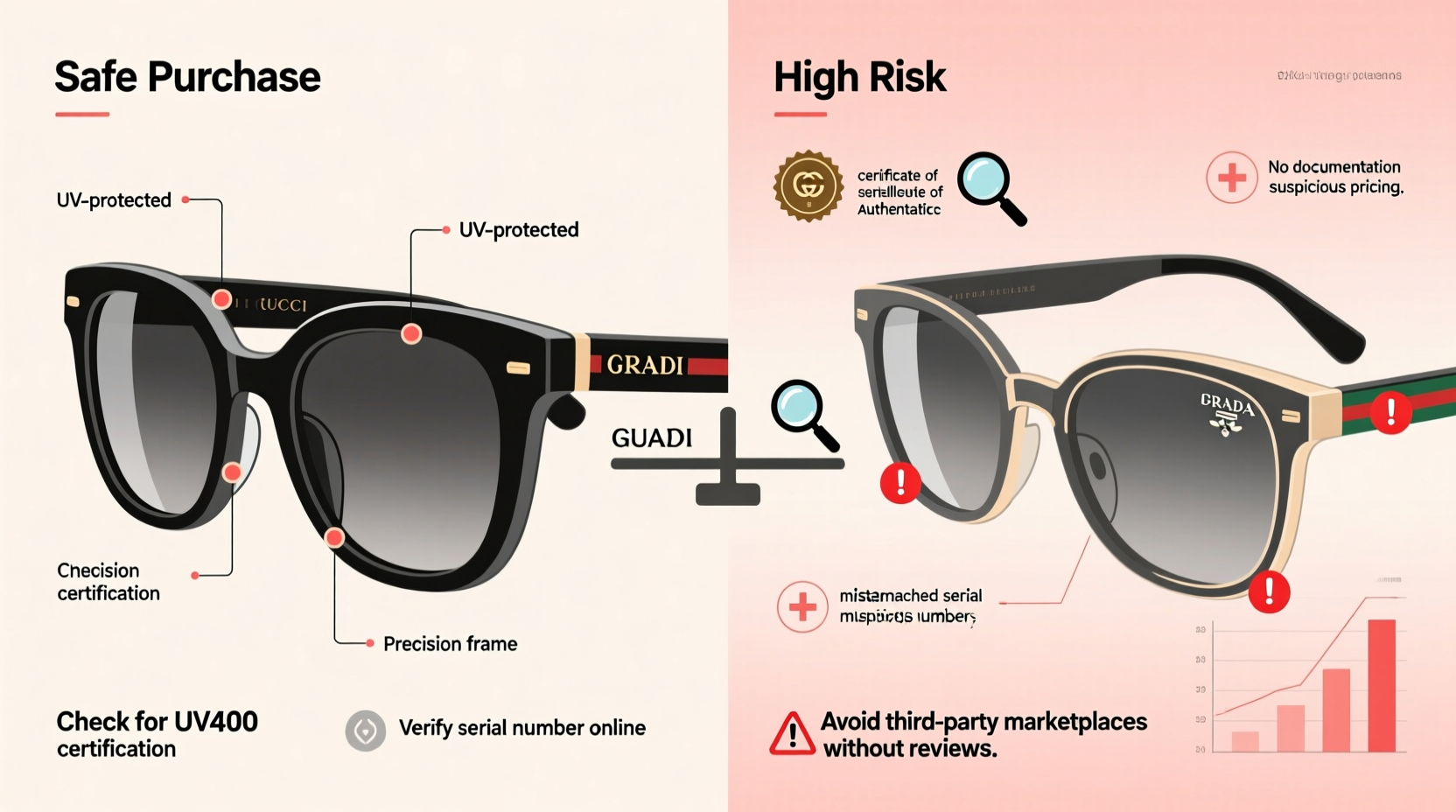
- Check the Brand Engraving: Genuine designer sunglasses have precise, laser-etched logos on the lens corner or temple arm. Run a fingernail over the mark—if it’s raised or painted on, it’s likely fake.
- Examine Hinge Quality: Authentic hinges are smooth, tight, and show no visible glue. Loose screws or flimsy metal indicate poor craftsmanship.
- Test Lens Clarity: Look through each lens at a straight line (like a door frame). Move the glasses side to side. If lines waver or distort, the lenses are poorly made.
- Verify UV Protection: Use a UV flashlight or visit an optician. Many clinics offer free lens testing. Authentic designer brands label lenses with “UV400” or “100% UV protection.”
- Compare Packaging: Original boxes include serial numbers, micro-text, and brand-specific details. Generic cases or misspelled labels are red flags.
Brand-Specific Telltale Signs
| Brand | Authentic Feature | Common Fake Flaw |
|---|---|---|
| Ray-Ban | “RB” etched into top corner of right lens | Logo missing or too large |
| Oakley | Lenses marked “Oakley USA” or “Oakley Imported” | Missing origin text or incorrect font |
| Gucci | Dual GG logo precisely aligned on arms | Uneven spacing or glossy finish on matte frames |
| Prada | Serial number on inside temple; matches box | No number or mismatched digits |
| Persol | Arrow symbol embedded in hinge; moves smoothly | Stiff hinge or flat sticker instead of metal |
Real Example: A Close Call on the Resale Market
Sophie, a 32-year-old stylist in Portland, bought a pair of \"vintage\" Chanel sunglasses on a peer-to-peer marketplace for $180—less than half retail. The seller included original case and papers. At first glance, everything seemed legitimate.
But after wearing them during a beach weekend, Sophie experienced headaches and eye strain. She took them to her optometrist out of concern. The doctor tested the lenses and discovered they blocked only 65% of UV rays. “These are cosmetic tints,” he said. “They’re dark, so your pupils open wider, letting in more UV damage.”
Further inspection revealed the “CHANEL” engraving was printed, not etched. The case had a faint mold smell and inconsistent stitching—signs of mass-produced replicas. Sophie filed a dispute, but the seller had already disappeared.
Her experience underscores a critical truth: documentation and presentation can be faked. Only physical verification and professional testing offer real assurance.
Where and How to Buy Safely
Not all secondhand sources carry equal risk. Your safest options combine expert authentication with buyer protection.
Recommended Platforms
- Vestiaire Collective: Uses in-house experts and AI to verify items. Offers return policy if authenticity is challenged.
- The RealReal: Employs full-time authenticators across categories. Publishes quarterly authenticity reports.
- Rebag / Fashionphile: Specialize in handbags and accessories, including sunglasses, with rigorous vetting.
- Certified Opticians Resale Programs: Some local optometry clinics resell gently used prescription sunglasses with verified lens quality.
Red Flags to Watch For
“Any deal that seems too good to be true—especially on social media—is almost certainly a scam.” — Marcus Lee, Luxury Goods Fraud Analyst
- No return policy or “final sale” disclaimers on high-value items
- Sellers refusing video calls or detailed photos
- Prices significantly below market value (e.g., $100 for new-looking Gucci)
- Use of vague terms like “inspired by” or “similar to” instead of “authentic”
- Requests to pay outside the platform (e.g., direct bank transfer)
Checklist: Buying Secondhand Designer Sunglasses Safely
✅ Pre-Purchase Checklist:- Buy from platforms with third-party authentication.
- Request high-resolution photos of engravings, hinges, and lenses.
- Ask for proof of purchase or original receipt if available.
- Verify UV protection via professional testing post-purchase.
- Ensure a return window of at least 14 days.
- Avoid deals paid outside secure platforms.
- Trust your instincts—if something feels off, walk away.
FAQ: Common Questions About Secondhand Designer Sunglasses
Can I replace the lenses in secondhand designer frames?
Yes—and it’s often the smartest move. Even if the frame is authentic, original lenses may be degraded. Visit an optician to install new UV-protected, polarized lenses. This preserves the design while ensuring eye safety. Cost ranges from $80 to $200 depending on coating and material.
Do all designer sunglasses have UV protection?
Authentic, newly manufactured designer sunglasses sold through authorized dealers do. However, older or pre-owned pairs may have worn-out coatings. Never assume protection based on brand alone—always test.
Are vintage sunglasses safe to wear?
Vintage frames can be safe if the lenses are replaced or verified. Many classic designs from the 70s and 80s used inferior plastics that yellow and lose clarity. Consider vintage pieces as fashion collectibles unless modern lenses are installed.
Protecting Your Eyes and Your Investment
Buying secondhand designer sunglasses doesn’t have to be a gamble—but it does require diligence. The cost savings and style benefits are real, but they shouldn’t come at the expense of your vision. With rising rates of UV exposure and screen-related eye strain, protecting your eyes is non-negotiable.
Think of your sunglasses as medical devices disguised as fashion. You wouldn’t buy a secondhand insulin pump or used contact lenses—why take risks with gear that shields one of your most vital senses?
The key is balance: embrace sustainable fashion, but prioritize verified authenticity and optical performance. When in doubt, invest in lens replacement. A $150 frame with $100 in premium lenses becomes a lifetime piece—stylish, safe, and truly valuable.
“Your eyes don’t get a second chance. If you love the look of designer shades, make sure they deliver the protection they promise.” — Dr. Arjun Patel, Retinal Specialist
Take Action Today
If you already own secondhand sunglasses, don’t wait for symptoms to act. Schedule a lens check with your optometrist. Most clinics can test UV filtration in minutes. For future purchases, stick to trusted resale platforms and always verify before you wear.
And if you’ve had a positive—or cautionary—experience with secondhand designer sunglasses, share it. Your story could help someone else avoid eye damage or discover a smarter way to shop. Fashion should empower, not endanger.
💬 Have questions about a pair you’re considering? Leave a comment with the brand and purchase source—we’ll help you assess the risk.