The iPhone 15 lineup presents a clear fork in the road: go with the capable yet more affordable iPhone 15 Plus, or invest significantly more in the flagship iPhone 15 Pro Max. At the heart of that decision for many users lies one compelling question—does the additional telephoto lens on the Pro Max justify the steep price increase? Apple markets the Pro Max as the ultimate iPhone experience, but for everyday users, the practical differences may be narrower than expected. This analysis dives into camera capabilities, hardware upgrades, user experience, and real-world value to help you determine whether the extra lens—and the premium it commands—is truly worth it.
Camera System Breakdown: More Than Just an Extra Lens
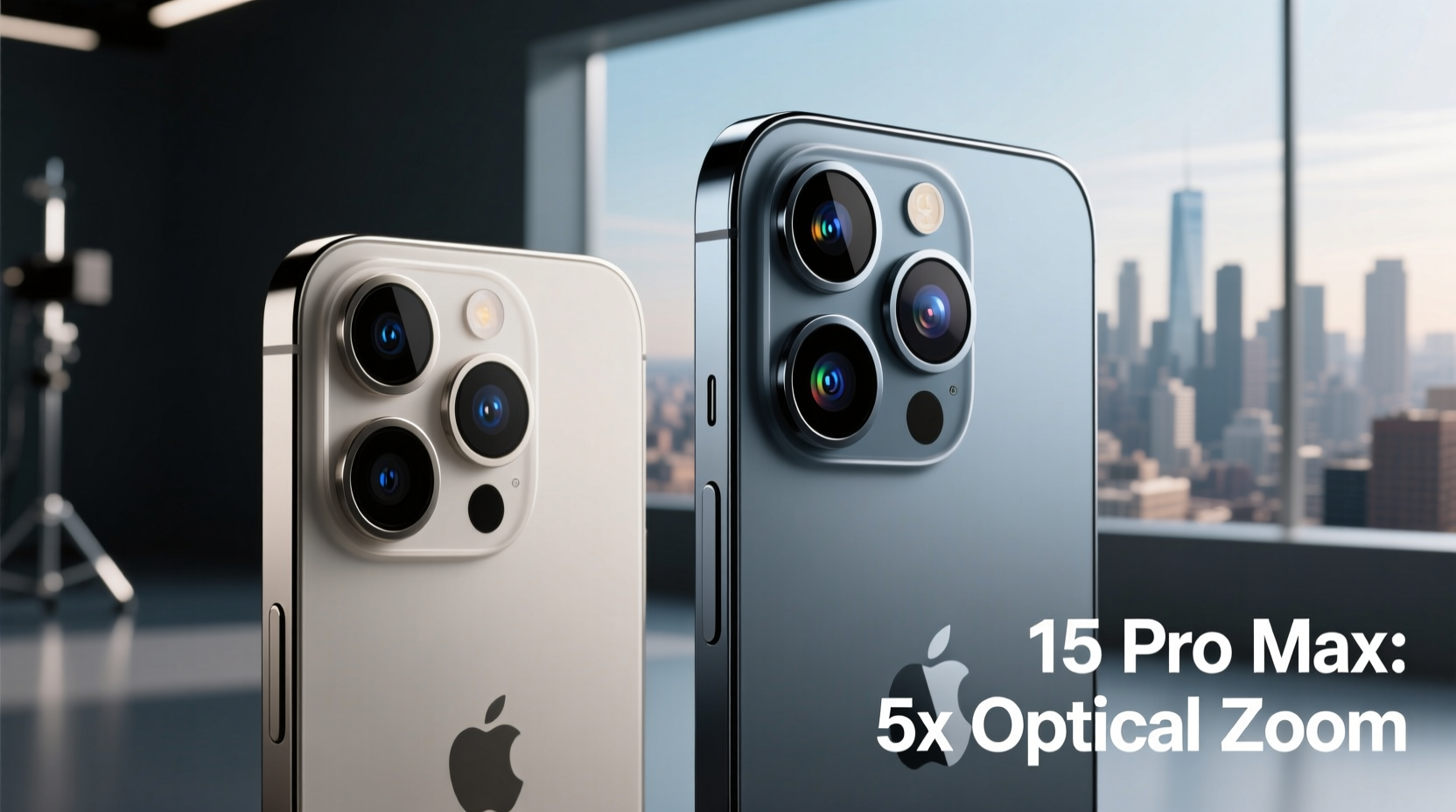
The most visible difference between the iPhone 15 Plus and the 15 Pro Max is their rear camera configurations. The iPhone 15 Plus features a dual-camera system: a 48MP main sensor and a 12MP ultrawide lens. In contrast, the iPhone 15 Pro Max steps up with a triple-lens array: the same 48MP main and 12MP ultrawide, plus a dedicated 12MP 5x tetraprism telephoto lens.
This third lens enables optical zoom up to 5x, far surpassing the 2x optical zoom available on the standard models through cropping the main sensor. Digital zoom on the Plus can reach 10x, but image quality degrades noticeably beyond 3x. On the Pro Max, even at 5x, photos remain sharp and detailed thanks to true optical magnification.
Tip: For wildlife, sports, or distant subjects, the 5x telephoto lens on the Pro Max offers dramatically better results than digital zoom on the Plus.Apple’s Photonic Engine and computational photography further enhance both devices, but the Pro Max gains additional advantages: ProRAW support, improved low-light performance on all lenses, and advanced Smart HDR 5. These features are particularly valuable for photographers who edit images extensively or shoot in challenging lighting.
Performance and Hardware: Where the Pro Truly Shines
The camera lens isn’t the only differentiator. The iPhone 15 Pro Max runs on the A17 Pro chip—the first 3-nanometer chip in any smartphone—delivering faster processing, better graphics performance, and improved energy efficiency. While the iPhone 15 Plus uses the capable A16 Bionic (same as iPhone 14 Pro), the A17 Pro brings tangible improvements in photo processing speed, video encoding, and machine learning tasks like scene recognition and portrait mode depth mapping.
Beyond the processor, the Pro Max includes several premium materials and features absent from the Plus:
- Titanium frame, making it lighter despite its larger size
- Action button (replacing the mute switch) for customizable shortcuts
- Wi-Fi 6E support for faster wireless transfers
- USB-C port with USB 3 speeds (up to 10 Gbps) for rapid photo and video offloading
These enhancements benefit not just photographers but power users across the board. However, if your primary concern is still photography—not professional video workflows or app performance—the hardware gap may feel less critical.
Real-World Camera Comparison: When the Lens Makes a Difference
To understand the practical impact of the extra lens, consider a typical day in the life of a travel photographer. You're exploring a historic city, capturing architecture, street scenes, and candid portraits. With the iPhone 15 Plus, the main and ultrawide lenses cover most scenarios beautifully. Wide-angle shots of monuments and interiors look stunning, and the 48MP sensor allows for excellent cropping flexibility.
But then you spot a musician performing on a balcony two stories up. On the iPhone 15 Plus, you’d need to rely on digital zoom, which produces a soft, noisy image. On the Pro Max, you tap the 5x zoom option and capture a crisp, well-exposed shot with accurate colors and fine detail in the instrument and facial expressions.
“Having a true telephoto lens transforms how I document events. I no longer have to invade personal space to get a good shot.” — Daniel Reyes, Mobile Photographer & Tech Reviewer
This scenario illustrates a broader truth: the value of the telephoto lens depends heavily on your shooting habits. Casual users who mostly photograph family, pets, or landscapes up close will rarely miss the extra zoom. But for enthusiasts, travelers, or those attending concerts and outdoor events, the Pro Max’s lens opens creative possibilities the Plus simply can’t match.
Video Capabilities: A Clear Edge for Content Creators
If you record video regularly, the differences become even more pronounced. Both phones support 4K recording at 60fps, but the Pro Max adds significant professional-grade features:
- Log video encoding (for color grading in post-production)
- ProRes video recording directly to external SSDs via USB-C
- Cinematic Mode available in 4K HDR at 30fps (vs 1080p on the Plus)
- Improved stabilization across all lenses, especially the telephoto
For vloggers, filmmakers, or social media creators, these tools are game-changers. Recording in ProRes preserves maximum dynamic range and detail, allowing for high-end editing. The ability to connect an external drive means hours of high-bitrate footage without filling internal storage.
In contrast, the iPhone 15 Plus remains a strong video device for casual use—its stabilization and HDR performance are excellent—but lacks the flexibility needed for serious production work.
Price-to-Value Analysis: Is the Jump Justified?
The iPhone 15 Plus starts at $899, while the 15 Pro Max begins at $1,199—a $300 difference. To assess whether this premium is justified, consider how frequently you’ll use the advanced features.
| Feature | iPhone 15 Plus | iPhone 15 Pro Max |
|---|---|---|
| Rear Cameras | Dual: 48MP main + 12MP ultrawide | Triple: 48MP main + 12MP ultrawide + 12MP 5x telephoto |
| Optical Zoom | 2x (digital crop) | 5x (true optical) |
| Chip | A16 Bionic | A17 Pro |
| USB-C Speed | USB 2 (480 Mbps) | USB 3 (10 Gbps) |
| Video Recording | 4K HDR, Cinematic Mode (1080p) | 4K HDR, Cinematic Mode (4K), ProRes, Log |
| Starting Price | $899 | $1,199 |
The table reveals that the Pro Max isn’t just about the camera—it’s a holistic upgrade targeting professionals and tech enthusiasts. If you value longevity, future-proofing, and peak performance, the investment makes sense. But if your needs are centered on great photos, long battery life, and reliable everyday use, the Plus delivers exceptional value.
Tip: Consider your usage over the next 3–4 years. Will you grow into the Pro Max’s features, or will they sit unused?Mini Case Study: Two Users, Two Choices
User 1: Sarah, 34 – Travel Blogger & Casual Photographer
Sarah upgraded from an iPhone 12 Pro Max to the iPhone 15 Plus. She shoots daily for Instagram and her blog but primarily captures wide landscapes, food, and portraits. She rarely uses zoom and doesn’t edit RAW files. After six months, she says, “I haven’t missed the telephoto lens once. The 48MP main sensor lets me crop when needed, and the battery lasts all day. I saved $300 and got 95% of what I need.”
User 2: Marcus, 41 – Wildlife Enthusiast & Videographer
Marcus moved from a DSLR setup to the iPhone 15 Pro Max for mobility. He films bird behavior and records short documentaries. “The 5x lens is essential,” he explains. “I can stay at a respectful distance and still get detailed shots. Plus, shooting ProRes to my SSD saves hours in workflow. For my use case, the Pro Max isn’t expensive—it’s actually cheaper than carrying multiple cameras.”
Their experiences highlight a key insight: the “worth” of the extra lens depends entirely on context.
Frequently Asked Questions
Can the iPhone 15 Plus take good zoomed photos?
Yes, but only up to a point. The 48MP main sensor allows for high-quality 2x zoom by cropping, and digital zoom works reasonably well up to 3x. Beyond that, images lose sharpness and detail. It’s not a replacement for true optical zoom, but sufficient for casual use.
Is the telephoto lens on the Pro Max worth $300 extra?
Only if you regularly shoot distant subjects or value professional photography tools. For general users, $300 may be better spent on accessories like lenses, tripods, or cloud storage. But for creatives, the lens unlocks new capabilities that justify the cost over time.
Does the Pro Max camera perform better in low light?
Yes, marginally. Both phones use advanced night mode and sensor-shift stabilization, but the Pro Max benefits from slightly larger pixels on the telephoto lens and better noise reduction due to the A17 Pro’s neural engine. The difference is noticeable in very dark conditions, especially when using zoom.
Checklist: Should You Upgrade to the Pro Max?
Ask yourself the following before deciding:
- Do you often take photos from a distance (e.g., concerts, wildlife, sports)? → Yes = Pro Max advantage
- Do you edit photos in RAW format or use professional apps? → Yes = Pro Max supports ProRAW
- Do you record high-quality video for YouTube, reels, or film projects? → Yes = ProRes and Log matter
- Do you value lightweight design and premium materials? → Yes = Titanium build helps
- Is budget a primary concern? → Yes = Plus offers excellent value
Final Verdict: Value Over Specs
The iPhone 15 Pro Max is undeniably the superior device on paper. Its 5x telephoto lens, A17 Pro chip, and pro-level video tools make it the most powerful iPhone ever built. But superiority doesn’t always translate to necessity.
For the average user, the iPhone 15 Plus delivers outstanding camera performance, excellent battery life, and a large display—all at a significantly lower price. The dual-camera system covers most photographic needs, and the 48MP sensor provides unexpected flexibility through smart cropping.
The extra lens on the Pro Max is impressive, but it serves a specific audience: mobile photographers, content creators, and professionals who demand versatility and quality under pressure. If you fall into that group, the price jump is justified. If not, you’re paying for capabilities you may never use.
Technology should serve your lifestyle, not dictate it. Choosing between these two models isn’t about which is objectively better—it’s about aligning your device with your actual needs.
💬 Have you made the leap to the Pro Max—or stayed with the Plus? Share your experience and help others decide what’s truly worth the upgrade.