Lucky clover jewelry has long been associated with charm, fortune, and timeless elegance. From delicate pendants to intricately designed rings, the four-leaf clover motif is more than just a symbol—it’s a statement of hope and individuality. But as demand rises, so does the number of counterfeit pieces flooding the market. Distinguishing between authentic craftsmanship and mass-produced imitations requires more than a keen eye; it demands knowledge, attention to detail, and an understanding of what makes genuine lucky clover jewelry truly special.
This guide cuts through the noise, offering practical, field-tested insights from jewelers, collectors, and gemologists to help you confidently identify authentic pieces—whether you're shopping online, in boutiques, or at antique markets.
Understand the Symbolism and Craftsmanship Behind Real Pieces
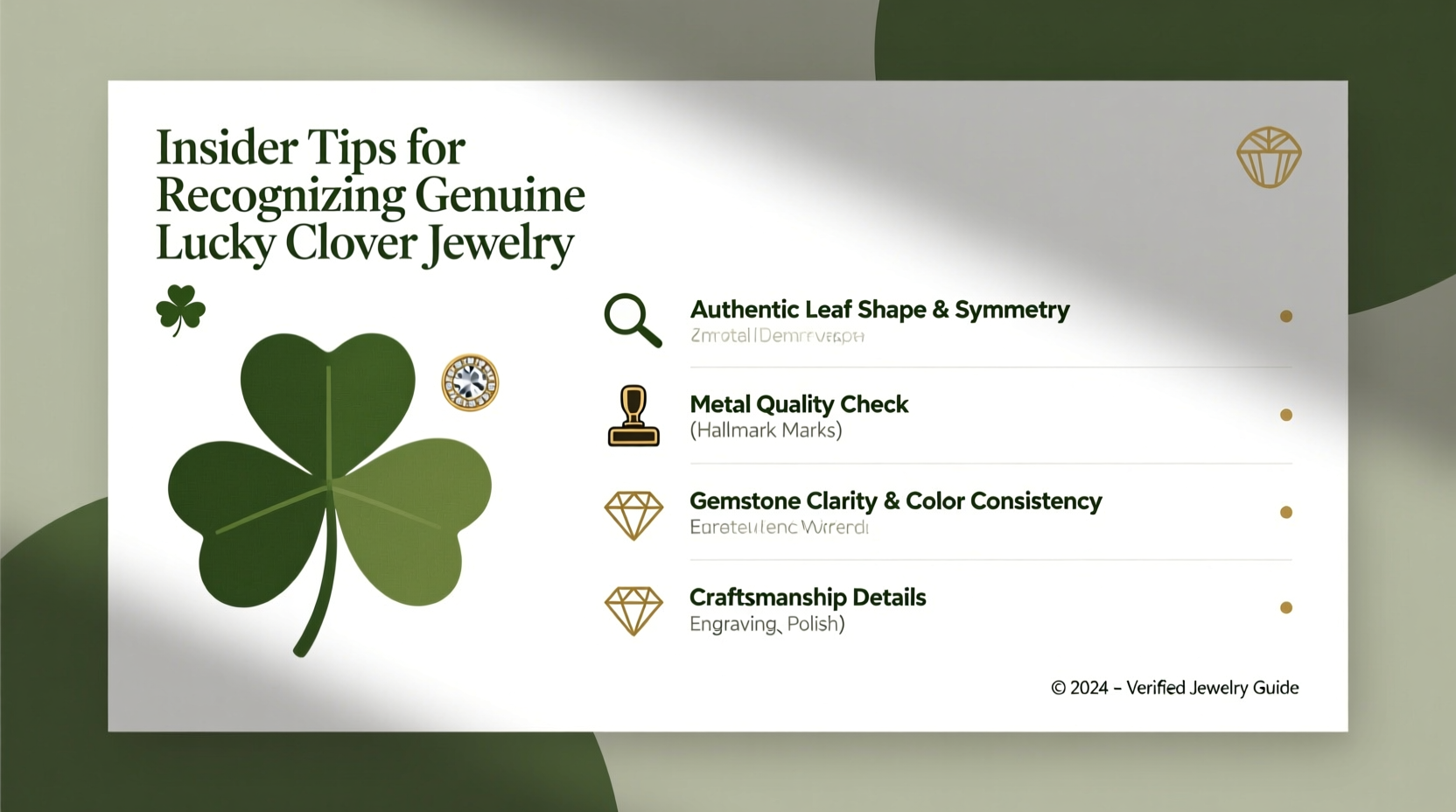
Genuine lucky clover jewelry isn’t merely stamped metal shaped like a clover. Authentic designs reflect intentionality in every curve, leaf, and setting. The four leaves are often asymmetrical but balanced, mimicking nature rather than rigid symmetry. High-end artisans may incorporate subtle details: textured veins on each leaf, hand-engraved borders, or micro-pavé stones that catch light uniquely.
Mass-produced replicas, by contrast, tend to use uniform molds. Leaves appear identical, edges are overly sharp or dull due to low-grade casting, and surface finishes lack depth. Real craftsmanship respects the organic form of the clover, while fakes prioritize speed and volume.
“Authentic clover jewelry tells a story through its imperfections. A slightly curled leaf edge or uneven stone placement can actually indicate handcrafting.” — Daniel Reeves, Master Goldsmith & Antique Jewelry AppraiserTip: Hold the piece under natural light and rotate it slowly. Genuine items show variation in reflection due to hand-finishing; machine-polished fakes reflect light uniformly.
Check for Hallmarks, Stamps, and Certification
One of the most reliable indicators of authenticity is proper marking. Reputable manufacturers stamp their jewelry with hallmarks indicating metal purity (e.g., “14K,” “585” for 14-karat gold), country of origin, and sometimes a maker’s mark or registered trademark.
For example, Irish-made sterling silver clover pendants typically bear the hallmark of the Assay Office—a crowned harp—and the “925” stamp. Absence of these marks, or poorly etched, misaligned, or faint engravings, should raise red flags.
| Mark Type | What It Means | Red Flags |
|---|---|---|
| 925 | Sterling silver (92.5% pure) | Faded, scratched, or missing |
| 585 / 14K | 14-karat gold | Uneven font or incorrect spacing |
| Hallmark (e.g., Harp) | Certified origin (Ireland) | Missing or cartoonish design |
| No Mark | Potentially base metal or fake | Especially suspicious in high-value claims |
If purchasing online, always request clear macro photos of the stamp area. Reputable sellers will provide them without hesitation. Be wary of vague descriptions like “gold-plated charm” sold at prices mimicking solid gold.
Material Quality: How to Test What You See
The materials used define both value and longevity. Here’s how to assess them without lab tools:
- Magnet Test: Genuine gold and silver are non-magnetic. If a clasp or bail sticks to a strong magnet, it contains iron or steel—an instant sign of low-quality plating.
- Weight Check: Precious metals have density. A real 14K gold clover pendant (approx. 1 inch) should weigh 3–5 grams. If it feels paper-thin or feather-light, it’s likely hollow or fake.
- Vinegar Test (with caution): Apply a drop of white vinegar to an inconspicuous area. Real silver may darken slightly but won’t corrode; plated metals bubble or turn green. (Note: Do not perform on finished or gem-set pieces.)
Also examine the clasp. Solid gold chains use sturdy spring-ring or lobster clasps made of matching metal. Flimsy, magnetic, or discolored clasps suggest cost-cutting—a common trait in counterfeits.
Step-by-Step Guide to Evaluating a Lucky Clover Piece
Follow this sequence when inspecting any potential purchase:
- Inspect Visually: Use a magnifying glass or phone zoom to examine surface texture, symmetry, and finish quality.
- Locate the Stamp: Find and verify the presence of metal purity and maker’s marks.
- Perform the Magnet Test: Rule out ferrous metals immediately.
- Weigh the Item: Compare against known weights for similar genuine pieces.
- Review Seller Credentials: Check for certifications, return policies, and customer reviews. Reputable jewelers offer appraisal documents.
- Request Lab Report (if applicable): For pieces with diamonds or gemstones, ask for GIA or IGI certification.
Real Example: How One Buyer Avoided a $400 Scam
Sarah, a collector from Portland, found a “vintage Irish 14K gold clover ring” listed online for $395—well below market value. The photos looked convincing, but she followed protocol:
- She asked the seller for a close-up of the inside band. The photo revealed a smudged “14K” stamp with inconsistent lettering.
- She requested weight information. The seller claimed “4.2g” but couldn’t confirm how it was measured.
- Upon delivery (with tracking), she used a kitchen scale: the ring weighed only 1.8g—too light for solid 14K.
- A quick magnet test confirmed attraction at the band’s base.
Sarah initiated a refund through the marketplace. Later, an independent jeweler identified it as brass with a thin gold wash. Her diligence saved her nearly $400 and highlighted how even convincing listings can deceive.
Do’s and Don’ts at a Glance
| Do | Don’t |
|---|---|
| Buy from certified jewelers or trusted heritage brands (e.g., Claddagh, Solvar) | Trust listings with stock photos only |
| Ask for detailed photos and documentation | Assume “gold tone” means real gold |
| Use simple tests (magnet, weight, visual inspection) | Wear unverified jewelry daily before testing |
| Compare prices across reputable retailers | Be swayed by urgency (“last one!” or “limited offer”) |
Frequently Asked Questions
Is all Irish-made clover jewelry guaranteed authentic?
No—but it’s far more reliable. Ireland has strict hallmarking laws enforced by the Dublin Assay Office. While not every small artisan stamps every piece, established Irish brands do. Look for the hallmark whenever possible.
Can gold-plated clover jewelry be valuable?
Not in terms of intrinsic material worth, but some designer-plated pieces hold aesthetic or sentimental value. Just don’t confuse them with solid gold. Plated jewelry typically lasts 1–3 years with regular wear before chipping or fading.
Are synthetic gemstones in clover jewelry a sign of fake?
Not necessarily. Many authentic designs use cubic zirconia or green enamel accents to represent luck. The key is transparency—reputable sellers specify if stones are natural or lab-created.
Your Next Move: Shop Smart, Stay Confident
Recognizing genuine lucky clover jewelry isn’t about memorizing rules—it’s about developing a mindset of informed skepticism. Every authentic piece carries subtle evidence of care: precise stamping, balanced weight, thoughtful design. Counterfeits may dazzle at first glance, but they falter under scrutiny.
Whether you’re buying for yourself or gifting someone a token of good fortune, take the time to verify. Ask questions. Insist on proof. Trust your instincts when something feels off. With these tools, you’re no longer just a shopper—you’re a discerning collector.
💬 Have a story about finding—or avoiding—a fake clover piece? Share your experience in the comments and help others stay one step ahead.