
As winter approaches and outdoor lighting becomes central to seasonal curb appeal, homeowners face a key design decision: should they choose icicle lights or traditional string lights for their modern home exterior? Both options offer charm and ambiance, but their visual impact, ease of installation, and compatibility with contemporary architecture vary significantly. With clean lines, minimalist materials, and intentional design being hallmarks of modern homes, selecting the right lighting isn’t just about brightness—it’s about harmony.
The difference between these two lighting styles goes beyond aesthetics. It touches on practical concerns like energy efficiency, durability, maintenance, and how well each complements the architectural language of a modern home. Whether you're preparing for the holidays or planning year-round exterior illumination, understanding the strengths and limitations of icicle and string lights can elevate your home’s presence—without compromising its sleek identity.
Understanding the Design Language of Modern Homes
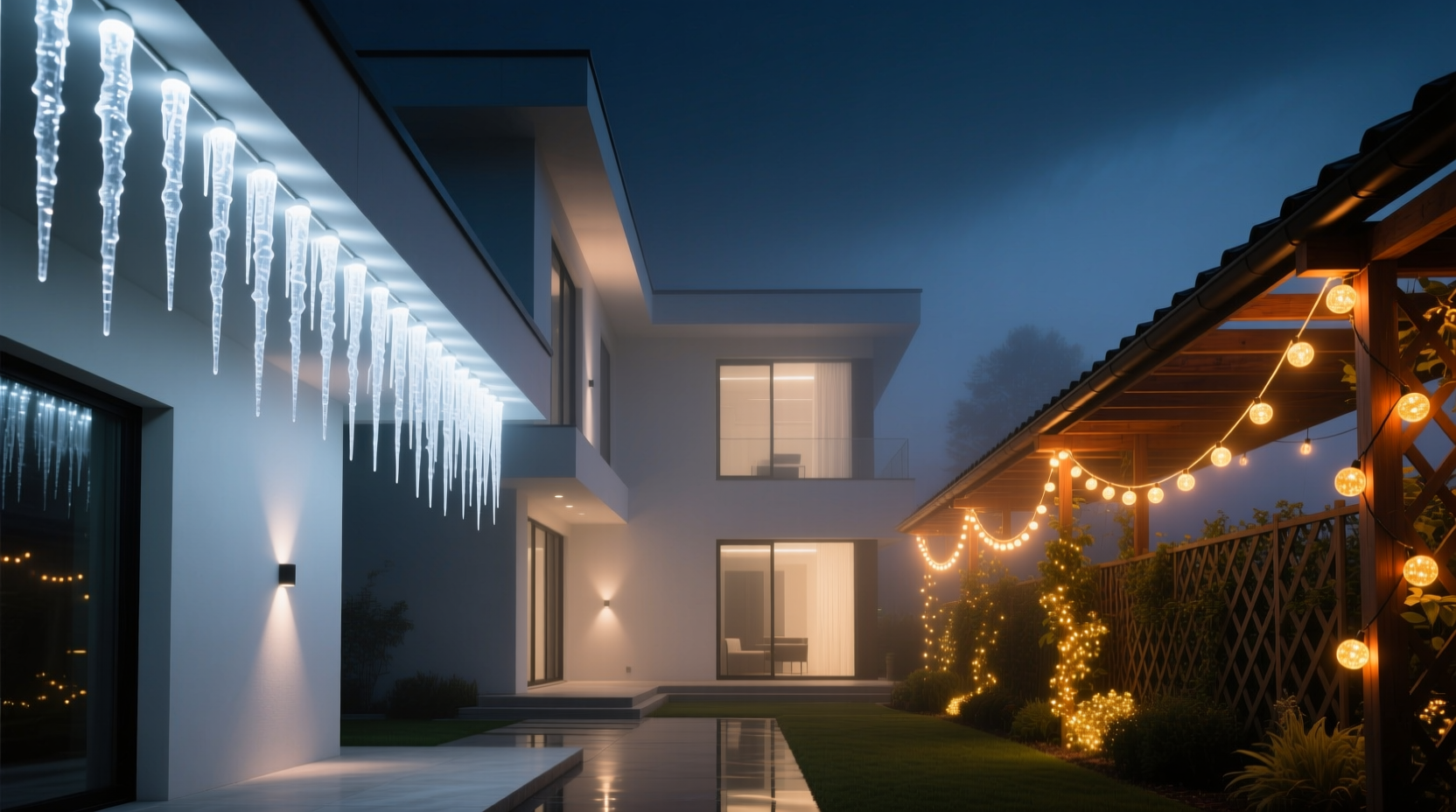
Modern home exteriors emphasize simplicity, geometric forms, large glass expanses, and a seamless connection between indoor and outdoor spaces. Materials like steel, concrete, wood, and black-framed windows define the look. In such environments, lighting must enhance—not distract from—the structure’s inherent elegance.
Lighting in modern design often follows the principle of “less is more.” Strategic placement, subtle glow, and uniform distribution are prioritized over dense clusters or excessive sparkle. This makes the choice between icicle and string lights more than decorative—it's architectural.
Icicle lights, with their vertical droplets simulating frozen waterfalls, evoke a wintry, nostalgic feel. String lights, particularly warm-white LED strands, can be arranged in clean horizontal runs along eaves, railings, or pergolas, aligning with the linear emphasis of modern facades.
“Lighting should support the architecture, not compete with it. In modern homes, subtlety and alignment matter more than volume.” — Daniel Ruiz, Architectural Lighting Designer
Key Differences: Icicle Lights vs String Lights
To determine which option suits a modern exterior better, it helps to compare them across several criteria:
| Feature | Icicle Lights | String Lights |
|---|---|---|
| Visual Style | Vertical, cascading effect; mimics hanging ice | Linear, even spacing; customizable layout |
| Installation Complexity | Moderate to high; requires precise spacing for even drops | Low to moderate; easy to drape or staple along surfaces |
| Best Placement | Eaves, gutters, porch edges | Eaves, fences, railings, pergolas, trees |
| Energy Efficiency (LED) | High, but higher wattage due to longer wire runs | Very high; shorter runs possible with focused placement |
| Year-Round Use Potential | Limited; strongly seasonal | High; neutral appearance fits any season |
| Compatibility with Modern Aesthetics | Low to moderate; can appear cluttered or outdated | High; especially when using warm white or dimmable LEDs |
The table reveals a clear trend: while icicle lights have seasonal charm, string lights offer greater flexibility and aesthetic synergy with modern design principles. Their ability to follow clean lines and integrate into architectural features makes them a preferred choice among designers working with contemporary homes.
Tip: For a refined look, use commercial-grade string lights with uniform bulb spacing and low-profile sockets to maintain a sleek appearance.Why String Lights Are Often the Better Choice for Modern Exteriors
String lights align naturally with the horizontal emphasis found in modern homes. When installed along rooflines, deck railings, or side walls, they create a sense of continuity and rhythm without overwhelming the eye. Unlike icicle lights, which draw attention downward with repetitive vertical elements, string lights can be arranged to complement the home’s geometry—highlighting overhangs, framing entryways, or accentuating outdoor living areas.
Moreover, modern string light designs now include options specifically tailored for architectural integration. Micro LED strings, copper wire strands, and color-tunable bulbs allow for discreet yet effective illumination. These can remain installed year-round, transitioning seamlessly from holiday warmth to summer ambiance.
Consider a home with a flat roofline and floating canopy entry. Running warm-white string lights along the underside of the canopy creates a welcoming glow that emphasizes depth and form. The same area adorned with icicle lights would risk looking busy or out of context—like applying Victorian trim to a Bauhaus building.
Another advantage of string lights is their adaptability. They can be used in creative configurations: zig-zag patterns on fences, grid layouts on patios, or even as backdrops behind planters. This versatility supports the modern ethos of multifunctional, intentional design.
Real Example: A Mid-Century Modern Home in Portland
A homeowner in Northwest Portland renovated their 1960s rambler with floor-to-ceiling glass, dark-stained cedar siding, and a cantilevered carport. For exterior lighting, they initially considered icicle lights for Christmas but worried about clashing with the home’s clean profile.
Instead, they opted for 50-foot warm-white LED string lights mounted horizontally along the carport’s edge and wrapped around the wooden support posts. The result was a soft, inviting glow that enhanced the home’s horizontal lines without introducing visual noise. Neighbors commented on the “elegant” and “sophisticated” look, and the owner decided to keep the lights up all year, adjusting brightness seasonally.
This case illustrates how string lights can serve both functional and aesthetic roles in modern design—offering ambient lighting while reinforcing architectural intent.
When Icicle Lights Can Work—With Caution
Icicle lights aren’t inherently incompatible with modern homes, but their application requires careful consideration. In regions where snow and ice are common, the visual metaphor of icicles can feel authentic and contextually appropriate. However, the execution must be precise to avoid a kitschy impression.
For a modern home, icicle lights should be used sparingly and only in specific zones—such as under a narrow eave or along a secondary gable—rather than wrapping the entire perimeter. Opting for shorter drip lengths (6–8 inches) and wider spacing between drops can reduce density and prevent a “overdone” look.
Additionally, choosing monochromatic LEDs—such as cool white instead of multicolor—helps maintain a more restrained, contemporary feel. Avoid models with exaggerated glitter or twinkling effects, which detract from the calm sophistication modern design seeks to achieve.
“Icicle lights can work on modern homes if treated like an accent, not a statement. Think of them as jewelry, not a full outfit.” — Lena Torres, Landscape Lighting ConsultantTip: If using icicle lights, pair them with recessed path lighting or wall sconces to balance the vertical emphasis and ground the design.
Step-by-Step Guide to Installing String Lights on a Modern Home
Proper installation ensures longevity and visual coherence. Follow this sequence for professional results:
- Plan the Layout: Sketch your home’s exterior and mark where lights will go. Focus on horizontal lines—roof edges, railings, or structural beams.
- Choose the Right Lights: Select commercial-grade, weatherproof LED string lights with a minimum 40,000-hour lifespan. Warm white (2700K–3000K) blends best with modern materials.
- Measure and Calculate Length: Add 20% extra length for slack and connections. Most strands are 25–50 feet; plan for connectors or extension cords if needed.
- Install Mounting Hardware: Use UV-resistant clips, gutter hooks, or silicone-coated staples. Avoid nails or tight fasteners that could damage wires.
- Run the Lights: Lay the strand smoothly without sagging. Maintain consistent spacing—typically 12 inches between bulbs for even illumination.
- Connect and Test: Plug in the system before finalizing. Check for flickering, dead sections, or voltage drop in long runs.
- Conceal Cords and Outlets: Route power cords along downspouts or behind trim. Use outdoor-rated outlet covers and consider a smart timer for automation.
- Seasonal Maintenance: Inspect twice a year for wear, debris, or pest damage. Clean gently with a damp cloth if needed.
This methodical approach ensures that string lights enhance rather than interrupt the home’s design narrative.
Checklist: Choosing the Right Lights for Your Modern Exterior
- ✅ Prioritize horizontal alignment over vertical drops
- ✅ Choose warm-white or tunable-white LEDs
- ✅ Ensure all components are rated for outdoor use (IP44 or higher)
- ✅ Limit icicle lights to small, contextual accents if used at all
- ✅ Plan for year-round usability, not just seasonal display
- ✅ Use clips or channels for clean, secure mounting
- ✅ Incorporate dimmers or timers for mood control
- ✅ Avoid multicolor or animated modes unless intentionally artistic
Frequently Asked Questions
Can I leave string lights up all year on a modern home?
Yes, high-quality outdoor-rated LED string lights are designed for continuous use. Choose low-profile, neutral-colored designs that blend with the architecture. Regular inspection and cleaning will extend their life and maintain appearance.
Are icicle lights energy efficient?
Modern LED icicle lights are energy efficient compared to older incandescent versions. However, they typically use more total wire and bulbs than standard string lights, leading to higher cumulative energy use. For eco-conscious homeowners, targeted string lighting is often a more efficient solution.
How do I avoid a “cheap” look with outdoor lights?
Invest in commercial-grade materials, ensure even spacing, hide cords and plugs, and avoid overcrowding. Uniformity, proper scale, and subtle glow are key. Less is more—especially in modern design.
Final Thoughts: Lighting as an Extension of Design
The choice between icicle lights and string lights ultimately reflects a deeper design philosophy. Icicle lights celebrate tradition and seasonal spectacle, making them ideal for homes with classic or rustic character. But for modern exteriors—where clarity, proportion, and restraint reign—string lights offer a superior blend of function, elegance, and adaptability.
By treating exterior lighting as an integral part of architectural expression, homeowners can transform their properties into thoughtfully illuminated spaces that shine year-round. The goal isn’t just visibility; it’s atmosphere. And in the quiet glow of well-placed string lights, a modern home finds its nighttime voice—calm, confident, and beautifully understated.
🚀 Ready to upgrade your home’s exterior lighting? Start with one section—your front porch or deck—and test a high-quality string light setup. Observe how it changes the mood at dusk. Share your results, tag a friend who loves modern design, or leave a comment with your favorite lighting tip!