
Seasonal wardrobe rotation is a necessary ritual for many, but improper storage can lead to ruined fabrics, lingering odors, and unexpected holes from moth infestations. Whether you're tucking away wool coats for summer or packing light dresses until next spring, the way you store your clothes determines their longevity and wearability. The good news: with the right preparation, containers, and environment, you can preserve your garments in pristine condition year after year. This guide walks through science-backed strategies to protect your investment from pests and moisture—without relying on harsh chemicals or guesswork.
Clean Before You Store: The First Line of Defense
Storing clothing while dirty—even if it just has invisible body oils or sweat—is an open invitation for moths and mildew. Organic residues attract pests like webbing clothes moths, which feed on keratin found in natural fibers such as wool, cashmere, silk, and feathers. Similarly, dampness combined with soiled fabric creates the perfect breeding ground for mold and bacteria that produce musty odors.
Always launder or dry clean items before storing. Pay attention to collars, cuffs, and underarms, where residue accumulates most. For delicate fabrics like silk or vintage pieces, professional dry cleaning ensures thorough sanitation without damage.
Tip: Never assume “it only got worn once” means it’s clean enough. Skin cells, perfume, and deodorant leave traces that pests find appealing.Choose the Right Storage Containers
The container you use plays a crucial role in preventing both insect access and moisture buildup. Not all storage solutions are equal—some actually trap humidity and accelerate deterioration.
| Container Type | Pros | Cons | Best For |
|---|---|---|---|
| Plastic bins with tight seals | Moth-proof, dust-resistant, stackable | Poor breathability; risk of trapped moisture | Long-term storage in dry climates |
| Cotton garment bags | Breathable, soft protection | Not pest-proof unless lined or sealed | Suits, coats, dresses in climate-controlled spaces |
| Vacuum-sealed bags | Space-saving, air-tight barrier | Can compress and deform padded items; may encourage mildew if moisture is present | Bulkier items like comforters or down jackets (if completely dry) |
| Wooden chests (cedar-lined) | Natural repellent properties, aesthetically pleasing | Heavy, expensive; cedar scent fades over time | Woolens, heirloom garments |
| Cardboard boxes | Affordable, breathable | Easily penetrated by moths; absorbs moisture | Not recommended for long-term storage |
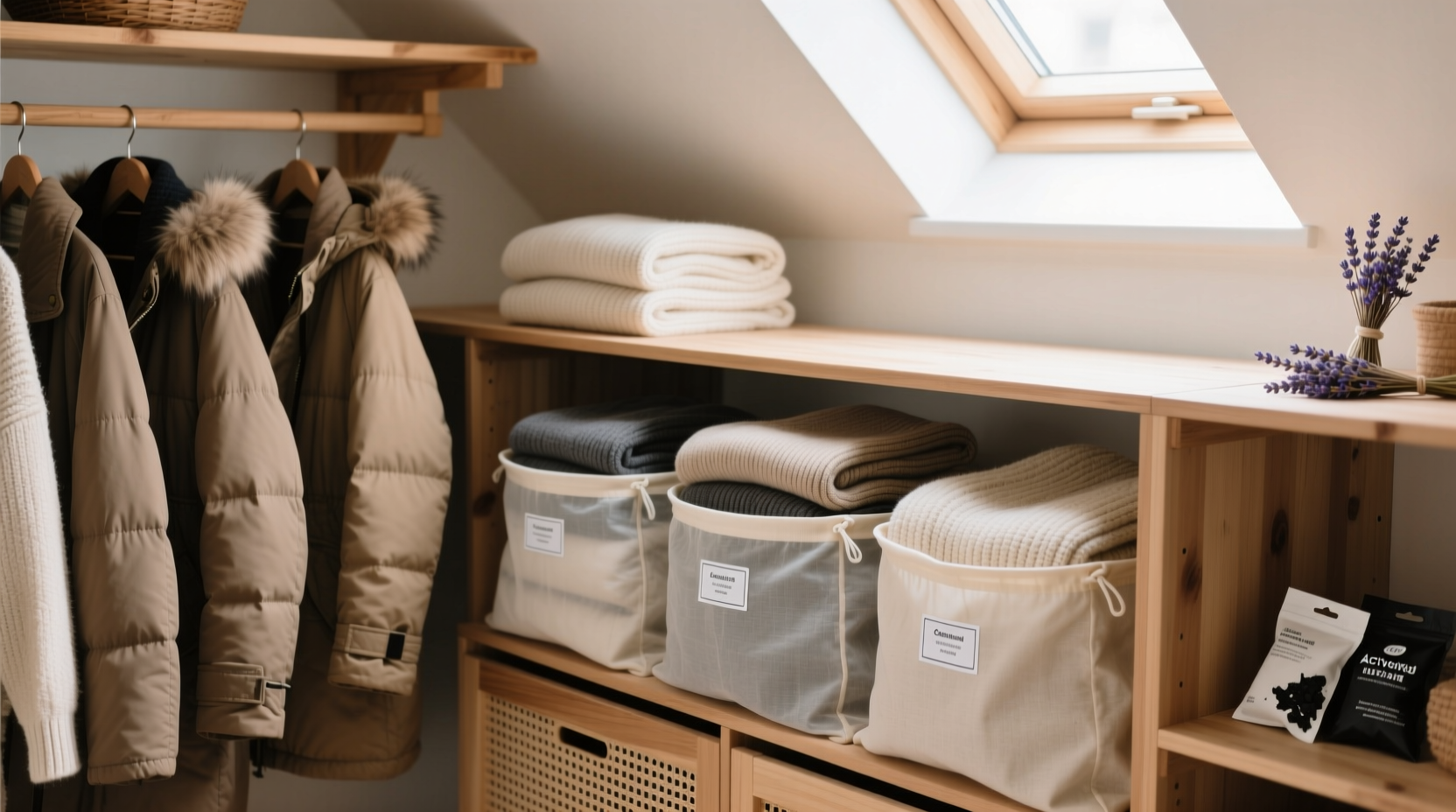
For optimal results, combine breathable materials with physical barriers. Use cotton garment bags inside sealed plastic bins for layered protection. If using vacuum bags, include silica gel packs to absorb any residual moisture.
Control the Environment: Location Matters
No matter how well you prepare your clothes, poor storage conditions will undo your efforts. Moths thrive in dark, undisturbed areas, while mustiness develops in humid environments—both common in attics, basements, and garages.
Ideally, store seasonal clothing in a cool, dry, climate-controlled space with stable temperatures between 60–70°F (15–21°C) and relative humidity below 50%. Closets inside living areas often meet these criteria better than peripheral storage zones.
“Temperature and humidity control are more effective than mothballs in preventing textile damage.” — Dr. Linda Holmes, Textile Conservation Scientist, Smithsonian Institution
Avoid placing stored items directly against concrete walls or floors, which can leach moisture. Elevate containers on shelves or pallets. In high-humidity regions, consider using a small dehumidifier or passive desiccants like DampRid in the storage area.
Step-by-Step Guide to Moth- and Odor-Free Storage
Follow this six-step process each season to ensure your off-duty clothing stays fresh and protected:
- Sort by Season and Material: Separate items into categories—woolens, cottons, silks, etc.—since different fabrics require tailored care.
- Clean Thoroughly: Wash or dry clean every piece, even those that appear clean. Allow full drying before packing.
- Inspect for Pests or Damage: Check seams, linings, and folds for signs of moths (tiny holes, silken tubes, or actual insects). Isolate and treat any infested items immediately.
- Use Natural Repellents: Place lavender sachets, cedar blocks, or dried rosemary in storage containers. These deter moths without toxic fumes. Replace every 3–6 months.
- Pack Thoughtfully: Fold knits to avoid stretching; hang structured garments like blazers if possible. Avoid overcrowding to allow airflow.
- Seal and Label: Close containers tightly and label them clearly (e.g., “Winter Woolens – Cedar Blocks Inside”). This speeds retrieval and helps track storage duration.
Avoid Common Mistakes That Invite Damage
Even well-intentioned efforts can backfire when based on myths or outdated advice. Here are frequent errors to avoid:
- Using mothballs indiscriminately: Naphthalene and paradichlorobenzene are toxic, carcinogenic, and leave a persistent chemical odor. They’re unnecessary if you maintain cleanliness and proper sealing.
- Storing damp clothes: A slightly damp sweater rolled up in a bin becomes a mold factory within weeks. Always confirm complete dryness.
- Leaving clothes in garment bags from the dry cleaner: These thin plastic covers trap moisture and offer no real pest protection. Remove them before long-term storage.
- Over-relying on cedar: Cedar wood repels moths only when freshly sanded and strongly scented. Once the aroma fades (usually after 6–12 months), its effectiveness drops significantly.
- Folding heavy knits for long periods: Chunky sweaters can stretch out at the folds. Roll them instead or store flat with tissue paper between layers.
Real Example: How Sarah Saved Her Heirloom Cashmere Collection
Sarah inherited a collection of vintage cashmere sweaters from her grandmother. Stored in a cedar chest in the basement for years, they developed faint holes and a stale smell. After consulting a textile conservator, she took action: she hand-washed each piece in pH-neutral detergent, air-dried them flat, then placed them in breathable cotton pillowcases inside airtight plastic bins. She added activated charcoal bags to neutralize odors and refreshed cedar blocks wrapped in muslin cloth. Stored in a bedroom closet, the sweaters remained untouched by moths for five consecutive seasons. By rotating them twice a year and airing them briefly, Sarah preserved both their quality and sentimental value.
Checklist: Seasonal Clothing Storage Preparation
Use this checklist before putting away any seasonal wardrobe:
- ☐ All items have been cleaned (washed or dry cleaned)
- ☐ Garments are completely dry—no lingering moisture
- ☐ Checked for existing moth activity or fabric weakness
- ☐ Chosen appropriate, clean storage containers
- ☐ Selected a cool, dry, climate-stable storage location
- ☐ Added natural repellents (e.g., lavender, cedar, silica gel)
- ☐ Folded or hung items properly to prevent deformation
- ☐ Labeled containers clearly with contents and date
- ☐ Scheduled next inspection/rotation (3–6 months ahead)
FAQ: Your Top Questions Answered
Can I use essential oils to repel moths?
Yes, certain essential oils like lavender, eucalyptus, and clove have shown repellent effects on moths. Apply a few drops to cotton balls or felt pads and place them in storage. However, they evaporate quickly and need replenishing every 4–6 weeks. Avoid direct contact with fabrics to prevent staining.
How do I remove musty smells from stored clothing?
If clothes develop a mild odor, try airing them outside on a dry day for a few hours. For stronger smells, wash or dry clean the item. For non-washable pieces, place them in a sealed container with baking soda or activated charcoal for 48–72 hours. Sunlight can also help neutralize odors—but avoid prolonged UV exposure, which fades colors.
Are there moth-resistant fabrics?
Synthetic fibers like polyester, nylon, and acrylic are not consumed by moths. However, if blended with natural fibers or soiled with organic matter, they can still be damaged. Pure cotton and linen aren’t primary targets but may suffer secondary damage from larvae moving between food sources.
Conclusion: Protect Your Wardrobe with Smart Habits
Storing seasonal clothing safely isn’t about perfection—it’s about consistency. A few deliberate steps before packing away your off-season favorites can prevent costly damage and unpleasant surprises. Clean garments thoroughly, choose breathable yet secure containers, prioritize dry environments, and use natural deterrents wisely. By treating storage as an extension of garment care, you extend the life of your wardrobe, reduce waste, and make seasonal transitions smoother.
🚀 Take action today: Pull out one bin or bag of stored clothing and inspect it. Clean, refresh, and repackage it using these methods. Small efforts now save big headaches later.