Minimalist design rings have surged in popularity for their clean lines, understated elegance, and timeless appeal. But not all minimalist rings are created equal. Behind the simplicity lies a world of precision, material integrity, and craftsmanship that separates an exceptional piece from a mass-produced imitation. For buyers navigating this refined aesthetic, understanding what constitutes true quality is essential. A well-crafted minimalist ring doesn’t just look good—it feels substantial, wears comfortably over time, and maintains its appearance with minimal maintenance.
The beauty of minimalism is in restraint: removing excess to highlight form, function, and material. This philosophy places greater importance on each detail. When ornamentation is stripped away, flaws become more apparent. A poorly finished edge, uneven band thickness, or subpar metal can ruin the entire effect. That’s why discerning buyers must pay close attention to construction, materials, and design integrity.
Material Purity and Sourcing
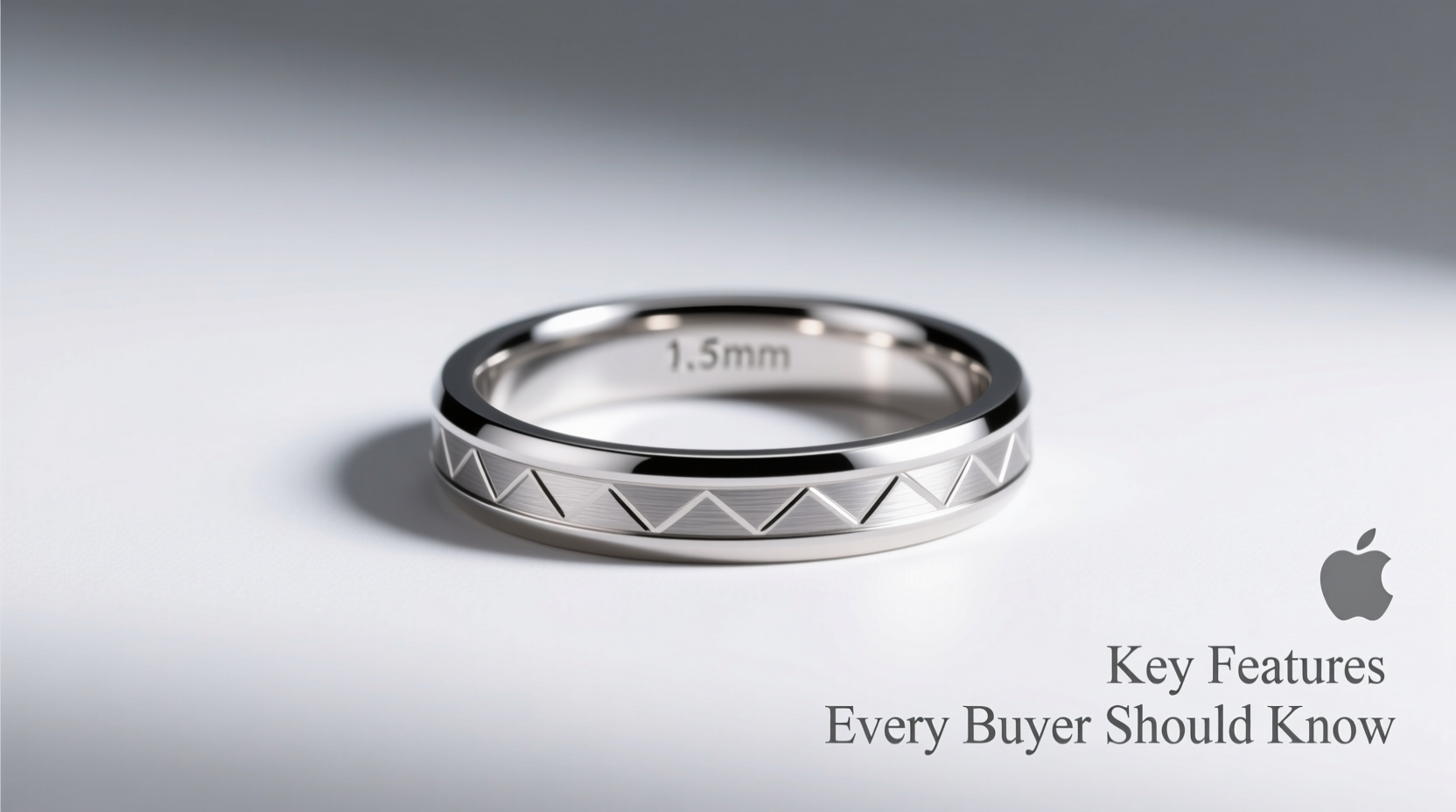
The foundation of any high-quality ring is the material used. Minimalist designs often rely on precious metals like platinum, 14k or 18k gold, and high-grade sterling silver. These materials not only offer durability but also carry intrinsic value and hypoallergenic properties crucial for long-term wear.
Look for hallmarks stamped inside the band—such as “14K,” “750” (for 18k gold), “925” (sterling silver), or “PT950” (platinum). These indicate certified metal purity. Be cautious of vague markings like “GP” (gold plated) or “HGE” (heavy gold electroplate), which suggest a base metal core with a thin layer of gold—unsuitable for lasting quality.
Tip: Always request a certificate of authenticity when purchasing fine jewelry, especially online. Reputable brands provide third-party assay reports verifying metal content.Recycled or ethically sourced metals are increasingly common among premium minimalist jewelers. Brands committed to sustainability often disclose their sourcing practices, adding another layer of trust. While not directly tied to physical quality, ethical transparency reflects a brand’s overall standards and attention to detail.
Precision in Craftsmanship and Symmetry
In minimalist design, symmetry isn’t just pleasing—it’s mandatory. Because these rings lack ornamental distractions, even slight imbalances in shape, width, or contour become immediately noticeable. A high-quality minimalist band will exhibit perfect circular alignment, consistent thickness from one side to the other, and seamless joins if it’s a tension or split-shank design.
Examine the ring under natural light from multiple angles. Rotate it slowly. Does the curve flow smoothly? Is the surface free of warping or bulging? The best pieces are machined or hand-finished to exact tolerances, often using CAD-CAM technology or traditional hand-setting techniques by skilled artisans.
“Minimalism demands perfection. One millimeter off in proportion can break the harmony of the entire piece.” — Lena Torres, Jewelry Designer & Craftsmanship Consultant
Pay special attention to where components meet—such as prongs meeting the band or stone settings blending into the shank. In a well-made ring, transitions should be fluid, with no visible gaps, rough edges, or misalignments.
Surface Finish and Detailing
The finish of a minimalist ring significantly impacts both aesthetics and longevity. Common finishes include polished, matte (brushed), satin, hammered, and sandblasted. Each requires different tools and expertise to execute uniformly across the entire surface.
A high-quality finish will be consistent throughout. Run your finger along the band. It should feel smooth and even, without patches of varying texture. A poorly applied brushed finish, for example, may show streaks or inconsistent grain direction. Polished surfaces should reflect light evenly, without cloudiness or tool marks.
| Finish Type | Characteristics | Quality Indicators |
|---|---|---|
| Polished | High shine, mirror-like | No scratches, uniform reflection, no orange-peel texture |
| Brushed/Matte | Subtle grain, low glare | Even directional lines, no patchiness |
| Satin | Soft luster between polished and matte | Smooth to touch, consistent sheen |
| Hammered | Textured, organic dimples | Uniform impact depth, no sharp edges |
Higher-end pieces may feature mixed finishes—like a polished interior with a brushed exterior—for added sophistication. This technique requires advanced skill to maintain balance and alignment.
Comfort Fit and Wearability
A truly high-quality minimalist ring isn’t just visually appealing—it’s comfortable to wear daily. Comfort-fit bands have a slightly domed interior that reduces friction and allows the ring to slide on and off easily. This subtle engineering detail prevents pinching and makes long-term wear practical.
Check the inner profile: it should be smooth, rounded, and free of sharp ridges. If you’re trying the ring on, notice how it sits on your finger. Does it rock or tilt? A properly sized, well-made ring should sit flush and stable.
Band thickness also plays a role. While minimalist rings tend to be slimmer, overly thin bands (under 1.5mm) may feel flimsy or bend easily. A thickness between 2mm and 4mm typically offers the right balance of elegance and durability for everyday wear.
Tip: Try wearing the ring for at least 10 minutes before purchasing. Temperature changes cause fingers to swell slightly, revealing fit issues not apparent at first.Stone Setting and Structural Integrity (If Applicable)
Many minimalist rings feature small center stones—often diamonds or colored gems—set in bezel, tension, or flush mounts. Since the design focuses attention on the stone, its setting must be flawless.
- Bezel settings should fully encircle the stone with a smooth metal rim, without gaps or uneven pressure.
- Flush settings require the stone to sit perfectly level with the band surface. No part should protrude or sink below.
- Tension settings are technically complex; only reputable manufacturers achieve secure, long-lasting results.
Inspect the prongs (if present). They should be symmetrical, securely holding the stone without excessive metal bulk. Gently nudge the stone with a wooden toothpick—there should be zero movement. Any wiggle indicates poor craftsmanship and risk of loss.
Mini Case Study: Choosing Between Two Seemingly Identical Bands
Sophia was shopping for a wedding band and narrowed her options to two platinum rings: one from a luxury boutique jeweler priced at $1,800, the other from an online marketplace at $650. Both were described as “hand-finished 950 platinum minimalist bands.”
Upon inspection, the cheaper ring had a slightly wavy inner edge, inconsistent brushing, and a faint seam line where the band closed. The hallmark was faint and partially smudged. The pricier ring, however, had a crisp interior dome, uniform finish, and a deep, clear “PT950” stamp. Under magnification, the join was nearly invisible.
Sophia chose the higher-priced option. After six months of daily wear, her ring remained scratch-free and retained its original luster. The cheaper alternative, purchased by a friend, began showing signs of wear within weeks—proof that true quality reveals itself over time.
Checklist: How to Evaluate a Minimalist Ring Before Buying
- Verify metal purity with official hallmarks (e.g., 14K, 925, PT950).
- Examine symmetry and proportions from multiple angles.
- Assess surface finish for consistency and absence of tool marks.
- Test comfort fit—ensure smooth interior and secure placement.
- Inspect stone settings for stability and precision (if applicable).
- Check weight—higher density often indicates solid construction vs. hollowed-out cheap copies.
- Review return policy and warranty—reputable sellers offer at least a 30-day return window and lifetime polish/repair services.
Frequently Asked Questions
Can a minimalist ring be durable enough for daily wear?
Yes, if crafted from quality materials like 14k gold, platinum, or titanium, and designed with appropriate band thickness (2mm+). Avoid ultra-thin or hollow designs if you lead an active lifestyle.
Are handmade minimalist rings better than machine-made ones?
Not necessarily. Handmade rings offer artisanal uniqueness and can be superior in finish, but precision-engineered machine-made rings often deliver unmatched consistency. The key is craftsmanship, not production method.
How do I know if a ring is truly minimalist versus just plain?
True minimalist design follows intentional principles: balanced proportions, thoughtful negative space, and refined details. A “plain” ring may simply lack decoration without considering ergonomics or aesthetic harmony.
Conclusion
Spotting a high-quality minimalist design ring comes down to mindful observation. It’s not about flashy details but the quiet confidence of perfect proportions, enduring materials, and meticulous execution. Every curve, edge, and finish tells a story of intent and care. By knowing what to look for—hallmarks, symmetry, finish quality, and structural integrity—you empower yourself to choose a piece that transcends trends and becomes a lifelong heirloom.
🚀 Ready to invest in a ring that balances simplicity and substance? Use this guide as your checklist on your next purchase—and share your experience with others looking to make smarter, more informed choices.