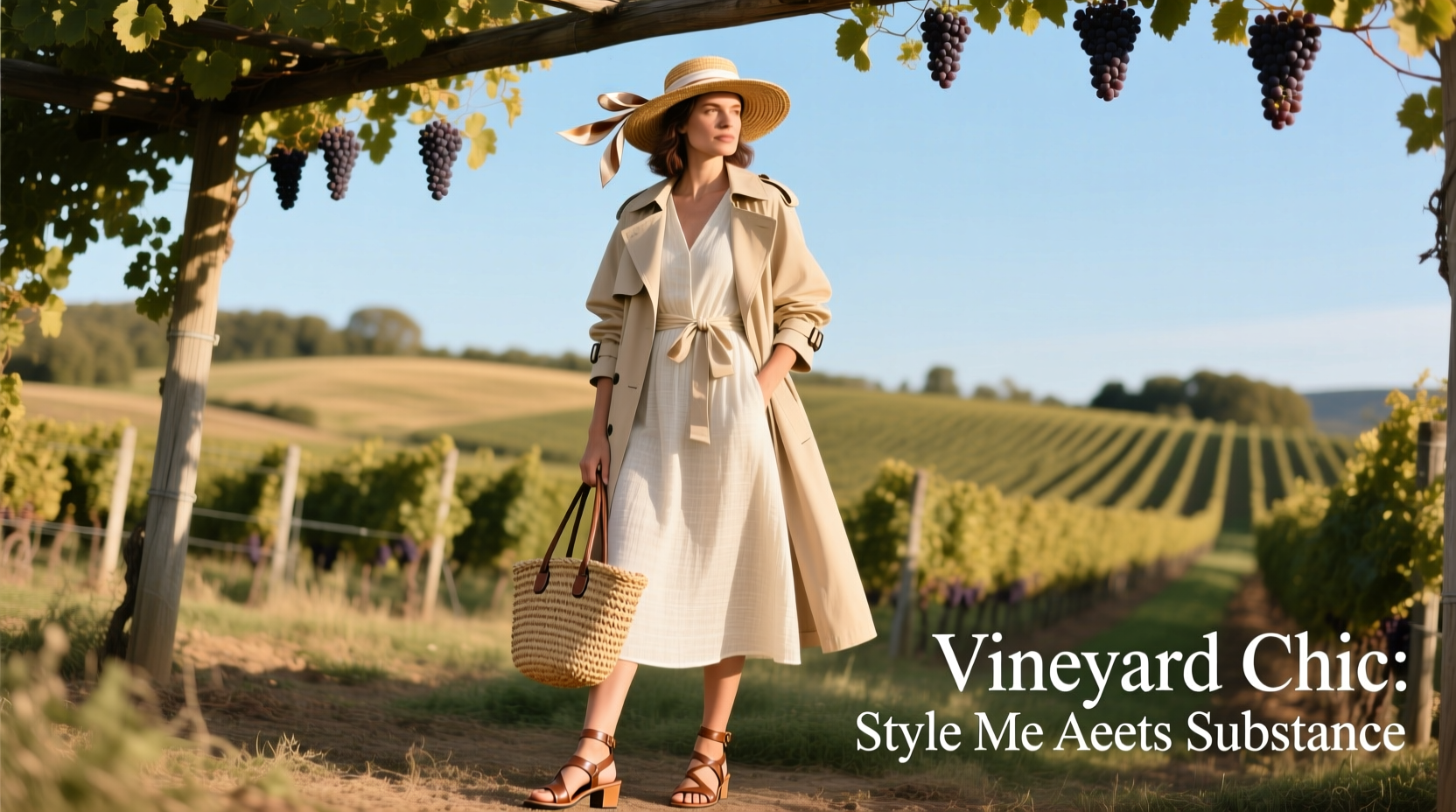
Vineyard tours are more than tastings and terroir—they’re immersive experiences: gravel paths winding between rows of vines, sun-dappled barrel rooms with oak-scented air, spontaneous photo stops at panoramic hilltops, and relaxed conversations over poured pours. Yet many guests arrive underdressed for the reality: uneven ground, shifting temperatures, midday glare, and the quiet expectation of looking *intentional*, not just comfortable. Fashion shouldn’t be sacrificed for function—or vice versa. The most memorable vineyard visits belong to those who moved confidently across crushed limestone, sat comfortably on rustic benches, and still looked like they belonged in a magazine spread shot at golden hour.
This isn’t about rigid “rules.” It’s about thoughtful layering, material intelligence, and understanding how clothing behaves *in context*. A vineyard isn’t a boardroom or a beach—it’s its own microclimate and movement ecosystem. Below is a field-tested framework, refined across dozens of visits to Napa, Sonoma, Willamette Valley, Bordeaux, and the Adelaide Hills. Every recommendation reflects real-world wear, not theoretical style.
Why “Just Comfortable” Isn’t Enough—and Why “Just Stylish” Backfires
Wearing sneakers and sweatpants guarantees foot comfort—but risks feeling out of place during seated tastings where sommeliers pour $120 Pinots. Conversely, stiletto heels or stiff linen blazers look polished in photos but become liabilities when navigating sloped vine rows or standing for 90 minutes in a cool, humid cellar. The disconnect arises because most advice treats vineyards as either “casual outdoor activity” or “semi-formal event”—neither is accurate.
Vineyard tours operate in a deliberate aesthetic middle ground: elevated casual. Think *intentional ease*—clothing that moves with you, breathes through temperature swings, and carries visual weight without stiffness. This duality matters because attire influences experience: confidence in your clothes translates to openness in conversation; physical ease allows deeper attention to aroma notes and soil stories; and respectful presentation honors the craft behind every bottle.
Tip: Pack one “transition piece”—a lightweight, structured jacket or scarf—that instantly elevates your look for tasting room photos or dinner afterward, without requiring a full outfit change.The 5-Pillar Framework for Vineyard-Ready Style
Forget seasonal trends. Focus instead on five non-negotiable functional pillars—each grounded in vineyard-specific conditions. Master these, and your outfit will serve you, not distract from you.
- Ground Engagement: Soles must grip gravel, resist slipping on damp stone, and cushion prolonged standing. Flat, flexible soles with subtle tread—not sneakers, not sandals, not heels—deliver optimal balance.
- Thermal Layering: Daytime warmth gives way to cellar chill (often 55–60°F/13–16°C) and evening breezes. Fabrics should wick light sweat, insulate without bulk, and layer seamlessly.
- Light Responsiveness: UV exposure intensifies near reflective surfaces (white gravel, stainless steel tanks). UPF-rated fabrics or strategic coverage (wide-brim hats, long sleeves rolled neatly) prevent sun fatigue and protect skin tone for photos.
- Texture Intelligence: Avoid delicate silks, raw-edge denim, or open-weave knits that snag on vine trellises or collect dust. Prioritize smooth, tightly woven natural fibers or performance blends that resist abrasion and hold shape.
- Proportion Harmony: Vineyard settings emphasize verticality—rows of vines, tall barrels, rolling hills. Outfits with clean lines, balanced hemlines (knee-length skirts/dresses, ankle-grazing pants), and modest volume avoid visual overwhelm while maintaining elegance.
Outfit Blueprints: Three Real-World Scenarios
Context dictates form. Below are three tested ensembles—each built around the 5-pillar framework—with precise reasoning behind every choice.
| Scenario | Core Outfit | Why It Works |
|---|---|---|
| Morning Walk & Barrel Room Tour (Cool start, warming day, cellar chill) |
• High-waisted, wide-leg linen-cotton blend trousers • Lightweight merino wool turtleneck (rolled sleeves) • Structured, cropped corduroy blazer • Leather ankle boots with 1.5\" stacked heel & rubber sole • Wide-brim felt hat (packable) |
Trousers breathe yet drape elegantly; merino regulates temperature without shine; corduroy adds tactile richness without bulk; boots provide ankle support on slopes and cellar traction; hat shields eyes without obstructing views. All pieces transition seamlessly to lunch. |
| Afternoon Tasting & Picnic (Sun-drenched, relaxed pace, grassy or gravel seating) |
• Midi wrap dress in Tencel™ twill (sleeveless or cap-sleeve) • Lightweight cashmere-blend cardigan (draped or tied) • Leather espadrille wedges (2\" platform, jute-wrapped heel) • Oversized silk scarf (worn as neckerchief or headband) |
Tencel™ wicks heat and resists wrinkles; wrap silhouette accommodates sitting and adjusts to temperature; espadrilles offer height + stability on uneven ground; scarf adds polish and doubles as sun protection. Zero static cling, zero wind-flapping hems. |
| Evening Sunset Tour & Dinner (Dramatic light shifts, cooler temps, refined ambiance) |
• Slim-fit, high-rise trousers in stretch wool crepe • Silk-blend shell top with subtle sheen • Unstructured wool-cashmere blazer (unlined) • Low-block-heeled leather loafers (rubber-soled) • Minimal gold jewelry + leather crossbody bag |
Wool crepe holds structure without constriction; silk shell catches golden-hour light without glare; unlined blazer layers without overheating; loafers deliver sophistication with walkability. Jewelry adds intention without jangling during cellar walks. |
A Mini Case Study: Sarah’s Napa Valley Reset
Sarah, a graphic designer from Chicago, arrived for her first Napa tour wearing white linen culottes, strappy sandals, and a delicate silk camisole—“so fresh and summery,” she said. By noon, the culottes were dusty and clinging from light perspiration; the sandals’ thin straps rubbed blisters on her heels; and the camisole offered zero warmth descending into the 58°F cave at Domaine Carneros. She spent the tasting self-conscious, adjusting her outfit instead of savoring the wine’s mineral finish.
On her second visit—just six months later—she wore charcoal high-waisted trousers, a deep emerald merino turtleneck, a textured oatmeal knit vest, and low-heeled Chelsea boots. She carried a compact, wide-brim hat in her tote. “I didn’t think about my clothes once,” she shared. “I noticed how the fog rolled in over the vines, how the barrel room smelled like toasted coconut and vanilla, how the sommelier described the ‘crushed rock’ note—I was present. And people kept complimenting my ‘effortless California elegance.’” Her shift wasn’t about spending more—it was about aligning fabric, fit, and function to the vineyard’s rhythm.
What to Absolutely Avoid (And Why)
Some choices seem logical until they undermine the experience. These aren’t fashion judgments—they’re physics and psychology in action.
- Open-toed sandals or flip-flops: Gravel embeds in toes; wet stone floors are slippery; vineyard dogs (common hosts) may nudge ankles unexpectedly. Safety and hygiene override trend appeal.
- Stiff, unbroken-in shoes: Even “comfort” brands require wear-in. New leather oxfords or unworn loafers cause friction burns on gravel paths. Break them in on pavement first.
- Overly light colors (bright white, pastel pink): Vineyard environments—dusty roads, oak shavings, soil residue—show stains instantly. Medium tones (olive, rust, charcoal, cream) forgive minor contact while retaining sophistication.
- Heavy denim or thick cotton: Traps heat during sunny walks and feels clammy in cool cellars. Opt for denim blends with Tencel™ or linen-cotton for breathability and drape.
- Long, flowing scarves or loose belts: Can catch on trellis wires, barrel hoops, or tasting room stools. If worn, secure ends or choose compact, knot-friendly styles.
“Vineyard dressing is the ultimate exercise in contextual intelligence. It’s not about what looks good on a hanger—it’s about how fabric behaves on a 12% slope at 3 p.m., how a collar sits after two hours of standing, how light reflects off your sleeve during a pour. That’s where true style lives.” — Elena Rossi, Sommelier & Founder of Terroir Style Workshops (Napa & Piedmont)
Your Vineyard Dressing Checklist
Before you zip your suitcase, verify these essentials:
- ✅ Footwear: Closed-toe, low-heel (under 2\"), rubber or grippy sole, broken-in
- ✅ Layering Core: One breathable base (merino, Tencel™, fine cotton), one insulating mid-layer (knit vest, lightweight blazer), one packable outer (tote-friendly hat or compact jacket)
- ✅ Bottoms: Hemline appropriate for sitting (no ultra-short shorts or mini-skirts), fabric resistant to dust and static
- ✅ Sun Strategy: Either UPF-rated hat, UV-blocking sunglasses, or long sleeves—never rely solely on sunscreen for face/neck coverage during extended exposure
- ✅ Bag: Hands-free crossbody or compact tote (no bulky backpacks that swing during cellar stairs); interior pockets for tasting notes, phone, lip balm
- ✅ Emergency Kit: Blister bandages (not tape), travel-size hand sanitizer, hydrating mist (alcohol-free), stain-removing pen for accidental spills
FAQ: Vineyard Dressing Clarified
Can I wear jeans?
Yes—if they’re tailored, mid-to-high rise, and made with stretch (at least 2% elastane). Avoid stiff, rigid denim or overly distressed styles. Dark washes hide dust better than light ones. Pair with elevated footwear (boots or loafers) to maintain the vineyard’s refined casual tone.
Are dresses practical for vineyard tours?
Absolutely—when chosen intentionally. Prioritize midi or knee-length silhouettes with built-in shorts or lined skirts for sitting. Avoid slippery satin or bias-cut fabrics that cling or ride up on slopes. Tuckable tops or wrap styles offer adjustability as temperatures shift.
What’s the best fabric for hot, sunny vineyards?
Merino wool (yes, really)—its natural thermoregulation keeps you cooler than cotton in heat and warmer in sudden cellar drops. Next-best: Tencel™ (lyocell) and high-quality linen-cotton blends. All wick moisture, resist odor, and drape beautifully without transparency.
Conclusion: Dress Like You Belong—Because You Do
Dressing for a vineyard tour isn’t about performing luxury or chasing trends. It’s about honoring the land, the labor, and the legacy in every bottle by showing up fully present—in mind, body, and appearance. When your clothes support your curiosity instead of competing with it, you notice more: the way light fractures through a Cabernet leaf, the whisper of wind through Sauvignon Blanc canes, the quiet pride in a winemaker’s voice as they describe their oldest block. That presence is the real luxury.
Start small. Swap one impractical item this season—a pair of sandals for supportive espadrilles, a stiff blouse for a merino shell, a flimsy tote for a structured crossbody. Build your vineyard wardrobe deliberately, piece by piece, guided by function first and beauty as the inevitable result. Your next tour won’t just be remembered for the wines you tasted—but for how effortlessly you moved through the landscape, how confidently you engaged with the story behind each glass, and how authentically you expressed yourself within that timeless setting.
💬 Share your go-to vineyard outfit or a lesson learned the hard way. Your real-world tip could help someone else step onto their first vineyard path with confidence—and comfort.