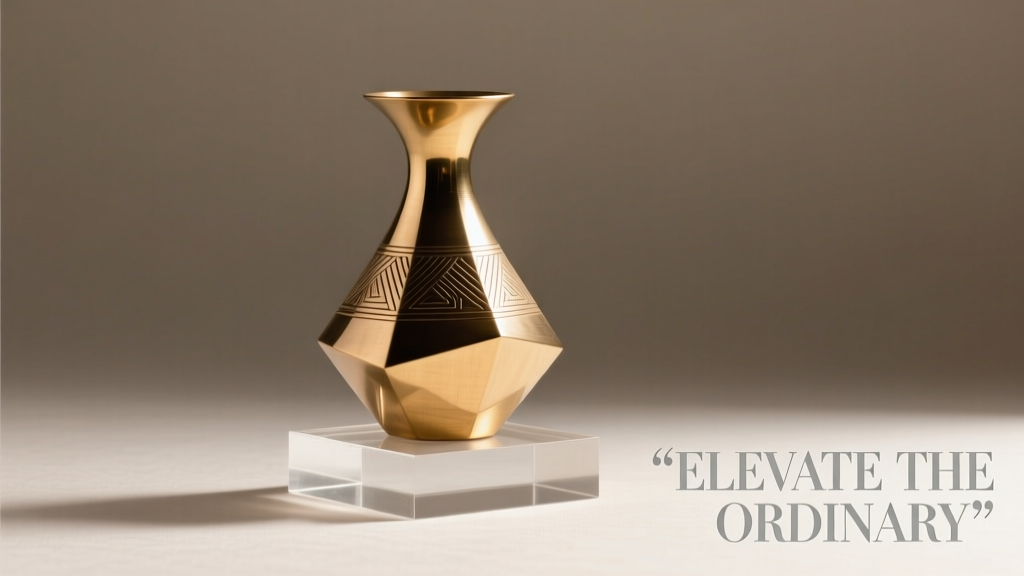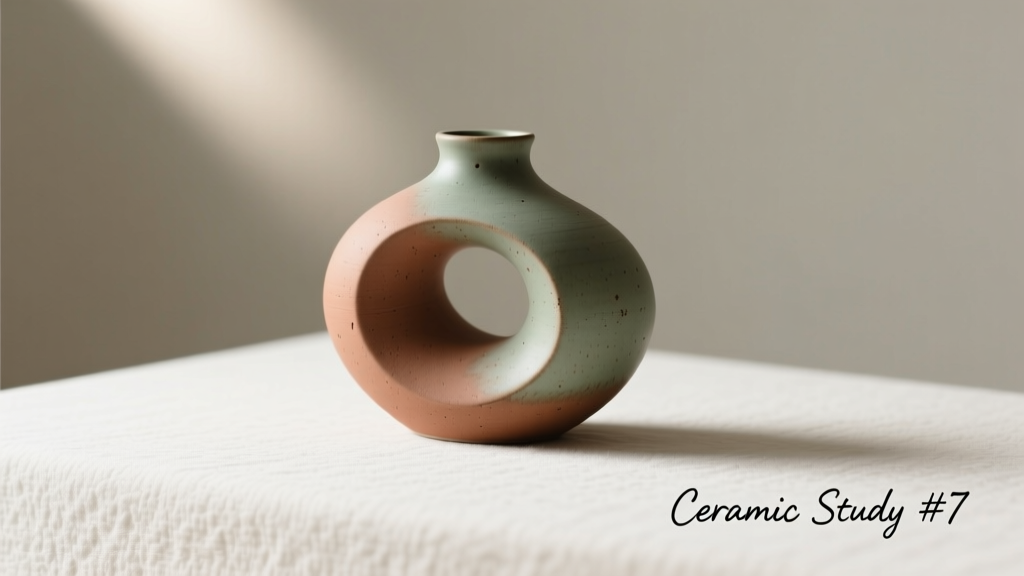
Beauty in accessories isn’t merely about sparkle or trendiness—it’s the quiet confidence of a well-chosen piece that feels like an extension of who you are. A beautiful accessory doesn’t shout; it resonates. It balances craftsmanship with intention, aesthetics with ethics, and personal meaning with everyday wearability. Yet most shoppers navigate this space on instinct alone—drawn by influencer posts, seasonal discounts, or fleeting novelty—only to find their “must-have” piece gathering dust within weeks. This guide distills over a decade of industry observation, stylist consultations, and material science insights into a grounded, actionable framework. It’s not about buying *more* beautiful things. It’s about buying the *right* beautiful thing—once.
1. Define Your Aesthetic Language—Before You Scroll
“Beautiful” is deeply subjective—and dangerously easy to outsource to algorithms. Social media feeds curate beauty for engagement, not authenticity. Start instead with your own visual vocabulary. Ask yourself: What three words consistently describe how you want to feel when wearing an accessory? (e.g., “grounded,” “refined,” “playful.”) Then, audit your existing wardrobe—not for items you own, but for pieces you *reach for daily*. Note recurring elements: metal tones (warm gold vs. cool silver), scale (delicate chains vs. bold cuffs), textures (matte ceramic, brushed brass, hand-stitched leather), and motifs (geometric, organic, minimalist). This isn’t about rigid rules—it’s about identifying your aesthetic signature so you can recognize resonance, not just repetition.
Tip: Take a photo of your five most-worn accessories. Print them, cut them out, and arrange them on paper. Look for shared lines, proportions, or finishes—the patterns reveal your true language.2. Material Integrity: Where Beauty Meets Longevity
A beautiful accessory must endure beyond its first impression. That requires understanding how materials age—not just how they look on launch day. Leather, for example, isn’t inherently superior; vegetable-tanned hides develop rich patina, while chrome-tanned leathers resist water but may crack if improperly stored. Sterling silver oxidizes intentionally, offering depth; plated metals fade unpredictably under friction or humidity. Even “eco-friendly” bamboo or recycled polyester demands scrutiny: Is the bamboo fiber processed with toxic solvents? Is the recycled polyester certified to GRS (Global Recycled Standard) standards?
Material choice also dictates care responsibility. A raw brass cuff will darken with skin contact—a feature, not a flaw—if you appreciate evolving texture. But if you prefer consistent shine, polished stainless steel or rhodium-plated silver offers stability with minimal upkeep. Never assume “natural” equals low-maintenance; untreated wood beads require periodic oiling, while coated enamel retains color but chips under impact.
“Beauty without integrity is performance art. The most elegant accessory is one that honors its material truth—whether that’s the softening of leather, the tarnish of silver, or the subtle warping of woven raffia.” — Lena Torres, Material Ethnographer & Founder of Craft Archive
3. The Fit-and-Function Audit: Beyond Visual Appeal
An accessory that looks stunning in a flat lay may fail catastrophically in motion. A necklace that photographs beautifully at 24 inches might slide down and tangle when you lean forward. Earrings labeled “lightweight” could still pull on thin lobes after two hours. A bracelet with a delicate clasp may open unexpectedly during typing. Functionality isn’t secondary to beauty—it’s foundational to it.
Conduct a real-world test before purchasing: If buying online, check for precise measurements—not just “medium” or “standard.” Compare against a trusted piece in your collection. For earrings, verify weight in grams (under 5g per earring is ideal for all-day comfort). For bags, assess strap drop: 20–22 cm allows comfortable crossbody wear; 45+ cm works for shoulder carry. For watches, confirm case diameter relative to wrist size—36–38 mm suits most wrists under 16 cm circumference.
| Accessory Type | Critical Fit Metric | Real-World Consequence of Mismatch |
|---|---|---|
| Necklace | Chain length + pendant weight distribution | Pendant flips upward, chain kinks, or choker strangles during movement |
| Earrings | Post thickness (0.8mm ideal) + back security (screw-back > friction) | Lobe stretching, loss during exercise, or irritation from cheap alloys |
| Watch | Case diameter + lug-to-lug distance | Band gaps at lugs, crown digging into wrist, or face appearing oversized/undersized |
| Belt | Hole spacing (2.5 cm standard) + buckle weight | Inability to secure at natural waist, buckle dragging on belt loops |
4. Ethical Sourcing: The Unseen Dimension of Beauty
True beauty carries weight—moral weight. A hand-beaded clutch may dazzle, but if its sequins were applied in unsafe conditions with unregulated dyes, its allure dims under scrutiny. Transparency matters: Does the brand disclose factory names (not just countries)? Are artisans paid living wages—or piece rates that force 14-hour days? Are materials traceable? Gold mined without cyanide leaching, cotton grown without synthetic pesticides, pearls harvested using non-invasive techniques—these aren’t marketing buzzwords. They’re evidence of respect—for people, ecosystems, and future generations.
Look beyond certifications (which can be costly for small makers) and examine storytelling. Do artisans appear in photos—named, smiling, working in daylight? Is the process described with specificity (“hand-stitched by Maria in Oaxaca using 100-year-old pedal loom”) or vagueness (“crafted with love”)? One red flag: brands that highlight “sustainable packaging” while remaining silent on labor or material origins. Packaging is the easiest layer to greenwash.
5. The 7-Step Selection Framework
Apply this sequence before every accessory purchase—even impulse buys. It takes under 90 seconds and prevents 80% of post-purchase regret.
- Pause at desire: Wait 24 hours after first seeing the piece. Does the urge persist—or was it triggered by scarcity (“Only 2 left!”) or context (“It looked perfect with that influencer’s outfit”)?
- Verify alignment: Does it match at least two of your three aesthetic words (from Section 1)?
- Check material honesty: Search “[Brand] + material sourcing” or “[Product name] + factory audit.” Absence of results is data.
- Measure twice: Convert listed dimensions to your body metrics (e.g., “18-inch chain” = sits at collarbone on 5’4” frame).
- Assess daily friction points: Will it catch on scarves? Trigger metal detectors? Require daily polishing?
- Calculate cost-per-wear: Divide price by number of times you’ll realistically wear it in 12 months. If ≥ $5/wear for non-essential pieces, reconsider.
- Say it aloud: “I choose this because ______.” Fill the blank with a reason rooted in self-knowledge—not trends, guilt, or social pressure.
Mini Case Study: When “Perfect” Wasn’t Enough
Maya, a graphic designer, spent months searching for a wedding-day hairpin. She found one: a vintage-inspired gold fern with freshwater pearls, ethically sourced, $298. It matched her “timeless,” “organic,” and “textured” aesthetic words. But during her final fitting, she noticed the pin’s base was 4.2 cm wide—too broad for her fine, layered bob. It slid sideways within minutes. She’d overlooked fit-and-function in favor of visual harmony. Instead of settling, she commissioned a local metalsmith to recreate the fern motif in a narrower, custom-fit setting ($210, 3-week wait). On her wedding day, the pin stayed perfectly centered—and Maya wore it weekly afterward. Her “beautiful accessory” wasn’t the first option. It was the one that honored her physical reality as rigorously as her aesthetic vision.
FAQ
How do I know if a “limited edition” accessory is truly rare—or just marketing?
Legitimate rarity includes verifiable production caps (e.g., “Edition of 50, each numbered and signed”), documentation of material scarcity (e.g., “Uses last batch of reclaimed 1920s brass”), or artisan time constraints (e.g., “One piece completed per week”). Vague claims like “while supplies last” or “exclusive drop” signal inventory management—not scarcity.
Is handmade always better than machine-made?
No. Handmade excels in uniqueness and expressive detail—but machine-made often delivers superior consistency in precision components (e.g., watch movements, clasp mechanisms, or laser-cut leather edges). The key is intent: Is the maker choosing handwork for expressive value—or masking poor tooling? Examine close-up product photos: Are seams even? Are edges burnished smoothly? Irregularity should feel intentional, not accidental.
Can I build a beautiful accessory collection on a budget?
Absolutely—by prioritizing investment pieces with high versatility (e.g., a single 18k gold hoop that works with jeans or silk) and rotating affordable accents (seasonal enamel pins, reversible silk scarves). Avoid “cheap luxury” traps: $80 “gold-plated” necklaces with 0.1-micron plating will fade in weeks. Instead, seek base metals with lifetime polish guarantees (e.g., brass with lacquer sealant) or secondhand fine jewelry verified by a gemologist.
Conclusion
Choosing the best beautiful accessory isn’t about perfection—it’s about presence. It’s the quiet satisfaction of reaching for a piece that fits your hand, flatters your posture, reflects your values, and deepens in meaning over time. It’s rejecting the exhausting chase for novelty in favor of cultivating resonance. Every accessory you own tells a story about what you honor: your time, your body, your ethics, your taste. So the next time you consider a new piece, don’t ask, “Do I love it?” Ask, “Does it love me back—with integrity, intelligence, and enduring grace?”
💬 Your turn. Share one accessory you’ve owned for over five years—and what makes it irreplaceable. Your story might be the compass someone else needs.