Selecting the right wearable device isn’t just about features or brand names—it’s about alignment with your lifestyle. Whether you're a busy professional juggling meetings, a fitness enthusiast tracking every rep, or someone simply trying to stay active, your daily routine plays a pivotal role in determining whether a smartwatch or a fitness tracker is the better fit. These devices may look similar at first glance, but their functionality, design, and long-term utility diverge significantly. Understanding how each aligns with your habits, priorities, and environment ensures you invest in technology that enhances rather than complicates your life.
Daily Habits That Influence Your Wearable Choice
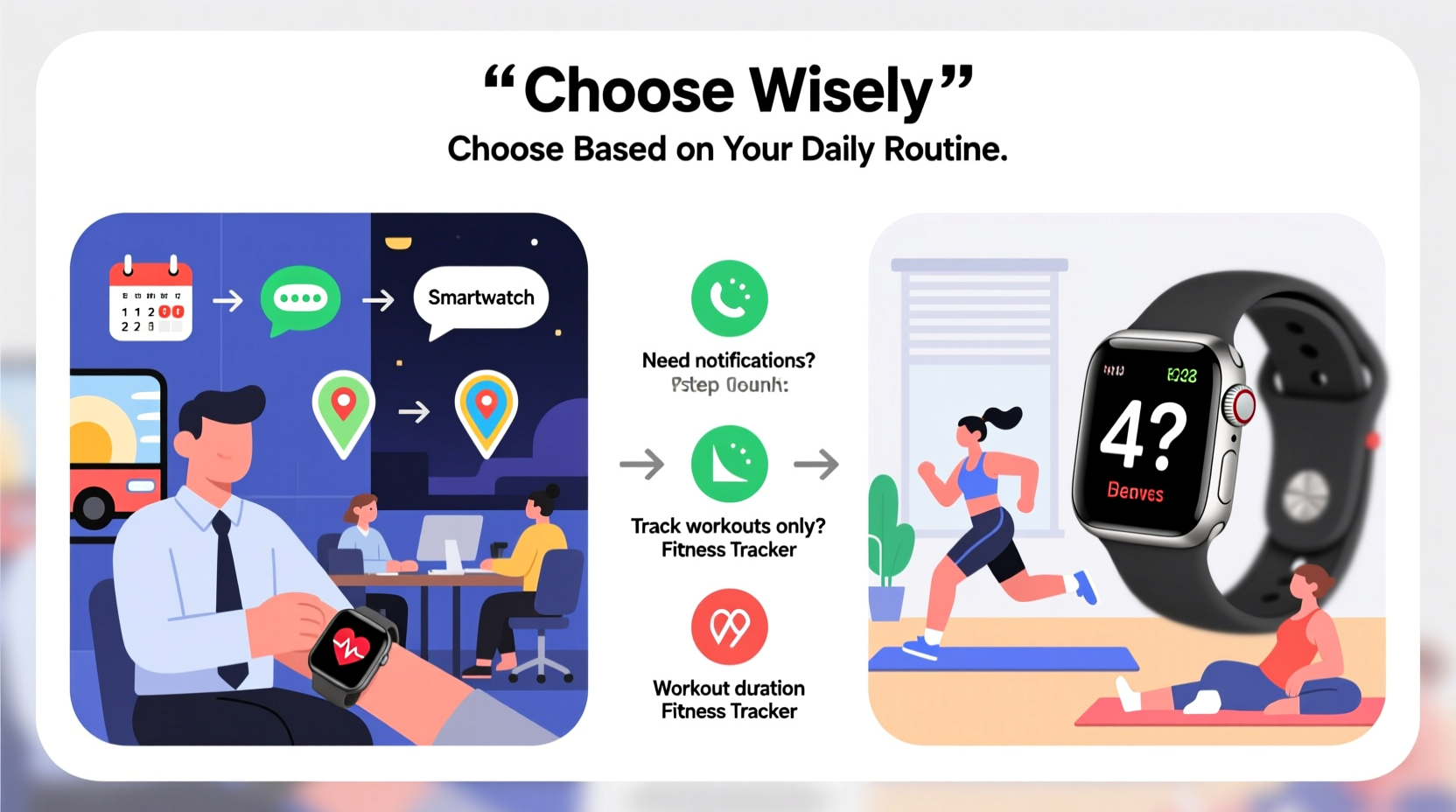
Your morning begins before the alarm even sounds—do you check sleep stats? Are you already planning your workout while sipping coffee? Or are you more focused on calendar alerts and messages from colleagues? These small routines reveal whether you lean toward health-centric monitoring or digital connectivity.
Fitness trackers excel in simplicity and endurance. They focus on core metrics: steps, heart rate, sleep quality, and calorie burn. If your day revolves around physical activity—running, gym sessions, yoga, or walking—the tracker’s lightweight design and extended battery life (often 7–10 days) make it unobtrusive and reliable. It stays on your wrist through showers, swims, and sweaty workouts without demanding constant charging.
Smartwatches, by contrast, function as mini-computers on your wrist. They deliver notifications, allow app interactions, support voice assistants, and often include GPS and music streaming. For someone whose workday involves back-to-back calls, email checks, and calendar management, a smartwatch reduces phone dependency. However, this convenience comes at the cost of battery life—typically 1–3 days—and increased complexity.
Tip: If you forget to charge devices regularly, a fitness tracker with longer battery life will serve you better than a smartwatch that dies mid-day.Feature Comparison: Smartwatch vs. Fitness Tracker
The real difference lies not in what these devices *can* do, but in what they *prioritize*. A side-by-side comparison clarifies where each shines.
| Feature | Smartwatch | Fitness Tracker |
|---|---|---|
| Battery Life | 1–3 days | 5–14 days |
| Notifications | Full message previews, replies, app alerts | Limited alerts (vibrations, basic caller ID) |
| Fitness Tracking | Comprehensive (GPS, HR, SpO2, multiple modes) | Focused on core metrics (steps, sleep, HR) |
| Design & Size | Larger screen, bulkier | Lightweight, discreet |
| Price Range | $200–$800+ | $50–$200 |
| Water Resistance | Often swim-ready (5ATM+) | Most models suitable for swimming |
| App Ecosystem | Supports third-party apps, payments, music | Minimal or no app support |
This table reveals a fundamental trade-off: capability versus efficiency. The more features a device offers, the greater the demand on attention, maintenance, and budget. For many users, especially those new to wearables, a fitness tracker provides sufficient data without overwhelming interface complexity.
Matching Device Type to Real-Life Routines
Consider three common lifestyles and how each might benefit from one device over the other.
Routine 1: The Office Professional
Alex starts work at 8:30 AM, attends virtual meetings, manages emails, and commutes via public transit. During the day, Alex values timely notifications but rarely exercises intensely. Evenings involve light stretching or weekend hikes. For Alex, a smartwatch like the Apple Watch or Samsung Galaxy Watch integrates seamlessly with calendar sync, call handling, and quick replies. The ability to control music during the commute or use contactless payments adds convenience. Battery anxiety is manageable because Alex charges devices nightly.
Routine 2: The Active Lifestyle Enthusiast
Jamal wakes up at 5:30 AM to run five miles, tracks his resting heart rate, monitors sleep cycles, and logs nutrition. He doesn’t need text replies on his wrist but wants accurate step counts, VO₂ max estimates, and recovery insights. A fitness tracker like the Fitbit Charge or Garmin Vivosmart delivers precise biometrics without distraction. Its slim profile is comfortable during sleep tracking, and the week-long battery means Jamal never misses a night’s data due to charging lapses.
Routine 3: The Minimalist Tech User
Sophie prefers analog routines—journaling, walking, reading—but wants gentle nudges to stand more and improve sleep. She avoids constant notifications and dislikes wearing bulky gadgets. A basic fitness tracker with silent alarms, step goals, and sleep staging gives her actionable feedback without pulling her into digital overload. The lack of apps and notifications supports her intentional disconnection from screens.
“Wearables should enhance self-awareness, not create dependency. Choose based on what behaviors you want to support—not what the marketing promises.” — Dr. Lena Torres, Behavioral Health Researcher, Stanford University
Step-by-Step Guide to Making Your Decision
Follow this practical timeline to assess which device suits your life:
- Week 1: Observe Your Current Routine
Track how often you check your phone, exercise, sleep, and interact with digital tools. Note pain points: Do you miss calls? Forget workouts? Sleep poorly? - Week 2: Define Your Primary Goal
Is it improving fitness consistency? Reducing screen time? Staying connected efficiently? Rank your top three objectives. - Week 3: Test Drive (If Possible)
Borrow or visit a store to try both types. Wear a fitness tracker for two days and a smartwatch for two days. Pay attention to comfort, distractions, and usefulness. - Week 4: Evaluate Trade-offs
Ask: Am I willing to charge my device every night? Do I need GPS for runs? Will notifications help or interrupt me? Use your observations to eliminate one category. - Final Step: Set a Budget and Purchase
Once you’ve identified your priority—fitness precision or digital integration—choose a model within your price range. Avoid overbuying features you won’t use.
When a Hybrid Option Makes Sense
The line between smartwatches and fitness trackers is blurring. Devices like the Garmin Venu or Fitbit Sense offer robust health tracking alongside smart features such as notifications, voice assistants, and apps. These hybrids suit users who want balance—more than a tracker, less than a full smartwatch.
If you’re unsure, consider starting with a hybrid. They typically last 4–7 days on a charge, provide detailed sleep and stress analysis, and support essential connectivity. However, they still require more frequent charging than basic trackers and may feel heavier. For someone transitioning from casual activity tracking to structured training or wellness monitoring, a hybrid serves as a bridge.
Checklist: Questions to Ask Before Buying
- Do I need to reply to messages or take calls from my wrist?
- How important is GPS for my workouts (e.g., running, cycling)?
- Am I likely to charge my device daily, or do I prefer weekly charging?
- Do I want reminders for movement, hydration, or breathing exercises?
- Will I use third-party apps (music, weather, payments)?
- Is water resistance needed for swimming or intense sweating?
- Does the design fit under a shirt cuff or feel comfortable during sleep?
- What is my maximum budget?
Answering “yes” to the first five questions leans toward a smartwatch. If most answers are “no,” a fitness tracker is likely sufficient.
Common Misconceptions Debunked
Many buyers assume smartwatches are inherently superior because they do more. But more features don’t mean better results. A study published in the Journal of Medical Internet Research found that users of simpler fitness trackers maintained higher long-term engagement due to lower cognitive load and fewer distractions.
Another myth is that only smartwatches provide accurate heart rate monitoring. In reality, leading fitness trackers from brands like Fitbit and Garmin use the same optical sensors and algorithms as premium watches. Accuracy depends more on fit, skin tone, and motion type than device category.
Finally, some believe fitness trackers lack durability. Modern models are built for 24/7 wear, featuring scratch-resistant screens, waterproof builds, and aerospace-grade materials. They’re designed to withstand years of daily use.
FAQ
Can a fitness tracker notify me of incoming calls and texts?
Yes, most modern fitness trackers vibrate and display basic caller ID or message previews. However, you cannot reply or interact beyond viewing. If responding quickly is crucial, a smartwatch is necessary.
Do I need a smartphone to use either device?
Yes, both require initial setup and periodic syncing via a companion app. Some advanced smartwatches support LTE for standalone use, but these are expensive and consume battery faster.
Which device helps more with weight loss?
Fitness trackers often have an edge here. Their emphasis on continuous activity monitoring, calorie burn estimates, and goal-based encouragement aligns well with sustainable weight management. Smartwatches can do this too, but their broader functions may divert focus from health goals.
Conclusion: Align Technology With Intention
Choosing between a smartwatch and a fitness tracker isn’t about technological superiority—it’s about personal relevance. Your daily routine holds the answer. If your life thrives on movement, rest, and mindful habits, a fitness tracker offers clarity without clutter. If your rhythm depends on connectivity, scheduling, and instant access, a smartwatch becomes an extension of your workflow.
The best wearable disappears into your day while quietly empowering better choices. It doesn’t buzz unnecessarily, die unexpectedly, or demand constant attention. Instead, it reflects your values: health, productivity, simplicity, or balance. Take the time to assess your actual needs, not imagined ones. Try options if possible. And remember, no device replaces awareness—but the right one can deepen it.
🚀 Ready to make your choice? Revisit your routine, use the checklist, and pick the device that fits your life—not someone else’s. Share your decision in the comments and help others find their perfect match.