Water resistance is a critical feature for many modern watches, especially for those who swim, dive, or work in wet environments. However, over time, gaskets degrade, seals loosen, and exposure to temperature changes can compromise a watch’s ability to keep moisture out. While professional pressure testing is the gold standard, most people don’t have access to a jeweler’s toolkit. The good news? You can perform preliminary assessments at home—safely and effectively—if you know what to look for and how to avoid common pitfalls.
This guide walks through reliable, non-invasive techniques to evaluate your watch’s water resistance, helping you spot early warning signs before irreversible damage occurs.
Understanding Water Resistance Ratings
Before testing, it’s essential to understand what water resistance ratings actually mean. These are not depth limits but rather laboratory-tested performance benchmarks under controlled conditions.
| Rating (ATM) | Equivalent Depth | Real-World Use |
|---|---|---|
| 3 ATM (30m) | 30 meters | Splash resistant; not suitable for swimming |
| 5 ATM (50m) | 50 meters | Safe for showering, swimming in shallow water |
| 10 ATM (100m) | 100 meters | Swimming, snorkeling, pool diving |
| 20 ATM+ (200m+) | 200+ meters | Diving, high-pressure aquatic activities |
Keep in mind: these ratings assume static pressure in ideal conditions. Real-world factors like water temperature, movement, soap exposure, and aging seals reduce actual protection. A 50m-rated watch may survive a quick swim but could fail during vigorous lap swimming due to dynamic pressure.
“Water resistance isn’t permanent. Even with no visible damage, seals dry out after 1–2 years. Annual checks are crucial.” — Daniel Reyes, Master Watchmaker & Certified ISO 22810 Technician
Step-by-Step: How to Perform a Safe Home Assessment
You cannot fully replicate lab-grade pressure tests at home, but you can conduct observational and environmental checks that reveal potential weaknesses. Follow this timeline-based approach monthly or before any water activity.
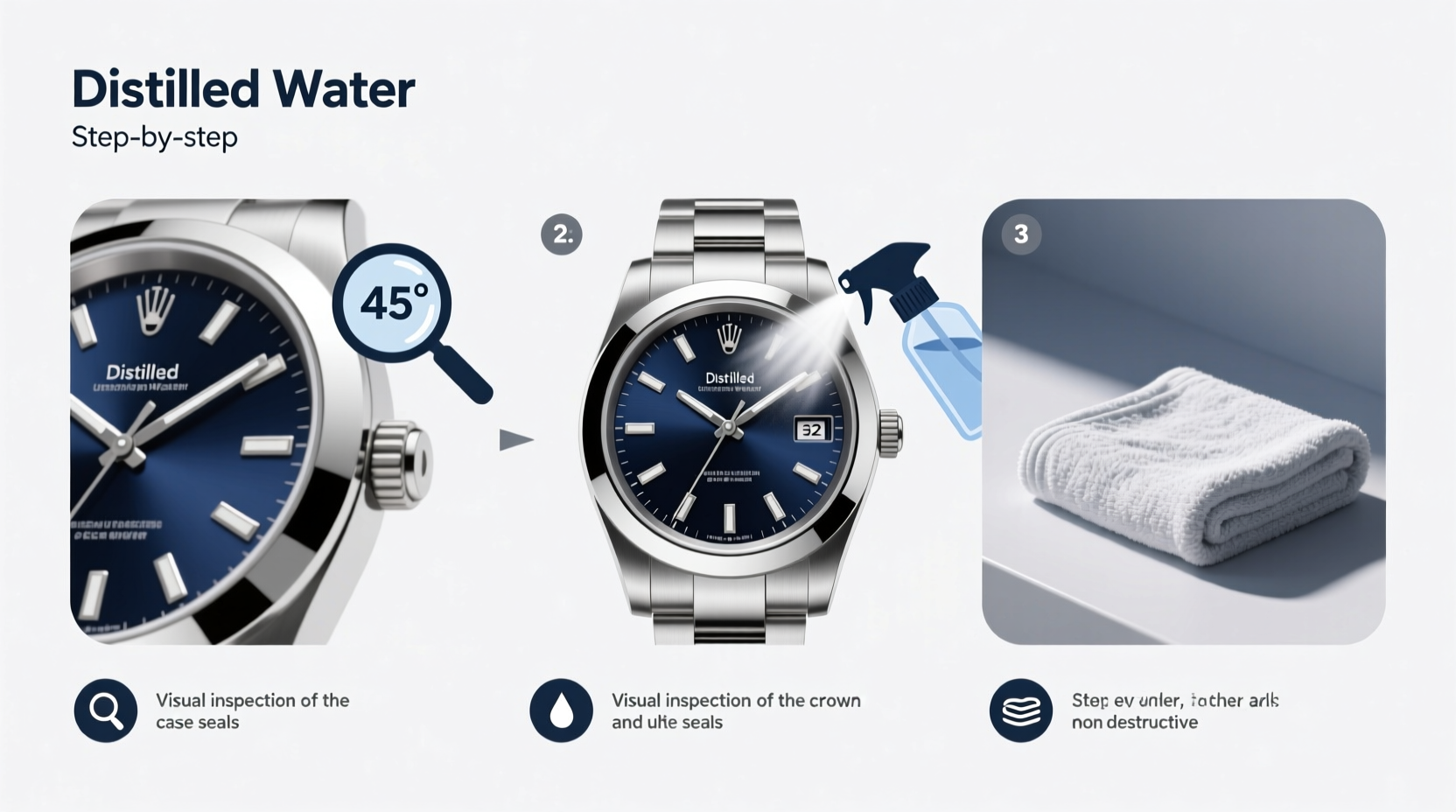
- Visual Inspection (Day 1): Examine the case, crystal, and crown under bright light. Look for cracks, clouding, or misalignment.
- Fog Test (Day 2): Place the watch near a warm, steamy surface (e.g., bathroom mirror post-shower) and observe internal condensation.
- Crown Seal Check (Day 3): Inspect if the crown screws down tightly (if applicable) and shows no wobble.
- Submersion Trial (Optional, Day 4): Only for watches rated 50m or higher—submerge in room-temperature water for 10 minutes.
- Dry Evaluation (Day 5): After drying, recheck for fogging or moisture traces inside the crystal.
If any red flags appear—fogging, sticky hands, or sluggish timekeeping—stop using the watch near water immediately.
Tip: Never expose your watch to hot water—even if it's labeled water-resistant. Heat expands metal and softens gaskets, increasing leak risk.Common Myths and Dangerous Misconceptions
Many watch owners unknowingly endanger their timepieces based on widespread myths. Here’s what not to believe:
- Myth: “If it survived the pool last summer, it’s still waterproof.”
Truth: Gasket degradation happens gradually. One successful swim doesn’t guarantee future safety. - Myth: “Screw-down crowns make my watch completely waterproof.”
Truth: Screw-down crowns improve sealing but aren’t foolproof. Threads wear out; debris can prevent full closure. - Myth: “I can rinse my watch with tap water after ocean use.”
Truth: Salt residue corrodes seals. Always rinse with fresh water *only* if the watch is rated for immersion—and even then, do so cautiously.
Avoid aggressive DIY “tests” like pressurized sprayers, deep boiling, or vacuum chambers. These can force water past compromised seals or permanently warp components.
Mini Case Study: The Weekend Swimmer’s Mistake
James, an amateur triathlete, trusted his 100m-rated sports watch during open-water training. He’d worn it for two years without issues. Last spring, after a cold-water swim, he noticed slight fogging inside the crystal—but dismissed it as temporary condensation.
Two weeks later, the second hand began stuttering. He took it to a service center, where technicians found saltwater corrosion on the movement. The root cause? A dried-out case-back gasket from prolonged sun exposure during bike segments. Despite the high rating, thermal cycling and UV exposure degraded the seal long before failure.
Had James performed a simple monthly fog check and avoided exposing the watch to extreme heat, he might have caught the issue earlier—potentially saving hundreds in repairs.
Practical Checklist: Monthly Water Resistance Self-Check
Use this checklist every 30 days or prior to planned water exposure:
- ✅ Inspect crystal for scratches or lifting edges
- ✅ Confirm crown screws down smoothly (if applicable)
- ✅ Check for dust or moisture inside the dial
- ✅ Verify no unusual resistance when operating pushers
- ✅ Perform fog test after hot shower (watch placed nearby, not inside)
- ✅ Wipe down case and band after any water contact
- ✅ Schedule professional pressure test annually (ideal)
This routine takes less than five minutes but significantly reduces the risk of sudden failure.
Frequently Asked Questions
Can I swim with a 30m water-resistant watch?
No. A 30m (3 ATM) rating only protects against splashes, rain, or handwashing. Swimming creates dynamic pressure far exceeding static lab tests, making submersion risky even in shallow water.
Is condensation always a sign of a leak?
Not always. Sudden temperature shifts (e.g., moving from air conditioning into a hot bathroom) can cause temporary fogging. If moisture disappears within hours and doesn’t recur, it may not indicate a breach. Persistent fog requires immediate inspection.
How often should I get my watch professionally tested?
Experts recommend a pressure test every 12 to 18 months, especially if exposed to water regularly. This includes checking gaskets, lubricating threads, and verifying case integrity.
Conclusion: Protect Your Timepiece Before It’s Too Late
Your watch’s water resistance is only as strong as its weakest seal—and those degrade silently over time. While home testing won’t replace professional equipment, consistent observation and cautious practices go a long way in preventing costly damage. By understanding your watch’s limits, performing regular checks, and respecting environmental stressors, you extend both functionality and lifespan.
💬 Have you ever experienced a water-damaged watch? Share your story or tips in the comments—your experience could help others avoid the same mistake.