When choosing everyday footwear, many people weigh style against function. One of the most common debates centers on sneaker height: do high tops truly offer better ankle support than their low-cut counterparts? While high tops are often associated with basketball and injury prevention, and low cuts with agility and freedom of movement, the reality is more nuanced—especially when it comes to daily wear. The answer depends on your activity level, foot structure, past injuries, and even walking habits.
This article examines both styles from a biomechanical, practical, and lifestyle perspective. Whether you're walking city streets, standing at work all day, or just want comfortable shoes for errands, understanding how each type affects your ankles can help you make smarter choices—and possibly avoid discomfort or long-term strain.
Anatomy of Ankle Support: What Does “Support” Really Mean?
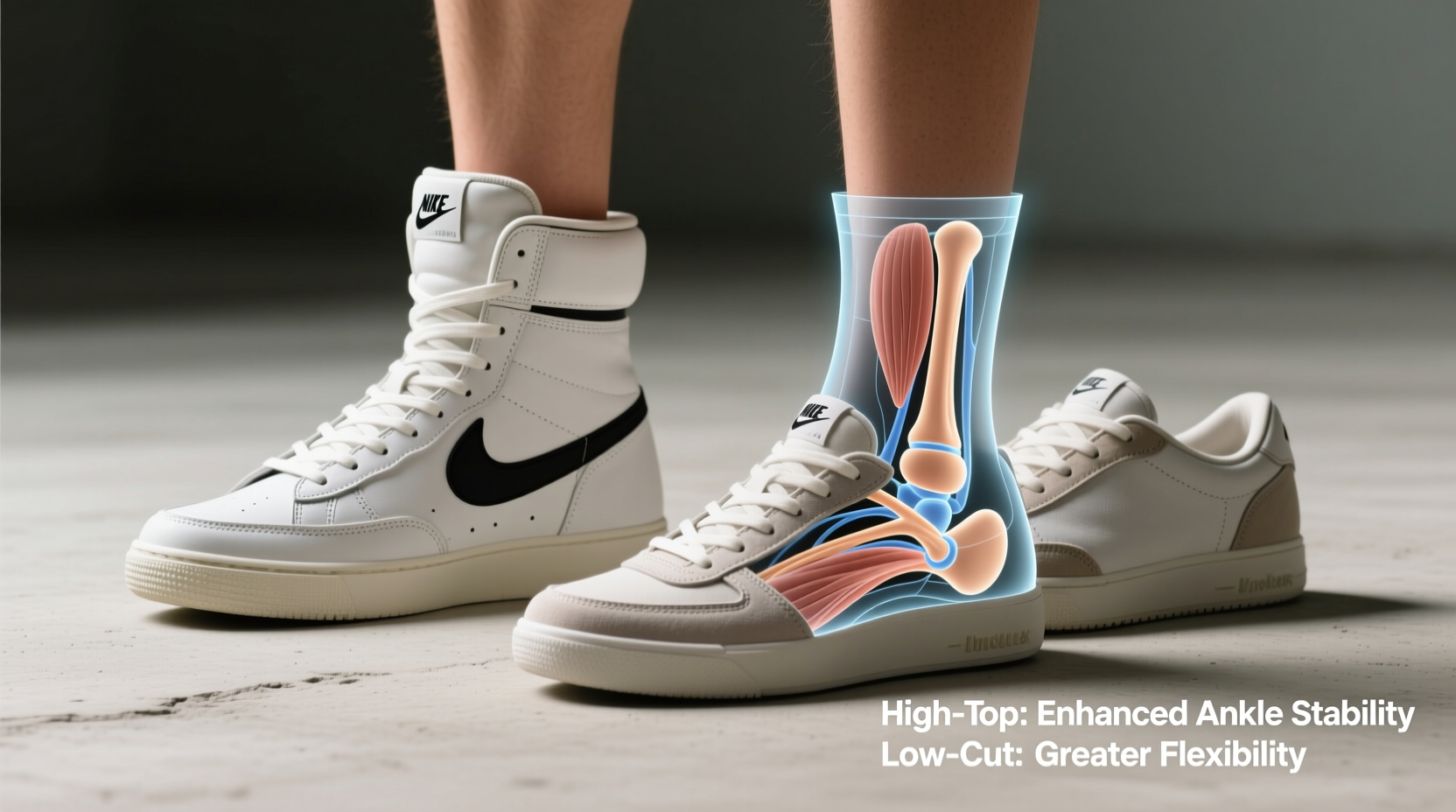
Ankle support isn’t just about restricting motion—it’s about providing stability during dynamic movements like walking, turning, or stepping off curbs. True support involves a combination of mechanical restriction, proprioception (your body’s awareness of joint position), and muscular engagement.
High top sneakers extend above the ankle joint, wrapping around the Achilles tendon and lower calf. This design physically limits side-to-side and backward rolling (inversion and dorsiflexion), which can reduce the risk of sprains in unstable environments. However, this doesn't mean they automatically strengthen the ankle—they may actually reduce natural muscle activation over time if relied upon excessively without exercise.
Low cut sneakers offer minimal physical barrier to motion, allowing full range of movement. While this increases vulnerability during sudden twists, it also encourages the stabilizing muscles—particularly the peroneals and tibialis posterior—to stay active. In healthy individuals, this can promote stronger, more resilient ankles.
“External support should complement, not replace, intrinsic strength. Relying solely on shoe height for protection can lead to dependency and weaker ligaments over time.” — Dr. Lena Torres, Sports Podiatrist, Cleveland Foot & Motion Institute
Comparative Analysis: High Top vs Low Cut in Daily Use
Daily wear differs significantly from athletic performance. Most people aren’t jumping, cutting, or pivoting aggressively while commuting or shopping. Instead, they’re walking on flat surfaces, standing, climbing stairs, or shifting weight slightly. These low-impact activities demand endurance, comfort, and moderate stability—not necessarily rigid support.
The table below outlines key differences between high top and low cut sneakers for everyday use:
| Feature | High Top Sneakers | Low Cut Sneakers |
|---|---|---|
| Ankle Restriction | Moderate to high – limits inversion and plantarflexion | Minimal – allows natural motion |
| Weight | Heavier due to extra material and structure | Lighter, more flexible |
| Comfort (Long Wear) | Can cause rubbing or pressure on Achilles; may feel restrictive | Generally higher comfort; less friction |
| Ventilation | Reduced airflow; can trap heat | Better breathability; cooler in warm weather |
| Stylistic Versatility | Limited pairing options; best with casual or streetwear | Easily paired with jeans, chinos, shorts, or even smart-casual looks |
| Injury Prevention (Daily Context) | Marginally better on uneven terrain or crowded spaces | Relies more on user’s balance and awareness |
For most urban dwellers, low cut sneakers win in terms of comfort, weight, and adaptability. But that doesn’t mean high tops have no place in daily life—they shine when there's a history of instability, chronic pain, or specific functional needs.
Tip: If you're switching from high tops to low cuts after years of wearing them, ease into it gradually. Sudden changes in support can trigger micro-instability and fatigue.Who Benefits More From High Tops in Everyday Life?
Not everyone has the same baseline ankle strength or mobility. Certain individuals gain measurable benefits from the added structure of high top designs:
- People with previous ankle sprains: Once an ankle has been injured, ligaments can remain lax, increasing susceptibility to re-injury. A high top can provide gentle external stabilization during recovery and beyond.
- Those with flat feet or overpronation: While arch support is primarily a midsole concern, the upper structure of a high top can help control rearfoot motion when combined with proper orthotics.
- Workers who stand or walk on uneven surfaces: Landscapers, delivery personnel, or warehouse staff may benefit from the mild containment offered by high tops, especially on gravel, slopes, or cluttered areas.
- Individuals with hypermobility: Some people naturally have looser joints. For them, a little extra mechanical feedback from a snug high top collar can improve confidence and reduce fatigue.
However, relying on high tops as a permanent fix without addressing underlying weaknesses is short-sighted. Long-term resilience comes from strengthening—not bracing.
Mini Case Study: Office Worker with Recurring Ankle Roll
Jamal, 34, works in tech and walks 3–4 miles daily between meetings across a mixed campus of sidewalks, grassy paths, and ramps. Two years ago, he rolled his right ankle badly on a curb. Since then, he’s worn high top sneakers every day, believing they prevent further injury.
Yet last winter, he experienced another minor twist—this time while stepping off a low curb in his trusted high tops. Confused and frustrated, he consulted a physical therapist. After assessment, the therapist explained that while the shoe provided some lateral resistance, Jamal’s peroneal muscles had weakened from disuse. His reliance on passive support reduced neuromuscular feedback, making him slower to react when balance was challenged.
The solution wasn’t to ditch high tops entirely—but to incorporate balance training and gradually introduce low-cut shoes during stable conditions. Over eight weeks, with daily single-leg stands and resistance band exercises, Jamal improved his proprioception. He now rotates between supportive low cuts and high tops, depending on the day’s demands. His confidence—and actual stability—has increased.
Low Cuts Aren’t Risky—If You Build Foundation
Wearing low cut sneakers daily isn’t inherently dangerous. In fact, for healthy individuals, they may contribute to stronger functional movement patterns. The human foot evolved to move freely, respond to terrain, and engage stabilizers dynamically. Shoes that allow this process support long-term musculoskeletal health.
But “healthy” doesn’t mean “neglected.” To safely enjoy low cuts every day, consider these foundational practices:
- Test your balance: Can you stand on one foot for 30 seconds with eyes closed? If not, your proprioception may need work.
- Check your gait: Do you favor one side or wobble slightly when walking? Subtle imbalances increase injury risk regardless of shoe type.
- Strengthen supporting muscles: Focus on exercises like heel raises, resisted eversion, and single-leg mini-squats.
- Choose quality low cuts: Not all low tops are created equal. Look for models with padded collars, secure heel counters, and torsional rigidity—even without height.
Step-by-Step Guide: Choosing the Right Daily Sneaker for Your Needs
Follow this decision-making timeline to determine whether high top or low cut sneakers are better suited to your lifestyle:
- Week 1: Assess Your Daily Routine
Track your movements for seven days. Note how much time you spend standing, walking, on stairs, or on uneven ground. Identify patterns of fatigue or discomfort. - Week 2: Evaluate Past Injuries
List any ankle sprains, tendinitis, or chronic pain. Consult a podiatrist or physiotherapist if symptoms persist. Determine whether you need temporary or ongoing support. - Week 3: Test Balance and Strength
Perform simple tests: single-leg stance (eyes open/closed), heel-to-toe walk, squat form. Poor results suggest a need for targeted training before transitioning to minimal support. - Week 4: Trial Both Styles
Spend three days in supportive high tops, three in well-constructed low cuts. Keep a journal of comfort, energy levels, and any twinges. Pay attention to heel slippage or irritation. - Final Decision: Match Shoe to Function
Choose high tops if you have instability, work in dynamic environments, or are recovering from injury. Opt for low cuts if you’re healthy, prioritize comfort, and want versatile footwear. Consider owning both and rotating based on the day’s demands.
Frequently Asked Questions
Do high top sneakers prevent ankle sprains?
They can reduce the risk during high-risk activities like jumping or cutting, but in daily life, the difference is minimal. Proper muscle strength and awareness play a larger role in preventing sprains than shoe height alone.
Are low cut sneakers bad for flat feet?
No—but they must be paired with appropriate arch support. Many low cut models now include structured midsoles and medial posting. Look for ones labeled “motion control” or “stability,” and consider custom orthotics if needed.
Can I wear high tops every day?
Yes, but be mindful of fit and friction. Poorly broken-in high tops can cause Achilles bursitis or skin irritation. Ensure the collar is padded and fits snugly without pinching. Rotate with other shoes to avoid overuse stress.
Checklist: Picking the Best Daily Sneaker for Ankle Health
- ☐ Determine your activity level and terrain exposure
- ☐ Review personal injury history
- ☐ Assess current ankle strength and balance
- ☐ Prioritize fit over fashion—heel should not slip
- ☐ Check for a firm heel counter (press the back—it shouldn’t collapse)
- ☐ Ensure midsole cushioning matches your weight and stride
- ☐ Break in new shoes gradually, especially high tops
- ☐ Include ankle-strengthening exercises in weekly routine
Conclusion: Support Is More Than Height—It’s Strategy
The debate between high top and low cut sneakers isn’t about declaring a universal winner—it’s about matching the shoe to the person and the purpose. For daily wear, ankle support isn’t solely determined by how high the collar rises, but by how well the entire shoe functions as part of a broader system: your body’s strength, movement habits, and environmental demands.
High tops offer tangible mechanical advantages for those with instability or recovering from injury. But for most people navigating predictable, flat environments, low cut sneakers with good construction and intentional foot care are not only safe—they can promote healthier, more responsive movement over time.
The smartest approach? Don’t rely on any single shoe type. Build resilient ankles through exercise, choose footwear based on daily needs, and rotate styles to avoid overloading any one structure. Your feet will thank you with lasting comfort and confidence.
💬 What’s your go-to sneaker for daily wear—and why? Share your experience in the comments and help others find the right balance between style, comfort, and support.








