In airport terminals around the world, a quiet revolution is unfolding at baggage claim. Once-dominant glossy polycarbonate shells are increasingly giving way to soft-sided trolley suitcases. What was once considered the gold standard of durability—hardshell luggage—is now being passed over by seasoned travelers, digital nomads, and even frequent business flyers. The shift isn’t just aesthetic; it reflects deeper changes in travel habits, airline policies, and practical functionality. To understand why so many are ditching the hard shell, we need to look beyond appearances and examine how modern travel really works.
The Rise and Fall of the Hard Shell
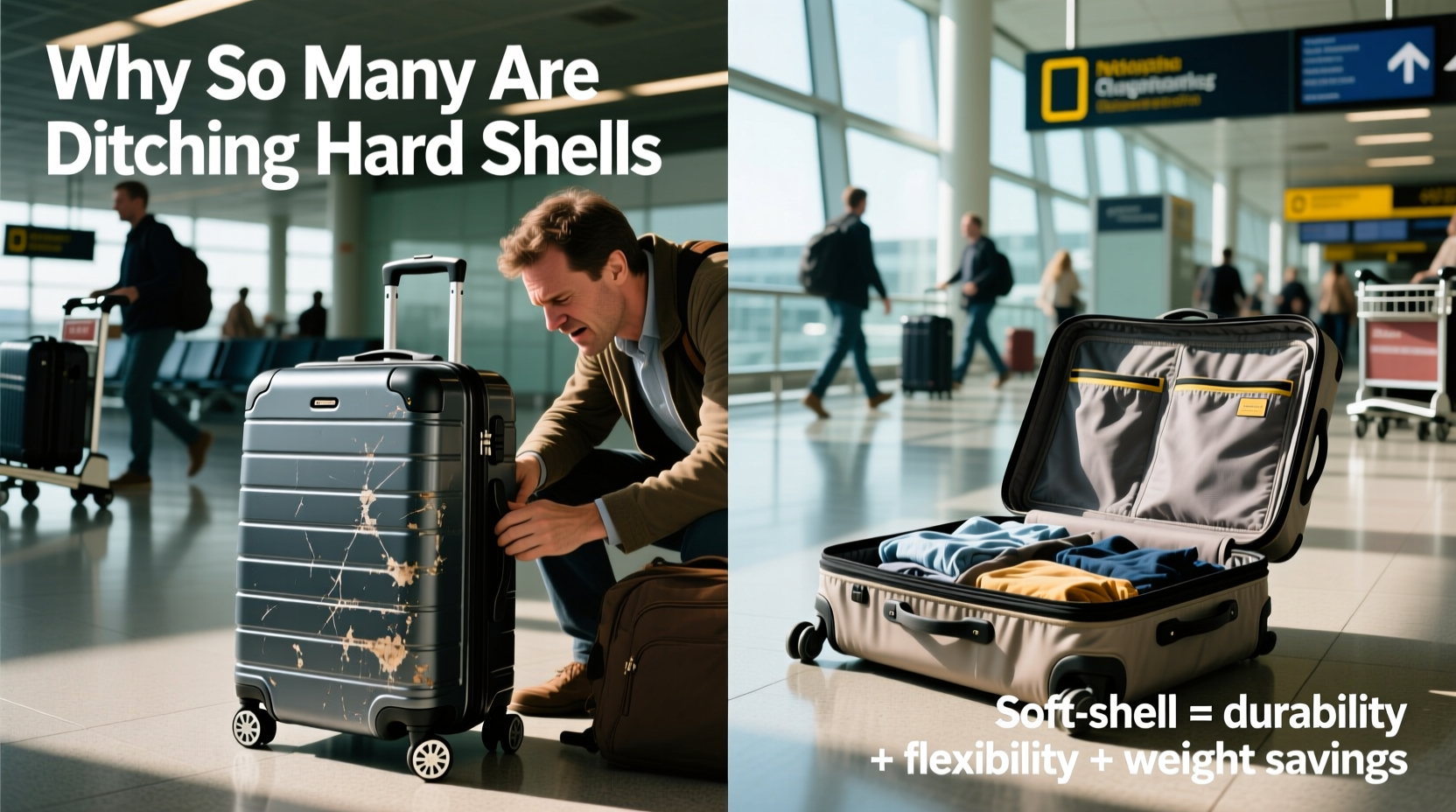
Hardshell suitcases surged in popularity during the 2010s, driven by sleek marketing campaigns showcasing indestructible polycarbonate cases surviving conveyor belts, overhead bins, and careless handlers. Brands like Rimowa and Away made hardshells aspirational—lightweight, rigid, and stylish. They promised protection: a fortress for fragile items like electronics, cosmetics, or souvenirs.
But real-world use revealed limitations. While hardshells do offer excellent impact resistance, they lack flexibility. Unlike soft-sided bags, they can’t be compressed or expanded. Over time, travelers began noticing that while their laptops survived drops, their packing experience suffered. Weight limits became harder to manage, internal organization was limited, and gate-checking often led to cracked corners or broken hinges.
“Hardshells were designed for a different era—one where checked baggage was handled with care and weight wasn’t a premium. Today’s air travel demands adaptability.” — Marcus Lin, Travel Gear Analyst at JetGear Review
Practical Advantages of Trolley Suitcases
Trolley suitcases—typically soft-sided with telescopic handles and spinner wheels—are winning favor due to their versatility. Most models are constructed from ballistic nylon or polyester, materials engineered for abrasion resistance and water repellency. But it's not just about fabric strength; it's about smart design responding to modern travel realities.
- Weight efficiency: Soft shells are generally lighter than hard ones of the same size, giving travelers more allowance for actual belongings.
- Expandability: Many trolleys feature zippered expansion compartments, allowing 15–25% more capacity when needed.
- Easier compression: You can squeeze a packed trolley into tight overhead bins or under seats—something impossible with rigid cases.
- Better organization: Interior mesh pockets, garment sleeves, and removable laundry bags are standard on most high-end soft bags.
- External access: Quick-access pockets for passports, chargers, or headphones improve convenience during layovers.
Hardshell vs Trolley: A Direct Comparison
| Feature | Hardshell Suitcase | Trolley (Soft-Sided) |
|---|---|---|
| Impact Protection | Excellent – resists dents and punctures | Fair – padding helps but fabric can tear |
| Weight (Empty) | Heavier – averages 8–12 lbs for 24” | Lighter – averages 6–9 lbs for 24” |
| Packing Flexibility | Rigid – no compression or expansion | High – expandable, compressible, moldable |
| Organization | Limited interior layout options | Multiple pockets, dividers, and sleeves |
| Durability (Long-Term) | Vulnerable to cracks and hinge failure | Resilient to wear; repairs easier |
| Gate Check Survival | Poor – prone to cracking under rough handling | Better – absorbs impact without breaking |
A Real Traveler’s Experience: From Hard to Soft
Sarah Kim, a UX designer based in Portland, used a premium 26-inch polycarbonate suitcase for three years of international client visits. “I loved how it looked,” she says, “but every trip became a stress test. I’d pack carefully, only to find the bag overweight at check-in. Once, after gate-checking, the corner cracked from someone dropping a stroller on it. The repair cost half as much as the bag.”
She switched to a soft-sided Samsonite Winfield 3 spinner. “It weighs two pounds less empty. I can actually fit everything I need without worrying about rigidity. And when they toss it around during boarding, I don’t cringe.” Her biggest surprise? “It looks just as professional, and I’ve never had a zipper fail—even after two monsoon seasons in Southeast Asia.”
Why Airlines and Airports Favor Soft Trolleys
Behind the scenes, airline operations teams have quietly influenced this shift. Ground crews report fewer issues with soft bags snagging on machinery or jamming in narrow cargo holds. Hardshells, especially those with protruding wheels or corners, are more likely to damage adjacent luggage or equipment.
Additionally, strict carry-on size enforcement has increased. Many airports now use sizers that require bags to fit snugly. Rigid cases that exceed dimensions—even slightly—get pulled aside for checking, adding delays. Soft trolleys, however, can be slightly compressed to meet requirements, giving travelers more leeway.
Another factor: sustainability. Polycarbonate production is energy-intensive, and damaged hardshells are rarely recyclable. In contrast, many soft-sided bags now use recycled fabrics (like Repreve®), and brands offer repair programs instead of replacements.
Tip: Look for luggage with modular replacement parts—handles, wheels, zippers—so you can extend its life instead of replacing it.When a Hardshell Still Makes Sense
That said, hardshells aren’t obsolete. They remain ideal for specific scenarios:
- Travelers transporting delicate or valuable items (e.g., camera gear, musical instruments, glassware).
- Trips involving off-road transport or unpaved routes where impacts are frequent.
- Environments with extreme humidity or pests, where sealed cases prevent moisture or insects from entering.
For these uses, a well-built hardshell with flexible lining and shock-absorbing frame can still outperform soft alternatives. But for the average traveler—especially one navigating crowded airports, tight connections, and carry-on-only trips—the balance has clearly tipped.
Checklist: Choosing the Right Luggage for Your Needs
Before making your next purchase, consider this checklist:
- ✅ Do you frequently travel carry-on only? → Prioritize lightweight, compressible trolleys.
- ✅ Are you often gate-checking bags? → Avoid hardshells; opt for durable soft fabric.
- ✅ Do you pack irregularly shaped items? → Choose expandable interiors with adjustable straps.
- ✅ Are you transporting fragile goods? → Consider a hybrid case with semi-rigid construction.
- ✅ Is weight a concern with airline limits? → Compare empty weights across models—every ounce counts.
- ✅ Do you value easy repairs? → Look for brands offering spare parts and customer service support.
FAQ: Common Questions About Suitcase Choices
Can soft-sided suitcases survive rough handling?
Yes, especially those made with ballistic nylon or reinforced polyester. These materials are designed to resist tearing and abrasion. While they may show scuffs, they rarely fail structurally like cracked polycarbonate.
Are hardshell suitcases waterproof?
Not inherently. While the shell itself doesn’t absorb water, seams and zippers are not sealed. Most soft trolleys come with water-resistant coatings and rain covers, offering comparable or better protection in wet conditions.
Is it worth repairing a damaged suitcase?
For soft bags, yes—zippers, wheels, and handles are often replaceable. For hardshells, repairs can be costly and cosmetic fixes may not restore structural integrity. Evaluate repair costs against replacement value.
Conclusion: Travel Smarter, Not Harder
The trend away from hardshell suitcases isn’t about fashion—it’s about function. As air travel becomes more congested, restrictive, and unpredictable, travelers are choosing adaptability over rigidity. Trolley suitcases offer smarter packing, better weight distribution, and greater resilience in real-world conditions. That doesn’t mean hardshells will disappear entirely, but their role is narrowing to niche use cases.
Before your next purchase, ask yourself: Do I need armor, or do I need agility? For most people, the answer is clear. The future of luggage isn’t just about surviving the journey—it’s about making it easier.
🚀 Ready to upgrade your travel game? Reassess your current suitcase based on how you *actually* travel—not how you wish you did. Share your experience or favorite model in the comments below.