
When it comes to choosing the right suitcase, travelers often find themselves torn between hardshell and softshell luggage. One promises armor-like defense against rough handling, while the other offers flexibility and lighter weight. But does that rigid exterior truly make a difference in protecting your belongings? Or is the choice more about personal preference than practical advantage?
The answer isn’t as straightforward as marketing campaigns suggest. While hardshell cases are frequently praised for their durability, softshell models have quietly evolved with reinforced fabrics, smart compartment layouts, and improved zippers. To determine whether the added rigidity of a hardshell case justifies its higher price and weight, we need to look beyond surface-level claims and examine how each performs in real travel conditions.
Durability and Impact Resistance
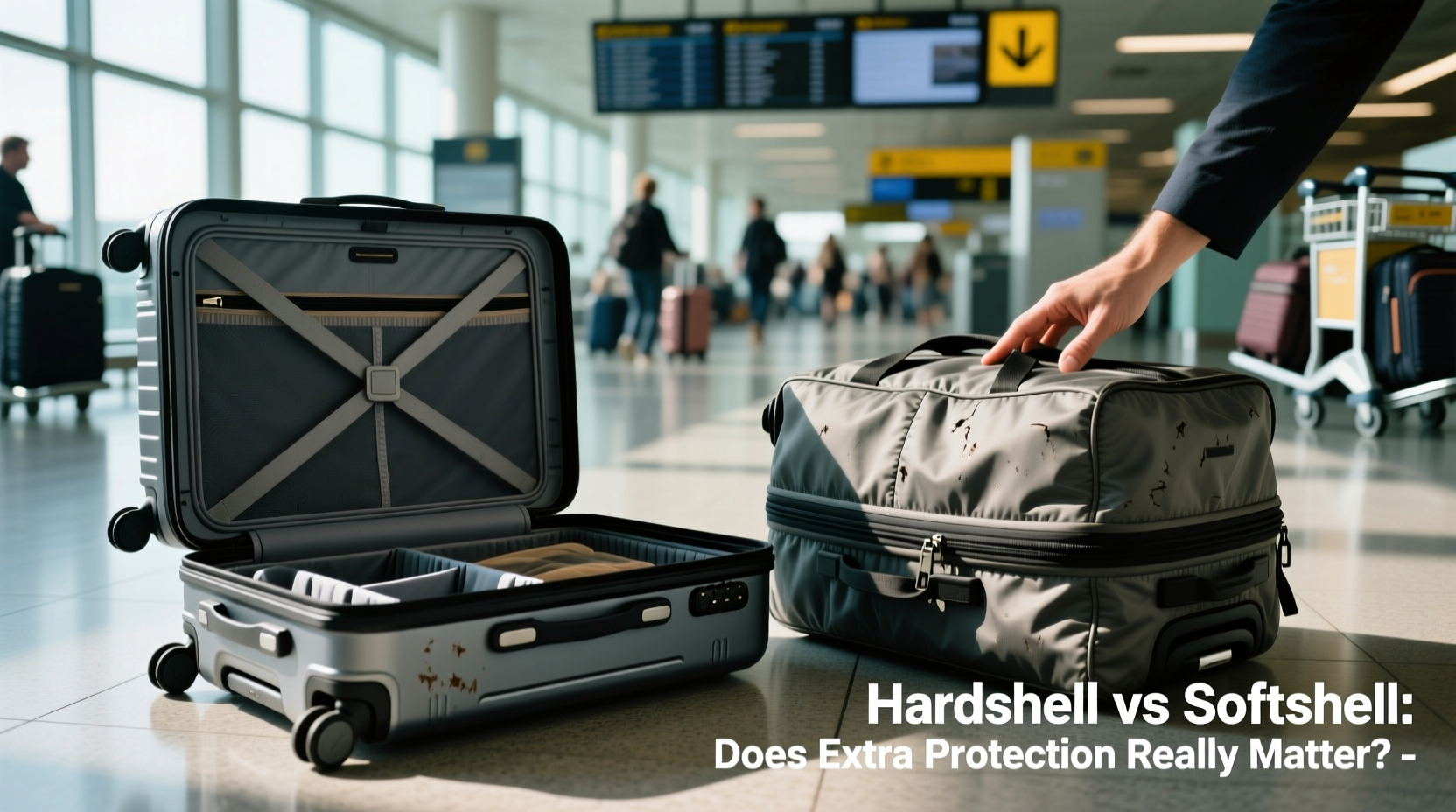
Hardshell luggage is typically made from polycarbonate or ABS plastic, materials known for their ability to absorb shocks and resist dents. This makes them particularly effective in shielding fragile items—like cameras, electronics, or glassware—from crushing forces during transit. If your suitcase ends up at the bottom of a pile or gets dropped on a concrete tarmac, a well-built hardshell can prevent internal damage that would otherwise compromise delicate contents.
Softshell luggage, on the other hand, relies on high-density nylon or polyester fabrics, often with ripstop weaves and water-resistant coatings. While these materials are flexible and tear-resistant, they don’t offer the same level of crush protection. A direct impact might not crack the exterior, but it can transfer force directly to your packed items. That said, softshells tend to handle abrasion better—they’re less likely to show scratches or scuff marks over time, maintaining a cleaner appearance even after years of use.
“Polycarbonate shells have revolutionized luggage durability. They flex under pressure instead of shattering, offering both strength and resilience.” — Daniel Ruiz, Product Engineer at TravelGear LabsTip: For maximum protection of fragile items, combine a hardshell case with padded dividers or wrap sensitive objects in clothing.
Weight and Packing Efficiency
One of the most significant trade-offs with hardshell luggage is weight. Polycarbonate cases, while strong, are inherently heavier than their softshell counterparts. An empty 22-inch hardshell can weigh 8–10 pounds, leaving less allowance for actual belongings—especially problematic when airlines enforce strict carry-on limits.
Softshell suitcases, by contrast, are generally lighter, often weighing 5–7 pounds for the same size. This difference may seem minor, but it translates into greater packing capacity, which frequent flyers appreciate. Additionally, softshells offer superior expandability. Many models feature zippered gussets that add 1–3 inches of depth, allowing you to squeeze in souvenirs or extra layers on the return trip.
However, this flexibility comes with a caveat: overpacking a softshell can strain zippers and seams. Hardshells, while less forgiving in volume, maintain structural integrity even when fully loaded, reducing the risk of bursting open during handling.
Security and Theft Prevention
Security is another area where the two designs diverge. Hardshell cases are easier to secure with built-in TSA-approved locks and seamless edges that resist tampering. Their solid construction makes it difficult for unauthorized access without visible damage, acting as a deterrent to casual thieves.
Softshell bags, despite often including lockable zippers, remain vulnerable to “razor slicing”—a common tactic where thieves use a thin blade to cut through fabric and steal valuables without breaking locks. Some premium softshells now incorporate slash-resistant linings or lockable zipper pulls, but they still lack the physical barrier that a molded shell provides.
| Feature | Hardshell | Softshell |
|---|---|---|
| Impact Protection | Excellent | Fair to Good |
| Weight (Avg. 22\") | 8–10 lbs | 5–7 lbs |
| Expandability | Limited or None | Common (1–3\") |
| Theft Resistance | High | Moderate (with upgrades) |
| Packing Flexibility | Rigid Compartments | Adaptable Layouts |
| Long-Term Durability | Prone to Cracks | Resists Scratches |
Real-World Use Case: Business Traveler vs. Backpacker
Consider Sarah, a corporate consultant who travels weekly between New York and London. She packs tailored suits, a laptop, and presentation materials. Her priority is wrinkle-free garments and device safety. She opts for a mid-sized hardshell with interior compression straps and a dedicated tech sleeve. Despite the extra weight, she values the peace of mind knowing her electronics won’t be crushed if baggage handlers toss her bag.
Then there’s Mark, a long-term traveler exploring Southeast Asia. He prioritizes lightweight gear, adaptability, and ease of carrying over uneven terrain. His softshell duffel-style suitcase weighs under six pounds, fits into overhead bins, and expands when he picks up local textiles. When trekking through rural areas, the soft exterior doesn’t snag on sharp edges like a rigid shell might. For him, the slight risk of minor punctures is outweighed by mobility and versatility.
Their choices reflect a broader truth: the “best” luggage depends on travel style, destination, and what you're carrying—not just theoretical durability.
What Experts Recommend
Industry professionals emphasize that no single type is universally superior. Instead, they advise matching the suitcase to your typical journey.
- Air travelers with fragile items: Hardshell offers measurable benefits in protection.
- Backpackers and adventure travelers: Softshell provides better maneuverability and weight savings.
- Frequent flyers: Consider hybrid models—some brands now offer hardshell bases with soft, expandable tops.
- Winter or rainy climates: Softshells with water-resistant coatings perform better than glossy shells that can become slippery.
“The real test of luggage isn’t how it looks in a store—it’s how it holds up after 50 flights, three continents, and one lost baggage claim.” — Lena Park, Senior Editor, *Travel Gear Review*
Step-by-Step Guide: Choosing the Right Luggage for Your Needs
- Assess your typical travel type: Do you fly short-haul business trips or embark on extended backpacking journeys?
- List your commonly packed items: Are they fragile, bulky, or irregularly shaped?
- Check airline restrictions: Confirm weight and size limits for carry-ons and checked bags.
- Evaluate handling conditions: Will your bag go through rough airports, bumpy roads, or cargo holds?
- Test mobility features: Wheels, handles, and weight distribution matter as much as shell type.
- Compare warranties and repair policies: Some brands offer lifetime coverage for structural defects.
- Make your decision: Prioritize either protection (hardshell) or flexibility (softshell).
FAQ
Can softshell luggage be as durable as hardshell?
While softshell won’t match hardshell in impact resistance, modern versions with ballistic nylon, YKK zippers, and reinforced corners can last just as long under normal conditions. Durability depends more on build quality than material alone.
Are hardshell suitcases more likely to crack?
Poor-quality ABS plastic can crack under extreme stress, but high-end polycarbonate shells are engineered to flex rather than fracture. Look for brands that specify “impact-resistant” or “flex-shell” technology.
Is it worth paying more for a hardshell suitcase?
If you regularly transport valuable or breakable items, yes. For general use, a well-made softshell often delivers better value due to lighter weight, lower cost, and greater packing versatility.
Conclusion
The debate between hardshell and softshell luggage ultimately hinges on what kind of traveler you are. The extra protection of a hardshell matters significantly if you're transporting expensive gear or traveling through high-risk handling environments. However, for those who prioritize weight, adaptability, and ease of movement, softshell remains a smart, resilient choice.
Instead of defaulting to one category, evaluate your real-world needs. Invest in quality regardless of shell type, and remember that features like smooth-rolling wheels, secure zippers, and thoughtful interior design often contribute more to a positive travel experience than rigidity alone.
🚀 Ready to upgrade your travel game? Reassess your last trip’s luggage challenges and choose your next suitcase based on function—not just fashion.