Traveling with fine jewelry demands more than just a pocket or purse toss. Whether you're carrying an heirloom ring, a pair of diamond studs, or a delicate pendant, the right storage solution can mean the difference between safe arrival and costly damage. Two popular choices dominate the market: hard shell jewelry cases and mini jewelry boxes. While both serve the purpose of portability, their level of protection, durability, and suitability for different types of gems vary significantly. Understanding these differences helps ensure your valuables remain secure, scratch-free, and organized no matter where life takes you.
Understanding the Core Differences
At first glance, hard shell jewelry cases and mini jewelry boxes may seem interchangeable. However, their construction, materials, and protective capabilities set them apart in critical ways.
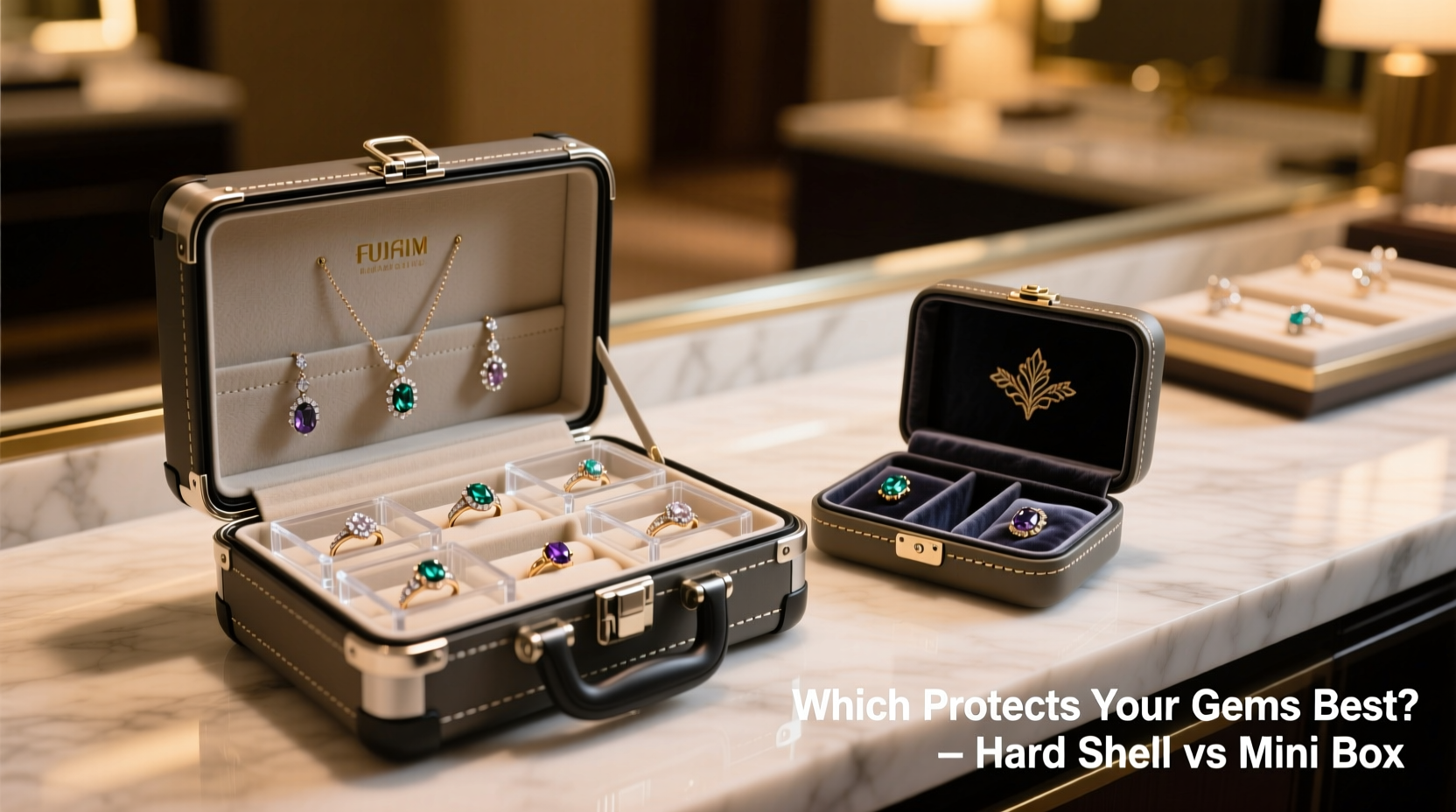
A hard shell jewelry case is typically made from rigid materials such as polycarbonate, ABS plastic, aluminum, or reinforced fabric with a firm internal frame. These cases often feature foam inserts, padded compartments, and locking mechanisms designed to withstand impact, pressure, and environmental exposure. They resemble small travel cases or even flight cases used for electronics.
In contrast, a mini jewelry box is usually crafted from wood, faux leather, or soft fabric with a hinged lid. Inside, you’ll find velvet-lined trays, ring rolls, and earring slots—elegant and compact, but structurally softer. These are ideal for short-distance transport or occasional use but lack the structural integrity needed for rigorous travel conditions.
Protection Against Physical Damage
The primary threat to jewelry on the go isn’t theft—it’s physical trauma. Dropping a bag, stacking luggage, or accidental compression can crack gemstones, bend prongs, or snap chains. Here, hard shell cases offer superior resistance.
Their rigid exteriors absorb shock and prevent crushing forces from reaching the contents. Many models include customizable foam cutouts that cradle each piece individually, minimizing movement during transit. This is especially crucial for stones like emeralds or opals, which are prone to chipping under pressure.
Mini jewelry boxes, while attractive, rely on thin padding and flimsy hinges. A fall from waist height onto tile can easily warp the structure, compromising internal organization and exposing jewelry to friction and impact. Even gentle pressure from a suitcase can deform soft linings, allowing rings to rub against one another and scratch precious metal surfaces.
“Jewelry doesn’t need luxury—it needs stability. The safest travel companion isn’t the prettiest box, but the one that acts like armor.” — Daniel Reeves, Gemologist & Jewelry Conservator at the American Gem Society
Security and Theft Prevention
Portability shouldn’t come at the cost of security. Hard shell cases often include TSA-approved locks, combination dials, or clip-fastening systems that deter opportunistic tampering. Some advanced models even integrate RFID-blocking layers to prevent digital skimming of smart tags or embedded chips in high-end pieces.
Mini jewelry boxes, on the other hand, typically close with magnetic clasps or simple latches that open easily under minimal force. In crowded environments—airports, trains, or festivals—this makes them vulnerable to quick access by thieves. Their classic appearance may also draw unwanted attention; a polished wooden box looks like it contains something valuable, inviting risk.
Tip: Always carry high-value items in a hard shell case and keep it concealed within a larger bag—not in an outer pocket or visible compartment.Environmental Protection: Moisture, Dust, and Temperature
Jewelry degradation isn’t always immediate. Long-term exposure to humidity, dust, and temperature swings can tarnish silver, cloud diamonds with residue, or weaken adhesives in glued-in settings.
Hard shell cases frequently feature sealed edges or gasketed lids that create a near-airtight environment. This barrier prevents moisture ingress and keeps out pollutants. For travelers visiting coastal regions or humid climates, this feature is invaluable. Some premium versions even include desiccant pouches to actively absorb ambient moisture.
Mini jewelry boxes, while lined with soft fabric, are rarely airtight. Gaps around the lid allow air circulation, which sounds beneficial but actually introduces moisture and airborne particles. Over time, this leads to oxidation and dulling of gemstone brilliance. Velvet linings themselves can shed fibers that cling to prongs and settings, requiring frequent cleaning upon return.
Real-World Scenario: The Beach Wedding Trip
Sarah flew to a destination wedding in Bali with her engagement ring, earrings, and a pearl bracelet. She packed her pieces in a beautifully engraved mini jewelry box tucked into her carry-on. During transit, her bag was dropped multiple times by airline staff. Upon arrival, she found the box cracked, the hinge broken, and her earrings tangled. Worse, the tropical humidity had caused slight tarnishing on her white gold band—a problem she hadn’t anticipated.
Her friend, traveling with the same jewelry collection, used a compact hard shell case with foam inserts. Despite identical handling, all pieces arrived intact, untangled, and visually pristine. The sealed design prevented moisture damage, and the rigid shell absorbed every bump without deformation.
This example underscores that aesthetics alone don’t guarantee safety. Real protection comes from engineering, not elegance.
Comparison Table: Key Features at a Glance
| Feature | Hard Shell Jewelry Case | Mini Jewelry Box |
|---|---|---|
| Impact Resistance | High – absorbs shocks, crush-resistant | Low – susceptible to dents and breaks |
| Mobility & Size | Moderate – slightly bulkier but highly durable | High – compact and lightweight |
| Security | Lockable, tamper-resistant options available | Rarely lockable; easy to open |
| Moisture Protection | Sealed design with optional desiccants | Limited; allows airflow and humidity |
| Interior Organization | Customizable foam, removable trays | Preset slots, less flexibility |
| Best For | Air travel, international trips, high-value pieces | Daily carry, short trips, low-risk environments |
Choosing Based on Your Jewelry Type
Not all gems require the same level of protection. Softer stones like pearls (2.5–4.5 on the Mohs scale), opals (5.5–6.5), and tanzanite (6) are highly sensitive to scratches and impacts. These demand the cushioned, immobile environment only a hard shell case can reliably provide.
Harder gems like diamonds (10), sapphires (9), and rubies (9) resist scratching but are still vulnerable to chipping along edges or if the mounting is compromised. A loose ring bouncing in a soft box can knock against other metal components, weakening solder joints over time.
If you primarily wear simple stud earrings or a single pendant, a mini jewelry box might suffice for weekend getaways. But if your collection includes vintage pieces, intricate settings, or mixed materials (gold, silver, enamel), investing in a hard shell case is a practical necessity.
Action Checklist: Picking the Right Travel Companion
- ✅ Assess the value and fragility of your jewelry
- ✅ Prioritize crush resistance over aesthetics
- ✅ Look for lockable closures and sealed construction
- ✅ Choose interiors with individual compartments or foam inserts
- ✅ Avoid boxes with loose padding that shifts during transit
- ✅ Test fit: Ensure pieces don’t rattle when closed
Frequently Asked Questions
Can I bring a hard shell jewelry case on a plane?
Yes. Hard shell cases are permitted in both carry-on and checked luggage. However, always keep high-value or irreplaceable items in your carry-on to reduce loss risk. If the case has a lock, ensure it’s TSA-approved so agents can inspect it without damaging the unit.
Are mini jewelry boxes useless for travel?
No—but they’re best suited for low-risk scenarios. If you’re driving a short distance, attending a local event, or carrying inexpensive costume jewelry, a mini box offers convenience and modest protection. Just avoid relying on them for air travel, rough handling, or valuable pieces.
How do I clean a hard shell case after a trip?
Wipe the exterior with a damp cloth and mild soap. For the interior, remove foam inserts and vacuum debris. Use a dry microfiber cloth to wipe down surfaces. Replace desiccant packs regularly if your model includes them.
Final Thoughts: Protection Over Presentation
When it comes to safeguarding your gems on the go, function must outweigh form. A mini jewelry box may look elegant on a dresser, but its vulnerabilities become apparent the moment it’s subjected to real-world travel stress. A hard shell case, though less decorative, functions as a true protective vault—resisting impact, moisture, and unauthorized access.
Your jewelry represents more than monetary worth; it carries emotional significance, craftsmanship, and history. Treating it with the care it deserves starts with how you transport it. Whether you’re crossing the country or the globe, choose the option that prioritizes preservation over presentation.
🚀 Ready to upgrade your jewelry travel game? Swap out flimsy boxes for a durable hard shell case today—and give your gems the protection they’ve earned.