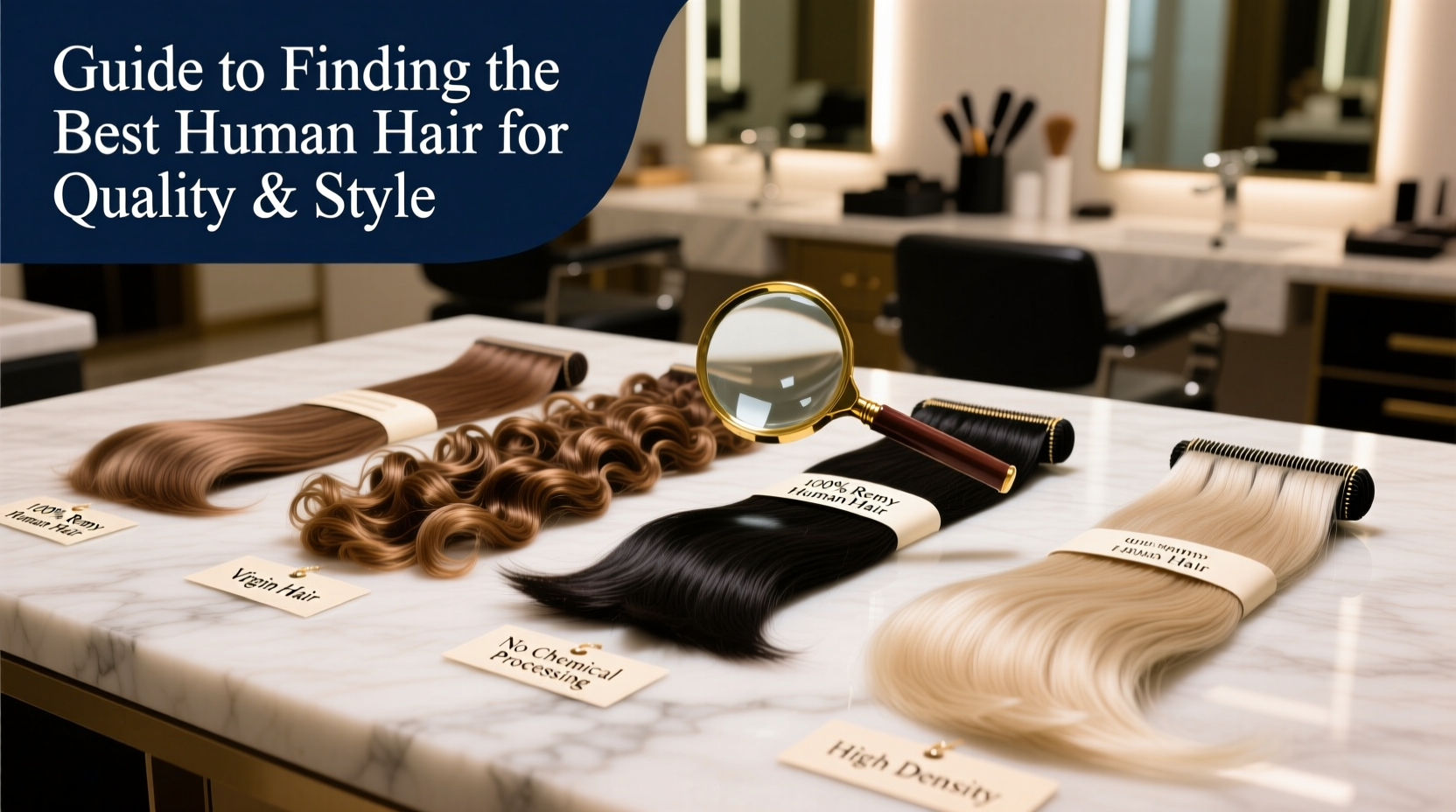
Selecting the right human hair extensions or wigs is more than a matter of aesthetics—it’s an investment in confidence, versatility, and self-expression. With countless options flooding the market, distinguishing premium quality from subpar products can be overwhelming. The difference between a lackluster look and a seamless, natural finish often lies in the origin, processing, and care of the hair. Understanding what defines high-quality human hair empowers you to make informed choices that align with your styling goals and lifestyle.
Understanding Human Hair Types and Origins
Not all human hair is created equal. The source significantly influences texture, durability, and performance. Hair is typically categorized by geographical origin, each offering distinct characteristics:
- Indian Remy Hair: Sourced from temples in India, this is one of the most common types. It’s known for its softness, versatility, and ability to hold curls. However, not all Indian hair is Remy—true Remy means cuticles are aligned in the same direction, reducing tangling.
- Malaysian Hair: Naturally silky and slightly wavy, Malaysian hair has a subtle sheen and holds styles well. It’s thicker than Indian hair and ideal for those seeking volume with movement.
- Peruvian Hair: Coarser and denser, Peruvian hair blends well with curly or textured natural hair. It’s durable and maintains curl patterns longer than finer textures.
- Chinese (Yak Hair): Often straighter and coarser, Chinese hair is less flexible in styling but very resilient. It may feel stiffer and lacks the natural luster of other types.
- Eurasian Hair: Rare and expensive, this hair is fine, soft, and naturally wavy. It blends exceptionally well with European and mixed-texture hair types.
Key Indicators of High-Quality Human Hair
Appearance can be deceiving. Many lower-tier products mimic the look of premium hair using silicon coatings or chemical treatments. True quality reveals itself over time and through close inspection. Here are the essential markers to evaluate:
- Cuticle Alignment: In genuine Remy hair, cuticles run uniformly from root to tip. This prevents matting and ensures smooth combing. Run your fingers down a strand—if it feels rough going up but smooth going down, the cuticles are intact.
- Luster Without Coating: Healthy hair reflects light naturally. If the hair looks unnaturally shiny or feels slippery, it may be coated with silicone. Wash it once—if the shine diminishes drastically, it was artificially enhanced.
- Density and Consistency: High-quality bundles have consistent thickness from top to bottom. Low-grade hair often tapers too quickly, leading to thin ends and poor blending.
- Burn Test (Use Caution): A small strand burned over flame should smell like burning hair (keratin) and turn to ash. Synthetic fibers melt, bead up, and emit plastic odor.
- Color Uniformity: Virgin hair retains even pigmentation. If color fades unevenly after washing, the hair was likely pre-colored or processed excessively.
| Feature | High Quality | Low Quality |
|---|---|---|
| Cuticle Direction | Aligned, smooth to touch | Muddled, causes tangling |
| Shine | Natural, soft luster | Glossy, silicone-coated |
| Texture | Consistent throughout | Thick at roots, thin at ends |
| After Washing | Retains softness and integrity | Frizzy, matted, dull |
Step-by-Step Guide to Selecting Your Ideal Hair
Finding the perfect match requires a methodical approach. Follow these steps before making a purchase:
- Define Your Styling Goals: Do you want long, flowing waves? Tight curls? A sleek bob? Match the hair type to your desired look. For example, Brazilian or Peruvian hair works better for defined curls, while Malaysian suits soft waves.
- Assess Your Natural Hair: Consider your texture, density, and color. Choose a shade that blends seamlessly—opt for two tones if needed (base and highlight). Texture matching ensures undetectable integration.
- Choose the Right Processing:
- Virgin Hair: Unprocessed, no chemical treatment. Best for coloring and long-term use.
- Remy Processed: Cuticles preserved but color-treated. Good balance of affordability and quality.
- Non-Remy: Cuticles stripped or reversed. Prone to tangling and shorter lifespan.
- Purchase From Reputable Vendors: Look for suppliers who offer transparency—photos of raw bundles, detailed origin info, and return policies. Avoid platforms with only stock images.
- Request a Sample: If buying online, order a sample first. Evaluate texture, smell, and behavior after washing.
“Hair that lasts over a year isn’t about luck—it’s about starting with integrity. Virgin Remy from ethical sources performs consistently because the cuticle structure remains untouched.” — Lena Tran, Master Stylist & Extension Educator
Real Example: Choosing Hair for Daily Wear and Heat Styling
Samantha, a marketing executive in Atlanta, wanted long, straight extensions that could withstand daily flat ironing and office humidity. She initially purchased affordable “Brazilian straight” hair from a discount site. Within six weeks, the strands became brittle, frizzy, and tangled at the ends despite regular conditioning.
She consulted a specialist who explained the hair was likely non-Remy and heavily coated. Samantha then invested in unprocessed Indian Remy virgin hair from a verified vendor. After six months of daily heat styling and weekly washes, the hair remained smooth, tangle-free, and retained its original luster. The upfront cost was higher, but the longevity and reduced maintenance made it the smarter choice.
Essential Care Tips to Preserve Quality and Style
Even the finest hair degrades without proper care. Extend its life with these practices:
- Wash every 2–3 weeks with sulfate-free shampoo. Overwashing strips natural oils and accelerates dryness.
- Always condition from mid-shaft to ends. Avoid applying heavy products to roots to prevent buildup.
- Detangle gently with a wide-tooth comb, starting from the ends and working upward.
- Limit heat exposure. Use a heat protectant and keep styling tools below 350°F (177°C).
- Store in a cool, dry place. Braid or loosely coil extensions when not in use to prevent snarling.
FAQ
Can I dye human hair extensions?
Yes, but only if they’re virgin or minimally processed. Pre-colored or heavily treated hair may react unpredictably to bleach or dyes. Always perform a strand test first and consult a professional for major color changes.
How long do high-quality human hair extensions last?
With proper care, virgin Remy hair can last 12 to 18 months. Non-Remy or synthetic-blend hair may need replacement every 3–6 months due to tangling and shedding.
What’s the difference between tape-in, clip-in, and sew-in extensions?
Tape-ins are semi-permanent and lie flat against the scalp. Clip-ins offer temporary, instant volume. Sew-ins (weaves) are durable and ideal for thick, layered styles but require braiding the natural hair. Each method affects wear time and maintenance differently.
Conclusion
Finding the best human hair comes down to informed decisions grounded in quality, not price. By understanding origin, verifying authenticity, and committing to thoughtful care, you unlock the full potential of your extensions—natural movement, enduring style, and confidence that lasts. Whether you're enhancing length, volume, or experimenting with new looks, prioritize integrity over impulse. The right hair shouldn’t just look good today—it should move beautifully tomorrow, too.
🚀 Ready to upgrade your hair game? Start by requesting a sample from a trusted supplier and compare it side-by-side with what you currently use. Small steps lead to stunning transformations.