
When Google unveiled the Pixel 8 and Pixel 8 Pro, it continued a familiar pattern: a solid mid-tier flagship and a premium sibling with one major differentiator—the telephoto lens. For many consumers, the $200 price gap between the two models hinges on whether that extra lens delivers enough value to justify the cost. The answer isn’t just about megapixels or zoom numbers; it’s about how you use your phone daily, what kind of photos matter to you, and whether computational photography can bridge the hardware gap.
The Pixel 8 offers nearly all the same core features as its Pro counterpart—same Tensor G3 chip, identical base camera sensor, similar display quality, and guaranteed seven years of updates. But the absence of a telephoto lens on the standard model raises a critical question: does losing optical zoom significantly impact photo quality and usability in real-world scenarios?
Understanding the Camera Differences
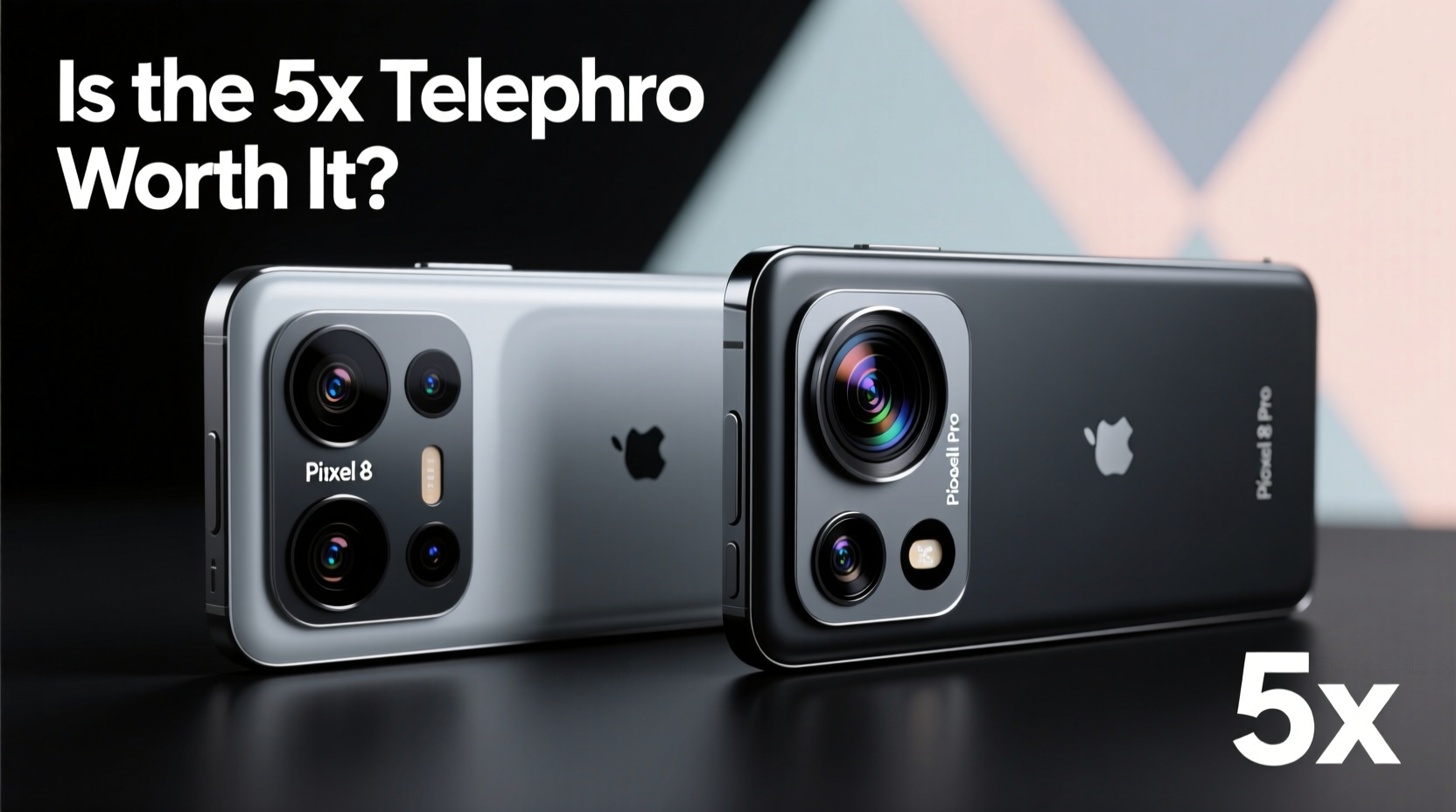
The most significant hardware divergence between the Pixel 8 and Pixel 8 Pro lies in their rear camera systems. Both devices feature a 50MP main sensor and a 12MP ultra-wide lens, but only the Pro includes a 48MP telephoto lens with 5x optical zoom (and up to 30x Super Res Zoom).
This telephoto lens uses folded optics (periscope design), allowing for longer focal lengths without increasing the phone’s thickness. It enables true optical magnification, preserving image detail far better than digital cropping. In contrast, the Pixel 8 relies entirely on digital zoom, which crops into the main sensor and applies AI upscaling—a process effective up to a point, but limited by physics.
Tip: Optical zoom captures more detail with less noise. If you frequently photograph distant subjects—wildlife, concerts, architecture—optical telephoto makes a tangible difference.How Telephoto Impacts Real-World Photography
Consider a scenario at a music festival. You’re 50 feet from the stage, trying to capture a close-up of the lead singer. On the Pixel 8, using 5x zoom means digitally enlarging a small portion of the main sensor. Even with Google’s advanced Super Res Zoom algorithm, fine details like facial expressions or instrument textures may appear soft or slightly artificial.
On the Pixel 8 Pro, the same 5x shot uses the dedicated telephoto lens. Light enters through a longer focal length, capturing more native detail before any processing. The result is sharper edges, truer colors, and better dynamic range—especially in mixed lighting.
“Optical zoom remains unmatched for subject isolation and background compression. Computational tricks help, but they can't replicate the depth information captured by a physical telephoto lens.” — David Kim, Mobile Imaging Analyst at DXOMARK
Performance Comparison: Zoom Quality at Key Levels
To evaluate the practical benefit, let’s compare image quality across common zoom levels under typical conditions (daylight, moderate lighting, low light).
| Zoom Level | Pixel 8 (Digital) | Pixel 8 Pro (Hybrid) | Verdict |
|---|---|---|---|
| 2x | Digital crop from main sensor; sharp with minor softening | Slight crop + tuning; virtually identical to Pixel 8 | Tie – no meaningful difference |
| 5x | Noticeable softness, slight halo artifacts, reduced texture | True optical zoom; excellent clarity, natural bokeh, minimal noise | Pro wins decisively |
| 10x | Heavy reliance on AI; usable but lacks fine detail | Mix of optical + digital; retains structure and edge definition | Pro maintains clear advantage |
| 20x+ | Blurry, noisy, best avoided | Still degraded but more structured; readable text possible | Pro more functional at extreme ranges |
The table illustrates a key threshold: beyond 3x, the lack of optical hardware begins to show. While Google’s software wizardry keeps the Pixel 8 competitive up to 3x, the Pro pulls ahead sharply at 5x and beyond. This gap widens in suboptimal lighting, where digital zoom amplifies noise and reduces dynamic range.
Who Actually Benefits From the Telephoto Lens?
Not every user needs a telephoto camera. The value depends on lifestyle, shooting habits, and creative intent. Consider these profiles:
- Travel photographers: Capturing distant landmarks, street scenes, or cultural events benefits greatly from optical reach.
- Nature and wildlife enthusiasts: Safely photographing animals or birds without disturbing them requires strong zoom capability.
- Event attendees: Concerts, sports games, school performances—situations where you can’t get close to the action.
- Portrait lovers: Telephoto lenses naturally compress perspective, creating flattering portraits with smoother background blur.
In contrast, casual shooters who primarily take selfies, food photos, or group shots in well-lit environments may never miss the telephoto lens. For them, the Pixel 8’s camera system is more than sufficient.
Mini Case Study: A Day at the Zoo
Sophia visits the zoo with her family. She owns a Pixel 8 and wants to photograph her son near the tiger enclosure. Safety barriers keep visitors 20 feet away. At 3x zoom, the tiger appears small and indistinct. She increases to 5x—now the image is grainy, with visible processing artifacts around the stripes. Details like whiskers and eye reflections are lost.
Her friend, using a Pixel 8 Pro, takes the same shot at 5x. The tiger’s fur shows individual strands, the eyes are vivid, and the background foliage remains coherent. Later, Sophia crops both images to compare face-to-face. The Pro version holds up dramatically better, proving that optical zoom preserves information that software can’t invent.
This example underscores a fundamental truth: while AI enhances what exists, it cannot recover data that wasn’t captured initially. The telephoto lens gathers more optical information at the source—making it irreplaceable for certain use cases.
Beyond Zoom: Other Pro-Only Features Worth Considering
The telephoto lens isn’t the only difference between the models. Several other upgrades on the Pixel 8 Pro contribute to its premium positioning:
- Bigger, brighter display: The Pro has a 6.7-inch LTPO OLED panel with adaptive 1–120Hz refresh rate and higher peak brightness (up to 2400 nits vs. 1600 nits).
- Stainless steel frame: Offers improved durability and a more premium feel compared to the aluminum build of the Pixel 8.
- Advanced health sensors: The Pro includes an embedded temperature sensor and improved skin tone analysis tools for future health tracking features.
- Longer battery life: Larger 5050mAh battery vs. 4575mAh, supporting heavier usage and extended zoom sessions.
While none of these are as impactful as the camera difference, they collectively enhance the user experience—particularly for power users or those who prioritize display quality and longevity.
Tip: If you watch videos or edit photos on your phone, the Pro’s larger, brighter screen provides a noticeably better viewing experience outdoors and in bright rooms.Is the Upgrade Worth It? A Practical Decision Framework
Deciding whether to pay extra for the Pixel 8 Pro shouldn’t be based solely on specs. Instead, assess your actual usage patterns. Here’s a step-by-step guide to help you decide:
- Review your last 100 photos. How many were taken at 3x zoom or higher? If fewer than five, the telephoto lens may not add much value.
- Identify your photography goals. Do you want professional-looking portraits or the ability to capture distant subjects clearly? If yes, the Pro is a stronger fit.
- Test zoomed shots in your environment. Borrow a friend’s Pro model or visit a store. Take sample photos at 5x in daylight and low light. Compare side-by-side with a non-zoom device.
- Evaluate secondary benefits. Are you willing to pay more for a larger screen, better brightness, and future-facing health tech?
- Calculate long-term value. With seven years of OS and security updates, both phones will last. But if you plan to keep it for four+ years, the Pro’s advantages compound over time.
Checklist: Should You Choose the Pixel 8 Pro?
Answer “yes” to three or more of the following to justify the upgrade:
- Do you regularly take photos from a distance (e.g., travel, events, nature)?
- Do you value portrait photography with natural depth and bokeh?
- Do you often shoot in challenging lighting where detail retention matters?
- Do you prefer larger, brighter displays for media consumption?
- Are you interested in emerging wellness features like temperature sensing?
If most answers are “no,” the Pixel 8 remains an outstanding choice—offering 90% of the experience at a significantly lower price.
Frequently Asked Questions
Can the Pixel 8 match the Pro’s zoom with software updates?
No. While Google continues to improve Super Res Zoom, it cannot overcome the physical limitation of lacking a telephoto sensor. Software enhances existing data but cannot replace optical magnification. Future updates may narrow the gap slightly, but the hardware disparity will remain.
Is the telephoto lens useful for video?
Yes. The telephoto lens enables smoother 5x zoomed video recording with less digital shakiness and better stabilization. It’s particularly useful for filming stage performances, sports, or vlogging with tight framing without moving closer.
Does the Pixel 8 Pro’s camera perform better in normal shots?
For standard wide and ultra-wide shots, both cameras deliver nearly identical results thanks to shared sensors and processing. The main advantage of the Pro only becomes apparent when zooming or using advanced portrait modes that leverage multiple lenses.
Final Verdict: Balancing Value and Capability
The telephoto lens on the Pixel 8 Pro isn’t a gimmick—it’s a purpose-built tool for specific photographic needs. For users who rarely zoom beyond 3x, the Pixel 8 offers exceptional value with no meaningful compromise. Its computational photography handles everyday scenes brilliantly, and the core experience is identical in speed, software, and update support.
However, for those who value creative control, superior distant subject capture, and a more refined hardware package, the Pixel 8 Pro justifies its premium. The telephoto lens unlocks new possibilities, especially when combined with Google’s HDR+ and Night Sight algorithms. It transforms the phone from a great point-and-shoot into a versatile imaging tool capable of handling diverse scenarios with confidence.
In the end, the decision comes down to intent. If your phone is primarily a communication device with occasional photo duties, stick with the Pixel 8. But if photography plays a central role in how you document life—and you want the best Google can offer—the Pro’s telephoto lens isn’t just a nice-to-have. It’s the defining feature that elevates the entire experience.
💬 Have you upgraded from Pixel 8 to 8 Pro—or vice versa? Share your real-world experience with the telephoto lens and help others decide!