Choosing the right metal for your jewelry isn’t just about style—it’s about harmony. The way gold or silver interacts with your skin tone can dramatically affect your overall appearance, confidence, and even how others perceive you. While designer bracelets offer luxury and personality, wearing the wrong metal can dull your glow or make your complexion appear uneven. Understanding the science and art behind metal-skin compatibility helps you make informed choices that enhance your natural beauty.
Understanding Skin Undertones: The Key to Metal Harmony
Your skin’s undertone—whether warm, cool, or neutral—is the foundation of determining which metal complements you best. Unlike surface color, which can change with sun exposure or makeup, undertones remain consistent throughout life. They influence how light reflects off your skin and how jewelry appears when worn.
Warm undertones feature golden, peachy, or yellowish hues beneath the surface. People with these tones often tan easily and may notice their veins appear greenish under natural light. Gold, rose gold, and brass tend to harmonize beautifully with warm complexions, enhancing warmth and radiance.
Cool undertones lean toward pink, red, or bluish bases. Those with cool skin might burn before tanning and typically see blue or purple veins on their wrists. Silver, platinum, and white gold reflect light in a way that complements cool tones, offering a crisp, clean contrast that brightens the face.
Neutral undertones blend both warm and cool characteristics, making them versatile. These individuals can often wear both metals successfully, though subtle preferences may emerge depending on lighting or outfit colors.
Tip: Hold a piece of white paper next to your face in natural light. If your skin looks yellow or olive, you likely have warm undertones. If it appears pink or rosy, you’re probably cool-toned.Gold vs Silver Designer Bracelets: Aesthetic and Practical Comparison
Designer bracelets are more than accessories—they're expressions of identity. Whether you gravitate toward bold statement cuffs or delicate chain links, the metal choice impacts both aesthetics and longevity.
| Feature | Gold (Yellow/Rose) | Silver |
|---|---|---|
| Best For Skin Tones | Warm, olive, deep complexions | Cool, fair, ashen tones |
| Luster & Shine | Rich, warm glow; enhances warmth | Bright, reflective; adds contrast |
| Durability | Softer; prone to scratches but ages gracefully | Harder but tarnishes over time |
| Maintenance | Low; wipe clean monthly | Regular polishing needed to prevent tarnish |
| Fashion Versatility | Elegant, timeless, luxurious | Modern, minimalist, edgy |
While gold exudes opulence and pairs effortlessly with earthy tones like rust, olive, and cream, silver shines alongside jewel tones and monochrome palettes. However, personal preference and lifestyle matter. Someone with cool undertones might still prefer the richness of rose gold for its romantic hue, especially when layered with gemstones.
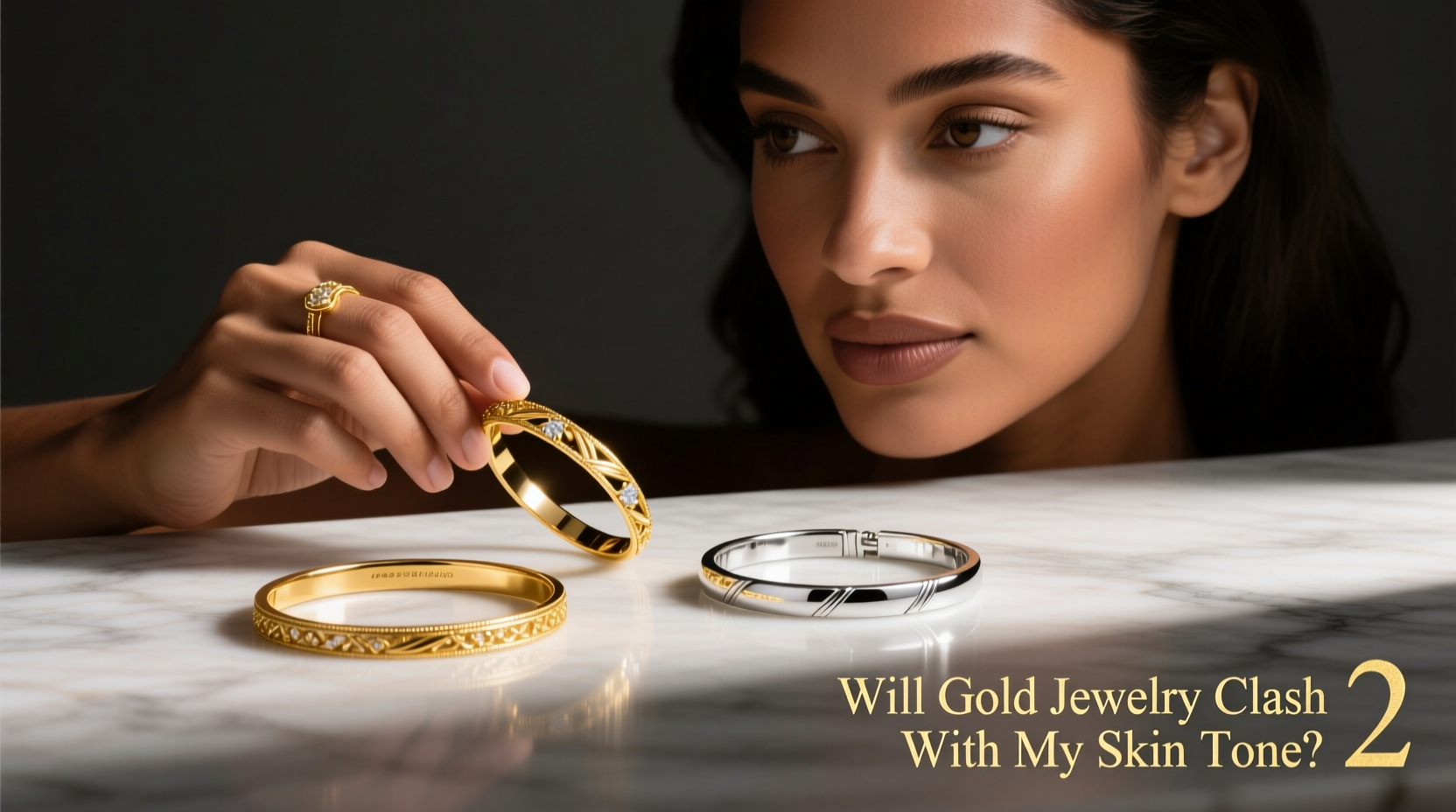
Will Gold Jewelry Clash With My Skin Tone?
The short answer: not inherently—but it depends on your undertone. Wearing yellow gold against a cool, pink-based complexion can create an unintended contrast, sometimes making the skin appear sallow or washed out. Conversely, pairing silver with warm olive skin might cast a grayish tint, diminishing natural vibrancy.
Rose gold offers a compelling middle ground. Its copper alloy gives it a warm-pink hue that flatters a broader range of tones, including many neutral and some cool complexions. This makes it particularly popular in modern designer bracelet collections, where versatility is prized.
“Metal choice should elevate your features, not compete with them. When in doubt, try both under daylight—the one that makes your eyes brighter and skin clearer is the right match.” — Lena Torres, Celebrity Stylist & Color Consultant
A Real-Life Example: Choosing Confidence Over Convention
Take Maria, a graphic designer with cool, fair skin and a long-held belief that “gold isn’t for her.” She avoided it entirely, sticking to silver and white gold. But during a trip to Marrakech, she tried on a handcrafted Moroccan gold cuff at a boutique. Against expectation, the warm metal didn’t clash—it created a striking contrast that drew attention to her cheekbones and made her hazel eyes shimmer.
She later learned her neutral-cool undertone could support richer golds, especially those with lower karat blends that included copper. The experience shifted her entire approach to accessorizing. Today, she layers a thin gold bangle under her watch daily, proving that rules are guides—not absolutes.
How to Test Jewelry Compatibility: A Step-by-Step Guide
You don’t need a professional consultation to determine what works. Follow this simple process to assess metal compatibility at home or in-store:
- Find Natural Light: Stand near a window during midday. Artificial lighting distorts color perception.
- Expose Your Wrist: Roll up your sleeve and remove existing jewelry from one arm.
- Hold Metal Samples: Place a gold and silver bracelet side by side on each wrist. Observe how your skin reacts.
- Check Reflection: Does the metal make your face look brighter? Duller? Are shadows under your eyes less pronounced?
- Compare Veins: Recheck your wrist veins while wearing each metal. Greenish hints suggest gold wins; bluish ones favor silver.
- Take Photos: Snap quick pictures. Sometimes the camera reveals what the eye misses.
If you're shopping online, order from retailers with generous return policies and test pieces at home within 24 hours.
Tip: Don’t judge jewelry in fluorescent store lighting. Step outside or into a well-lit room to see the true effect.Building a Balanced Jewelry Wardrobe
Monogamy to one metal limits your styling potential. A well-curated collection includes both gold and silver pieces, allowing flexibility across seasons, outfits, and occasions. Here’s how to mix them intentionally without clashing:
- Choose a dominant metal per outfit and use the other as an accent.
- Opt for transitional metals like champagne gold or oxidized silver.
- Layer bracelets with mixed metals using a unifying element—a shared gemstone, texture, or design motif.
- Match your jewelry to your clothing’s undertones. Pair gold with warm-toned fabrics (terracotta, mustard), silver with cool ones (navy, emerald).
Checklist: Selecting the Right Designer Bracelet
- ✅ Determine your skin’s undertone using the vein or white paper test
- ✅ Try on both gold and silver in natural light
- ✅ Consider maintenance requirements (tarnish resistance, scratch durability)
- ✅ Evaluate how the piece complements your everyday wardrobe
- ✅ Ensure comfort and proportion—bracelets shouldn’t pinch or slide excessively
- ✅ Verify authenticity and craftsmanship if buying luxury brands
Frequently Asked Questions
Can I wear gold if I have dark skin?
Absolutely. Deep and rich skin tones often glow magnificently with gold, especially high-karat varieties. Yellow and rose gold enhance warmth and depth, making them ideal choices. Silver can work too, particularly for contrast in formal settings.
Does fake gold always turn my skin green?
Not always, but low-quality alloys containing copper or nickel can react with sweat and acids on the skin, causing discoloration. Opt for hypoallergenic coatings or real gold plating over surgical steel to avoid this issue.
Is it outdated to match all jewelry to one metal?
No—it’s a classic approach that ensures cohesion. However, modern fashion embraces intentional mixing. The key is balance and purpose, not randomness.
Final Thoughts: Wear What Makes You Feel Radiant
While understanding skin tone and metal compatibility provides valuable guidance, the most important factor is how you feel when you wear a piece. Confidence transforms any accessory into a statement. Whether you choose a sleek silver tennis bracelet or a bold gold link design, let intention guide your selection—not fear of clashing.
Experiment. Layer. Break rules thoughtfully. The right designer bracelet doesn’t just sit on your wrist—it completes you.
💬 Found your perfect metal match? Share your story or ask questions in the comments—we’d love to hear how gold or silver has transformed your style journey.