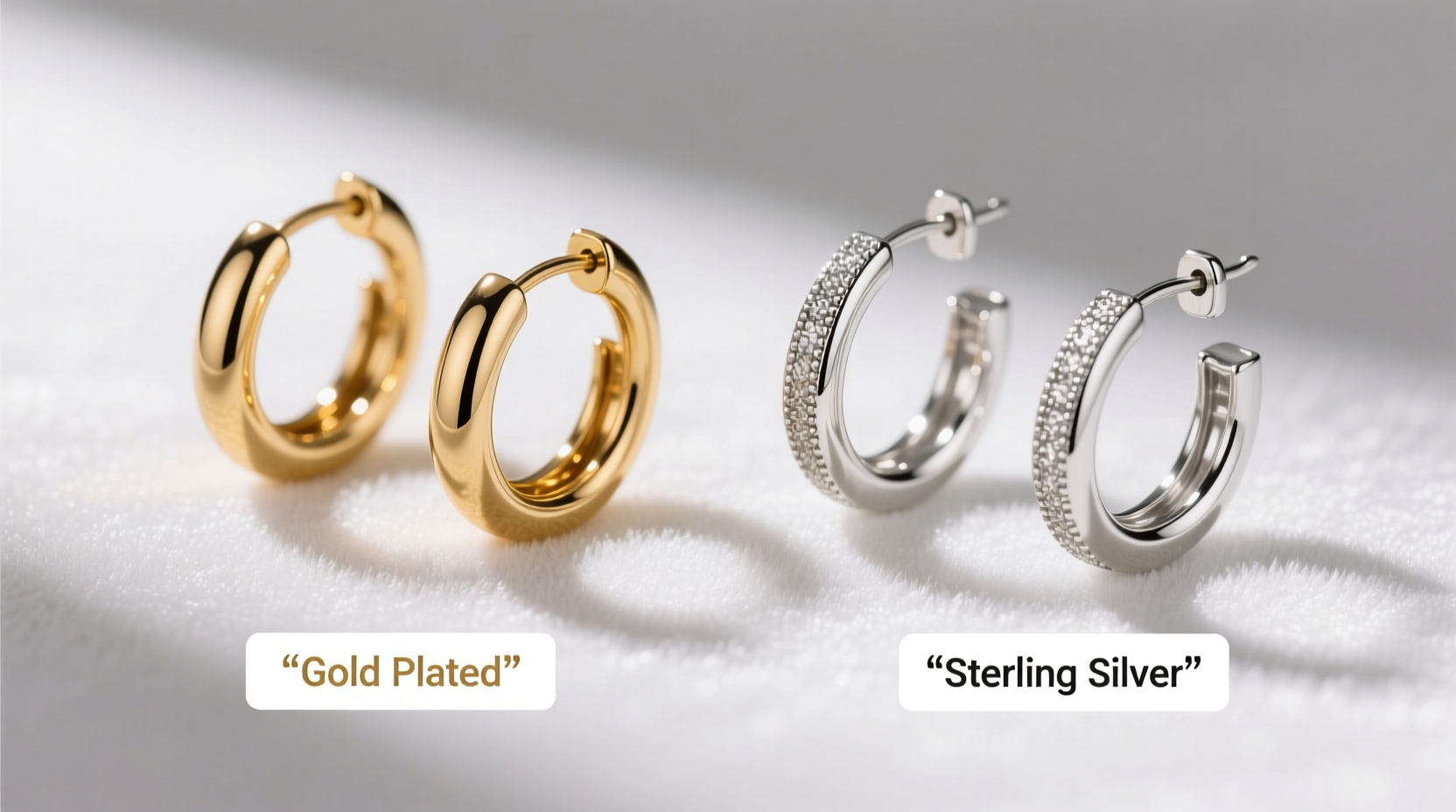
When shopping for hoop earrings, two of the most common materials you’ll encounter are gold plated and sterling silver. At first glance, the price difference can be striking—sterling silver often costs more than gold plated options. But does that higher price tag translate into real value? Understanding the differences in composition, longevity, maintenance, and overall worth helps clarify whether you’re paying for quality or just perception.
Understanding the Materials: What You're Actually Wearing
Before comparing cost, it’s essential to understand what each material is made of and how it performs over time.
Sterling silver is an alloy composed of 92.5% pure silver and 7.5% other metals, typically copper. This blend increases strength while maintaining the lustrous shine silver is known for. It’s hypoallergenic for most wearers and naturally resistant to tarnish—though not immune.
Gold plated jewelry, on the other hand, consists of a base metal (often brass or copper) coated with a thin layer of real gold, usually between 0.5 to 2.5 microns thick. The plating gives the appearance of solid gold at a fraction of the cost. However, because the gold layer is so thin, it wears off over time, especially with daily use.
Tip: Always check product descriptions for plating thickness—higher micron counts mean longer-lasting gold finish.Price vs. Value: Is Sterling Silver Worth the Investment?
It’s common to see gold plated hoops priced at $15–$30, while sterling silver versions range from $40–$80. That gap raises a valid question: is the extra cost justified?
The answer lies in long-term value. While gold plated earrings offer instant aesthetic appeal, their lifespan is limited. Frequent exposure to moisture, sweat, and chemicals causes the gold layer to fade, chip, or wear through, revealing the base metal underneath. Once that happens, the earrings lose both beauty and resale value.
In contrast, sterling silver maintains its integrity over years. Though it may develop a patina, this can be easily polished away. With proper care, a pair of sterling silver hoops can last decades and even become heirloom pieces.
“Sterling silver is an investment in lasting elegance. Gold plating offers affordability but requires frequent replacement.” — Lena Patel, Jewelry Designer & Material Specialist
Comparing Durability and Maintenance Needs
Daily wear demands durability. How each type holds up under regular use is a critical factor in determining true cost-effectiveness.
| Feature | Gold Plated Hoops | Sterling Silver Hoops |
|---|---|---|
| Lifespan (with daily wear) | 6 months – 2 years | 5+ years |
| Tarnish Resistance | High initially; degrades as plating wears | Moderate; develops patina over time |
| Hypoallergenic Properties | Depends on base metal; nickel content can cause reactions | Generally safe; low allergy risk |
| Care Requirements | Avoid water, perfume, lotions; store separately | Polish monthly; store in anti-tarnish pouch |
| Repair/Restoration Options | Re-plating possible but often not cost-effective | Polishing, re-tipping, resizing available |
As shown, sterling silver wins in longevity and repairability. Gold plated hoops require more cautious handling to preserve their appearance, making them better suited for occasional wear rather than everyday use.
Real-Life Example: Two Years of Wear Compared
Consider Sarah, who bought two pairs of medium-sized hoops: one gold plated ($28), the other sterling silver ($65). She wore both regularly—about four times a week.
Within six months, the gold plated pair began showing signs of wear. The inner curve, where earrings rub against clothing, started flaking. By month ten, the base metal was visible, and the color looked uneven. She stopped wearing them by the 14-month mark.
The sterling silver pair darkened slightly after eight months but regained its shine after a five-minute polish with a silver cloth. After two years, they still look nearly new and remain her go-to accessory.
Factoring in replacement costs, Sarah would need to buy three to four gold plated pairs to match the lifespan of one sterling silver pair—totaling $84–$112 versus a single $65 investment. In this scenario, sterling silver proves more economical over time.
How to Extend the Life of Either Option
Regardless of material, proper care dramatically improves longevity. Follow these steps to protect your investment:
- Remove before sleeping, showering, or exercising. Sweat and moisture accelerate tarnishing and plating wear.
- Apply makeup, perfume, and hair products first. Chemicals in cosmetics degrade metal finishes.
- Store in a dry, lined jewelry box. Use anti-tarnish strips if storing silver long-term.
- Clean gently and regularly. Use a soft polishing cloth for silver; for gold plated, wipe with a dry microfiber cloth only.
- Avoid ultrasonic cleaners for plated jewelry. These can strip the gold layer rapidly.
FAQ: Common Questions About Gold Plated vs Sterling Silver
Can I wear gold plated earrings every day?
You can, but expect faster wear. Daily exposure to friction, moisture, and chemicals shortens the plating’s life. For everyday wear, opt for vermeil (thick gold over sterling silver) or solid gold instead.
Why do some sterling silver earrings turn my skin green?
This rare reaction is usually due to the copper in the alloy reacting with skin acidity or sweat. It’s harmless and temporary. Coating the earring backs with clear nail polish creates a barrier and prevents discoloration.
Is gold filled a better alternative to gold plated?
Yes. Gold filled jewelry contains 100x more gold than plated and is bonded using heat, making it far more durable. It resists wear much longer and is closer in performance to solid gold—though still not quite equal to sterling silver in structural resilience.
Final Verdict: Price Reflects Long-Term Value
The price difference between gold plated and sterling silver hoop earrings isn’t arbitrary—it reflects material quality, durability, and long-term value. Gold plated options serve a purpose: affordable fashion statements for seasonal trends or special events. But when worn frequently, they degrade quickly, leading to repeated purchases.
Sterling silver, though pricier upfront, delivers consistent performance, timeless appeal, and lower lifetime cost. It’s ideal for staples in your jewelry collection—pieces you reach for daily and plan to keep for years.
If budget allows, prioritize sterling silver for core items like hoops, studs, and chains. Reserve gold plated jewelry for bold, trendy designs you don’t plan to wear daily. This balanced approach maximizes both style and savings.
💬 Have a favorite pair of hoops that stood the test of time? Share your experience and help others decide what’s truly worth the price.








