
Films centered on gifted individuals often transcend entertainment. They explore the boundaries of human potential, challenge societal norms, and illuminate the emotional weight that comes with exceptional talent. Whether it's a child prodigy mastering quantum physics or a person unlocking telekinetic powers through trauma, these stories captivate because they reflect our deepest hopes: to be seen, understood, and capable of changing the world in ways others cannot. The best of these films balance wonder with realism, celebrating brilliance while acknowledging isolation, pressure, and the search for belonging.
The Emotional Weight of Being Gifted
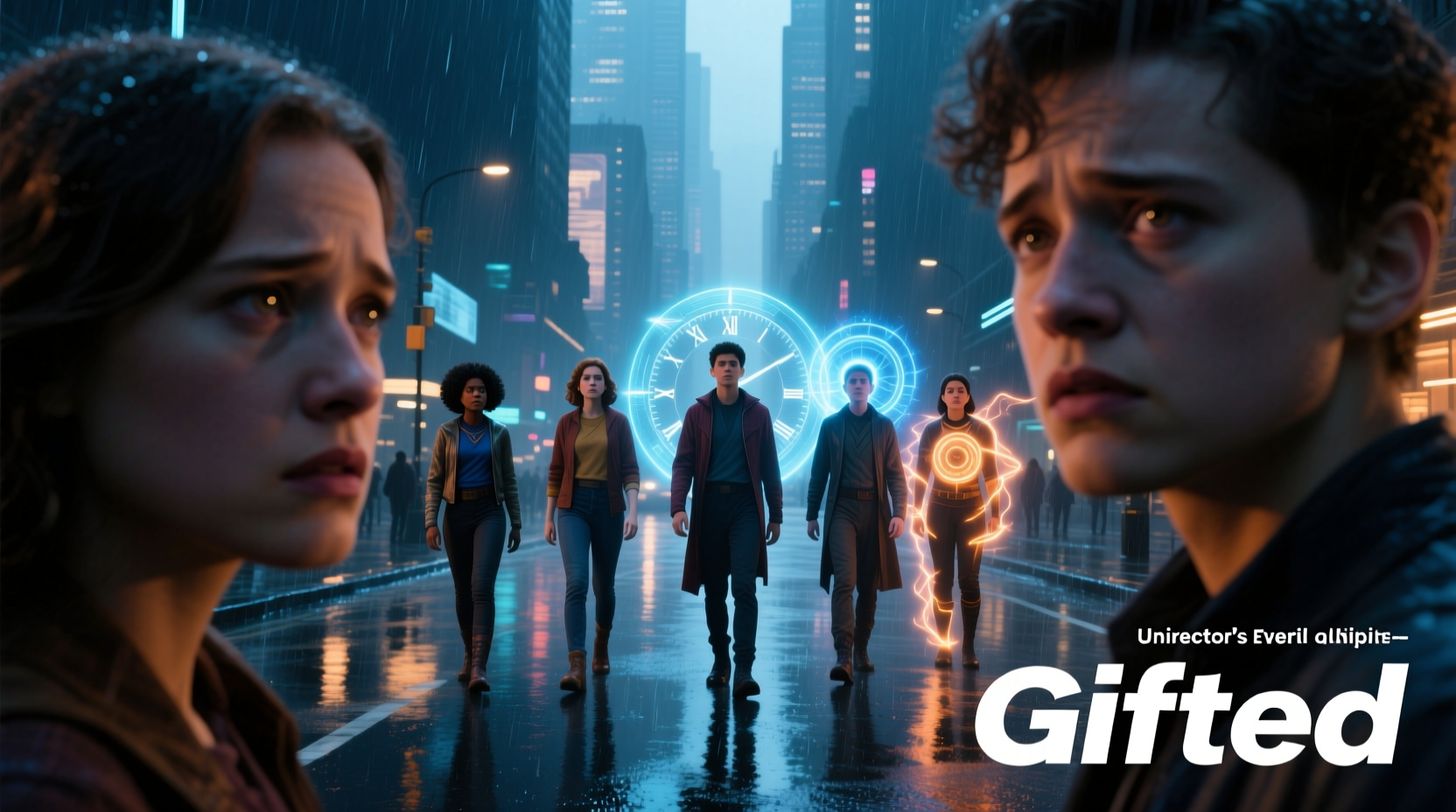
Extraordinary ability is rarely portrayed as an unalloyed gift. In cinema, high intelligence or supernatural talents often come at a cost—social alienation, fractured relationships, or internal turmoil. This duality makes such narratives compelling. Characters like Will Hunting in Good Will Hunting possess genius-level mathematical insight but struggle with trust and self-worth. Similarly, in Little Miss Sunshine, Olive’s precociousness contrasts sharply with her family’s dysfunction, highlighting how society often misunderstands or misuses giftedness.
The emotional arc of these characters typically involves not just achievement, but integration—learning to accept their gifts without being defined by them. This journey resonates with viewers who may have felt out of step with their peers due to unique talents or perspectives.
“Giftedness isn’t just about IQ—it’s about sensitivity, depth of processing, and a relentless need to understand. These traits can be both empowering and exhausting.” — Dr. Joy DeLeo, Developmental Psychologist
Top Inspiring Films About Extraordinary Abilities
The following films stand out for their thoughtful portrayal of gifted individuals, blending narrative depth with emotional authenticity. Each explores different forms of giftedness—intellectual, intuitive, artistic, and even psychic—with care and nuance.
| Movie | Year | Type of Ability | Key Theme |
|---|---|---|---|
| A Beautiful Mind | 2001 | Mathematical Genius | Genius intertwined with mental illness |
| Gifted | 2017 | Child Prodigy (Mathematics) | Balancing education with childhood |
| Limitless | 2011 | Cognitive Enhancement (Fictional drug) | Ethics of maximizing human potential |
| Carrie (1976) | 1976 | Telekinesis | Power born from trauma and repression |
| The Boy with the Incredible Brain (Documentary) | 2007 | Savant Syndrome / Hyperthymesia | Neurodiversity and memory mastery |
Why These Stories Resonate Across Cultures
Movies about extraordinary abilities succeed globally because they tap into universal questions: What does it mean to be different? How do we nurture potential without losing ourselves? In Japan, Departures explores emotional intelligence as a form of quiet genius. In India, Like Stars on Earth reframes dyslexia not as a deficit but as a different kind of perception—one that requires compassionate teaching to flourish.
These international examples reinforce a crucial idea: giftedness is not monolithic. It manifests in empathy, creativity, resilience, and vision—not just academic prowess. The most inspiring films recognize this breadth, portraying giftedness as a spectrum rather than a fixed point.
Real-Life Inspiration Behind the Screen
Many gifted-themed films are rooted in real experiences. A Beautiful Mind chronicles the life of John Nash, a Nobel laureate in economics who battled schizophrenia. His ability to distinguish reality from delusion late in life remains one of the most remarkable recoveries in psychiatric history.
Likewise, The Theory of Everything portrays Stephen Hawking’s intellectual ascent amid the progression of ALS. Though his physical capabilities diminished, his mind expanded the frontiers of cosmology. These biopics remind us that extraordinary ability often thrives not despite adversity, but in dialogue with it.
“Hawking didn’t just think about black holes—he redefined time, space, and our place in the universe. His disability became part of his intellectual lens.” — Dr. Elena Ruiz, Astrophysics Educator
Mini Case Study: From Classroom Outcast to National Recognition
In 2015, a 12-year-old girl from rural Ohio named Maya Thompson was initially dismissed as “disruptive” in school for correcting her teacher’s math solutions. After a psychologist identified her as profoundly gifted, she was enrolled in a specialized program. Inspired by watching Gifted, her mother advocated for dual enrollment at a local university. By age 16, Maya presented original research on algorithmic efficiency at a national STEM conference.
Her story underscores a key takeaway from gifted films: early recognition and empathetic support systems are critical. Without intervention, brilliance can be mistaken for defiance—or worse, suppressed entirely.
How to Use These Films for Personal Growth
Watching movies about giftedness isn’t just passive entertainment. These stories can serve as mirrors and maps—helping individuals understand their own experiences or those of loved ones. Parents, educators, and mentors can gain insight into the emotional needs of gifted children by observing character arcs in these films.
- Use Good Will Hunting to spark conversations about emotional vulnerability in high-achieving individuals.
- Show Like Stars on Earth in teacher training to highlight alternative learning styles.
- Analyze Limitless in ethics classes to debate cognitive enhancement technologies.
- Identify which film aligns with the person’s experience (e.g., social isolation, academic pressure).
- Watch together and pause for discussion at key emotional turning points.
- Ask open-ended questions: “How did the character handle being misunderstood?”
- Connect themes to real-life decisions—education paths, therapy, peer relationships.
- Follow up with books or documentaries that expand on the topic.
Common Misconceptions About Giftedness in Film
While many films get it right, some perpetuate myths. One common trope is the “lone genius”—a socially inept savant who solves world problems alone. In reality, collaboration and communication are vital components of sustained achievement. Another myth is that giftedness guarantees success. Films like Searching for Bobby Fischer counter this by showing the psychological toll of intense competition on young minds.
Additionally, cinematic portrayals often overlook intersectionality. A gifted Black girl in an underfunded school faces different challenges than a white boy in a private academy. More inclusive storytelling is needed to reflect the full landscape of giftedness.
FAQ
Are gifted films only about intelligence?
No. While many focus on intellectual ability, others explore emotional intelligence, artistic vision, or even supernatural talents. The core theme is usually exceptional capacity in a particular domain, coupled with personal growth.
Can watching these films help gifted individuals feel less alone?
Yes. Seeing characters navigate similar struggles—feeling misunderstood, pressured, or isolated—can provide validation and reduce feelings of alienation. Shared viewing can also open doors to meaningful conversations.
Is there a difference between giftedness and savant syndrome?
Yes. Giftedness generally refers to high general intelligence or advanced abilities in areas like math or language. Savant syndrome involves extraordinary skills in specific domains (like memory or music), often alongside developmental conditions such as autism. Films like Rain Man depict savant abilities, whereas Gifted focuses on general intellectual giftedness.
Conclusion: Embracing Extraordinary Potential
Films about gifted individuals do more than entertain—they educate, validate, and inspire. They challenge us to rethink how we define intelligence, how we support those who think differently, and how we create spaces where extraordinary abilities can flourish without sacrificing well-being. From the quiet brilliance of a child solving equations to the cosmic insights of a physicist defying physical limits, these stories remind us that human potential is vast, varied, and deeply human.
Whether you're a parent, educator, or someone who has always felt a little out of sync with the world, these films offer connection and clarity. Watch them not just for inspiration, but as tools for understanding. Share them with someone who might see themselves on screen for the first time.
🚀 Ready to explore your own potential? Start by watching one of the films listed, then reflect: What part of the story speaks to you? Share your thoughts with someone who understands—or help someone else feel seen.








