In a world where self-expression is stitched, pinned, and layered into everyday wear, enamel pins have emerged as quiet but powerful statements of identity. Whether clipped to a denim jacket, backpack, or corkboard, these small accessories carry big meaning. Among the most popular design categories are geometric and abstract pins—two styles that couldn’t be more different in form, yet equally compelling in function. Choosing between them isn’t just about aesthetics; it’s a reflection of your inner rhythm, your approach to order and chaos, and how you navigate the world.
Understanding the distinction between geometric and abstract pins—and what each says about personal style—can help you curate a collection that feels authentic, intentional, and deeply *you*.
The Logic of Lines: What Geometric Pins Say About You
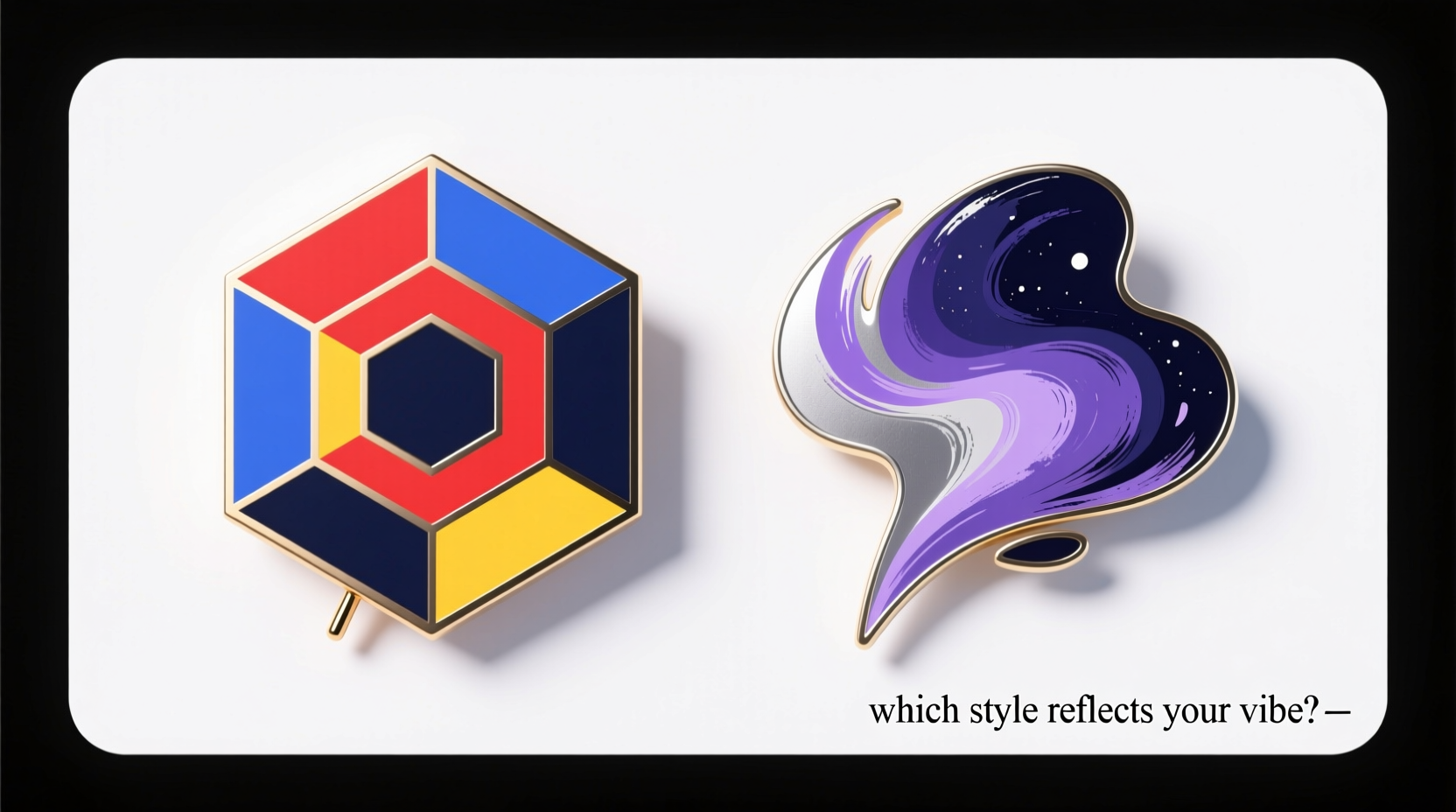
Geometric pins are defined by symmetry, repetition, and clean lines. Think triangles, hexagons, concentric circles, tessellating patterns, and structured mandalas. These designs rely on mathematical precision and visual balance. Wearing geometric pins often signals an appreciation for clarity, structure, and intentionality.
People drawn to geometric designs typically value organization, minimalism, and thoughtful planning. They may gravitate toward modern interiors, monochrome wardrobes, or careers in architecture, engineering, or data analysis. The appeal lies in control—the satisfaction of seeing elements fit together seamlessly, like pieces of a well-designed puzzle.
Tip: Pair geometric pins with structured outfits—tailored jackets or clean-lined bags—for a cohesive, polished look.Designers note that geometric patterns resonate with individuals who seek harmony in their environment. As graphic artist Lila Chen explains:
“There’s a calm in geometry. It doesn’t shout. It arranges itself quietly, and that speaks volumes to those who value precision.”
The Freedom of Form: The Allure of Abstract Pins
In contrast, abstract pins embrace unpredictability. They might feature splattered colors, asymmetrical shapes, surreal figures, or dreamlike compositions that resist definition. These pins don’t follow rules—they challenge them. Abstract designs often stem from emotional expression, subconscious inspiration, or experimental artistry.
If you’re drawn to abstract pins, you likely thrive on spontaneity, intuition, and creative exploration. You might enjoy journaling, painting, or improvisational music. Your wardrobe could be a mix of textures and eras—a vintage coat paired with neon sneakers. For you, fashion isn’t about matching; it’s about storytelling.
Abstract pins work best when layered. Their strength lies in contrast—placing a wild, color-drenched piece beside a minimalist watch creates tension, interest, and depth. This juxtaposition mirrors the wearer’s ability to hold opposing forces: logic and emotion, discipline and freedom.
Comparing Design Philosophies: A Visual Breakdown
| Feature | Geometric Pins | Abstract Pins |
|---|---|---|
| Design Basis | Mathematical patterns, symmetry | Emotion, imagination, randomness |
| Color Use | Minimal, monochromatic, or limited palette | Bold, contrasting, expressive combinations |
| Shape Language | Angular, circular, repeating forms | Irregular, flowing, unpredictable edges |
| Wearer Personality | Organized, detail-oriented, analytical | Creative, intuitive, open-minded |
| Best Styling Approach | Sparse placement, aligned layouts | Clustered arrangements, eclectic mixing |
Real-Life Example: Two Collectors, Two Visions
Consider Maya and Jordan, both avid pin collectors in their late twenties. Maya works as a UX designer and keeps her lapel adorned with a series of interlocking hexagons in matte black and silver. She arranges her pins in precise grids on her tote bag, rotating them seasonally based on theme and color harmony. “I like knowing there’s a system,” she says. “It makes me feel grounded.”
Jordan, a freelance illustrator, wears a rotating cast of abstract pins—some resembling melting clocks, others like explosions of paint trapped in metal. “I don’t plan where they go,” Jordan admits. “Sometimes I add one just because it ‘feels right’ that day. It’s like wearing my mood.”
Their collections reflect not just taste, but worldview. Maya finds comfort in predictability; Jordan thrives in ambiguity. Neither is better—both are valid expressions of self.
How to Choose: A Step-by-Step Guide
Selecting the right pin style shouldn’t be arbitrary. Follow this process to align your accessories with your authentic vibe:
- Assess Your Wardrobe: Do you lean toward neutral tones and tailored fits (geometric), or bold prints and mixed textures (abstract)?
- Reflect on Your Space: Is your home organized with matching decor, or filled with found objects and vibrant art?
- Consider Your Creative Habits: Do you sketch blueprints or write stream-of-consciousness poetry?
- Test with a Sample Pin: Try wearing one geometric and one abstract pin for a week each. Note how you feel.
- Evaluate Emotional Response: Which style makes you feel more seen, more like yourself?
This method moves beyond trend-chasing and centers authenticity. As stylist Marcus Reed notes:
“Accessories should mirror your interior landscape—not someone else’s Instagram feed.”
Tips for Styling Both Styles with Confidence
Tip: Don’t limit yourself to one category. Mix a single geometric pin into an abstract cluster to anchor the chaos.- For geometric lovers: Stick to three or fewer pins per item to maintain crispness. Align them vertically or in a triangle formation.
- For abstract enthusiasts: Embrace layering. Overlap pins slightly to create depth, but leave breathing room so designs aren’t lost.
- For hybrid wearers: Use geometric pins as borders or frames around a central abstract piece—this creates visual hierarchy.
- Always consider contrast: A white enamel geometric pin pops on a dark fabric, while a textured abstract piece stands out on smooth surfaces.
Frequently Asked Questions
Can I like both geometric and abstract pins?
Absolutely. Many people identify with aspects of both styles. You might prefer geometric designs at work and abstract ones for weekend outings. Authenticity isn’t about purity—it’s about alignment with context and mood.
Are geometric pins more professional than abstract ones?
Not inherently. A sleek geometric pin can enhance a professional look, but a tastefully chosen abstract pin—especially in muted tones—can convey creativity and individuality in fields like design, education, or media.
Do certain metals suit one style over the other?
Polished silver and gunmetal often complement geometric designs due to their precision-like finish. Abstract pins shine with antique finishes (like bronze or oxidized black) that enhance their vintage, handmade feel. However, this is a guideline, not a rule—experiment freely.
Build a Collection That Feels Like Home
Your pin collection is more than decoration—it’s a portable gallery of your evolving self. Geometric pins offer sanctuary in order; abstract pins celebrate the beauty of imperfection. One is not superior. The key is intentionality.
Start by auditing your current pins. Remove the ones that no longer resonate. Then, acquire new pieces not because they’re trendy, but because they echo something true within you. Whether you’re drawn to the stillness of a perfect circle or the riot of a color-splashed swirl, let your pins speak your language.
💬 Which style feels more like you—geometric precision or abstract freedom? Share your favorite pin combination and inspire others to wear their vibe proudly.








