
When it comes to everyday clothing choices, few decisions are as frequent or impactful as choosing between a formal shirt and a casual tee. Both have their place in modern wardrobes, but which one truly enhances your appearance? The answer isn’t simply about fashion—it’s about context, confidence, body type, and the message you want to send. Understanding the strengths and limitations of each garment allows you to make intentional choices that elevate your personal image.
The Role of Context: When Formal Shirts Shine
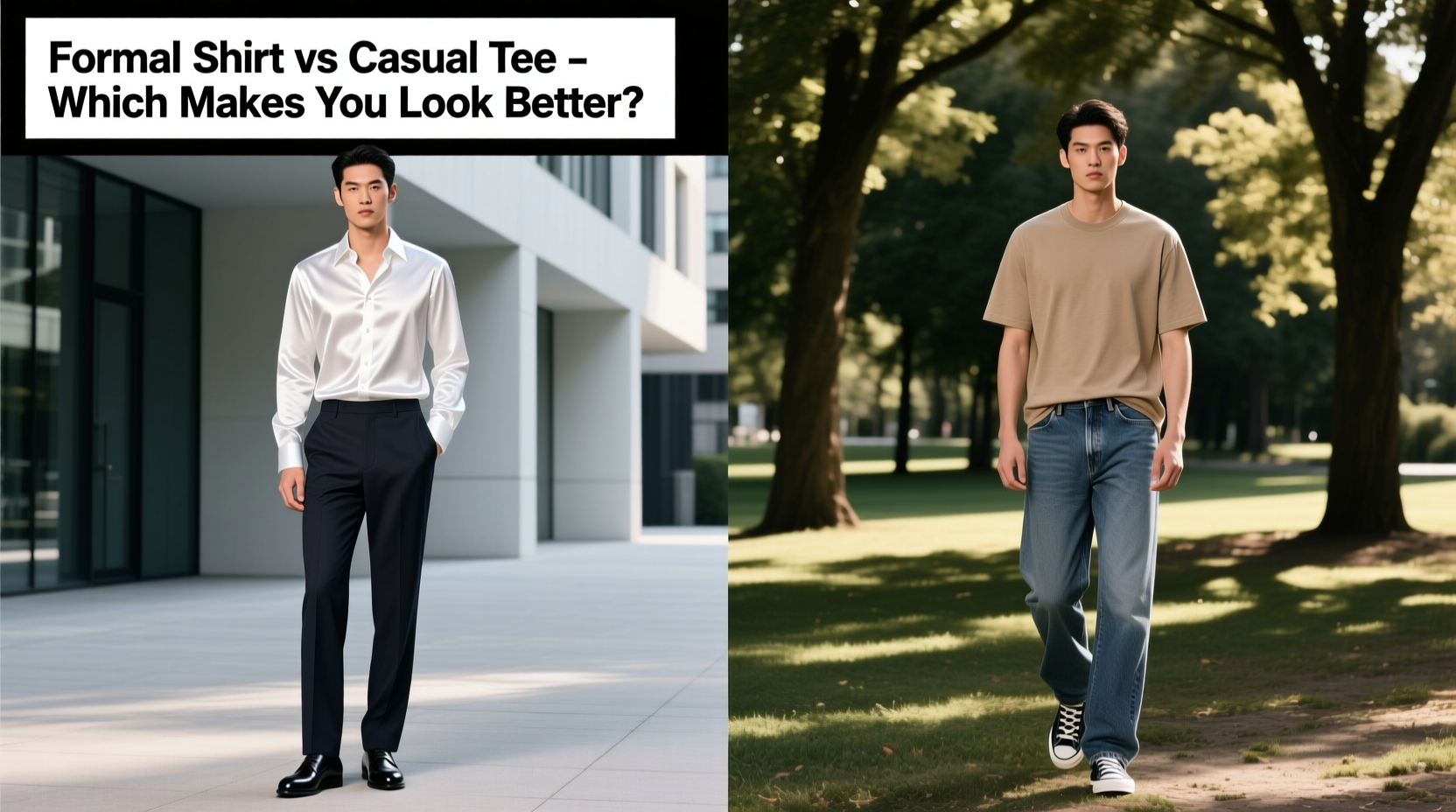
Formal shirts—typically made from cotton, poplin, or twill—are designed for structure and polish. They feature collars, buttoned fronts, structured shoulders, and often come with cuffs and plackets that convey attention to detail. These elements matter most in professional environments, business meetings, interviews, or formal social events.
In these settings, wearing a formal shirt signals preparedness and respect for the occasion. Studies in behavioral psychology suggest that people perceive those in formal attire as more competent, trustworthy, and authoritative. A 2015 study published in Social Psychological and Personality Science found that individuals dressed in formal clothing demonstrated higher levels of abstract thinking and were rated more favorably in leadership scenarios.
Tip: Always ensure your formal shirt fits well across the shoulders and doesn't pull at the buttons when seated.Casual Tees: Comfort First, But Style Possible
Casual t-shirts prioritize comfort and ease. Made from soft cotton or jersey blends, they lack structured collars and are typically worn untucked. While ideal for weekends, workouts, or relaxed gatherings, their informal nature can undermine authority in professional contexts.
However, a well-fitted tee in a neutral color—like charcoal, navy, or heather gray—paired with tailored chinos or dark jeans can project a modern, confident aesthetic. The key lies in fabric quality, fit precision, and coordination with other garments. A premium tee with clean lines and minimal branding can outclass a wrinkled, ill-fitting dress shirt any day.
“Clothing is nonverbal communication. A crisp shirt tells people you’re ready to engage; a great tee tells them you’re approachable—but only if everything else aligns.” — Marcus Lang, Menswear Stylist & Consultant
Finding the Right Fit: How Fabric and Cut Shape Perception
No garment looks good if it doesn’t fit properly. This principle applies equally to both formal shirts and casual tees. A baggy oxford shirt drapes poorly and adds visual bulk, while an overly tight graphic tee emphasizes flaws rather than form.
For formal shirts, aim for:
- A collar that sits snugly around the neck without pinching (you should fit two fingers inside).
- Sleeves ending at the wrist bone, allowing a quarter-inch of cuff to show under a jacket.
- A torso that doesn’t flare or bunch when buttoned.
For casual tees:
- Shoulder seams should align with the edge of your natural shoulder.
- Sleeve length should end mid-bicep, not too high or low.
- The hem should stay tucked or fall cleanly over the waistband without excess fabric.
Body Type Considerations
Your physique plays a major role in which garment flatters you more:
- Broad shoulders: Formal shirts enhance presence and balance proportions.
- Slender frame: A well-tailored tee avoids looking swallowed by fabric; avoid oversized styles.
- Heavier build: Solid-color formal shirts in non-reflective fabrics create a streamlined effect; avoid loud patterns.
Comparative Analysis: Formal Shirt vs Casual Tee
| Feature | Formal Shirt | Casual Tee |
|---|---|---|
| Best For | Office, interviews, weddings, client meetings | Weekends, travel, gym, casual outings |
| Perceived Authority | High | Low to Moderate |
| Comfort Level | Moderate (can feel restrictive) | High (breathable, flexible) |
| Versatility | Can be dressed up or down with layers | Limited without smart-casual pairing |
| Maintenance | Requires ironing, dry cleaning sometimes | Machine washable, low upkeep |
| Style Longevity | Years (classic cuts remain relevant) | Seasonal (trends shift quickly) |
Real-World Example: The Job Interview Turnaround
Take James, a 28-year-old marketing specialist who had been repeatedly passed over for mid-level roles despite strong qualifications. His initial interview outfit? A black crew-neck tee under a navy blazer. He thought it looked “modern” and “relaxed.” After feedback from a career coach, he switched to a light-blue pinpoint cotton shirt with a slim-fit suit.
The difference was immediate. In his next three interviews, he received offers from two companies. One hiring manager noted, “You looked like someone ready to lead a team.” The change wasn’t in James’ skills—it was in how he presented himself. The formal shirt elevated his credibility instantly.
Action Plan: Choosing the Right Top for Maximum Impact
Selecting between a formal shirt and a casual tee shouldn’t be arbitrary. Follow this step-by-step guide to make the best choice every time:
- Assess the occasion: Is it work-related, formal, or purely social?
- Evaluate the company culture: Tech startups may embrace tees; law firms expect shirts.
- Check your confidence level: Do you feel sharper in structured clothing or more natural in relaxed wear?
- Consider your audience: Are you meeting clients, peers, or friends?
- Inspect the garment: Wrinkles, stains, or fading diminish the value of either option.
- Pair strategically: A tee with tailored trousers and loafers reads \"smart casual\"; a shirt with jeans and sneakers leans \"business casual.\"
Essential Checklist Before You Choose
Use this checklist to ensure your top choice supports your goals:
- ✅ Does the color complement my skin tone?
- ✅ Is the fit flattering—not too tight or loose?
- ✅ Is the fabric clean, unwrinkled, and odor-free?
- ✅ Does it match the rest of my outfit in style and weight?
- ✅ Will I feel confident wearing it in this setting?
- ✅ Am I dressing slightly above the expected norm?
Frequently Asked Questions
Can a high-quality tee ever look as good as a formal shirt?
Yes—in casual or creative environments. A premium pique or slub cotton tee with a refined cut can project effortless style. However, it won’t convey the same level of professionalism or authority as a proper shirt in formal settings.
Do I need to wear a tie with a formal shirt to look better?
Not necessarily. A tie adds formality and structure, but many modern workplaces accept open-collar shirts under blazers. The key is neatness: a well-pressed shirt with coordinated accessories works with or without a tie.
What if I’m between sizes in both shirts and tees?
Always size up in tees for comfort; size down or tailor formal shirts for a sleeker silhouette. Off-the-rack sizing varies widely—measure yourself and refer to brand-specific charts before buying.
Final Verdict: It Depends—But Lean Toward Intentionality
There’s no universal winner between formal shirts and casual tees. Each excels in its domain. If your goal is to appear competent, credible, and put-together, the formal shirt wins in most adult professional contexts. If comfort, authenticity, and ease are priorities—and the setting allows it—the right casual tee can make you look effortlessly attractive.
The real question isn’t just “which makes you look better,” but “who do you want to be seen as?” Clothing shapes perception. Choose garments that reflect your aspirations, not just your habits.
💬 Ready to upgrade your wardrobe impact? Audit your tops this week: donate ill-fitting pieces, invest in two versatile formal shirts, and keep only the crispest tees. Small changes yield big returns in how others see you—and how you see yourself.








