When summer rolls around, sandals become a daily footwear staple. But as temperatures rise, so does the debate: flat sandals or heeled sandals—which option truly supports foot health? While style often drives the decision, long-term comfort and biomechanical impact should take priority. The truth is not all sandals are created equal, and choosing between flat and heeled designs involves more than aesthetics. Understanding how each type affects your arches, joints, and gait can help you make smarter choices for both short-term comfort and long-term mobility.
The Biomechanics of Walking in Sandals
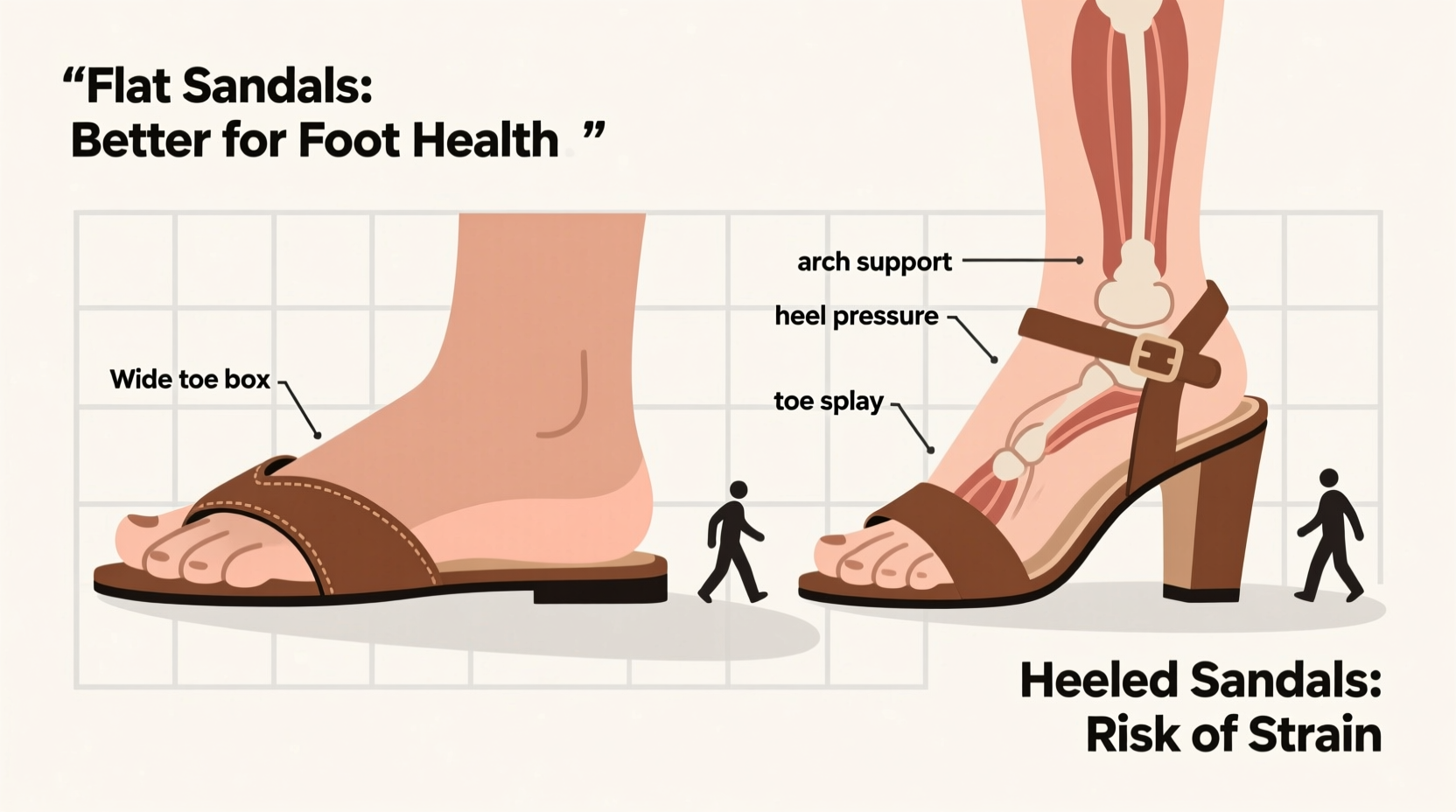
Walking in sandals introduces unique challenges compared to closed shoes. Without a heel counter or secure upper structure, stability relies heavily on foot strength and sandal design. Every step alters pressure distribution across the foot, particularly on hard surfaces like concrete or tile. In flat sandals, weight spreads more evenly from heel to toe. Heeled sandals, however, shift body weight forward, increasing pressure on the ball of the foot and toes.
This redistribution impacts more than just the feet. It cascades up the kinetic chain—altering ankle alignment, knee tracking, hip positioning, and even spinal posture. Over time, poor alignment can contribute to chronic pain, plantar fasciitis, metatarsalgia, and tendon strain. The key difference lies not only in height but in support, cushioning, and fit.
Tip: Always walk on a variety of surfaces when testing new sandals—include pavement, grass, and stairs—to assess real-world stability.Flat Sandals: Comfort with Caveats
Flat sandals are often praised for their natural foot positioning. When well-designed, they allow the foot to maintain its neutral alignment, minimizing unnatural torque on joints. Many podiatrists recommend flats for daily wear, especially styles with contoured footbeds, arch support, and shock-absorbing soles.
However, not all flat sandals are supportive. Flip-flops and minimalist slides—popular for their convenience—often lack cushioning and arch support. Prolonged use forces the toes to grip the shoe during walking, leading to strained tendons and altered gait patterns. This \"toe-clutching\" mechanism may contribute to conditions like hammertoes and neuromas over time.
Better-designed flat sandals feature:
- Anatomically shaped footbeds that mirror the foot’s natural curves
- Moderate arch support tailored to different foot types
- Heel cups that stabilize the rearfoot
- Durable, flexible outsoles with grip
“Flat doesn’t automatically mean healthy. A flat sandal without structure can be just as damaging as a high heel.” — Dr. Lena Patel, Podiatrist & Gait Specialist
Heeled Sandals: Style vs. Structural Strain
Heeled sandals offer elevation, elongated silhouettes, and fashion-forward appeal. From block heels to stilettos, they’re common at weddings, dinners, and events. But biomechanically, even moderate heels change how the body moves.
A heel elevated by just 1 inch shifts up to 75% of body weight onto the forefoot. At 3 inches, pressure on the ball of the foot can double. This concentrated force increases the risk of calluses, stress fractures, and Morton’s neuroma. Additionally, wearing heels regularly tightens the Achilles tendon and calf muscles, reducing ankle dorsiflexion over time—a factor linked to balance issues and increased fall risk in later years.
That said, not all heels are equally problematic. Lower block heels (1–2 inches) with wide bases and cushioned insoles distribute weight more safely than narrow stilettos. Some modern heeled sandals incorporate ergonomic features like rocker soles or memory foam padding, mitigating some negative effects.
Real Example: Office to Event Wear
Sophie, a 34-year-old marketing executive, wears flat sandals to work most days but switches to 3-inch heeled sandals for evening networking events. Over six months, she began experiencing sharp pain under her right foot after long evenings. A podiatrist diagnosed early-stage metatarsalgia caused by repetitive forefoot overload. By alternating with lower-heeled options and using silicone forefoot pads, her symptoms improved within weeks. Her case highlights how occasional heel use—even without daily wear—can still lead to cumulative damage if support is inadequate.
Comparative Analysis: Flat vs. Heeled Sandals
| Feature | Flat Sandals (Well-Designed) | Heeled Sandals (Moderate to High) |
|---|---|---|
| Foot Pressure Distribution | Evenly distributed heel-to-toe | Concentrated on forefoot |
| Arch Support Potential | High (in quality models) | Variable (often low) |
| Postural Alignment | Natural spine and joint alignment | Forward lean, increased lumbar curve |
| Ankle Stability | Moderate to high (with straps) | Reduced, especially above 2 inches |
| Risk of Long-Term Issues | Low, if supportive | Moderate to high (Achilles shortening, arthritis) |
| Ideal Use Case | All-day wear, walking, travel | Short-duration events, special occasions |
How to Choose Foot-Friendly Sandals: A Practical Checklist
Regardless of heel height, these criteria separate foot-healthy sandals from harmful ones:
- Contoured Footbed: Should follow the shape of your foot, not lie completely flat.
- Arch Support: Matches your arch type (low, medium, high).
- Heel Cup: Firm and slightly raised to cradle the heel.
- Secure Fit: Adjustable straps (ankle or instep) prevent slipping.
- Cushioned Sole: Absorbs impact, especially important on hard surfaces.
- Flexible Forefoot: Allows natural toe-off during walking.
- Wide Toe Box: Prevents crowding and friction.
Frequently Asked Questions
Can flat sandals cause plantar fasciitis?
Yes, if they lack proper arch support and cushioning. Flat sandals with no structure force the plantar fascia to absorb excessive strain, especially during prolonged standing or walking. People with flat feet or overpronation are at higher risk.
Are wedge sandals safer than stilettos?
Generally, yes. Wedges provide a larger surface area and distribute weight more evenly than narrow heels. However, very stiff or inflexible wedges can still restrict natural foot motion and increase pressure on the forefoot if not properly contoured.
How long is it safe to wear heeled sandals?
Most experts recommend limiting continuous wear of heels above 2 inches to 2–3 hours. After that, switch to supportive flats if possible. Carrying a pair of foldable recovery flats can help reduce cumulative strain during long outings.
Building a Foot-Smart Sandal Rotation
The best approach isn't choosing one type over the other—it's creating a rotation based on activity and duration. Think of footwear like tools: each suited to a specific job.
- Daily Commute/Walking: Opt for supportive flat sandals with good tread and arch integration.
- Outdoor Events (Grass, Sand): Choose flats with rugged soles; avoid heels that sink or destabilize.
- Evening Outings: If wearing heels, select block styles under 2.5 inches with padded insoles and ankle straps.
- Travel Days: Prioritize lightweight, supportive flats with excellent shock absorption.
- Recovery Days: Alternate with orthopedic sandals or go barefoot (on safe surfaces) to restore natural movement.
“The goal isn’t to eliminate heeled sandals, but to respect their physical cost. Balance them with restorative footwear.” — Dr. Marcus Tran, Biomechanics Researcher
Conclusion: Prioritize Function Without Sacrificing Style
When it comes to foot health, well-constructed flat sandals generally outperform heeled ones for everyday use. They promote natural alignment, reduce joint strain, and support long-term mobility. That doesn’t mean heeled sandals must be abandoned—they have their place in wardrobes, provided they’re worn mindfully and sparingly.
The real win lies in informed choices. Look beyond trends and prioritize construction, fit, and function. Invest in a few high-quality pairs that align with your lifestyle and foot type. Your feet don’t need perfection—they need consistency, support, and respect.
🚀 Ready to upgrade your summer footwear? Audit your current sandals using the checklist above—and share your favorite supportive pair in the comments to help others walk healthier.