Flasks are no longer hidden in coat pockets or tucked into hiking packs. Today, they appear on marble countertops at rooftop bars, rest beside artisanal coffee mugs on Instagram feeds, and dangle from leather crossbody straps during weekend strolls. What was once a purely functional—often discreet—item has evolved into a deliberate style statement. This resurgence isn’t driven by nostalgia alone; it’s the result of converging cultural shifts: renewed appreciation for tactile craftsmanship, growing demand for reusable alternatives to single-use plastics, and a broader aesthetic pivot toward intentional minimalism. Sleek metal flasks—particularly those crafted from brushed stainless steel, matte titanium, and copper-infused alloys—are now designed with the same care as luxury watches or high-end eyewear. They’re slim enough to slip into tailored blazers, engraved with subtle monograms, finished in muted earth tones or polished gunmetal, and engineered for both performance and presence.
The Design Renaissance: Why Form Finally Matches Function
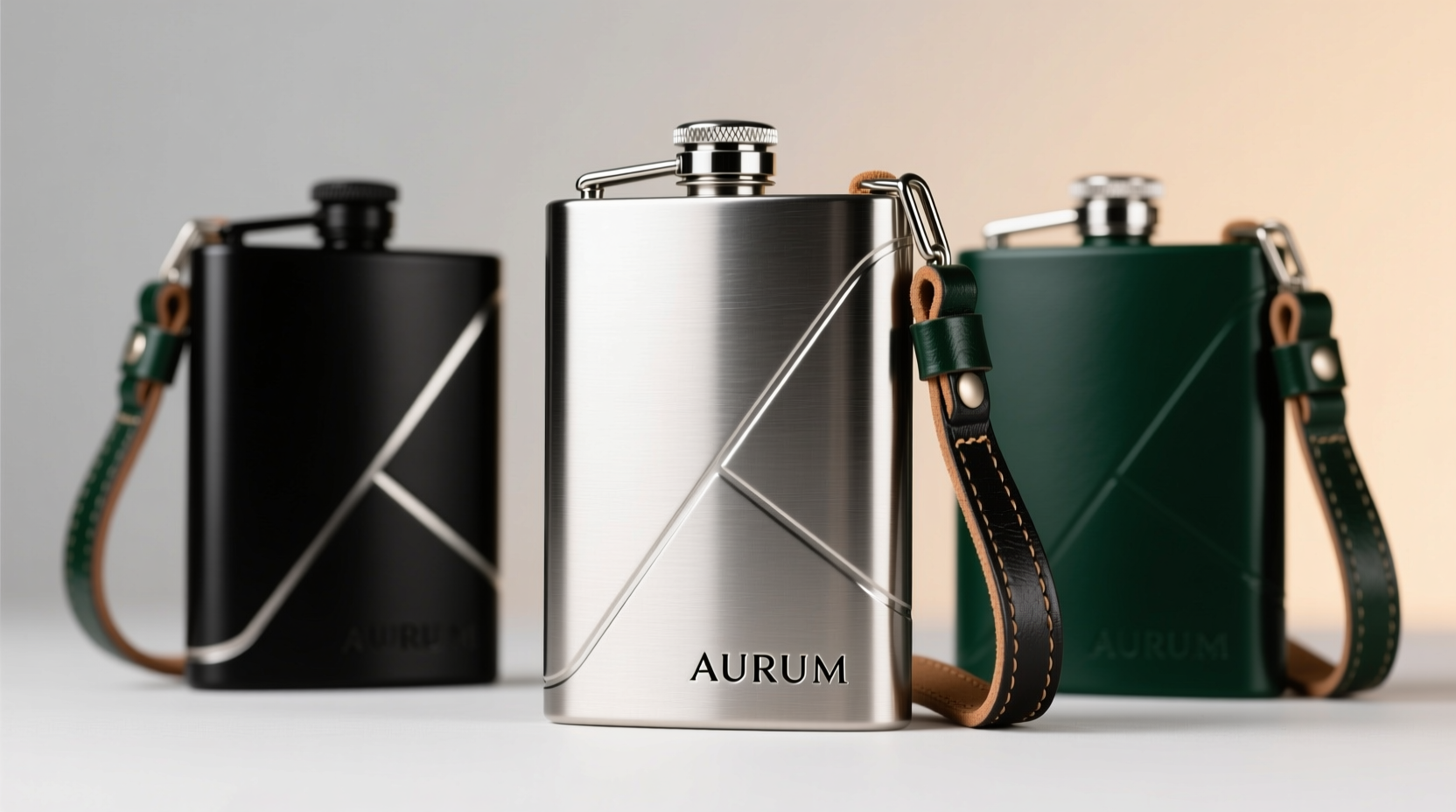
Early 20th-century flasks prioritized utility over aesthetics—bulky, utilitarian, often nickel-plated and prone to denting. Modern iterations reject that compromise. Contemporary designers treat the flask as a wearable object: its curvature echoes ergonomic grip studies, its weight distribution is calibrated for pocket comfort, and its surface finish resists fingerprints without sacrificing texture. Leading brands now collaborate with industrial designers who previously worked on premium audio equipment or medical devices—bringing precision tolerances, seamless welds, and non-slip micro-textured surfaces to a category once defined by stamped sheet metal.
This evolution is visible in three key design principles:
- Proportion refinement: The ideal modern flask sits between 6 and 7.5 inches tall and no more than 1.75 inches wide—slim enough for front pants pockets yet voluminous enough (typically 6–8 oz) to hold a proper pour without constant refills.
- Surface intelligence: Brushed finishes dominate—not just for scratch resistance, but because they diffuse light evenly, eliminating glare while conveying quiet sophistication. Some limited editions feature laser-etched geometric patterns or heat-treated oxide gradients that shift subtly in different lighting.
- Hardware integration: Hinges, caps, and lanyard attachments are no longer afterthoughts. Precision-machined screw-top closures use food-grade silicone gaskets for absolute leak-proofing, while magnetic cap retention systems allow one-handed operation—critical for users cycling, commuting, or navigating crowded spaces.
Material Matters: Beyond Stainless Steel
While 18/8 stainless steel remains the industry standard for corrosion resistance and thermal neutrality, discerning buyers are exploring nuanced alternatives that elevate both aesthetics and ethics.
| Material | Key Advantages | Design Impact | Considerations |
|---|---|---|---|
| Brushed 316 Marine-Grade Stainless | Superior saltwater and acid resistance; ideal for citrus-based mixers or coastal lifestyles | Deeper, cooler gray tone; holds polish longer than 18/8 | Slightly heavier; premium pricing reflects enhanced metallurgy |
| Titanium (Grade 2) | 45% lighter than steel; hypoallergenic; naturally antimicrobial surface | Matte, warm-gray hue; develops a soft patina over time—no two flasks age identically | Higher initial cost; requires specialized machining; limited engraving depth |
| Copper-Infused Stainless | Copper ions inhibit microbial growth on contact; improves perceived temperature stability | Subtle rose-gold undertone; pairs exceptionally well with walnut or cognac leather accessories | Requires occasional polishing to maintain luster; not recommended for prolonged alcohol storage above 40% ABV |
| Recycled Aluminum Alloy (7075-T6) | Made from post-consumer aerospace scrap; 30% less embodied energy than virgin aluminum | Lightweight matte silver; excellent for engraved typography due to softer grain structure | Less resistant to denting than steel; best suited for low-alcohol or non-alcoholic uses |
Material choice directly influences how a flask integrates into daily life. A titanium flask worn daily against skin won’t trigger allergic reactions common with lower-grade nickel alloys. A copper-infused version used for herbal infusions or cold-brew coffee enhances perceived freshness—a psychological effect validated in sensory studies conducted by the London College of Fashion’s Material Futures Lab.
A Real-World Shift: How One Designer Reimagined Utility
In early 2022, Brooklyn-based product designer Lena Cho launched Vesper Flasks after noticing her clients—architects, sommeliers, and sustainability consultants—carrying mismatched, ill-fitting flasks that clashed with their wardrobes. “They’d pull out something that looked like a relic from a prohibition-era film,” she recalls. “It undermined their entire aesthetic intention.”
Cho spent 14 months prototyping. She visited distilleries to observe how professionals handled spirits, consulted hand surgeons on grip ergonomics, and partnered with a Sheffield steel foundry to develop a proprietary cold-rolled finishing process. The result: the Vesper Slimline, a 6.8-ounce flask with a 1.6-inch profile, dual-wall construction for condensation control, and a cap system that rotates 180 degrees before releasing—preventing accidental spills when retrieving from tight pockets.
Within nine months, Vesper was stocked in 32 boutiques across North America and Europe—from Tokyo’s Dover Street Market to Copenhagen’s Samsøe & Samsøe. More telling: 68% of first-time buyers returned within six months for a second flask in a different finish, citing “color coordination with seasonal wardrobes” as their primary reason. This isn’t about drinking—it’s about curation.
“The flask is the last unbranded accessory in a world saturated with logos. Its power lies in restraint: clean lines, honest materials, and silence where others shout. That’s why it’s resonating now—not as a prop, but as punctuation.” — Lena Cho, Founder & Lead Designer, Vesper Flasks
Your Flask Styling Checklist
Integrating a sleek metal flask into your personal aesthetic requires more than purchase—it demands intentional pairing and mindful usage. Follow this field-tested checklist:
- Match metal tones intentionally: Pair a brushed steel flask with watch bands, belt buckles, and eyeglass frames in matching finishes—not mixed metals.
- Curate your contents deliberately: Avoid sugary liqueurs or acidic juices that can degrade seals or discolor interiors. Opt for aged spirits, fortified wines, or house-made shrubs.
- Rotate finishes seasonally: Matte black for winter layers, warm copper for autumn, titanium for summer linen ensembles.
- Engrave minimally—or not at all: Single-initial monograms centered on the front face work best. Avoid full names or dates unless the flask is a formal gift.
- Store upright, empty, and uncapped: Prevents gasket compression and allows interior evaporation, reducing residual odor buildup.
- Wipe after every use: A microfiber cloth removes oils and prevents fingerprint accumulation on polished surfaces.
Step-by-Step: Building Your First Signature Flask Ritual
A flask becomes meaningful only when integrated into rhythm—not routine. Here’s how to establish a sustainable, stylish practice:
- Week 1 — Observe & Assess: Track how often you reach for single-serve beverages. Note contexts: commuting? Post-work wind-down? Outdoor activities? Identify your top 2 usage scenarios.
- Week 2 — Select & Source: Choose a flask aligned with those scenarios (e.g., titanium for hiking, marine-grade steel for urban travel). Purchase from a brand offering lifetime hinge/cap warranty—this signals engineering confidence.
- Week 3 — Curate Contents: Prepare three signature pours: one spirit-forward (e.g., rye whiskey), one low-ABV option (e.g., vermouth spritz), one non-alcoholic (e.g., ginger-turmeric infusion). Store in amber glass bottles with dropper lids for easy refilling.
- Week 4 — Integrate Visually: Pair your flask with one complementary accessory: a custom-woven paracord lanyard, a leather sleeve with contrast stitching, or a minimalist clip holster. Photograph the ensemble in natural light—refine until it feels authentically yours.
- Ongoing — Refine & Reflect: Every 30 days, ask: Does this still serve my lifestyle? Does it reflect who I am now? Adjust contents, accessories, or even upgrade finishes as your needs evolve.
FAQ: Practical Questions, Straight Answers
Can I put sparkling wine or champagne in a sleek metal flask?
No. Carbonation creates internal pressure that exceeds the safe operating limits of most flask seals—even premium ones. Over time, this degrades gaskets and risks sudden cap release. For effervescent drinks, use insulated, pressure-rated stainless steel tumblers designed specifically for carbonation.
How do I remove stubborn odor or residue from the interior?
Fill the flask halfway with equal parts white vinegar and warm water. Seal and shake vigorously for 30 seconds. Let sit for 15 minutes (no longer—vinegar can dull some finishes). Rinse three times with hot water, then air-dry upside-down overnight with the cap off. Never use bleach or abrasive scrubbers.
Is engraving safe for all flask materials?
Laser engraving is safe for stainless steel and titanium. Mechanical engraving (rotary tools) risks micro-fractures in thin-walled aluminum or copper-infused alloys. Always confirm engraving method with the manufacturer—and avoid engraving near seams, hinges, or cap threads where structural integrity is critical.
Why This Moment Matters
The comeback of the sleek metal flask isn’t a trend—it’s a quiet correction. It responds to our collective fatigue with disposability, our longing for objects that earn their place through longevity and intention, and our desire to express identity without shouting. In an era where digital noise dominates, the physical presence of a well-designed flask offers grounding: the cool weight in your palm, the precise click of a cap, the satisfaction of a perfectly proportioned pour. These aren’t frivolous details—they’re anchors in a fragmented world.
Fashion has long been about signaling belonging, but today’s most resonant style statements speak to values: sustainability through reuse, craftsmanship through material honesty, and self-awareness through considered curation. A sleek flask does all three without uttering a word.
💬 Your turn: What’s the first thing you’ll pair your next sleek flask with—a tailored coat, a vintage motorcycle jacket, or your favorite tote? Share your vision in the comments. Let’s build a gallery of real-world elegance, one thoughtful pour at a time.