
The green Serrano chile is a cornerstone of Mexican cuisine, prized for its crisp heat, grassy aroma, and vibrant presence in salsas, marinades, and street food. Unlike milder jalapeños or searing habaneros, the Serrano occupies a distinctive middle ground—sharp enough to ignite the palate but balanced enough to enhance rather than dominate a dish. For home cooks seeking authentic flavor with real fire, understanding how to select, prepare, and deploy this slender green pepper is essential. Whether you're crafting a smoky salsa cruda, pickling slices for tacos, or infusing oils with its essence, the green Serrano delivers freshness and intensity in equal measure.
Definition & Overview
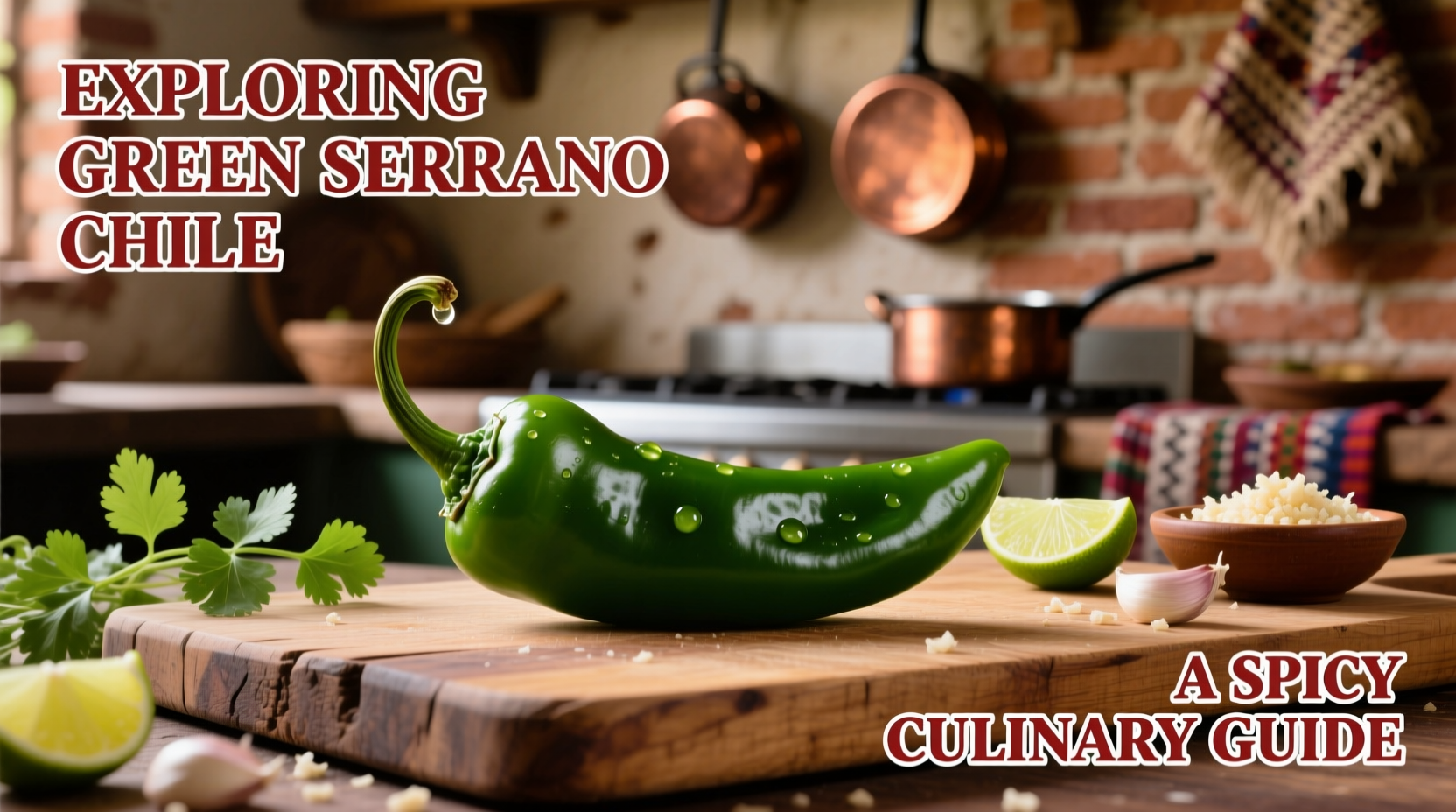
The green Serrano chile (Capsicum annuum) is a small, elongated chili pepper native to the mountainous regions of Puebla and Hidalgo in central Mexico. Its name derives from “sierra,” meaning mountain range, reflecting its high-altitude origins. Harvested while still unripe and vivid green, the Serrano matures into red, orange, or yellow variants—but it is most commonly used and recognized in its green form. Typically 1 to 4 inches long and about half an inch in diameter, it has smooth, taut skin and a tapering tip that gives it a sleek, almost elegant profile compared to the blockier jalapeño.
Culinary applications span centuries and borders. In traditional Mexican cooking, green Serranos are foundational in fresh salsas like pico de gallo and salsa verde, as well as cooked preparations such as chiles en nogada and mole amarillo. Their heat cuts through rich meats, brightens bean stews, and elevates simple dishes like scrambled eggs or grilled corn. Today, their popularity extends globally, appearing in fusion dishes, hot sauces, and even craft cocktails where a clean, vegetal spice is desired.
Key Characteristics
| Attribute | Description |
|---|---|
| Heat Level (Scoville) | 10,000–23,000 SHU — significantly hotter than jalapeños (2,500–8,000 SHU), but milder than habaneros (100,000–350,000 SHU) |
| Flavor Profile | Grassy, vegetal, slightly sweet with a sharp, immediate bite; more intense than jalapeño but less fruity than serranos at red maturity |
| Aroma | Fresh-cut green pepper with herbal top notes; becomes smokier when roasted |
| Color & Form | Smooth, glossy green skin; firm texture; conical shape tapering to a point |
| Culinary Function | Adds heat, brightness, and aromatic complexity; functions both raw and cooked |
| Shelf Life (Fresh) | 7–10 days refrigerated in crisper drawer; up to 6 months frozen or preserved |
The heat in green Serranos is concentrated in the ribs and seeds, though the flesh also carries significant capsaicin. Unlike some chilies that build slowly, the Serrano’s punch is fast and upfront, making it ideal for dishes where immediate spiciness is desired without lingering burn.
Practical Usage: How to Use Green Serrano Chile
Green Serranos are remarkably versatile. Their thin walls allow them to cook quickly, and their high moisture content makes them excellent for blending into sauces. Because they retain structure when chopped, they add textural contrast in raw preparations.
Raw Applications
In raw form, green Serranos shine in fresh salsas and garnishes. Finely diced, they integrate seamlessly into:
- Salsa Cruda: Combine 2 chopped Serranos (seeds removed for moderate heat) with 3 diced tomatoes, ½ white onion, 1 garlic clove, cilantro, lime juice, and salt. Let rest 15 minutes before serving with tortilla chips or tacos.
- Pico de Gallo: Use one seeded and minced Serrano per cup of tomato mixture. The pepper adds zip without overwhelming the freshness.
- Garnish for Tacos & Tostadas: Thinly slice into rings and scatter over carnitas, fish tacos, or guacamole for visual appeal and heat.
Tip: Always wear gloves when handling Serranos. Capsaicin can linger on fingers and cause irritation if transferred to eyes, nose, or skin. After chopping, wash knives, cutting boards, and hands thoroughly with soapy water.
Cooked Applications
Cooking mellows the Serrano’s sharpness and introduces deeper, earthier tones. Roasting enhances sweetness and reduces raw bite.
- Roasted Salsa Verde: Char 6 Serranos over open flame or under broiler until blackened. Steam in a bowl covered with plastic wrap for 10 minutes, then peel. Blend with 2 cups tomatillos, 1 small onion, 2 garlic cloves, and cilantro. Simmer 10 minutes for a complex, smoky sauce.
- Marinades: Purée 3 Serranos with orange juice, garlic, cumin, and oregano for a spicy citrus marinade ideal for chicken or pork. Marinate for 2–4 hours before grilling.
- Stews & Braises: Add one whole or halved Serrano to pozole, menudo, or black bean soup during simmering. Remove before serving if preferred, or leave in for diners to control heat.
Infusions & Preserved Forms
Preserving green Serranos extends their utility beyond harvest season.
- Vinegar-Pickled Slices: Pack sliced Serranos into a jar with garlic, oregano, and peppercorns. Cover with equal parts vinegar and water plus 1 tsp salt per cup. Refrigerate 48 hours before use. Excellent on sandwiches, tacos, or cheese boards.
- Oil Infusions: Lightly crush 4–5 Serranos and steep in 1 cup olive oil over low heat for 15 minutes. Cool and strain. Use for drizzling over grilled vegetables or pizza. Note: Do not store infused oils at room temperature due to botulism risk—always refrigerate and use within 2 weeks.
- Freezing Whole: Wash and dry peppers, place in freezer bag, and freeze up to 6 months. Thaw before use; texture softens but flavor remains intact.
Variants & Types
While the green Serrano is the most common, several variations exist based on ripeness, cultivation, and processing:
| Type | Description | Best Used For |
|---|---|---|
| Red Ripe Serrano | Matured version; sweeter, fruitier, slightly hotter (up to 25,000 SHU) | Salsas rojas, dried powders, roasted sauces |
| Dried Serrano (Chile Seco) | Dehydrated green or red Serranos; leathery texture, concentrated heat | Mojo sauces, spice blends, rehydrated in stews |
| Smoked Serrano (Rare) | Not commercially common, but can be homemade via smoking | Adding depth to salsas or rubs; substitute for chipotle in moderation |
| Canned or Jarred | Pickled or brined slices; often labeled \"Sliced Green Chilies\" | Convenient for soups, casseroles, or quick additions to rice dishes |
| Cultivars | ‘Hidalgo’ (standard), ‘TAM Mild’ (bred for lower heat), ‘Bola’ (shorter, rounder) | Select based on desired heat level and availability |
When selecting between types, consider whether freshness, convenience, or shelf life is prioritized. Fresh green Serranos offer the purest flavor, while preserved forms provide consistency and longer storage.
Comparison with Similar Ingredients
The green Serrano is often confused with other green chilies, especially jalapeños and poblano peppers. Understanding the differences ensures accurate substitution and better dish outcomes.
| Pepper | Heat (SHU) | Flavor | Texture | Best Substitution Ratio |
|---|---|---|---|---|
| Green Serrano | 10,000–23,000 | Sharp, grassy, bright | Firm, thin-walled | N/A |
| Jalapeño | 2,500–8,000 | Milder, buttery, slightly sweet | Thicker flesh, meatier | Use 2 jalapeños per 1 Serrano for similar heat |
| Poblano | 1,000–2,000 | Earthy, mild, bell pepper-like | Very thick, fleshy walls | Not a heat substitute; use only for bulk/mass |
| Habanero (green) | 100,000–350,000 | Fruity, floral, intensely hot | Thin-walled, lantern-shaped | Use 1/4 to 1/2 habanero per 1 Serrano—handle with care |
| Thai Bird’s Eye Chili | 50,000–100,000 | Floral, citrusy, rapid-onset heat | Small, upright pods | Use 1 bird’s eye per 3–4 Serranos for equivalent heat |
“The Serrano is the workhorse of Mexican salsas. It’s got more fire than a jalapeño but doesn’t steal the show like a habanero. When you want authenticity and balance, reach for the Serrano.” — Chef Elena Ruiz, Oaxaca Culinary Institute
Practical Tips & FAQs
How hot is a green Serrano compared to other chilies?
On average, a green Serrano is about 3 times hotter than a typical jalapeño. One Serrano may deliver the same heat as 2–3 jalapeños, depending on growing conditions. Heat varies plant-to-plant, so taste a small piece before committing to a recipe.
Can I substitute jalapeño for Serrano?
Yes, but expect a milder result. To match heat, use two jalapeños (with seeds) for every one Serrano. Keep in mind that jalapeños have a richer, less vegetal flavor, which may alter the final taste slightly.
How do I reduce the heat of a Serrano?
Remove the inner ribs and seeds—the primary source of capsaicin. Soaking chopped peppers in cold milk or lime juice for 10 minutes can also temper the burn. Cooking further reduces perceived heat.
Are green Serranos safe to eat raw?
Yes. They are commonly consumed raw in salsas and salads. However, those with sensitive digestive systems may experience discomfort due to capsaicin. Start with small amounts if new to spicy foods.
How should I store fresh Serrano chiles?
Store unwashed in a paper towel-lined container in the refrigerator’s crisper drawer. Avoid plastic bags unless perforated—excess moisture accelerates spoilage. Use within 10 days.
Can I grow my own Serrano peppers?
Absolutely. Serranos thrive in warm climates (USDA zones 9–11) or containers indoors. They require 6–8 hours of sunlight, well-draining soil, and regular watering. Plants yield fruit 70–80 days after transplanting.
What dishes pair best with green Serrano?
They excel in:
- Fresh salsas and guacamole
- Tacos al pastor, carne asada, and fish tacos
- Eggs (chilaquiles, huevos rancheros)
- Bean soups and pozole
- Grilled seafood and poultry
- Ceviche (finely minced)
Is there nutritional value in green Serrano chiles?
Yes. They are rich in vitamin C (one pepper provides over 100% of daily needs), vitamin A, potassium, and antioxidants like capsanthin. Capsaicin has been studied for metabolic and anti-inflammatory benefits.
Pro Tip: For restaurant-style control, prepare Serrano in three forms: raw (for freshness), roasted (for depth), and pickled (for tang). Having all three on hand allows layering of flavors in complex dishes.
Summary & Key Takeaways
The green Serrano chile is a dynamic, indispensable ingredient for anyone serious about bold, authentic flavor. With a Scoville rating between 10,000 and 23,000 units, it delivers a clean, grassy heat that enhances rather than overwhelms. Smaller and hotter than a jalapeño, yet more approachable than tropical superhots, it bridges the gap between accessibility and intensity.
Its culinary versatility spans raw salsas, roasted sauces, marinades, and preserved forms like pickles and infused oils. When selecting, look for firm, glossy peppers without wrinkles or soft spots. Store in the refrigerator for up to 10 days or freeze for long-term use.
Understanding how it differs from similar chilies—especially jalapeños and poblanos—ensures proper usage and substitution. Whether you're building a layered salsa, spiking a morning omelet, or pickling for future tacos, the green Serrano offers precision heat and unmistakable character.
To master Mexican and Latin-inspired cooking, treat the green Serrano not as an accent, but as a lead ingredient. Learn its rhythms—how it behaves raw versus cooked, fresh versus preserved—and you’ll unlock a new dimension of flavor in your kitchen.
Next time you’re at the market, pick up a handful of green Serranos. Try roasting half and using the rest raw in a side-by-side salsa test. Taste the difference heat application makes—and discover why this slender green pepper remains a chef’s secret weapon.









