Gold plated necklaces offer the luxurious look of solid gold at a fraction of the cost. However, their delicate surface is prone to wear, tarnishing, and discoloration if not properly cared for. Unlike solid gold, the thin layer of real gold over a base metal can fade or peel with exposure to moisture, chemicals, and friction. With the right maintenance routine, you can preserve the radiant finish and extend the life of your favorite pieces for years. Understanding the science behind plating and adopting consistent care habits makes all the difference.
Understanding Gold Plating: What You’re Working With
Gold plating involves bonding a thin layer of real gold—typically 0.5 to 2.5 microns thick—onto a base metal such as brass, copper, or stainless steel. The process, often done through electroplating, gives the jewelry a rich, golden appearance. However, because the gold layer is so thin, it wears away over time, especially in high-friction areas like clasps or chain links.
The longevity of the plating depends on several factors: thickness of the gold layer (measured in microns), quality of the base metal, frequency of wear, and environmental exposure. High-quality gold vermeil, which uses sterling silver as the base and thicker gold plating (usually 2.5+ microns), lasts significantly longer than standard gold plating.
“Gold plating isn’t permanent, but its lifespan is largely in the wearer’s hands. How you store, clean, and wear your necklace determines whether it lasts six months or three years.” — Lena Torres, Master Jeweler & Restoration Specialist
Daily Wear Practices That Preserve Shine
Everyday habits play a critical role in how quickly your gold plated necklace loses its luster. Simple behavioral adjustments can drastically reduce wear and oxidation.
Tip: Always put on your gold plated necklace after applying makeup, perfume, and hairspray. These products contain chemicals that accelerate tarnishing.Avoid wearing your necklace while swimming, showering, or exercising. Chlorine, saltwater, sweat, and soap strip the gold layer and corrode the underlying metal. Even daily handwashing exposes the piece to moisture and detergents. Remove your necklace before these activities to prevent micro-damage that accumulates over time.
Friction is another silent enemy. Necklaces rubbing against clothing, especially rough fabrics like wool or knits, cause microscopic abrasions. Over time, this leads to flaking. When wearing your piece, opt for soft, smooth fabrics and avoid turtlenecks or scarves that create constant contact.
Proper Cleaning Techniques for Gold Plated Jewelry
Cleaning gold plated necklaces requires a gentle touch. Harsh scrubbing or abrasive cleaners will remove the gold layer entirely. Instead, use mild solutions and soft materials.
Step-by-Step Cleaning Guide
- Remove the necklace and lay it flat on a clean, dry surface.
- Use a soft, lint-free microfiber cloth to gently wipe away oils and dust.
- If needed, dampen a corner of the cloth with warm water mixed with a single drop of mild dish soap.
- Gently rub the chain, focusing on areas near the clasp and pendant where grime collects.
- Rinse by wiping with a second cloth dampened only with water.
- Dry thoroughly with a clean, dry section of the microfiber cloth.
- Allow to air-dry completely before storing.
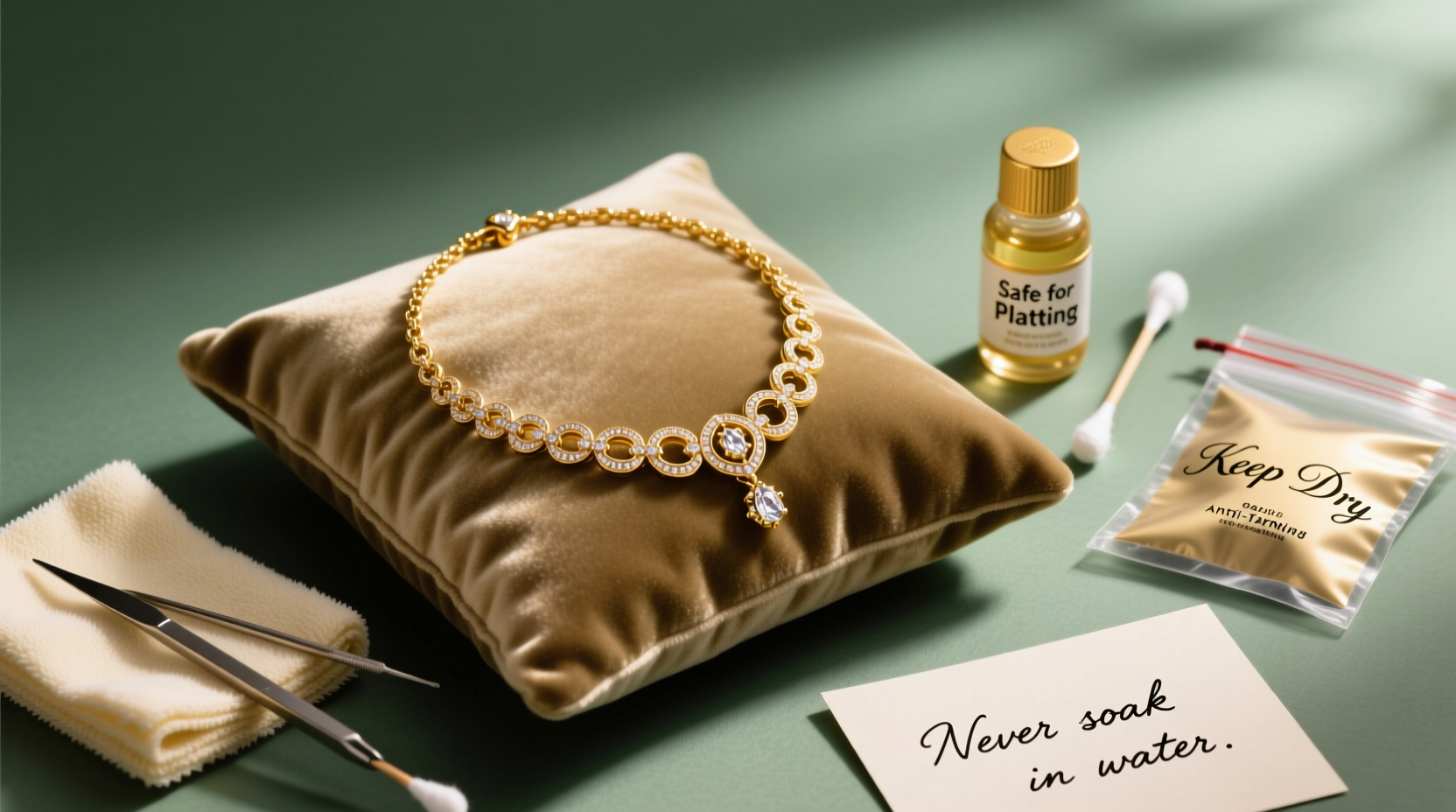
Never soak gold plated jewelry. Prolonged water exposure weakens the bond between the gold and base metal. Avoid ultrasonic cleaners, steamers, and chemical dips—they are designed for solid metal and will destroy plated finishes.
| Do | Don't |
|---|---|
| Wipe with a dry microfiber cloth daily | Use toothpaste or baking soda to clean |
| Clean monthly with mild soapy water | Soak in water or jewelry cleaner |
| Store in an airtight container | Leave it exposed to humidity |
| Apply skin products before putting on jewelry | Wear in pools, showers, or saunas |
Optimal Storage Solutions to Prevent Tarnish
How you store your gold plated necklace when not in use is just as important as how you wear it. Exposure to air, light, and moisture causes oxidation, leading to dullness and darkening of the base metal beneath the plating.
Store each necklace separately in a soft pouch or lined jewelry box to prevent tangling and scratching. If multiple pieces are stored together, they can rub against one another, accelerating wear. For maximum protection, place the necklace in an airtight ziplock bag with the air pressed out, or use a vacuum-sealed jewelry case.
Tip: Add a silica gel packet to your jewelry drawer to absorb excess moisture and slow oxidation.Keep your jewelry away from direct sunlight and heat sources like radiators or windowsills. UV rays and temperature fluctuations degrade both the plating and any gemstones or enamel details. A cool, dark drawer is ideal.
Real-Life Example: Reviving a Faded Heirloom Necklace
Sophia inherited a delicate gold plated locket from her grandmother. She wore it weekly for two years without protective habits—applying perfume over it, sleeping in it, and storing it loosely in a drawer. Over time, the front of the locket dulled, and small patches of brass began to show.
After consulting a jeweler, she learned the damage wasn’t irreversible—yet. She began a strict care routine: removing the locket before washing hands, cleaning it monthly with a microfiber cloth, and storing it in a sealed box with desiccant. Within three months, the remaining gold looked brighter and more uniform. While the plating couldn’t be restored, proper care halted further deterioration. Today, the locket remains a cherished, well-maintained keepsake.
When Re-Plating Makes Sense
Eventually, even the best care won’t prevent visible wear. Once the base metal is exposed in multiple spots, cleaning won’t restore the original shine. At this stage, professional re-plating is a cost-effective alternative to replacement.
Many local jewelers offer re-plating services for $20–$50, depending on the chain’s size and complexity. The process involves stripping old residue, polishing the base metal, and applying a fresh layer of gold. It can breathe new life into a favorite piece, especially if the design has sentimental value.
Consider re-plating when:
- More than 30% of the surface shows base metal.
- The chain feels rough or flaky to the touch.
- Polishing no longer restores brightness.
Frequently Asked Questions
Can I wear my gold plated necklace every day?
Yes, but with caution. Daily wear increases exposure to elements that degrade plating. Limit continuous wear, remove it during risky activities, and follow a consistent care routine to prolong its life.
Why is my gold plated necklace turning black?
Blackening usually indicates oxidation of the base metal (often copper or brass) due to moisture and sulfur in the air. It may also result from reactions with skin chemistry or lotions. Regular cleaning and proper storage can prevent this.
Is it safe to use a jewelry polishing cloth on gold plated necklaces?
Only if it’s specifically labeled for plated or costume jewelry. Standard polishing cloths contain abrasives that strip gold layers. Use a non-abrasive, chemically neutral cloth designed for delicate finishes.
Jewelry Care Checklist
Monthly Jewelry Care Routine:- Inspect necklace for signs of wear or flaking
- Clean gently with microfiber cloth and mild soapy water
- Dry completely before storing
- Check storage environment for moisture or light exposure
- Ensure clasps are secure and functioning
- Rotate usage to reduce daily strain on a single piece
Final Thoughts: Small Habits, Lasting Beauty
The allure of a gold plated necklace lies in its elegance and accessibility. But its beauty is fleeting without mindful care. By understanding the limitations of plating and committing to simple, consistent practices, you protect your investment and enjoy radiant jewelry for years.
It’s not about perfection—it’s about awareness. Putting on your necklace last, storing it right, and cleaning it gently are small acts that compound into long-term preservation. Whether it’s a gift, an heirloom, or a personal indulgence, treat it with intention.
💬 Have a favorite gold plated piece you’ve kept looking new? Share your care secrets in the comments—your tip could help someone else preserve their sparkle!