Diamond earrings are more than just accessories—they’re often heirlooms, symbols of milestones, or daily expressions of personal style. While diamonds rank at the top of the Mohs hardness scale, their durability doesn’t make them immune to damage. The metal settings, prongs, and overall design are vulnerable to wear, and dirt can dull a diamond’s brilliance over time. Proper care ensures your earrings remain secure, radiant, and beautiful for decades.
Understanding Diamond Vulnerabilities
Despite their reputation for strength, diamonds can chip or crack under impact, especially along their cleavage planes—natural structural weaknesses. The setting plays a crucial role in protection; if prongs become bent or worn, the stone risks loosening or falling out. Additionally, everyday substances like lotions, hairspray, and soap film accumulate on the surface, creating a hazy layer that diminishes sparkle.
Regular maintenance isn’t just about aesthetics—it’s about security. A loose earring back or weakened post can result in loss, which is both emotionally and financially costly. Recognizing these vulnerabilities allows you to take proactive steps in preserving your investment.
“Many people assume diamonds don’t need care because they’re so hard. But neglecting cleaning and inspection is the fastest way to compromise both beauty and safety.” — Lena Torres, GIA-Certified Gemologist
Step-by-Step Guide to Safe Cleaning at Home
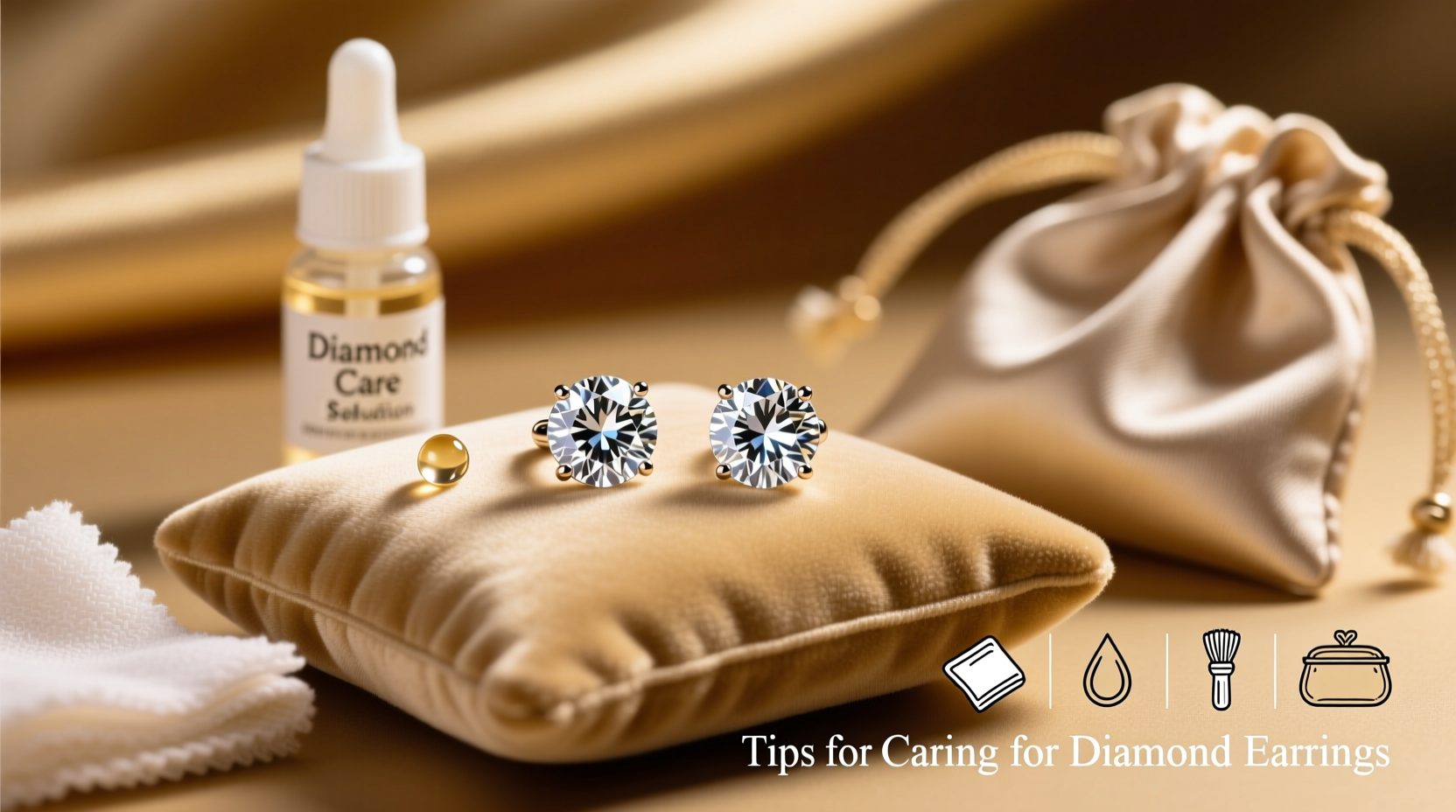
Cleaning your diamond earrings at home is simple when done correctly. Follow this weekly routine to maintain their luster:
- Prepare a gentle solution: Mix one part ammonia with six parts lukewarm water. Alternatively, use a few drops of mild dish soap in warm water for sensitive skin or non-platinum settings.
- Soak for 20–30 minutes: Place earrings in the solution to loosen grime and oils. Avoid prolonged soaking for pieces with fracture-filled diamonds or treated stones.
- Brush gently: Use a soft-bristled toothbrush (preferably designated for jewelry) to clean behind the stones and around prongs. Focus on areas where buildup hides.
- Rinse thoroughly: Hold under warm running water using a strainer or plug the sink. Never rinse directly into an open drain.
- Dry with care: Pat dry with a lint-free microfiber cloth. Air drying may leave water spots.
Do’s and Don’ts: Best Practices for Daily Wear and Storage
How you handle your earrings during daily routines significantly affects their longevity. Refer to the table below for clear guidance:
| Do’s | Don’ts |
|---|---|
| Put on earrings after applying makeup, perfume, and hairspray | Wear earrings while swimming, showering, or exercising |
| Remove earrings before bedtime to reduce stress on posts | Store earrings loosely in a drawer or pouch without compartments |
| Check earring backs regularly for tightness | Use ultrasonic cleaners on vintage, antique, or tension-set pieces |
| Store in a lined jewelry box with individual slots | Expose platinum or gold to harsh chemicals like acetone |
Avoid wearing diamond studs or hoops during high-impact activities. Even minor knocks can bend posts or loosen prongs, especially in older settings.
Professional Maintenance: When and Why to See a Jeweler
At-home care complements, but doesn’t replace, professional servicing. Schedule a check-up with a trusted jeweler every 6 to 12 months. During these visits, they will:
- Inspect prongs for wear, bending, or thinning
- Tighten loose settings or recommend re-tipping
- Polish metal to restore shine and remove scratches
- Ultrasonically clean in a controlled environment
- Verify earring post integrity and screw-back mechanism function
If you notice any wobbling, visible gaps around the stone, or a post that feels loose, see a jeweler immediately. Delaying repairs increases the risk of stone loss.
“A single annual inspection can prevent 90% of avoidable diamond losses. It’s the most cost-effective insurance you’ll ever buy.” — Marcus Reed, Master Bench Jeweler with 28 years of experience
Real-Life Example: How Neglect Led to a Costly Loss
Sarah, a teacher from Portland, wore her diamond studs daily for over five years. She wiped them occasionally but never had them professionally checked. One morning, after a workout, she noticed one earring was missing. Despite retracing her steps, it was gone. An examination of the remaining earring revealed two severely worn prongs—one had nearly broken off.
The jeweler explained that regular inspections would have caught the deterioration early. Replacing the lost diamond and resetting both earrings cost $1,200—nearly double what biannual maintenance would have totaled over five years. Sarah now schedules appointments every eight months and keeps a log of each visit.
Storage Solutions That Prevent Damage
Improper storage is a leading cause of earring damage. Tossing them into a cluttered jewelry dish leads to scratches, bent posts, and lost backs. Opt for solutions that offer separation and cushioning:
- Compartmentalized jewelry boxes: Choose ones with fabric-lined trays and individual indentations.
- Earring cards or cushions: Ideal for studs—push posts through soft material to hold them securely.
- Travel cases with locking slots: Prevent movement during transit.
FAQ: Common Questions About Diamond Earring Care
Can I wear my diamond earrings in the shower?
No. Soap, shampoo, and hard water leave a residue that clouds diamonds and erodes metal over time. Moisture can also weaken adhesives in composite settings and promote bacterial buildup behind the ears.
How often should I get my earrings professionally cleaned?
Twice a year is ideal, especially if worn frequently. This aligns with routine inspections and ensures deep cleaning that home methods can’t achieve.
Are all diamond cleaning methods safe for my setting?
No. Ultrasonic cleaners can damage antique pieces, micro-pave settings, or stones with internal fractures. Always confirm with your jeweler whether your earrings are suitable for machine cleaning.
Final Checklist for Long-Term Diamond Earring Care
To simplify your routine, follow this actionable checklist monthly and annually:
- ✅ Clean at home weekly with a soft brush and mild solution
- ✅ Inspect for loose stones or bent posts every two weeks
- ✅ Check earring backs for tightness after removal
- ✅ Store in a dedicated compartment away from other jewelry
- ✅ Schedule a professional inspection every 6–12 months
- ✅ Remove earrings before swimming, cleaning, or sleeping
Conclusion: Preserve Beauty, Protect Value
Your diamond earrings deserve more than occasional attention—they require consistent, informed care. By integrating simple cleaning habits, smart storage, and regular professional evaluations, you preserve not only their sparkle but also their structural integrity. Whether they were a gift, an inheritance, or a personal reward, these small actions ensure they continue to shine for generations.
💬 Have a diamond earring care tip that worked for you? Share your experience in the comments and help others protect their precious pieces with confidence.