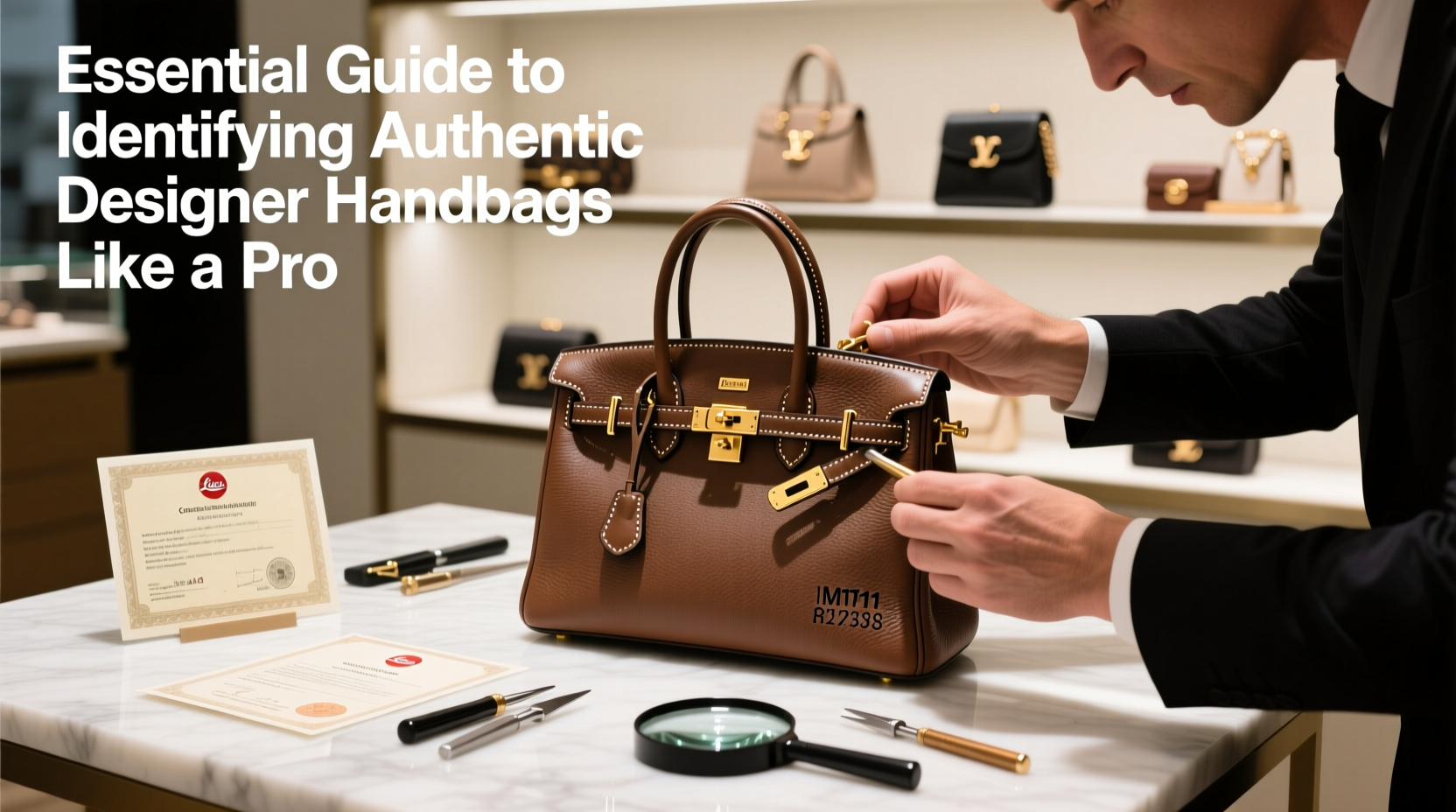
Purchasing a designer handbag is more than a fashion statement—it’s an investment. With counterfeiters growing increasingly sophisticated, distinguishing a real luxury bag from a fake has become harder than ever. From stitching precision to serial codes and hardware quality, every detail matters. Whether you're buying vintage Chanel, a new Hermès Birkin, or pre-owned Louis Vuitton, knowing how to authenticate gives you confidence, protects your wallet, and preserves resale value.
1. Know the Brand’s Signature Design Elements
Luxury brands have distinct design cues that remain consistent across seasons. These hallmarks are often overlooked by counterfeiters but instantly recognizable to seasoned collectors.
- Gucci: The double-G logo must be perfectly symmetrical. On authentic pieces, the \"G\" curves are smooth and evenly spaced. Fake versions often show uneven proportions or misaligned logos.
- Chanel: The interlocking CC turn-lock should rotate freely and align precisely when closed. The quilting on a classic flap bag follows a precise diamond pattern—irregular spacing is a red flag.
- Prada: The triangle logo is laser-etched, not glued. It should sit flush with the leather and feature clean, sharp edges.
- YSL: The YSL monogram hardware uses a specific font. Counterfeits often use bolder or slightly altered lettering.
2. Examine the Craftsmanship and Materials
The hallmark of a true designer bag lies in its construction. Luxury houses use premium materials and employ artisans who spend hours perfecting each piece.
Start with the leather. Genuine designer bags use high-grade calfskin, lambskin, or exotic hides. Authentic leather feels supple yet structured, with a natural grain and subtle aroma. Fakes often use synthetic leather that feels plasticky, overly shiny, or stiff.
Stitching is another critical indicator. Real designer bags feature tight, even stitches—typically 8 to 12 per inch. Look for consistency in thread color and tension. Crooked seams, loose threads, or mismatched colors are telltale signs of poor craftsmanship.
| Feature | Authentic Bag | Fake Bag |
|---|---|---|
| Stitching | Even, tight, 8–12 stitches per inch | Uneven, loose, fewer than 6 per inch |
| Leather Quality | Natural grain, soft texture, slight variation | Uniform shine, artificial texture |
| Hardware | Weighty, engraved logos, scratch-resistant | Lightweight, painted logos, chips easily |
| Interior Lining | Durable fabric, precise alignment | Loose stitching, off-center patterns |
“Authenticity isn’t just about logos—it’s in the details. A single crooked stitch can reveal a counterfeit.” — Isabelle Nguyen, Luxury Authentication Specialist, Rebag
3. Decode Serial Numbers and Date Codes
Most major luxury brands embed internal codes that verify production details. While not all brands use external serial number tags, internal date codes are common.
- Chanel: Since 2000, Chanel uses a two-letter prefix indicating year and season (e.g., “19” = 2019, “20” = 2020). The code is stamped inside on a leather patch. Older models may have no code—this doesn’t mean it’s fake, but requires deeper verification.
- Louis Vuitton: LV does not use serial numbers but includes date stamps molded into vachetta leather or printed inside linings. A four-character code (e.g., AR01) indicates factory and week/year of production.
- Hermès: Each bag has a unique stamp near the seam—either a single letter (early 2000s) or two letters (modern). This corresponds to the artisan and year. For example, “L” = 2003, “S” = 2021.
- Gucci: Post-2016 bags include a QR code tag. Scanning it via the Gucci app verifies authenticity.
4. Step-by-Step Guide to Authenticating a Pre-Owned Bag
Buying secondhand? Follow this methodical process before making a purchase:
- Inspect Photos Thoroughly: Request high-resolution images of the front, back, interior, hardware, stitching, and date code. Zoom in on details.
- Verify Proportions: Compare dimensions to official specs. Fakes often alter size slightly to save material.
- Check Hardware Finish: Zippers should glide smoothly. Engraved logos on zippers (like “YKK” for YSL) must be crisp. Painted logos wear off quickly.
- Review Interior Stamp: Ensure brand name, country of origin, and care labels match official standards. Fonts matter—designers use proprietary typefaces.
- Request Video Verification: Ask the seller to record a video showing the bag being opened, zipped, and rotated under natural light.
- Use Authentication Services: Platforms like Entrupy, Authenticate First, or Real Authentication offer expert reviews for a fee.
5. Real Example: Spotting a Fake Chanel Classic Flap
Sophie, a fashion editor in London, found a “genuine” Chanel medium classic flap on a popular resale site for 60% below market price. Excited, she nearly purchased it—but decided to run a checklist first.
She noticed the chain was lighter than usual and had a silvery hue instead of Chanel’s signature aged-gold tone. The quilted pattern was slightly off—diamonds were taller than they should be. Most damning: the interior pocket wasn’t centered, and the leather patch with the serial number was glued, not stitched.
She contacted a professional authenticator, who confirmed it was a high-end replica. Sophie saved over $7,000. Her takeaway? “If the price seems too good to be true, scrutinize every millimeter.”
Common Red Flags Checklist
Use this quick-reference list when evaluating any designer bag:
- ✅ Logo is centered and properly aligned
- ✅ Stitching is uniform and dense
- ✅ Leather has natural texture and smell
- ✅ Hardware is heavy, not hollow or lightweight
- ✅ Interior lining matches brand standards (color, pattern, stitching)
- ✅ Date code or serial number is present and plausible
- ✅ No glue residue or frayed edges inside
- ✅ Retail price is consistent with market value
FAQ: Your Top Questions Answered
Can a bag be authentic without a dust bag or box?
Yes. Missing accessories don’t automatically mean a bag is fake—especially with pre-owned items. However, original packaging adds credibility. Be extra cautious if other red flags are present.
Do all designer bags have serial numbers?
No. Brands like Louis Vuitton and Hermès do not use traditional serial numbers. They rely on date stamps or artisan marks instead. Research the specific brand’s authentication methods.
Is it safe to buy designer bags from online marketplaces?
It can be—if you’re vigilant. Stick to platforms with built-in authentication (like Rebag, Vestiaire Collective, or Fashionphile). Avoid direct peer-to-peer sales without third-party verification.
Maintain Confidence in Every Purchase
Identifying authentic designer handbags isn’t about memorizing rules—it’s about developing a discerning eye. Over time, you’ll recognize the weight of real hardware, the drape of fine leather, and the quiet perfection of luxury craftsmanship. These skills protect your investment and deepen your appreciation for true artistry.
Whether you're building a collection or buying your first designer piece, take your time. Inspect thoroughly. When in doubt, consult an expert. Authenticity isn’t just a label—it’s a standard worth upholding.
💬 Found a bag you love but unsure if it’s real? Share your questions in the comments—we’ll help you spot the truth behind the details.