When shopping for an outfit inspired by Disney’s Queen Elsa from *Frozen*, you’ll quickly notice two terms dominating search results: “Elsa dress” and “Elsa costume.” At first glance, they may seem interchangeable—both feature sparkles, capes, and ice-blue fabric. But dig deeper, and the distinctions become clear. Understanding these differences isn’t just about semantics; it affects durability, comfort, price, and whether you’re truly getting what you need. Let’s explore what sets them apart and how to avoid overspending on something that won’t meet your expectations.
Defining the Terms: What’s in a Name?
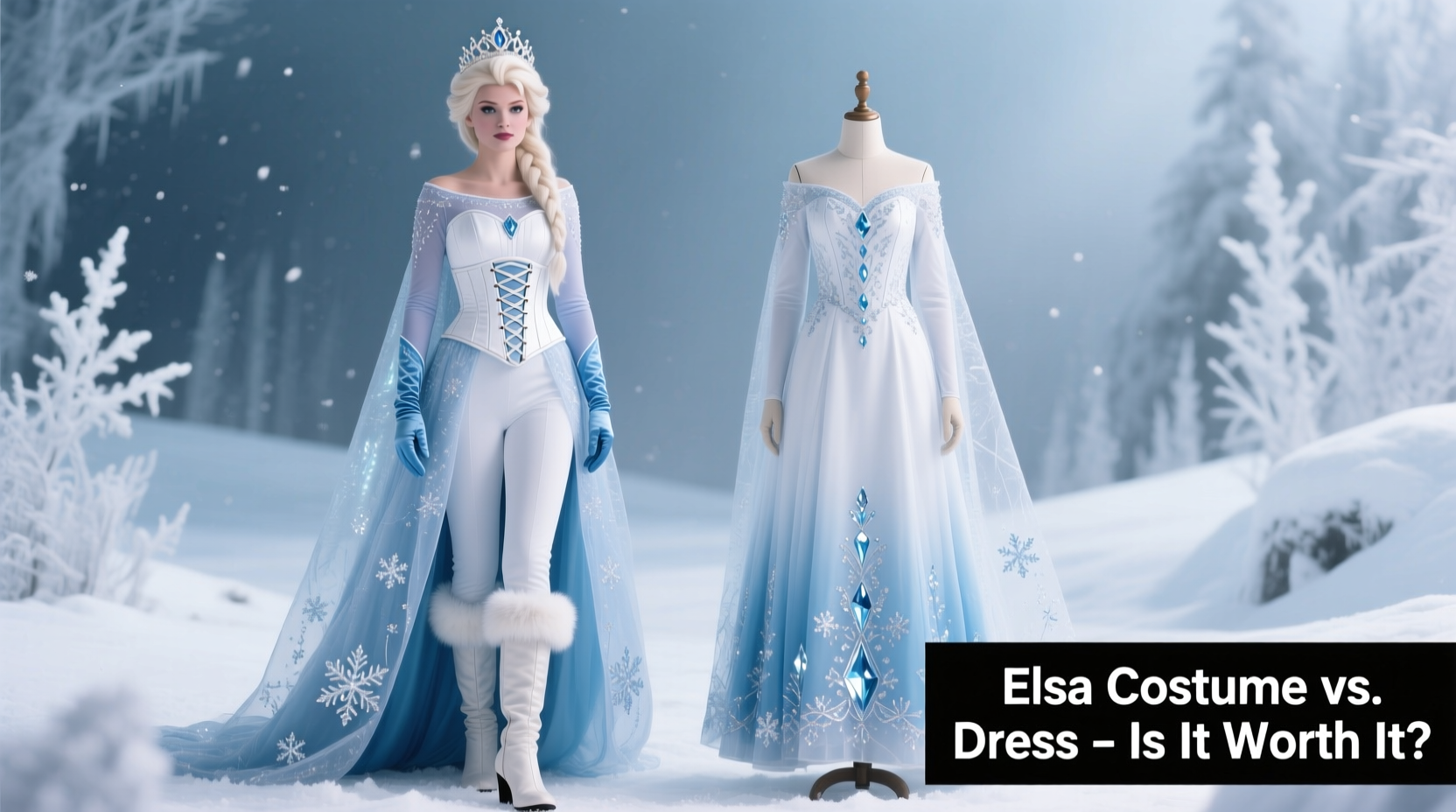
The confusion starts with language. Retailers often use “dress” and “costume” loosely, sometimes even interchangeably. However, in practice, each term points to different product categories with distinct purposes.
An Elsa dress typically refers to a standalone garment designed to resemble Elsa’s iconic look, often marketed as everyday wear, birthday attire, or special occasion clothing. These are usually sold without accessories and emphasize wearable design—soft fabrics, functional zippers, and modest embellishments.
An Elsa costume, on the other hand, is generally part of a full ensemble intended for roleplay, theatrical performance, or Halloween. It includes multiple pieces—dress, cape, gloves, tiara—and prioritizes visual accuracy over long-term comfort or washability.
Tip: Always check the product description for included components. A single item labeled “costume” might come with more accessories than a “dress,” even if priced similarly.Material and Construction: Where Quality Matters
One of the most significant differences lies in materials. Costumes are frequently made from polyester, nylon, or PVC-based fabrics chosen for their shiny appearance and low production cost. While they look dazzling under stage lights or flash photography, these materials can be stiff, non-breathable, and prone to static cling.
Elsa dresses aimed at daily wear tend to use softer blends—cotton-polyester mixes, jersey knits, or satin-backed fabrics—that prioritize comfort and movement. They’re more likely to be machine-washable and less irritating against sensitive skin, making them better suited for children who may wear them beyond a single event.
Stitching also varies. Costumes often rely on quick assembly techniques: glued-on sequins, thin seams, and minimal lining. This speeds up manufacturing but reduces longevity. In contrast, higher-end dresses (especially those from premium toy or apparel brands) feature reinforced hems, lined bodices, and securely attached details.
“Costumes are built for impact in short bursts—not endurance. If you want something that survives repeated play, construction quality matters more than sparkle count.” — Lena Ruiz, Children’s Apparel Designer
Price vs. Value: Are You Paying for Flash or Function?
It’s easy to assume that a higher price means better quality, but that’s not always true in the world of licensed character wear. Some $40 “premium” costumes offer little more than oversized wigs and flimsy plastic tiaras. Meanwhile, certain $25 Elsa dresses from reputable retailers provide better fit, safer materials, and longer usability.
The key is evaluating what you’re paying for:
- Authenticity: Officially licensed products (e.g., Disney Store, Rubie’s) often carry a premium but ensure design accuracy and safety compliance.
- Inclusions: Does the price cover a cape, gloves, headband, and shoe covers? Or are you buying a basic dress with add-ons sold separately?
- Lifespan: Will this be worn once for Halloween, or do you expect it to last through imaginative play over several months?
| Feature | Elsa Dress | Elsa Costume |
|---|---|---|
| Primary Use | Daily wear, parties, photos | Halloween, performances, events |
| Fabric Type | Soft blends, breathable materials | Polyester, vinyl, stiff synthetics |
| Accessories Included | Rarely (sometimes headband) | Commonly (cape, gloves, crown) |
| Washability | Often machine-washable | Spot clean only, delicate care |
| Average Price Range | $18–$35 | $25–$60+ |
| Durability | Moderate to high | Low to moderate |
Real-Life Example: The Birthday Party Test
Sarah purchased two outfits for her daughter’s *Frozen*-themed birthday party. One was labeled an “Elsa Sparkle Dress” ($27), the other a “Deluxe Elsa Costume” ($42). She expected the more expensive option to perform better.
During the party, the costume’s cape detached after one spin, and the plastic tiara caused discomfort after 20 minutes. The cheaper dress, though lacking a glove set, held up through cake smashing, dancing, and outdoor play. It was later washed three times with no fading or seam damage.
Sarah realized she hadn’t wasted money on the lower-priced item—she’d invested in functionality. The “costume” looked impressive in pre-party photos but failed under real-world conditions.
How to Choose Wisely: A Practical Checklist
Before clicking “Add to Cart,” ask yourself the following. Use this checklist to align your purchase with actual needs:
- Will this be worn once or multiple times?
- Does the child need to move freely (run, dance, sit)?
- Is machine washing a priority?
- Are accessories essential, or can they be sourced separately?
- Is the fabric safe for sensitive skin?
- Does the sizing run true, or should I size up for growth?
- Is it officially licensed, or a generic version?
Frequently Asked Questions
Can I use an Elsa costume as regular playwear?
Technically yes, but not ideally. Costumes are rarely comfortable enough for extended wear. Stiff fabrics, fragile trims, and complex fastenings make them impractical for daily play. Over time, frequent use will degrade the materials faster than expected.
Are Elsa dresses suitable for Halloween?
Absolutely—if supplemented. Pair a high-quality Elsa dress with a separate cape, wig, and boots for a complete look. This approach often results in a more durable, customizable, and comfortable ensemble than a one-piece costume.
Do official Disney dresses last longer than generic ones?
Generally, yes. Licensed products adhere to stricter safety and quality standards. While some off-brand options are well-made, others cut corners on stitching, dyes, and hardware. When in doubt, opt for known retailers like Target, Amazon (with verified reviews), or the Disney Store.
Final Thoughts: Don’t Waste Money—Make Informed Choices
The difference between an Elsa dress and an Elsa costume isn’t just marketing noise. It reflects intent: one is designed for wearability, the other for spectacle. Recognizing this helps you spend smarter, whether you’re outfitting a preschooler for show-and-tell or preparing for a themed event.
You’re not wasting money simply by choosing one over the other—it depends on your goals. Need something soft, washable, and reusable? Go for a dress. Preparing for a single-night event where visuals matter most? A costume might be worth the trade-offs.
Ultimately, value isn’t measured by price tag alone. It’s determined by how well the product serves its purpose over time. With clearer expectations and smarter selection, you can find an Elsa outfit that delights without draining your wallet.
💬 Have you compared an Elsa dress and costume firsthand? Share your experience in the comments—your insights could help other parents make better choices!