Beyond their aesthetic appeal, brooches often carry sentimental value—passed down through generations or gifted on meaningful occasions. Whether vintage or modern, crafted in silver, gold, or adorned with gemstones, brooches are susceptible to tarnish caused by environmental exposure and improper handling. Tarnish dulls the luster, weakens metal integrity, and diminishes overall value. The good news: with informed care, tarnishing can be significantly slowed, if not prevented entirely. Understanding the science behind tarnish and adopting a proactive maintenance routine ensures your brooch remains radiant and resilient.
The Science Behind Tarnish: Why It Happens
Tarnish is a chemical reaction, primarily oxidation, that occurs when metals like silver, copper, and certain alloys react with sulfur compounds in the air. These compounds are present in everyday environments—rubber bands, wool, felt, polluted air, and even human sweat contain trace amounts of sulfur. When these elements interact with metal surfaces, they form a dark layer known as tarnish. While gold itself does not tarnish, gold-plated brooches are vulnerable because the base metal underneath (often brass or copper) can oxidize, causing discoloration over time.
Humidity accelerates this process. Moisture in the air acts as a catalyst, increasing the rate at which sulfur bonds with metal. Temperature fluctuations also contribute, as condensation forms microscopic water droplets on the surface, promoting corrosion. Even cosmetics, perfumes, and hairsprays introduce chemicals that degrade metal finishes over time.
“Tarnish isn’t inevitable—it’s manageable. The key is minimizing exposure and maintaining a consistent care schedule.” — Dr. Lena Patel, Jewelry Preservation Specialist, Guild of Antiquities Conservators
Step-by-Step Guide to Daily and Long-Term Protection
Preserving a brooch requires both immediate habits and long-term strategies. Follow this structured approach to maintain brilliance across seasons and years.
- Wear with Care: Always put on your brooch after applying makeup, perfume, and hair products. These substances contain alcohol and sulfates that accelerate tarnishing.
- Limit Exposure: Avoid wearing your brooch in humid environments like saunas, bathrooms, or during heavy exercise. Sweat contains salts and acids that corrode metal.
- Immediate Post-Wear Wipe: After each use, gently wipe the brooch with a soft, lint-free microfiber cloth to remove skin oils and residues.
- Deep Cleaning (Quarterly): Use a jewelry polishing cloth designed for your brooch’s metal type. For intricate designs, lightly dampen a cotton swab with distilled water and carefully clean crevices—never submerge unless specified by a jeweler.
- Inspection Routine: Every few months, examine the pin mechanism, clasp, and stones for looseness or damage. Early detection prevents costly repairs.
Smart Storage: The Foundation of Longevity
How you store your brooch between uses is just as critical as how you wear it. Poor storage leads to scratches, moisture buildup, and accelerated tarnishing.
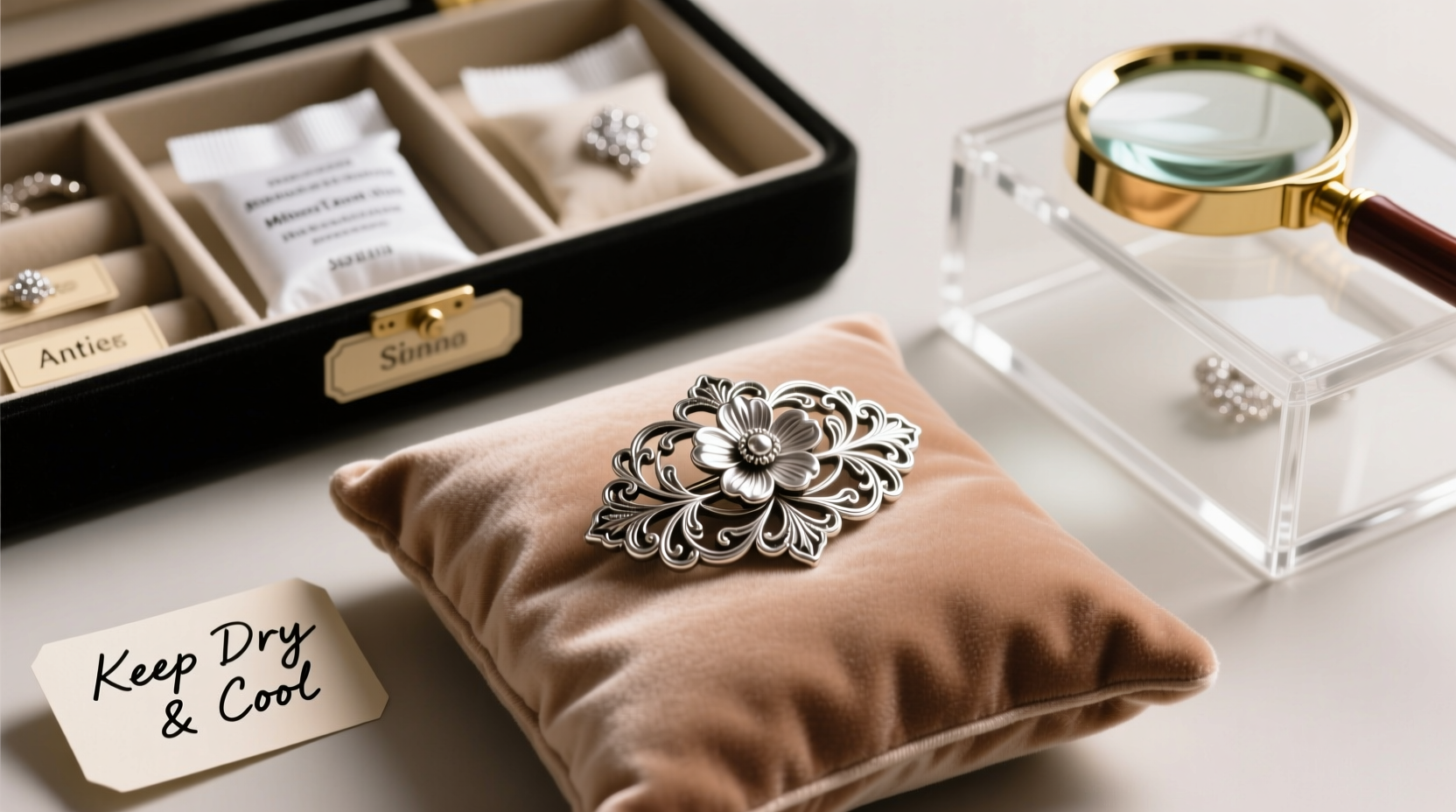
Store each brooch individually in a soft pouch made of anti-tarnish fabric, such as Pacific Silvercloth. These materials are woven with metallic threads that absorb sulfur particles from the air. Alternatively, use a zip-top bag with an anti-tarnish strip inserted inside. Ensure the bag is sealed tightly to limit air exchange.
Avoid storing brooches in the following conditions:
- Near rubber bands or latex gloves (they emit sulfur)
- In direct sunlight (UV rays degrade adhesives and fade enamel)
- Inside plastic bags not designed for jewelry (traps moisture)
- Nested together in a cluttered drawer (causes scratching)
| Storage Method | Effectiveness | Risk Level |
|---|---|---|
| Anti-tarnish cloth pouch + sealed container | Excellent | Very Low |
| Jewelry box with tarnish-inhibiting lining | High | Low |
| Open shelf or drawer | Poor | High |
| Plastic bag without protection | Fair | Moderate (moisture trap) |
Real Example: Reviving a Heirloom Brooch
Sophie inherited a 1940s sterling silver floral brooch from her grandmother. Stored for decades in a cedar chest wrapped in tissue paper, the piece had developed a thick black patina. Initially assuming it was beyond repair, she consulted a local conservator. After analysis, the expert explained that while the tarnish was severe, the structure remained intact.
The restoration involved a gentle electrolytic cleaning process followed by hand polishing with a non-abrasive compound. Crucially, the conservator emphasized future prevention: “The cedar released organic acids, and the paper contained lignin, both contributing to rapid tarnishing.” Sophie now stores the brooch in a lined case with activated charcoal packets and handles it only with cotton gloves. Two years later, the brooch remains bright, worn proudly at family events.
Checklist: Essential Brooch Care Routine
To simplify maintenance, follow this actionable checklist monthly and seasonally:
Monthly Brooch Care Checklist:- Inspect for loose stones or weakened clasps
- Wipe with a microfiber cloth
- Verify storage environment (dry, dark, cool)
- Replace anti-tarnish strips if used
- Polish with appropriate cloth (silver vs. gold)
- Check humidity levels in storage area
- Rotate display or usage to prevent uneven exposure
Frequently Asked Questions
Can I use toothpaste to clean my silver brooch?
No. While some home remedies suggest toothpaste, most contain abrasive particles and fluoride that scratch metal and erode engravings. Use only jewelry-specific polishes or professional cleaning services for valuable pieces.
How often should I professionally clean my brooch?
For regular-wear brooches, professional cleaning every 18–24 months is sufficient. Delicate or antique pieces benefit from evaluation every three years, depending on condition and exposure.
Is it safe to wear a brooch in the rain?
It’s best to avoid it. Rainwater, especially in urban areas, can be slightly acidic due to atmospheric pollutants. Prolonged exposure increases oxidation risk and may damage porous stones like pearls or opals if present.
Final Thoughts: Shine Begins with Prevention
A brooch’s beauty lies not just in its design but in the care it receives over time. Tarnish doesn’t appear overnight—it accumulates silently through repeated exposure to avoidable elements. By integrating simple habits like post-wear wiping, using anti-tarnish storage, and scheduling seasonal checkups, you preserve both appearance and value. Think of brooch care not as a chore, but as a ritual of respect for craftsmanship and memory.
💬 Have a favorite brooch care tip or a restoration story? Share your experience in the comments—your insight could help others protect their treasures for generations.








