Mail plays a crucial role in daily life—whether it's paying bills, receiving important documents, or staying connected with loved ones. When a package or letter goes missing, the frustration is real. Delays can lead to financial penalties, missed opportunities, or emotional distress. The good news: there are proven, actionable steps you can take to track down missing mail and improve your chances of recovery. With the right approach, timing, and tools, many lost items can be located before they’re gone for good.
Understand How Mail Gets Lost
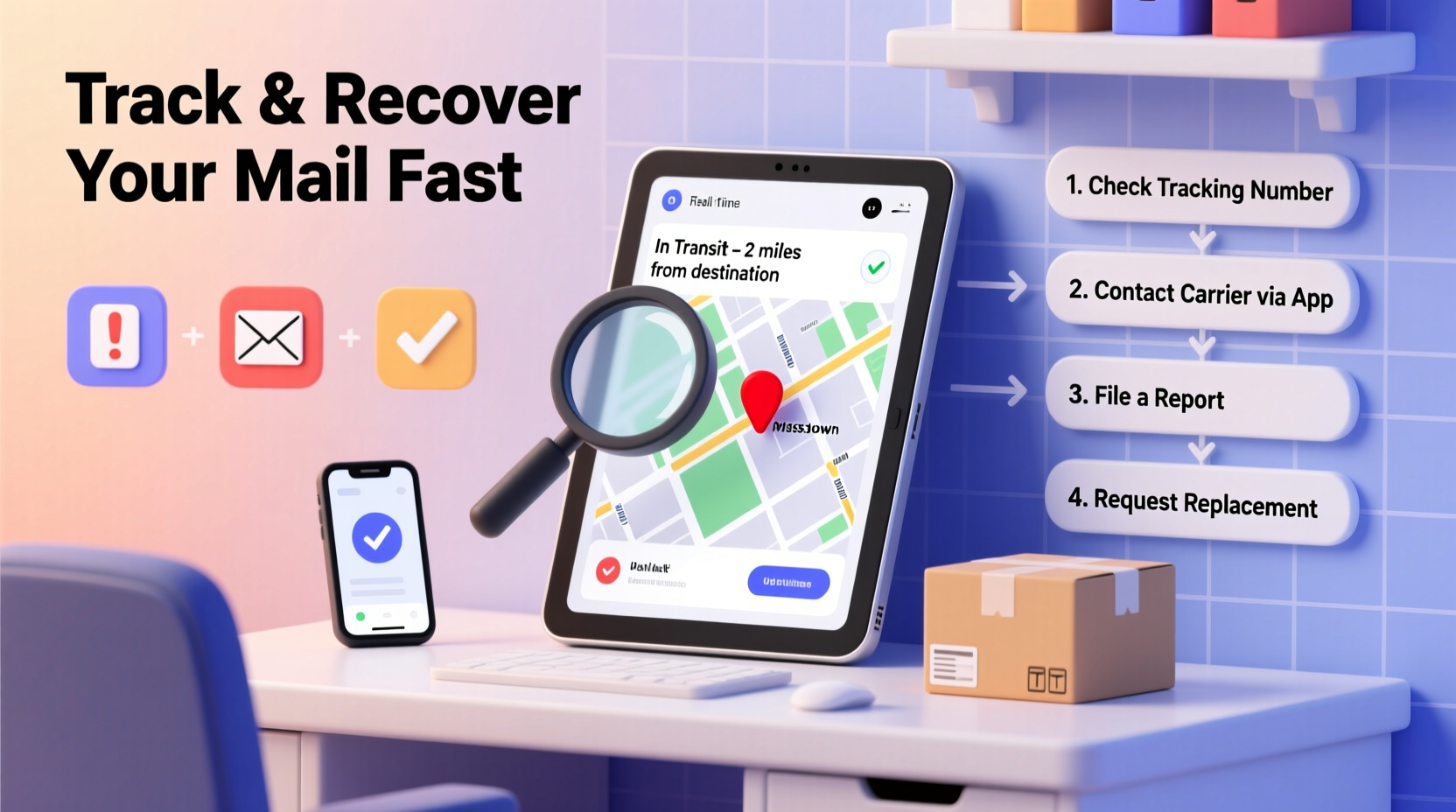
Before jumping into recovery, it helps to understand how and why mail disappears. Common causes include incorrect or incomplete addresses, automated sorting errors, weather disruptions, theft, or simple human error at postal facilities. Domestic first-class mail has a national on-time delivery rate of about 94%, according to USPS data—but that still leaves a small margin where things go wrong.
Not all mail is created equal when it comes to traceability. Standard letters without tracking have fewer recovery options than insured packages or registered mail. Knowing the difference between service levels—and acting quickly—can make all the difference.
Tip: Always double-check addresses before mailing, especially ZIP codes. A single digit error can reroute your mail across states.Immediate Actions to Take When Mail Is Missing
Time is critical. The longer you wait, the harder it becomes to locate your item. Here’s what to do within the first 24–72 hours of realizing your mail is missing:
- Verify delivery expectations. Check if the sender has actually dispatched the item. Contact them directly to confirm mailing date and method.
- Review tracking information. If available, use the tracking number to monitor progress. Look for any “delivery exception” alerts such as “attempted delivery” or “return to sender.”
- Contact your local post office. Visit in person if possible. Provide the tracking number, recipient address, and approximate mailing date. Frontline staff often have access to internal systems not visible online.
- Ask neighbors. Misdeliveries happen frequently. A quick check with nearby homes can resolve the issue instantly.
If the item was sent via certified, registered, or insured mail, the Postal Service maintains detailed records and may hold the item at a facility pending inquiry.
Step-by-Step Guide to Filing a Missing Mail Inquiry
When informal checks fail, escalate your search through an official Missing Mail investigation. Follow this timeline for best results:
- Wait 7 business days for domestic first-class mail (longer for media mail or international).
- Gather key details: tracking number, sender info, recipient address, contents description, and value.
- Submit a Missing Mail request via the USPS website (USPS.com) under “Track & Manage” > “Missing Mail Inquiry.”
- Upload supporting documents such as receipts, photos of the package, or proof of insurance.
- Monitor email updates. USPS typically responds within 5–10 business days.
- Follow up by phone if no response after two weeks. Call 1-800-ASK-USPS (1-800-275-8777) and reference your inquiry number.
The investigation process usually takes 7–14 days. If the item is found, USPS will redirect it or notify you of its status. If not, you may be eligible for insurance claims or compensation depending on the service used.
Use Technology to Your Advantage
Modern tools make monitoring and protecting your mail easier than ever. Consider these digital solutions:
- Informed Delivery (USPS): This free service emails scanned images of your incoming mail each morning. It won’t prevent loss, but it confirms what was mailed and when, helping identify discrepancies early.
- Package tracking aggregators: Services like ParcelPanel or AfterShip let you track multiple shipments from different carriers in one dashboard.
- Smart locks and cameras: While not part of the postal system, home security devices can deter mailbox theft and provide evidence if needed.
For businesses or frequent shippers, setting up automated alerts and maintaining shipping logs can dramatically reduce resolution time when issues arise.
| Mail Type | Tracking Available? | Insurance Option? | Recovery Likelihood |
|---|---|---|---|
| First-Class Letter (no extra service) | No | No | Low |
| Certified Mail | Yes – signature confirmation | Optional | High |
| Priority Mail Express | Yes – full tracking | Yes (up to $100 included) | Very High |
| Media Mail | Limited | No | Moderate |
| Registered Mail | Yes – chain-of-custody record | Yes (up to $25,000) | Very High |
Expert Insight: What Postal Insiders Recommend
Former USPS logistics manager James Holloway emphasizes proactive measures:
“Most recoverable mail is found within 48 hours of initiating a formal inquiry. But people wait too long. If something’s urgent—like a passport or prescription—call the post office the same day you notice it’s missing. We can flag scans, check mis-sorted trays, even contact delivery drivers.” — James Holloway, Retired USPS Operations Supervisor
Holloway also notes that holiday periods and severe weather increase misrouting risks. During peak seasons, he advises allowing extra transit time and upgrading to trackable services for anything time-sensitive.
Real Example: Recovering a Lost Passport Renewal
Sophia M., a teacher from Portland, OR, mailed her passport renewal application via First-Class Mail. After three weeks with no update, she grew concerned—her summer abroad was approaching. She logged into her USPS Informed Delivery account and noticed a scan showing her envelope was processed in a facility over 200 miles away from her destination.
She filed a Missing Mail inquiry immediately, attaching the scan and application receipt. Within two days, a USPS agent contacted her, confirming the item had been misrouted due to a barcode scanning error. It was located in a holding bin and redirected overnight. Sophia received her passport just 10 days before her flight.
Her takeaway: “I didn’t think Informed Delivery was useful until I saw that image. It gave me proof and saved my trip.”
Checklist: What to Do When Mail Goes Missing
- ☐ Confirm the sender actually mailed the item
- ☐ Wait the appropriate time frame (domestic: 7 days; international: 14–60 days)
- ☐ Check tracking status and Informed Delivery notifications
- ☐ Talk to neighbors and check around your mailbox
- ☐ Visit your local post office with documentation
- ☐ File a Missing Mail inquiry online at USPS.com
- ☐ Follow up by phone if no update in 10 business days
- ☐ Initiate an insurance claim if applicable
Frequently Asked Questions
Can I get compensation for lost mail?
Yes—if the item was sent with insurance, Registered Mail, or certain Priority Express services. Claims must be filed within specific timeframes (usually 60 days from mailing). Without added services, USPS is not liable for loss or damage to standard mail.
What if my mail was stolen?
If you suspect theft—especially of sensitive items like checks, IDs, or credit cards—report it immediately. Contact USPS Postal Inspectors at www.uspis.gov or call 1-877-876-2455. You should also alert your bank and consider placing a fraud alert on your credit report.
Does filing a Missing Mail inquiry guarantee recovery?
No, but it significantly increases the odds. According to USPS, over 60% of Missing Mail cases result in successful location and delivery when reported promptly and supported with accurate information.
Conclusion: Act Fast, Stay Organized
Missing mail doesn’t have to mean permanent loss. By understanding how the postal system works, leveraging tracking tools, and taking swift, structured action, you can recover a surprising number of lost items. The key is not to wait. Every hour counts in the mail recovery window. Whether it’s a birthday card, legal document, or essential package, being prepared with the right knowledge gives you the upper hand.
💬 Have you recovered lost mail using these methods? Share your story in the comments—your experience could help someone else get their package back.








