Fashion earrings are more than just accessories—they're expressions of personality, style, and occasion. Whether you own a collection of delicate studs, bold hoops, or intricate dangles, one common challenge unites all earring lovers: preventing tarnish while maintaining easy access and organization. Tarnishing not only dulls the shine but can also compromise hypoallergenic coatings and structural integrity over time. The key lies in smart storage solutions that combine protection, airflow, and thoughtful design.
With the right approach, your earrings can stay lustrous, tangle-free, and ready to wear—no matter how large your collection grows. Below are proven strategies for storing fashion earrings effectively and preserving their brilliance for years.
Understanding Why Earrings Tarnish
Tarnish occurs when metals like silver, brass, or copper react with sulfur compounds in the air, moisture, or skin oils. Even gold-plated or stainless steel pieces can lose their finish if exposed to humidity, perfumes, or lotions. Fashion earrings, often made with base metals and decorative finishes, are especially vulnerable.
Environmental factors such as high humidity, temperature fluctuations, and exposure to chemicals accelerate oxidation. Poor storage—like tossing earrings into a drawer or leaving them on a bathroom counter—exposes them to these elements daily. Preventing tarnish starts with minimizing contact with air and moisture while ensuring each pair has room to breathe without damage.
“Proper storage isn’t just about neatness—it’s chemistry. Limiting exposure to oxygen and humidity is the single most effective way to delay tarnishing.” — Dr. Lena Reyes, Materials Conservation Specialist
Best Storage Solutions for Long-Term Protection
The ideal earring storage system balances visibility, accessibility, and protection. Here are several practical options, each suited to different lifestyles and collections:
- Earring Organizer Boards: Fabric-covered cork or foam boards allow you to pin stud earrings securely. These are excellent for display and quick selection, especially when mounted inside a closet door.
- Acrylic Trays with Compartments: Ideal for stud and small hoop earrings, these trays keep pairs together and dust-free. Look for stackable models to save space.
- Hanging Pouch Organizers: Made from soft fabric with clear pockets, these wall-mounted organizers protect against scratches and make it easy to see every pair at a glance.
- Magnetic Strips: Perfect for metal-backed studs, magnetic strips let you attach earrings safely and retrieve them quickly. Cover with a cloth sleeve when not in use to block dust.
- Jewelry Boxes with Anti-Tarnish Lining: High-end boxes lined with tarnish-resistant fabric (often treated with anti-oxidant compounds) offer superior protection, especially for valuable or frequently worn pieces.
Step-by-Step Guide to Preparing Earrings for Storage
Before placing earrings in any storage system, follow this five-step process to ensure they remain in optimal condition:
- Clean Gently: Wipe each earring with a microfiber cloth after wearing. For deeper cleaning, use a jewelry polishing cloth designed for your metal type. Avoid liquid cleaners unless specified safe for the material.
- Dry Thoroughly: Ensure no moisture remains, especially between clasps or backings. Let them air-dry on a clean towel for 5–10 minutes before storage.
- Pair and Secure: Reattach earring backs or use mini ziplock bags or labeled tabs to keep pairs together. For dangling styles, consider using earring stoppers to prevent tangling.
- Choose the Right Container: Select a storage method based on frequency of use and sensitivity to air. Daily wear items benefit from accessible yet covered containers; seasonal pieces should be sealed with desiccants.
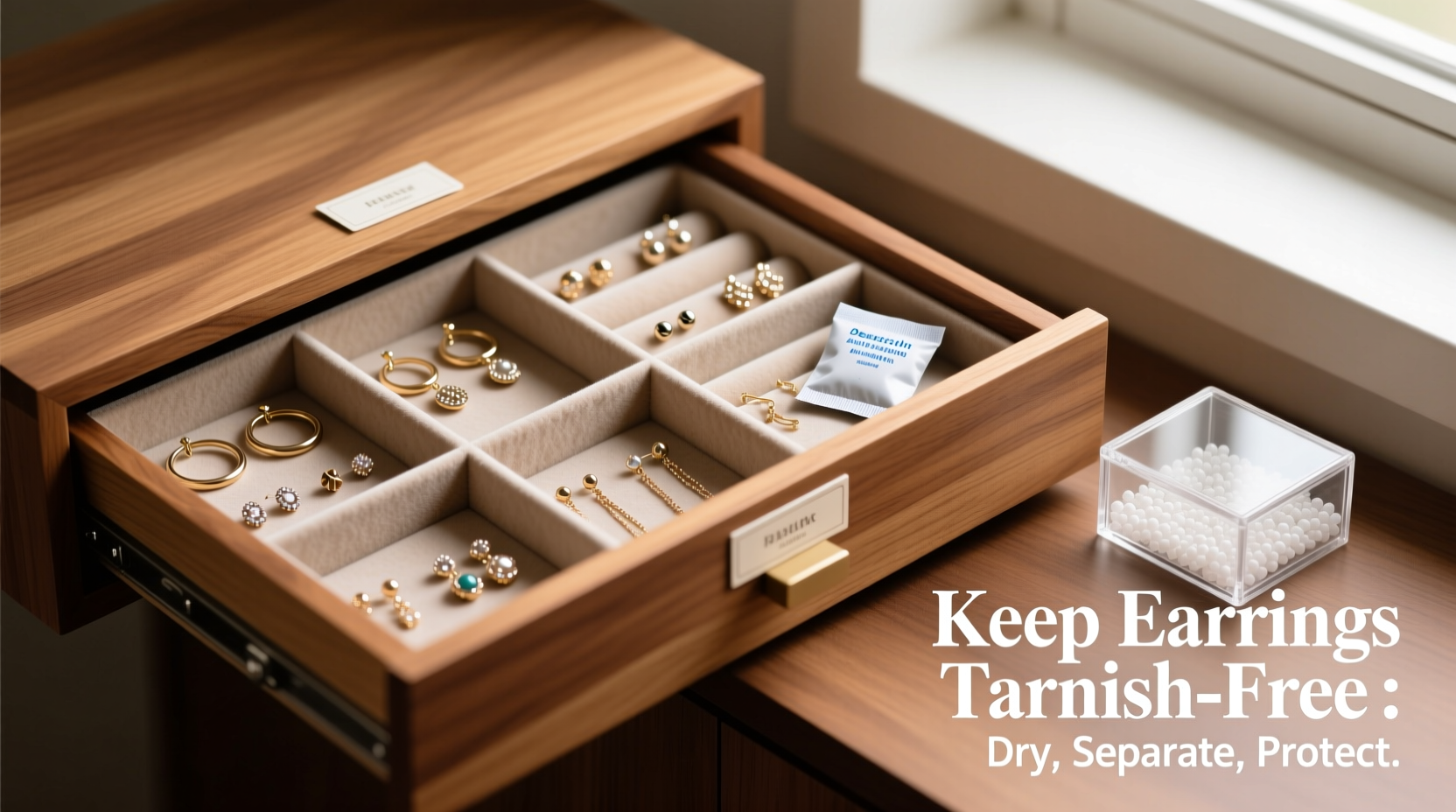
- Add Tarnish Protection: Place anti-tarnish strips, silica gel packets, or a piece of chalk inside the storage container to absorb excess moisture and neutralize airborne sulfur.
Do’s and Don’ts of Earring Storage
| Do’s | Don’ts |
|---|---|
| Store earrings in a cool, dry, dark place | Leave them exposed on open surfaces |
| Use anti-tarnish strips or pouches | Store near perfume, hairspray, or lotions |
| Keep pairs organized with labels or compartments | Throw multiple pairs into a single pouch |
| Clean earrings before storing after wear | Wear earrings while applying makeup or skincare |
| Rotate stored earrings occasionally for inspection | Forget to check for early signs of tarnish |
Real Example: How Sarah Preserved Her Heirloom Collection
Sarah, a vintage jewelry collector from Portland, inherited over 60 pairs of fashion earrings from her grandmother—ranging from 1950s rhinestone studs to 1980s metallic hoops. Initially, she stored them in a wooden box without dividers, and within months, many had tarnished or become mismatched.
She reorganized her collection by first cleaning each pair with a silver polishing cloth, then categorizing them by era and metal type. She invested in a multi-tier acrylic organizer with removable trays and added silica gel packs to each level. For her most delicate pieces, she used individual anti-tarnish pouches. Two years later, every pair remains in excellent condition, and she now rotates them seasonally to monitor wear and storage effectiveness.
Her system not only preserved the earrings’ appearance but also made it easier to match them with outfits, turning her collection into a functional wardrobe asset rather than a fragile archive.
Essential Checklist for Tarnish-Free Earring Care
Monthly Earring Maintenance Checklist:
- Inspect all stored earrings for early tarnish or moisture buildup
- Replace silica gel or anti-tarnish strips as needed
- Polish metal components gently with a non-abrasive cloth
- Reorganize compartments to prevent overcrowding
- Verify storage location remains cool and dry
Frequently Asked Questions
Can I use plastic bags to store my earrings?
Regular plastic bags are not recommended—they can trap moisture and contain chemicals that accelerate tarnishing. If you must use plastic, opt for ziplock bags specifically labeled as \"jewelry-safe\" or \"anti-tarnish,\" and always include a desiccant packet.
How often should I clean my earring storage containers?
Every 3–4 months is ideal. Empty the container, wipe down compartments with a dry microfiber cloth, and inspect for dust or residue. For fabric-lined cases, use a soft brush to remove debris without damaging the material.
Are velvet-lined boxes better than acrylic ones?
Velvet-lined boxes offer cushioning and classic appeal but can retain moisture if not aired out. Acrylic is non-porous and easier to clean, making it better for humid climates. The best choice depends on your environment—pair velvet with dehumidifiers, and acrylic with anti-tarnish strips for optimal results.
Final Thoughts: Make Preservation Part of Your Routine
Storing fashion earrings properly doesn’t require expensive equipment or hours of effort. It begins with awareness—understanding how materials react to their environment—and builds through consistent habits. From choosing the right organizer to incorporating simple maintenance steps, every action contributes to longer-lasting, brighter accessories.
Your earrings reflect your taste and moments—you’ve chosen them for special occasions, daily confidence, or sentimental value. Protecting them honors that intention. Start today by auditing your current storage, removing any sources of moisture or friction, and setting up a system that works for your lifestyle.
💬 Have a favorite earring storage hack or product that changed your routine? Share your experience and help others build smarter, shinier collections!