Water resistance is a critical feature for any sports watch, especially if you swim, dive, or engage in outdoor activities in wet conditions. However, not all watches labeled as “water resistant” are built to withstand prolonged exposure to moisture. Over time, seals degrade, gaskets wear out, and impacts can compromise integrity—making regular testing essential. While professional pressure testing is the gold standard, there are practical, reliable ways to assess your watch’s water resistance at home. These methods won’t replace lab-grade diagnostics, but they can help identify early warning signs before irreversible damage occurs.
Understanding Water Resistance Ratings
Before testing your watch, it’s vital to understand what the water resistance rating actually means. Manufacturers use ATM (atmospheres), meters, or feet to indicate depth tolerance, but these numbers reflect static pressure in controlled environments—not real-world movement or temperature shifts.
| Rating (ATM) | Depth Equivalent | Suitable For |
|---|---|---|
| 3 ATM | 30 meters | Accidental splashes, handwashing |
| 5 ATM | 50 meters | Showering, swimming in shallow water |
| 10 ATM | 100 meters | Snorkeling, pool swimming |
| 20 ATM+ | 200+ meters | Scuba diving, deep-water sports |
A 5 ATM watch isn't truly suitable for diving just because it says \"50 meters\"—the motion of jumping into water creates pressure spikes far exceeding that rating. Always interpret ratings conservatively.
Tip: Never operate the crown or pushers while the watch is wet—even if it's rated for water exposure.Step-by-Step Guide to At-Home Water Resistance Testing
While you can't replicate a manufacturer’s pressure chamber at home, you can perform observational and environmental checks that reveal potential vulnerabilities. Follow this sequence carefully to avoid unnecessary risk.
- Inspect the case and seals visually. Use a magnifying glass or bright light to examine the gasket around the crown, crystal edge, and case back. Look for cracks, dryness, or deformation. A compromised seal is often the first failure point.
- Check the crown position. Ensure the crown is fully screwed down (if applicable) and sits flush with the case. Any gap indicates improper sealing.
- Condensation test under temperature change. Breathe hot air onto the crystal for 10 seconds. If fog forms inside the glass and doesn’t dissipate within 30 seconds, moisture has breached the interior.
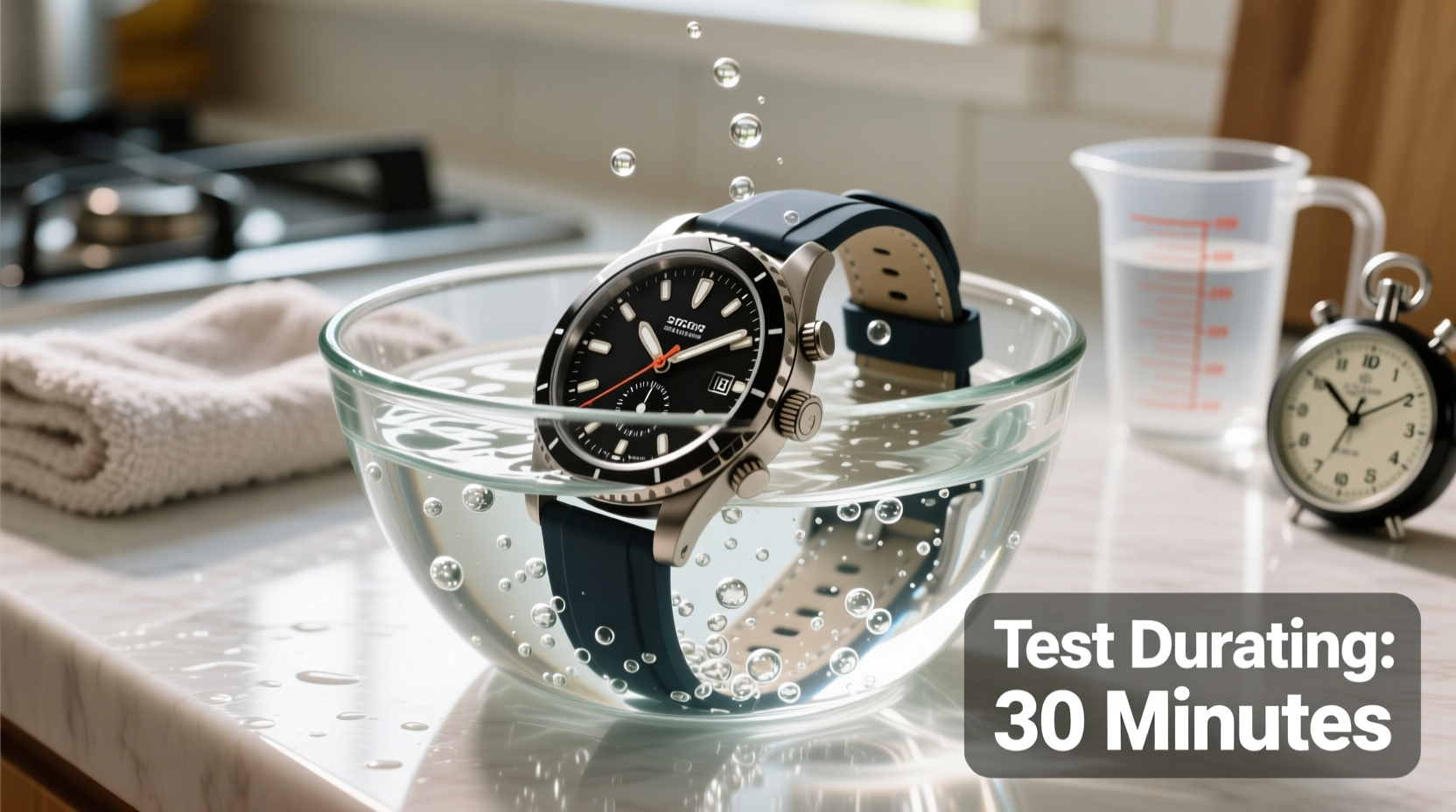
- Submersion trial in still water. Fill a bowl with room-temperature water and submerge the watch for 10–15 minutes. Keep it face-up to minimize pressure on the crystal. After removal, dry thoroughly and wait 24 hours before checking for internal fogging or droplets.
- Listen for subtle signs. After drying, gently shake the watch near your ear. If you hear sloshing, water has entered the casing.
This process helps detect existing breaches but does not simulate dynamic pressure. It should be performed every 6–12 months—or after any impact.
Do’s and Don’ts of Home Testing
Mistakes during self-testing can cause more harm than good. Avoid common pitfalls by following this guide.
| Action | Recommended? | Reason |
|---|---|---|
| Using hot water for testing | No | Heat expands metal and rubber, creating temporary gaps that may allow water entry |
| Testing with soaps or chemicals | No | Residues degrade gaskets and corrode seals over time |
| Pressing buttons underwater | No | Increases risk of forcing water past button seals |
| Drying with hairdryer on high heat | No | Excessive heat damages internal components and lubricants |
| Storing in a dry, cool place post-test | Yes | Allows residual moisture to evaporate naturally |
| Wiping with soft microfiber cloth | Yes | Prevents scratches and removes surface water safely |
Real Example: The Weekend Swimmer’s Surprise
Mark, an amateur triathlete, relied on his 10 ATM-rated sports watch for open-water training. After two years of regular use, he noticed slight fogging after a swim. He assumed it was normal condensation. A month later, the second hand began stuttering. He disassembled the back (a risky move) and found corrosion on the circuitry. Despite the high rating, repeated exposure to chlorinated pools and saltwater had degraded the gaskets. A simple condensation check earlier could have alerted him to the issue before permanent damage occurred.
This case underscores that even high-rated watches require vigilance. Environmental factors matter more than the number on the dial.
“Water resistance isn’t permanent—it’s a condition that degrades over time. Even a watch rated for 200 meters needs maintenance every 1–2 years.” — Daniel Reyes, Watch Technician at Precision Time Labs
Expert-Backed Tips for Long-Term Protection
Prevention is far more effective than repair when it comes to water damage. Incorporate these habits into your routine to extend your watch’s lifespan.
Tip: Rinse your watch with fresh water after swimming in pools or the ocean to remove chlorine and salt residues.- Service every 1–2 years: Replace gaskets and test pressure professionally.
- Avoid thermal shock: Don’t jump from a hot sauna into cold water while wearing your watch.
- Keep it clean: Wipe the case and band regularly to prevent buildup that traps moisture.
- Store properly: Keep in a dry, low-humidity environment when not in use.
- Know your limits: Just because a watch survives one deep dive doesn’t mean it’s designed for it.
Frequently Asked Questions
Can I swim with a 5 ATM watch?
Yes, but only in shallow water and for short durations. Avoid diving, jumping in, or prolonged submersion. Showering with it is risky due to steam and soap, which can degrade seals faster than water alone.
My watch fogs up after being in the rain. Is it ruined?
Not necessarily. Temporary fogging on the outside of the crystal is normal due to humidity. But if the fog appears *inside* the watch, moisture has penetrated the case. Remove the watch immediately, stop using it, and take it to a technician to prevent corrosion.
How often should I get my watch pressure tested?
At minimum, every 12 to 18 months—especially if used frequently in water. Watches exposed to harsh environments (saltwater, chlorine, extreme temperatures) should be checked annually.
Conclusion: Stay Proactive, Not Reactive
Your sports watch is engineered to handle stress, but it’s not invincible. Water resistance diminishes over time, and silent failures can lead to costly repairs or total loss. By incorporating simple at-home checks—like the condensation test and visual inspection—you gain early insight into your watch’s condition. Combine these with regular professional servicing and smart usage habits, and you’ll maximize both performance and longevity.
💬 Have you ever caught water damage early using a home test? Share your experience in the comments and help others protect their gear.








