In professional and formal environments, footwear has long been governed by unspoken rules. For decades, dress shoes—oxfords, loafers, brogues—have reigned supreme as the default standard for polished attire. But as workplace norms evolve and climate-conscious fashion gains ground, a new contender is stepping into the spotlight: the dress sandal. Once relegated to beach resorts and summer barbecues, well-designed dress sandals are now appearing in boardrooms, weddings, and even high-end restaurants. So, are dress shoes still the only safe bet—or have sandals earned their place in formal wear?
The Evolution of Formal Footwear
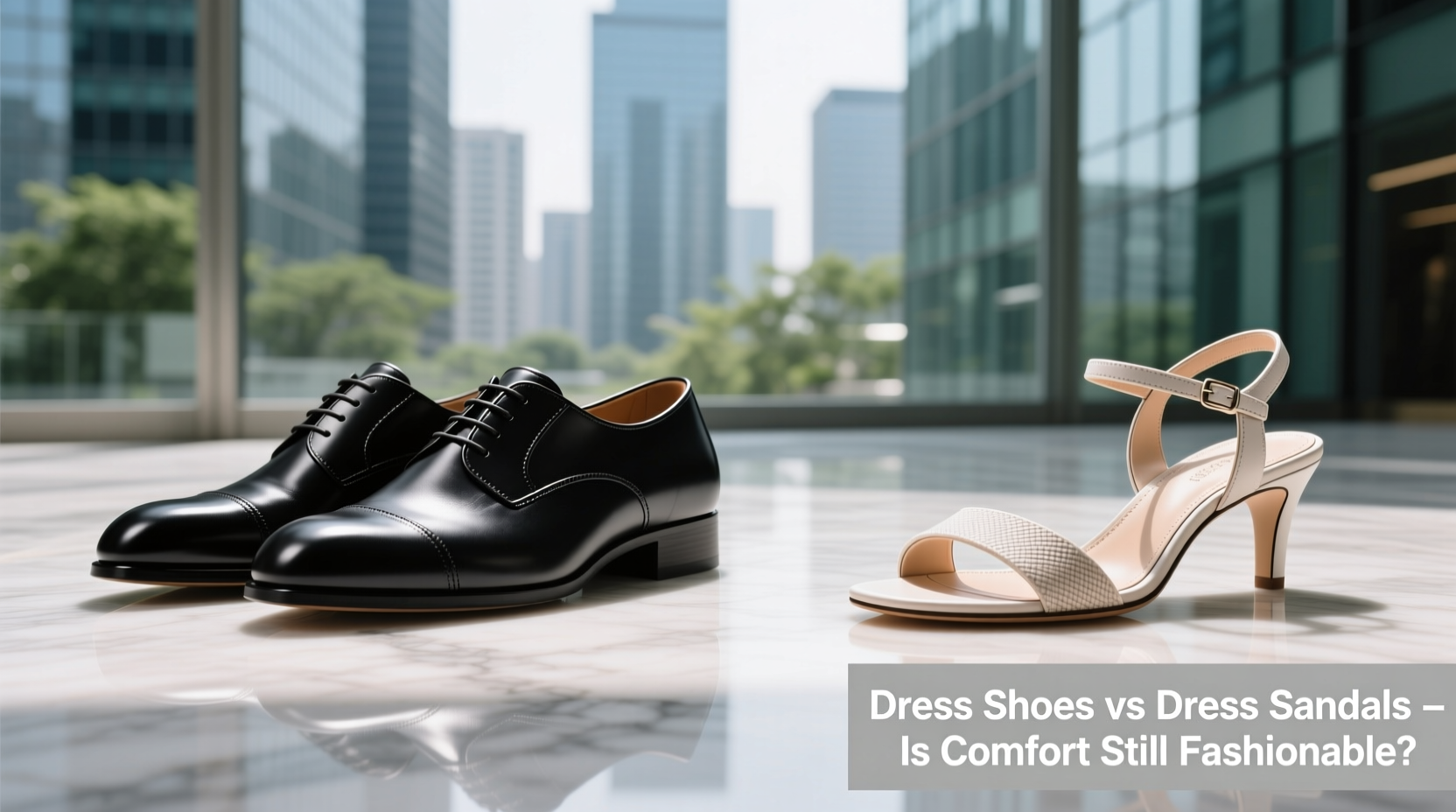
Formality in men’s and women’s fashion has traditionally been defined by coverage. The more skin concealed, the more “appropriate” the outfit was considered for serious occasions. This logic placed closed-toe dress shoes at the top of the hierarchy. However, cultural shifts, warmer urban climates, and a growing emphasis on comfort and sustainability are challenging that assumption.
Today’s dress sandals—crafted from premium leather, featuring refined silhouettes, and designed with minimal hardware—are no longer flip-flops with a price tag. Brands like Birkenstock (with their collaborations), Teva, and even Gucci have introduced elevated styles that blur the line between casual and formal. Meanwhile, women’s fashion has seen a surge in strappy leather sandals with block heels or sleek metallic finishes suitable for office wear or evening events.
“Footwear formality isn’t just about tradition anymore—it’s about context, craftsmanship, and confidence.” — Marcus Lin, Menswear Stylist & Consultant
When Dress Shoes Are Still the Safer Choice
Dress shoes remain the gold standard in many environments, particularly where tradition and hierarchy shape expectations. Consider these scenarios:
- Corporate offices – Especially in finance, law, and government sectors, closed-toe lace-ups or oxfords signal professionalism and attention to detail.
- Weddings – Unless explicitly casual, most formal weddings expect guests to wear closed shoes. Sandals, even elegant ones, can appear underdressed.
- Funerals and religious services – Modesty and solemnity often require full coverage.
- Cold or wet climates – Practicality aside, exposed feet in chilly weather can seem out of touch with social norms.
Where Dress Sandals Have Earned Their Place
Not all formal settings demand shoe polish and sock lines. In fact, in certain modern or region-specific contexts, dress sandals aren’t just acceptable—they’re preferred.
In Mediterranean countries like Italy or Greece, it’s common to see men in leather sandals paired with tailored linen suits during summer months. Silicon Valley tech executives routinely wear minimalist sandals to work, signaling a culture that values function over formality. Even in creative industries—design, media, architecture—sandals made from fine materials are increasingly seen as stylish and intentional, not sloppy.
Key factors that make dress sandals appropriate:
- Material quality – Full-grain leather, suede, or cork soles elevate the look.
- Minimalist design – Avoid chunky straps, Velcro, or sporty soles.
- Proper pairing – Worn with cropped trousers, chinos, or summer dresses—not jeans or athletic socks.
Real Example: A Tech Conference in Austin
At a recent industry summit in Austin, Texas, two attendees arrived dressed similarly: both wore navy blazers, light shirts, and tailored cotton pants. One wore classic brown oxfords; the other, polished cognac-leather sandals with thin straps and a contoured footbed. While the first blended into the expected norm, the second turned heads—not negatively, but with curiosity. Several networking conversations began with, “I love your shoes—where did you get them?” By day’s end, he had collected five business cards directly because of his footwear choice. In that environment, the sandal wasn’t a misstep—it was a conversation starter and a statement of personal brand.
Comparing Dress Sandals and Dress Shoes: A Practical Guide
| Criteria | Dress Shoes | Dress Sandals |
|---|---|---|
| Formality Level | High – universally accepted in formal settings | Moderate to High – depends on design and context |
| Comfort in Heat | Low – tend to trap heat and moisture | High – breathable and cooling |
| Versatility | High – transitions from day to night easily | Moderate – limited by weather and setting |
| Maintenance | Moderate – requires polishing, waterproofing | Low – easy to wipe clean, less prone to odor |
| Sustainability | Variable – often resource-intensive production | Higher potential – simpler construction, less material used |
How to Choose the Right Option: A Step-by-Step Decision Framework
Selecting between dress sandals and dress shoes shouldn’t be arbitrary. Use this decision-making process to ensure your choice aligns with the occasion and your goals.
- Assess the event type – Is it a job interview, wedding, conference, or dinner? Conservative events favor dress shoes.
- Check the dress code – “Business formal” means shoes. “Smart casual” or “summer chic” may allow sandals.
- Consider the location and climate – Hot, dry cities (Phoenix, Rome) are more accepting of sandals than rainy London or snowy Chicago.
- Evaluate your outfit – Can your ensemble support open footwear? Tailored shorts, cropped pants, or midi skirts work better with sandals.
- Know your audience – Traditional industries may judge sandals harshly. Creative fields often reward thoughtful individuality.
- Trust your grooming – Well-maintained feet, trimmed nails, and neutral polish (if any) are essential when wearing sandals formally.
Common Missteps to Avoid
Even in accepting environments, not all sandals qualify as “dress” wear. Steer clear of these mistakes:
- Wearing beach sandals to an office – Flip-flops, rubber thongs, or heavily branded sport sandals undermine credibility.
- Mismatched socks (or none at all) with dress shoes – Socks should complement your outfit; going barefoot with leather shoes risks odor and blistering.
- Ignoring foot hygiene – With sandals, your feet are visible. Dry skin, cracked heels, or unkempt toenails distract from an otherwise sharp look.
- Over-accessorizing – Too many straps, buckles, or embellishments make even leather sandals look costume-like.
Frequently Asked Questions
Can I wear dress sandals to a job interview?
Generally, no—unless you're interviewing in a warm climate creative industry (e.g., architecture in Miami or tech in Los Angeles). Even then, closed-toe shoes project more caution and respect for tradition. When building trust early, it’s best to err on the side of conservatism.
Are open-toe shoes unprofessional for women?
Not inherently. Many professional women wear elegant strappy sandals with dresses or skirts in summer. The key is refinement: avoid overly high stiletto heels with excessive cutouts. Opt for neutral tones, supportive heels (2–3 inches), and quality materials.
Do dress sandals last as long as dress shoes?
It depends on construction and use. High-end leather sandals with replaceable footbeds (like those from Birkenstock or Ecco) can last 5+ years with care. However, dress shoes typically offer better structural longevity, especially in varied weather conditions.
Final Verdict: Context Is King
The idea that dress shoes are *always* the safer choice is outdated—but so is assuming that any sandal qualifies as formal wear. The real answer lies in context. Dress shoes remain the default for maximum safety in uncertain or conservative settings. Yet, in the right environment, with the right design and styling, dress sandals can be equally appropriate, even advantageous.
Modern professionalism is less about rigid rules and more about intentionality. A well-chosen pair of leather sandals speaks to awareness of climate, comfort, and personal branding. A polished pair of oxfords communicates respect for tradition and precision. Both have value. The wise wearer knows not just what to wear—but why.
💬 What’s your take? Have you worn dress sandals to a formal event? Did it pay off—or backfire? Share your experience and help others navigate this evolving fashion frontier.








