
When the weather turns unpredictable—rain, sleet, or damp mountain trails—the question isn’t just about staying dry. It’s about staying warm. And for outdoor enthusiasts, hikers, climbers, and even urban commuters, the choice between a down jacket and a synthetic puffer often comes down to one critical factor: how well each performs when wet.
Both materials have loyal followings. Down is praised for its superior warmth-to-weight ratio and compressibility. Synthetic insulation has long been considered the practical alternative, especially in humid climates. But when moisture enters the equation, the performance gap becomes stark—and the decision far less obvious.
This guide cuts through marketing claims and anecdotal preferences to deliver a clear, evidence-based answer: which insulation truly keeps you warmer when wet, and under what conditions?
The Science of Warmth: How Insulation Works
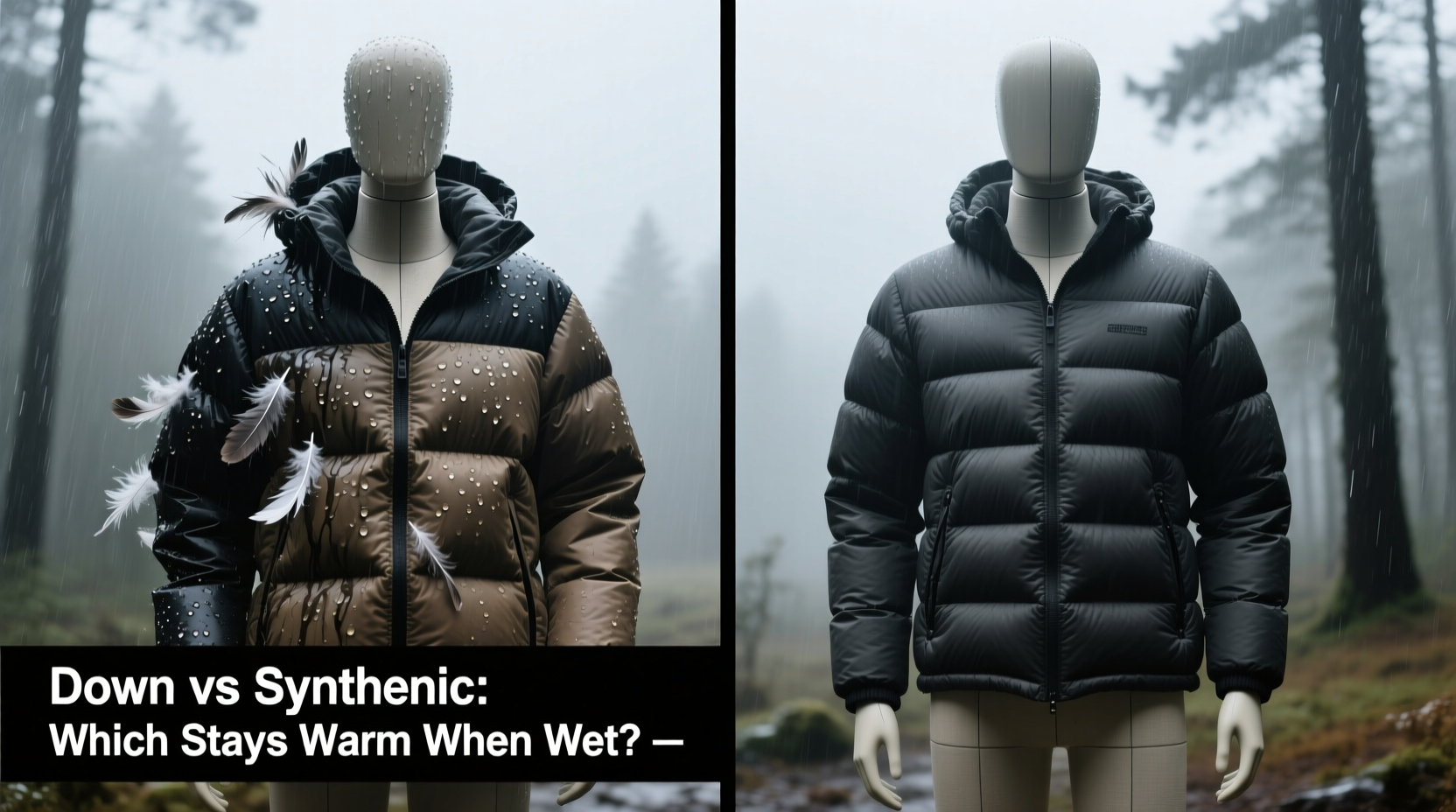
Insulation works by trapping air. The more still air an insulating layer can hold close to the body, the better it retains heat. Both down and synthetic fibers create tiny pockets that prevent convective heat loss. However, their structure, origin, and response to moisture differ fundamentally.
Down, derived from the soft underplumage of ducks and geese, consists of clusters with fine filaments radiating from a central point. This 3D structure creates highly efficient air pockets. When lofted properly, down offers unmatched thermal efficiency per ounce.
Synthetic insulation, typically made from polyester fibers, mimics this lofting effect using engineered strands. These are arranged in crimped, curled, or web-like formations designed to replicate down’s air-trapping ability. Modern synthetics like PrimaLoft, Coreloft, and Thermolite have closed the performance gap significantly—but not completely.
The key differentiator? Hydrophobic behavior.
Tip: Always check whether your down jacket uses hydrophobic-treated down—it behaves much closer to synthetic in damp conditions.Wet Conditions: Why They Matter
Moisture compromises insulation in two ways: directly by collapsing loft, and indirectly by increasing conductive heat loss. Water conducts heat away from the body about 25 times faster than air. When insulation gets wet, those carefully trapped air pockets fill with water, reducing loft and allowing rapid heat transfer.
In extreme cases, a soaked jacket can become a liability—drawing heat from the body instead of preserving it.
Natural down, while incredibly efficient when dry, has a major weakness: it absorbs moisture readily. Once damp, down clusters clump together, losing loft and insulating power. Historically, this made down a poor choice for wet environments—think Pacific Northwest hikes, alpine snowmelt crossings, or sudden downpours.
Synthetic insulation, on the other hand, is inherently hydrophobic. Polyester fibers do not absorb water. Instead, moisture passes through or beads on the surface. Even when saturated, many modern synthetics retain partial loft and continue providing warmth.
“On a rainy traverse in the Scottish Highlands, I’ve seen down jackets turn into cold, flat sheets while synthetic layers kept climbers functional—even after hours of drizzle.” — Dr. Liam Hartwell, Mountain Safety Researcher, UIAA
Performance Comparison: Down vs Synthetic When Wet
To understand the real-world implications, consider three key metrics: wet warmth retention, drying time, and durability under repeated exposure.
| Factor | Down (Untreated) | Hydrophobic Down | Synthetic Puff |
|---|---|---|---|
| Warmth Retention (when damp) | Poor – loses 70–90% insulation value | Moderate – retains 50–70% | Good – retains 60–80% |
| Drying Time (moderate humidity) | Slow – 6–12+ hours | Moderate – 4–8 hours | Fast – 2–5 hours |
| Compressibility | Excellent | Very Good | Fair to Good |
| Lifespan (with care) | Long (10+ years) | Long (8–10 years) | Moderate (5–7 years) |
| Best Use Case | Dry cold, high-altitude expeditions | Variable conditions, shoulder seasons | Wet climates, frequent use, active wear |
The data shows a clear trend: untreated down fails dramatically in wet environments. Even hydrophobic treatments—such as Nikwax or DownTek—only delay the inevitable if saturation occurs. Synthetics, while slightly heavier and bulkier, maintain functionality across a broader range of conditions.
Real-World Example: Hiking the Olympic Peninsula
A group of four backpackers set out on a five-day trek through the Hoh Rainforest. Two wore premium 800-fill-power down jackets; the other two opted for mid-range synthetic puffers.
By day two, constant mist and dripping canopy had soaked outer shells. The hikers in down reported feeling chilled during breaks, despite dry base layers. Their jackets showed visible clumping along shoulders and sleeves. In contrast, the synthetic wearers maintained consistent warmth, even after sitting on wet logs during lunch stops.
At camp, the down jackets took overnight drying near a tent vestibule fan to regain minimal loft. The synthetic jackets were wearable the next morning after brief shaking and airing. No additional heat source was used.
This scenario illustrates a common truth: in persistently damp environments, synthetic insulation provides more reliable thermal protection—even if it starts with a lower warmth-to-weight ratio.
When Down Still Wins (Even With Moisture Risk)
That said, down remains the gold standard in specific scenarios. Its unparalleled warmth-to-weight ratio makes it ideal for winter mountaineering, where every gram counts and precipitation is primarily snow (which sheds easily). Additionally, down lasts longer when properly cared for, often outperforming synthetics over a decade of use.
Modern hydrophobic down has also improved significantly. Brands like Mountain Equipment and Rab use treated down that resists moisture absorption for hours, making them viable for mixed conditions. If paired with a high-quality DWR-treated shell and worn actively (generating body heat), these jackets can perform admirably in light rain or snow.
However, they still require careful management. Once fully saturated, recovery is slow and incomplete without external heat sources.
Tip: Never pack a down jacket tightly when there's a chance of moisture. Compressed wet down loses loft permanently if not dried promptly and thoroughly.Step-by-Step Guide: Choosing the Right Insulation for Your Environment
Selecting between down and synthetic shouldn’t be based on popularity or price alone. Follow this decision framework:
- Assess your typical environment: Do you hike in humid forests, coastal regions, or rainy cities? Choose synthetic. If you’re in dry cold (Rockies, Himalayas, Arctic), down excels.
- Evaluate activity level: High-output activities (ski touring, trail running) generate sweat. Without breathable insulation, moisture builds up. Synthetics handle internal dampness better.
- Consider backup options: If relying on one insulated layer, lean toward synthetic for reliability. If layering with a hardshell and spare clothing, down can work as a mid-layer in variable weather.
- Check care commitment: Down requires meticulous cleaning and storage. Improper washing leads to clumping and mildew. Synthetics tolerate frequent washing and rough handling.
- Budget and longevity: Down costs more upfront but lasts longer. Synthetics degrade faster due to fiber breakdown but are cheaper to replace.
Expert Insight: What Professionals Recommend
According to gear testers at OutdoorGearLab, “For anyone spending time in wet conditions, synthetic insulation is no longer the compromise—it’s the smart choice.” Their 2023 field tests concluded that top-tier synthetics now match 700-fill down in warmth, with vastly superior wet performance.
“In expedition medicine, we see more hypothermia cases linked to failed insulation in damp conditions than any other gear failure. When lives depend on warmth, we recommend synthetic or hydrophobic-treated down—never untreated down.” — Dr. Amara Singh, Wilderness Medical Society
Similarly, Patagonia’s material innovation team emphasizes sustainability and function: “We’ve shifted many of our bestsellers to recycled synthetic insulation because it performs consistently in the real world—not just in lab-controlled dry chambers.”
FAQ: Common Questions About Wet Weather Insulation
Can I make my down jacket waterproof?
No jacket is truly waterproof unless sealed like a dry bag. While DWR coatings and tightly woven shells help shed light rain, prolonged exposure will eventually saturate any down jacket. A waterproof hardshell over a down layer is the only reliable solution.
Does synthetic insulation lose warmth over time?
Yes. Polyester fibers break down with compression, washing, and UV exposure. Most synthetic jackets lose 10–20% of their loft after two years of regular use. Proper storage (uncompressed, dry) slows degradation.
Is hydrophobic down worth the extra cost?
If you face occasional moisture but prioritize lightweight warmth, yes. Hydrophobic down delays wetting, dries faster, and resists mildew. But it’s not a substitute for synthetic in consistently wet climates.
Final Recommendation: Match Material to Mission
The answer to “which stays warmer when wet” isn’t theoretical—it’s situational. For sheer performance in damp conditions, synthetic puff wins. It maintains warmth, dries quickly, and forgives user error. Whether you're trekking through foggy hills or commuting in sleet, synthetic insulation delivers dependable protection.
Down, particularly untreated varieties, falters when wet. Even advanced hydrophobic versions have limits. They shine in cold, dry settings where weight and packability matter most—like high-altitude climbs or winter camping in arid zones.
Your environment should dictate your choice. Don’t let brand loyalty or prestige sway you. A soaked down jacket is worse than useless—it’s dangerous. A well-designed synthetic puffer may lack the luxury appeal, but it keeps working when conditions turn harsh.
💬 What’s your go-to insulated jacket for wet weather? Share your experience and help others make smarter gear choices.








