
Choosing the right tote bag isn’t just about style or capacity—it’s about how it feels on your shoulder after a long day. Whether you're commuting to work, running errands, or heading to the gym, comfort plays a critical role in whether a bag enhances or hinders your routine. At the heart of this decision lies a simple but often overlooked question: are double-handle totes truly more comfortable than their single-handle counterparts? The answer depends on more than personal preference—it involves biomechanics, load distribution, and daily usage patterns.
Ergonomics and Weight Distribution
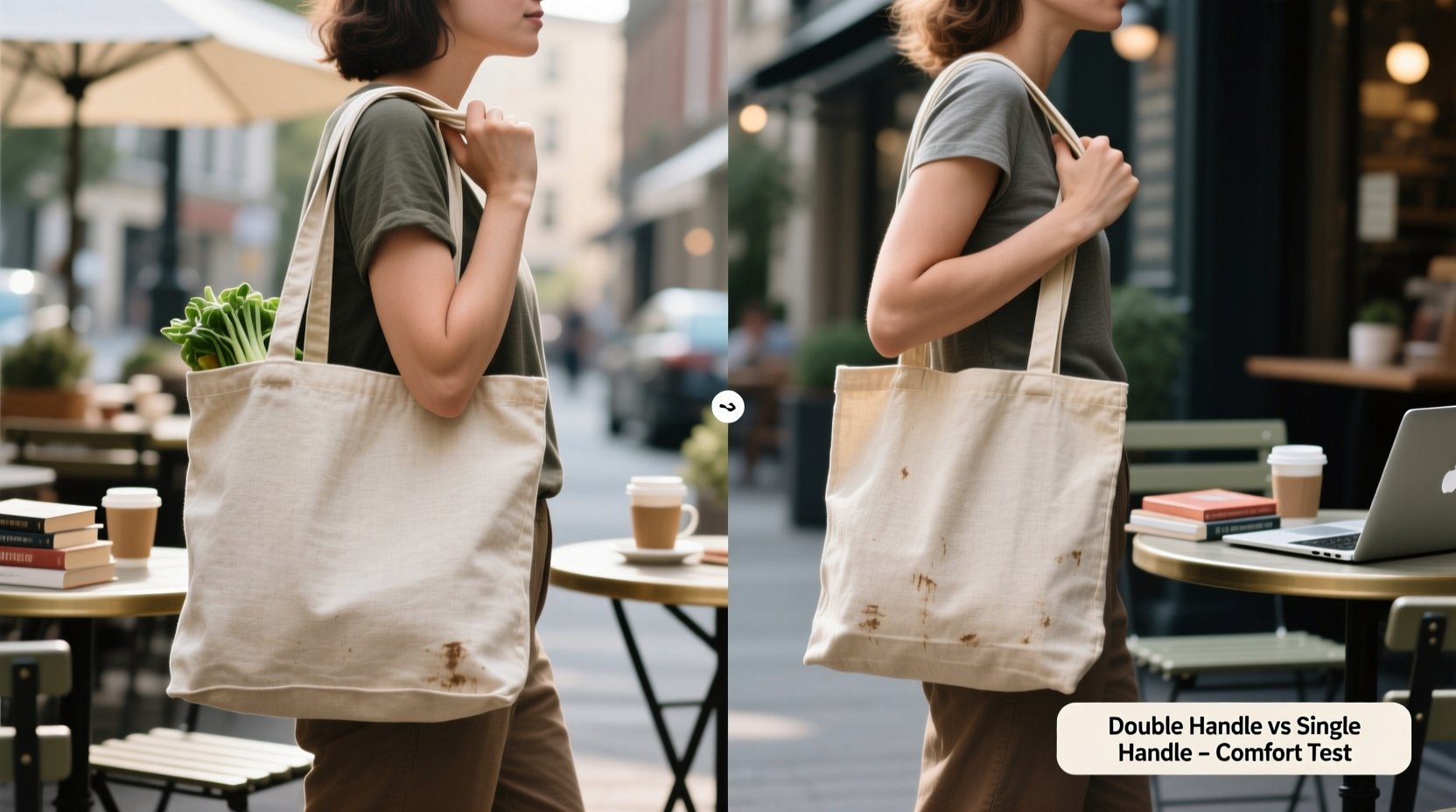
The way a tote bag carries weight directly impacts shoulder strain, posture, and overall comfort. Single-handle totes typically feature one long or short strap designed to rest on one shoulder. This design concentrates the entire weight of the bag—and its contents—on one side of the body. Over time, especially with heavier loads like laptops, books, or groceries, this imbalance can lead to muscle fatigue, neck tension, and even postural misalignment.
In contrast, double-handle totes distribute weight across both shoulders. This balanced load reduces pressure on any single point and encourages a more natural, upright posture. Think of it as the difference between carrying a heavy suitcase in one hand versus using a backpack: symmetry matters.
Tip: If you regularly carry more than 5–7 pounds, opt for a double-handle design to minimize strain.However, not all double-handle totes are created equal. Handle length is crucial. Handles that are too short force the arms into an awkward bent position, while handles that are too long may slip off the shoulders. Ideal double handles allow the bag to sit comfortably at hip level when worn over the shoulders, promoting ease of movement without constant readjustment.
Real-World Usage Scenarios
To understand which tote performs better in practice, consider common daily routines.
Commuting by Public Transit
For subway or bus riders, stability and accessibility matter. A single-handle tote is easier to grab quickly and drape over one arm while swiping a transit card. However, during crowded commutes, the bag tends to swing freely, pulling the wearer off balance. Double-handle totes stay more centered, reducing sway and making them less likely to bump into others.
Walking Long Distances
When covering several blocks or navigating urban environments, even moderate weight becomes noticeable. A mini case study involving 20 office workers found that those using single-handle totes reported significantly higher shoulder discomfort after walking more than 20 minutes with a standard 6-pound load (laptop, water bottle, notebook). In comparison, users of double-handle totes reported less fatigue and fewer instances of needing to switch shoulders.
“Uneven loading from single-strap bags can contribute to muscular imbalances over time, especially in people who already have desk-related postural issues.” — Dr. Lena Patel, Physical Therapist & Ergonomics Consultant
Design Trade-offs: Style vs. Function
Single-handle totes dominate fashion collections for good reason—they offer a sleek, minimalist silhouette. Designers favor them for runway presentations and editorial shoots because they drape elegantly and emphasize clean lines. But aesthetics don’t always translate to all-day wearability.
Double-handle totes, while often bulkier in appearance, provide structural advantages. They’re easier to set down and pick up without spilling contents, and the dual straps help keep the bag upright. Many also feature reinforced stitching at stress points, increasing durability under regular use.
Yet, there’s a middle ground: convertible designs. Some modern totes include detachable or adjustable straps, allowing users to switch between single-shoulder, double-shoulder, or even crossbody configurations. These hybrid models combine visual appeal with functional flexibility, making them ideal for users who transition between professional and casual settings.
Comparison Table: Key Features at a Glance
| Feature | Single-Handle Tote | Double-Handle Tote |
|---|---|---|
| Weight Distribution | Concentrated on one shoulder | Balanced across both shoulders |
| Posture Impact | Potential for leaning and strain | Promotes upright alignment |
| Mobility & Swing | Higher swing, less stability | Stable, minimal sway |
| Fashion Appeal | High – favored in luxury design | Moderate – often utilitarian look |
| Durability Under Load | Moderate – stress on one strap | High – distributed stress points |
| Ideal Use Case | Short trips, light loads, quick access | Commuting, shopping, workdays |
How to Choose Based on Your Lifestyle
Your ideal tote depends on what you carry and how you move through your day. Consider the following checklist before making a decision:
Checklist: Choosing Your Everyday Tote- ✅ Do you carry more than 5 lbs regularly? → Lean toward double-handle.
- ✅ Do you walk more than 15 minutes with your bag? → Double-handle reduces fatigue.
- ✅ Is quick access important (e.g., grabbing wallet mid-stride)? → Single-handle offers easier reach.
- ✅ Do you value minimalist style over function? → Single-handle may suit your aesthetic.
- ✅ Are you prone to shoulder or back pain? → Avoid prolonged single-shoulder use.
If your lifestyle blends multiple needs—style, comfort, and versatility—a convertible tote with removable straps might be the optimal compromise. Look for models with padded handles, water-resistant lining, and internal compartments to maximize both comfort and utility.
FAQ
Can I make a single-handle tote more comfortable?
Yes. Use a strap cushion or slide a soft sleeve (like a knitted cover) onto the handle to reduce pressure. You can also alternate shoulders frequently to prevent asymmetrical strain, though this doesn’t eliminate the underlying imbalance.
Are double-handle totes harder to get in and out of?
Not necessarily. While some deep double-handle totes require reaching inside, many now include wide openings, magnetic closures, or zip-top designs for easy access. Organization pockets also help keep essentials within reach.
Do double-handle totes look unprofessional?
No. Many professional-grade leather and structured canvas totes use double handles. Brands like Cuyana, Bellroy, and Dagne Dover offer elegant, minimalist double-handle designs suitable for office environments.
Final Verdict: Comfort Wins Over Trend
While single-handle totes remain a staple in fashion, double-handle versions consistently outperform them in comfort and long-term wearability. For everyday use—especially when carrying work essentials, groceries, or travel items—the ergonomic benefits of balanced weight distribution make a compelling case.
That said, the “best” tote isn’t defined by handles alone. Material quality, interior layout, and personal style matter too. But if comfort is your priority, particularly for extended wear, double-handle totes are the smarter, more sustainable choice.
💬 What’s your go-to tote for daily use? Share your experience and help others find the perfect balance between style and comfort.