Silk scarves have long been a symbol of elegance, versatility, and refined taste. Whether draped over shoulders, tied in hair, or looped around a handbag, they elevate any look with subtle luxury. But when shopping for silk scarves, one question often arises: is the higher price of a double sided silk scarf justified compared to its single sided counterpart? The answer isn’t always straightforward—it depends on your priorities, how you plan to wear the scarf, and what you expect from quality and longevity.
Understanding the differences between single and double sided silk scarves goes beyond just appearance. It involves fabric construction, printing techniques, durability, and even ethical production practices. This guide breaks down every aspect so you can make an informed decision without overspending—or underinvesting—in your wardrobe.
What Defines a Double Sided vs Single Sided Silk Scarf?
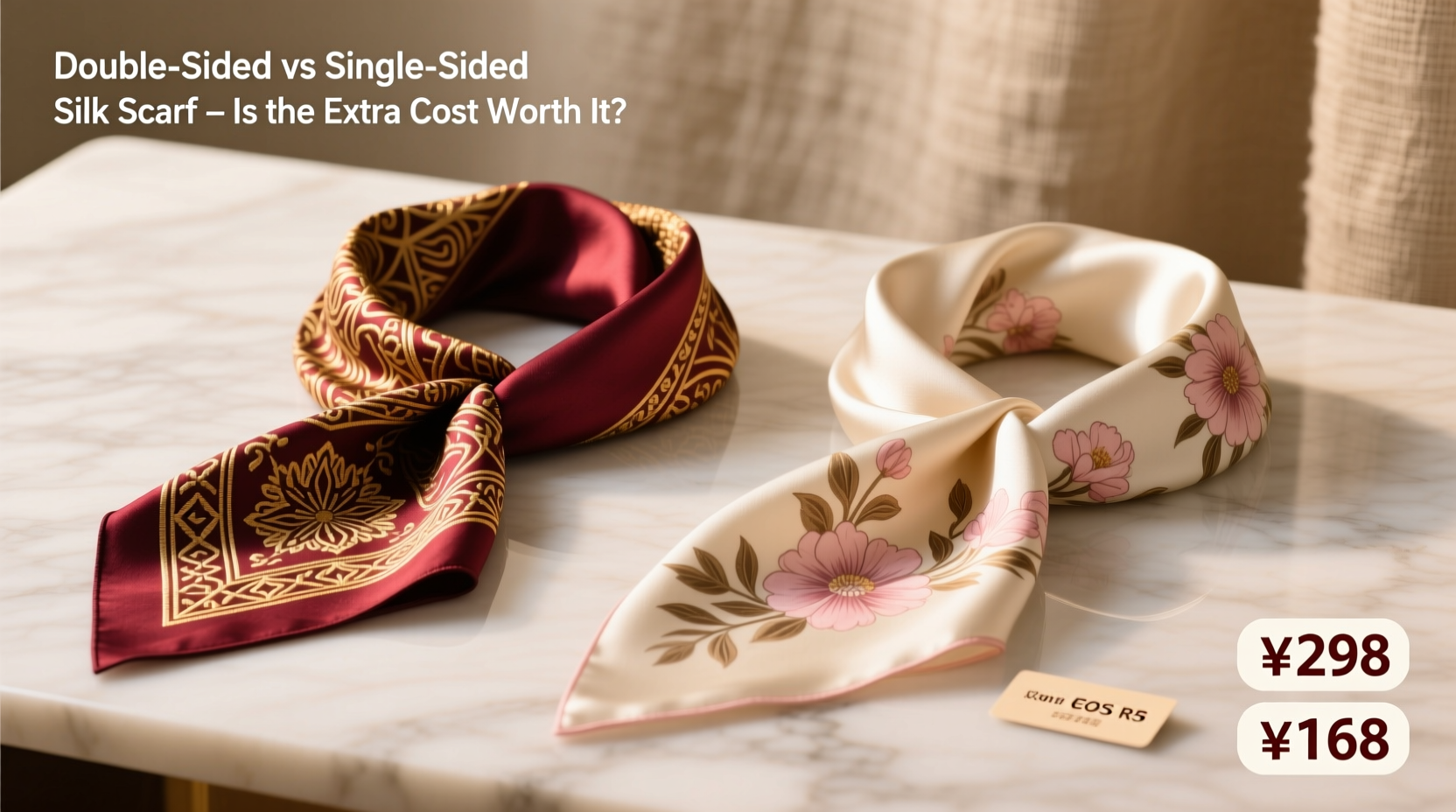
The distinction lies primarily in how the design is applied and whether both sides of the scarf display the same image or color. A single sided silk scarf typically has a printed pattern on one side, while the reverse may appear faded, mirrored, or slightly blurred due to ink seepage through the thin fabric. In contrast, a true double sided scarf features identical, vibrant prints on both sides, achieved through more complex manufacturing methods such as digital printing with precise alignment or specialized screen printing techniques.
Double sided scarves are not simply two layers of silk glued together—that misconception leads some brands to market \"fake\" double sided versions using bonded fabrics, which compromise breathability and drape. Authentic double sided scarves use a single layer of high-quality silk (usually 100% mulberry silk) with advanced printing that ensures full opacity and consistent imagery on both sides.
Tip: To test if a scarf is truly double sided, hold it up to the light—there should be no visible transparency or ghosting of the print.Construction Quality and Fabric Integrity
Single sided scarves are generally less expensive because they require fewer production steps. However, this doesn’t mean they’re low quality. Many reputable brands produce beautiful single sided scarves using 14-19 momme silk, which offers excellent softness and sheen. The key difference emerges in edge finishing and overall resilience.
Double sided scarves often undergo tighter quality control. Because misalignment in printing would be immediately noticeable, manufacturers invest more time in precision. Additionally, these scarves usually feature hand-rolled hems—a hallmark of luxury craftsmanship—which take longer to produce but result in smoother edges that resist fraying.
In terms of weight and drape, there's little difference between authentic single and double sided scarves made from the same momme weight. However, poorly made double sided versions using laminated fabric tend to feel stiffer and lack the fluid movement expected of fine silk.
Comparison Table: Key Differences at a Glance
| Feature | Single Sided Scarf | Double Sided Scarf |
|---|---|---|
| Print Visibility | Clear on front; faint reverse | Identical on both sides |
| Production Cost | Lower | Higher due to precision printing |
| Hem Finish | Machine or hand-rolled | Typically hand-rolled |
| Durability | Good with proper care | Excellent; better tension control |
| Price Range (approx.) | $75–$150 | $180–$400+ |
| Best For | Casual wear, lightweight styling | Formal events, professional settings |
“True double sided scarves represent the pinnacle of silk craftsmanship—not just for aesthetics, but for balance, symmetry, and tactile refinement.” — Clara Moreau, Textile Designer & Former Hermès Artisan
When the Extra Cost Makes Sense
Investing in a double sided silk scarf becomes worthwhile when you value consistency in presentation and plan to wear the scarf in ways where both sides are visible. For example, looping a scarf around your neck in a reversible knot, wearing it as a top, or draping it loosely over a jacket exposes both surfaces. With a single sided scarf, the backside might look unfinished or less polished, undermining the intended elegance.
Frequent travelers also benefit from double sided designs. Since these scarves don’t require “flipping” to hide the dull side, they offer greater flexibility when layering or improvising outfits from limited luggage. Moreover, their superior construction often means better resistance to creasing and wear over time.
For collectors or those building a capsule wardrobe, double sided scarves serve as heirloom pieces. Brands like Hermès, Boucheron, and Etro are known for producing limited-edition double sided scarves that retain or increase value over time, especially when stored properly and worn with care.
Mini Case Study: Sarah’s Wardrobe Upgrade
Sarah, a marketing executive based in London, owned several single sided silk scarves she loved for springtime looks. But during client meetings, she noticed that certain knots revealed the pale underside, making her outfit appear mismatched. After investing in one double sided scarf from a mid-tier designer brand, she found herself reaching for it repeatedly—not only did it look flawless from every angle, but colleagues complimented its richness. Over 18 months, she wore it over 40 times across seasons, hand-washing it monthly. Two years later, it still looked nearly new, while her older single sided scarves showed signs of fading and fraying.
Her experience illustrates a crucial point: the cost per wear of a well-made double sided scarf can be significantly lower than cheaper alternatives used infrequently due to aesthetic limitations.
Practical Tips for Maximizing Value
Tip: Always store silk scarves flat or rolled—not folded—to prevent permanent creases and fiber stress.- Wear strategically: Use single sided scarves for casual, tucked-in styles where only the front shows.
- Rotate usage: Avoid overusing one scarf; rotation extends lifespan and prevents localized wear.
- Hand-wash gently: Use cold water and pH-neutral detergent; never wring or tumble dry.
- Avoid perfume contact: Spray fragrance before putting on a scarf to prevent staining and fiber degradation.
- Iron inside out: Use low heat and a pressing cloth to maintain sheen and prevent shine marks.
Checklist: Choosing the Right Scarf Type
- ✅ Determine your primary use: daily wear, travel, formal events?
- ✅ Check the fabric: Is it 100% mulberry silk? What is the momme weight?
- ✅ Inspect the hem: Is it hand-rolled or machine-stitched?
- ✅ Test visibility: Hold it to light—does the print bleed through?
- ✅ Evaluate budget: Can you justify $200+ for longevity and performance?
- ✅ Research the brand: Do they specialize in scarves or mass-produce accessories?
Frequently Asked Questions
Are all double sided scarves made from higher quality silk?
Not necessarily. While many premium brands use superior silk for double sided models, some manufacturers cut costs by using lower momme weights or synthetic blends. Always verify material composition and momme count regardless of the “double sided” label.
Can I convert a single sided scarf into a double sided look?
No practical method exists without damaging the fabric. Adding lining alters drape and breathability, defeating the purpose of silk. If visual symmetry matters, purchase a genuine double sided version instead.
Do double sided scarves last longer than single sided ones?
Generally yes—but only when comparing similar materials and care routines. The enhanced printing process and frequent inclusion of hand-rolled hems contribute to improved structural integrity. However, neglectful handling will degrade any silk, regardless of type.
Final Verdict: Is the Investment Worth It?
The added cost of a double sided silk scarf is justified if you prioritize polish, versatility, and long-term wearability. For occasional use or experimental styling, a high-quality single sided option offers excellent value. But if you're building a timeless accessory collection or need a piece that performs flawlessly in professional or social settings, the precision and finish of a true double sided scarf deliver tangible benefits that outweigh the initial price gap.
Ultimately, it’s not about choosing the most expensive option—it’s about aligning your purchase with how you live, dress, and care for your belongings. A single well-chosen double sided scarf can become a signature element of your personal style, serving you elegantly for decades.
💬 Have a favorite silk scarf that’s stood the test of time? Share your story or tips with our community—your insight could help others invest wisely.