Sleep tracking has become a cornerstone of modern health tech. With more people prioritizing rest as part of their wellness routine, wearable devices now promise to deliver deep insights into sleep quality, duration, and patterns. Two dominant players in this space are smart rings and fitness trackers. But which one truly delivers superior sleep tracking? While both claim high accuracy and continuous monitoring, the reality is more nuanced. This article dives into sensor technology, user experience, data reliability, and practical use cases to answer the question: do smart rings actually track sleep better than fitness trackers?
Sensor Technology: What’s Under the Hood?
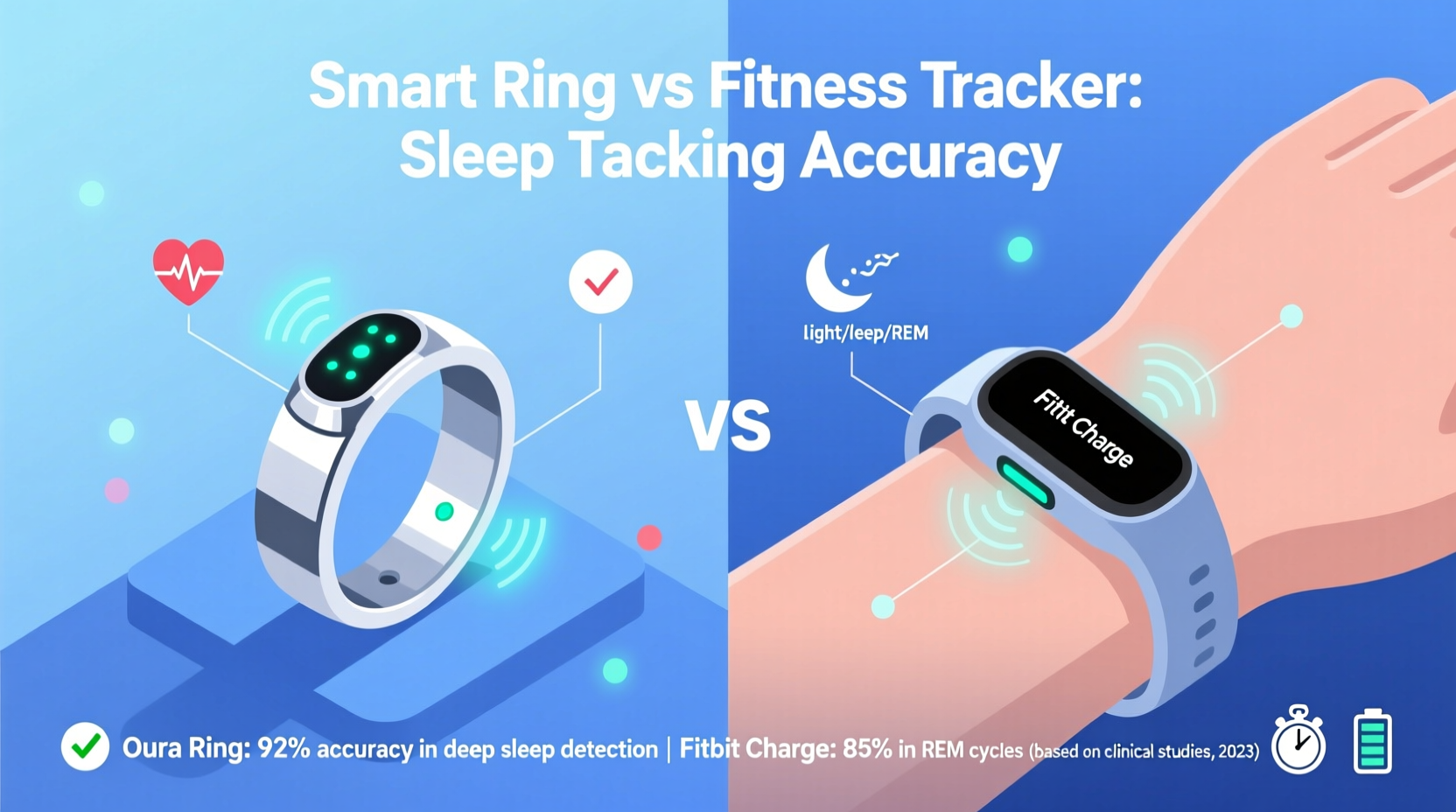
The foundation of any sleep-tracking device lies in its sensors. Both smart rings and fitness trackers rely on photoplethysmography (PPG) sensors to monitor heart rate and blood oxygen levels. However, placement and design lead to significant differences in performance.
Smart rings, such as the Oura Ring or Ultrahuman Ring Air, sit on the finger—a location with strong arterial blood flow. This allows for consistent PPG readings, especially during still periods like sleep. The proximity to capillaries means less motion noise and potentially higher signal quality when measuring heart rate variability (HRV), a key metric for assessing sleep recovery and autonomic nervous system activity.
Fitness trackers—like the Fitbit Charge 6, Garmin Vivosmart, or Apple Watch—wear on the wrist. While convenient, the radial artery can be more variable in signal strength, particularly if the band is too loose or the user moves frequently. During sleep, arm movements or rolling over can disrupt data continuity, leading to gaps or inaccuracies.
“Finger-based PPG generally provides a cleaner physiological signal during rest due to reduced motion artifact and stable perfusion.” — Dr. Lena Patel, Biomedical Engineer & Wearable Tech Researcher, Stanford University
That said, fitness trackers often include additional sensors—such as accelerometers, skin temperature monitors, and even EDA (electrodermal activity)—that can enhance contextual sleep analysis. Some models also use machine learning algorithms trained on large datasets to classify sleep stages (light, deep, REM) with increasing precision.
Tip: For the most accurate sleep data, ensure your device fits snugly but comfortably—especially important for wrist-worn trackers that can shift during the night.Comfort and Wearability: The Real-World Factor
No matter how advanced the sensors, a device that interrupts sleep won’t deliver reliable data. This is where smart rings often gain an edge.
Most users report that once acclimated, smart rings are nearly unnoticeable during sleep. Their small size, lightweight build, and lack of screen make them ideal for side sleepers or those sensitive to pressure points. In contrast, some fitness trackers—with bulkier designs or rigid bands—can cause discomfort, especially for petite wrists or active sleepers.
A mini case study illustrates this well: Sarah, a 34-year-old software developer and light sleeper, tried both the Oura Ring Gen3 and the Fitbit Charge 5. She wore each for two weeks, switching nightly. While both provided detailed sleep scores, she consistently removed the Fitbit halfway through the night due to wrist pressure. The Oura Ring, however, stayed on without issue. Over time, her compliance improved with the ring, resulting in more complete datasets.
Still, rings aren’t perfect. They may not fit all finger sizes, and swelling (common during sleep or hormonal shifts) can affect fit and sensor contact. Users with Raynaud’s syndrome or poor peripheral circulation may also get inconsistent readings.
Data Accuracy and Sleep Stage Detection
How accurately do these devices detect actual sleep stages compared to clinical polysomnography (PSG), the gold standard?
Studies suggest both smart rings and fitness trackers are reasonably accurate for estimating total sleep time and distinguishing wake from sleep, but they struggle with finer granularity. A 2022 review published in *Sleep Medicine Reviews* found consumer wearables correctly classified sleep stages about 70–80% of the time when compared to PSG. Deep sleep tends to be overestimated, while REM sleep is often underreported.
Where smart rings may pull ahead is in consistency. Because they’re less prone to movement-related signal loss, they tend to collect uninterrupted data throughout the night. Fitness trackers, especially those without always-on heart rate, may miss critical transitions between sleep phases.
However, newer fitness trackers are closing the gap. Devices like the Fitbit Sense 2 and Whoop 4.0 use multi-day trend analysis and AI-driven corrections to improve long-term accuracy. They also benefit from larger batteries, enabling longer recording sessions and more frequent firmware updates.
Feature Comparison: Beyond Sleep Tracking
Sleep isn’t the only factor in overall wellness. How do these devices stack up when it comes to broader functionality?
| Feature | Smart Rings | Fitness Trackers |
|---|---|---|
| Sleep Tracking Accuracy | High (consistent finger PPG) | Moderate to High (varies by model) |
| Battery Life | 4–7 days | 5–10 days |
| Daytime Activity Tracking | Limited (steps, HR) | Comprehensive (GPS, workouts, calories) |
| Comfort During Sleep | Excellent | Good to Fair |
| Recovery & Readiness Metrics | Strong (e.g., Oura Readiness Score) | Available (e.g., Fitbit Sleep Score) |
| Water Resistance | Generally good (IP68) | Excellent (swim-proof on many models) |
| Notifications & Smart Features | Minimal or none | Full support (calls, texts, apps) |
As shown, smart rings excel in passive, sleep-focused monitoring with minimal distraction. They’re ideal for users who want deep recovery insights without the complexity of a full smartwatch. Fitness trackers, meanwhile, offer a balanced blend of sleep, activity, and lifestyle features—better suited for those already using wearables for exercise or productivity.
Practical Tips for Choosing the Right Device
Selecting between a smart ring and a fitness tracker depends on your goals, habits, and priorities. Consider the following checklist before making a decision:
Checklist: Smart Ring vs. Fitness Tracker – Which Is Right for You?- ✅ Do you prioritize sleep and recovery over daily activity metrics? → Lean toward smart ring
- ✅ Are you a side sleeper or sensitive to wrist pressure? → Smart ring likely more comfortable
- ✅ Do you want GPS, workout modes, or smartphone notifications? → Fitness tracker is better suited
- ✅ Are you willing to charge every 4–5 days? → Both options viable
- ✅ Do you need waterproofing for swimming? → Fitness tracker typically superior
- ✅ Are you looking for clinical-grade precision? → Neither replaces PSG; manage expectations
User Experience Timeline: First Month with a Smart Ring vs. Fitness Tracker
To understand real-world adoption, consider a typical timeline for new users:
- Days 1–3: Excitement and setup. Both devices require app pairing and calibration. Smart ring users may struggle initially with finger fit; fitness tracker users adjust to wearing something at night.
- Days 4–7: Early insights. Sleep scores appear, but data may be incomplete due to removal during sleep (especially with wrist devices). Users begin noticing trends like bedtime consistency or HRV changes.
- Weeks 2–3: Habit formation. Comfort improves. Smart ring users report forgetting they’re wearing it. Fitness tracker users may start ignoring notifications or disabling alarms.
- Week 4: Data maturity. Longitudinal trends emerge—sleep efficiency, resting heart rate, recovery scores. Users start making behavioral changes: earlier bedtimes, reduced alcohol, stress management.
By the end of the first month, adherence rates differ significantly. Studies suggest ~85% of smart ring users continue nightly wear after 30 days, compared to ~65% for fitness trackers—largely due to comfort and lower cognitive load.
Frequently Asked Questions
Can smart rings detect sleep apnea or snoring?
No consumer smart ring currently diagnoses sleep apnea. However, some—like the Oura Ring—can flag irregular breathing patterns, low blood oxygen (SpO2), or frequent awakenings that may suggest underlying issues. These signals should prompt consultation with a healthcare provider, not replace formal testing.
Are fitness trackers better for athletes?
Yes, especially for endurance or gym-focused training. Fitness trackers offer detailed workout logging, GPS mapping, rep counting, and real-time feedback. While smart rings provide excellent recovery data, they lack the active coaching and performance analytics most athletes need.
Do I need both a smart ring and a fitness tracker?
For most people, no. Using both introduces data redundancy and charging complexity. If your priority is holistic health, choose based on primary focus: recovery and sleep (ring) or activity and fitness (tracker). Advanced users may combine a ring for sleep with a chest strap HR monitor for workouts—avoiding duplication.
The Verdict: Is One Truly Better?
After evaluating sensor performance, comfort, data reliability, and real-world usability, the answer isn’t binary. Smart rings do tend to track sleep slightly better than most fitness trackers—not because they’re inherently more advanced, but because their design supports consistent, uninterrupted wear.
Their finger-based PPG sensors capture steadier physiological signals, and their minimalist form encourages nightly use. For individuals focused on optimizing recovery, managing stress, or improving sleep hygiene, a smart ring offers a less intrusive, more reliable solution.
However, fitness trackers remain the better all-in-one option. They balance decent sleep tracking with robust activity monitoring, smart features, and broader ecosystem integration. For general wellness enthusiasts or fitness-oriented users, they provide greater value across the day.
In short: if sleep is your top priority and you want minimal distraction, go with a smart ring. If you want a comprehensive view of health—including workouts, steps, and lifestyle—you’ll likely prefer a fitness tracker.
Final Thoughts and Next Steps
Wearable tech continues to evolve rapidly. While neither smart rings nor fitness trackers match clinical equipment, they’ve made personalized sleep insights accessible to millions. The key is choosing the right tool for your lifestyle—one you’ll actually wear every night.
Start by defining your goals. Are you trying to recover from burnout? Optimize athletic performance? Or simply understand your sleep patterns? Once clear, let function guide form.
Remember: no device can fix poor sleep habits alone. Tracking is only useful when paired with action—consistent bedtimes, reduced screen exposure, and mindful routines. The best wearable is the one that helps you make lasting changes, not just collect data.
💬 Have you tried a smart ring or fitness tracker for sleep? Share your experience in the comments—what worked, what didn’t, and what you learned about your rest.