
Choosing the right everyday bag isn’t just about aesthetics—it’s about function, comfort, and how well it fits into your daily rhythm. Two popular options often debated are the crossbody wallet bag and the clutch. Both serve the purpose of carrying essentials, but they differ significantly in usability, accessibility, and long-term wearability. Whether you're commuting, running errands, or heading out for a casual lunch, understanding the strengths and limitations of each can help you make a smarter, more practical choice.
Understanding the Basics: What Defines Each Bag?
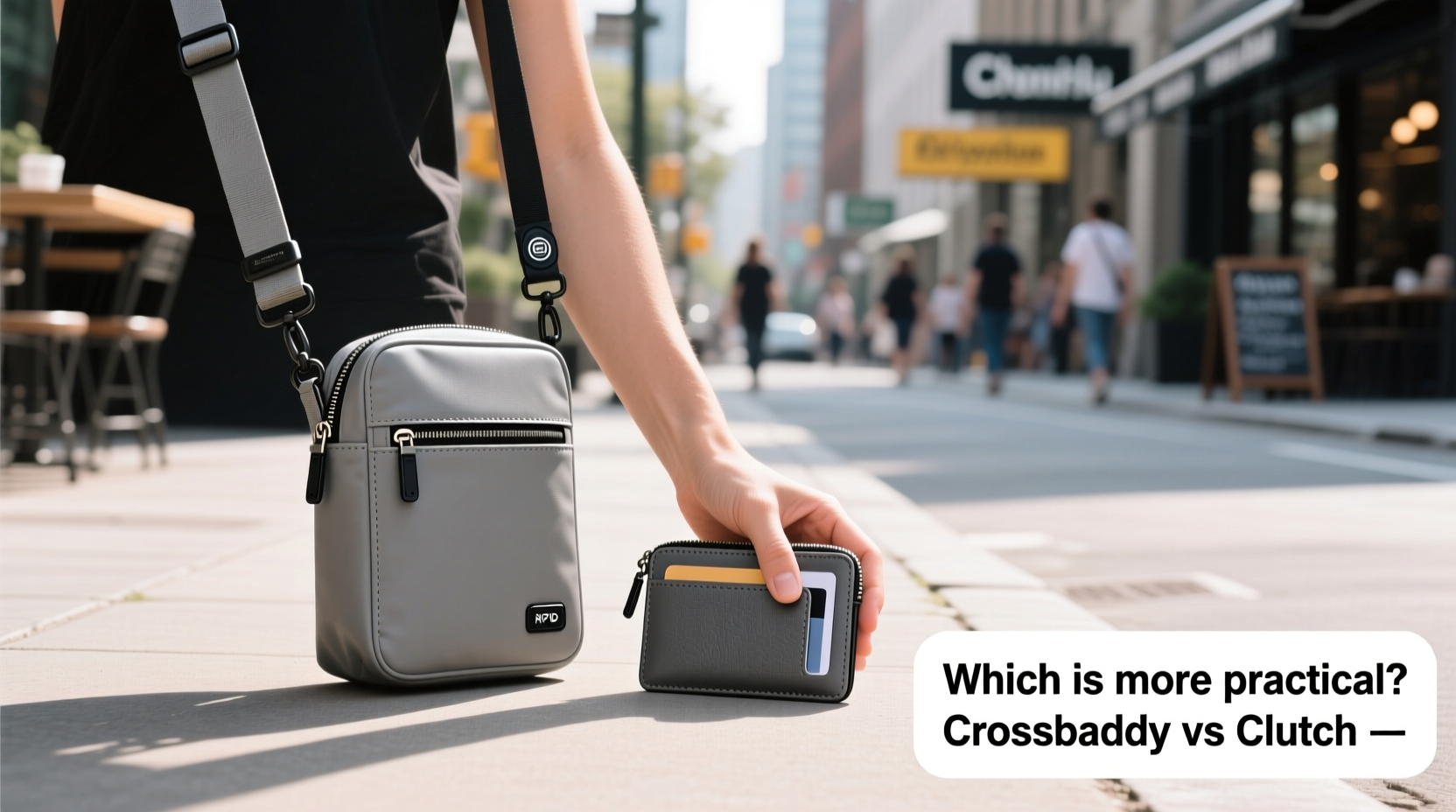
A crossbody wallet bag combines the compactness of a wallet with the convenience of a shoulder strap. It typically features multiple card slots, a zippered coin compartment, and enough space for a phone and keys. Worn diagonally across the body, it keeps hands free and distributes weight evenly. These bags are designed for mobility and are usually made from leather, nylon, or synthetic materials with secure closures.
In contrast, a clutch is a flat, handheld accessory with no straps. It's minimalist by design—ideal for carrying cards, cash, and a lipstick. While some clutches come with detachable chains or wristlets, they still require one hand to hold. Often associated with evening wear, clutches prioritize elegance over utility.
The fundamental difference lies in how each interacts with your movement. One supports active lifestyles; the other suits controlled environments where carrying something in hand isn’t a burden.
Practicality Face-Off: Key Factors Compared
To determine which bag wins in everyday practicality, consider these critical factors: security, comfort, capacity, accessibility, and versatility.
| Factor | Crossbody Wallet Bag | Clutch |
|---|---|---|
| Security | High – worn across the body, harder for pickpockets to access | Low – easily set down and forgotten or snatched |
| Comfort | High – hands-free, adjustable strap, even weight distribution | Low – requires holding, can become tiring during extended use |
| Capacity | Moderate – fits phone, wallet, keys, small cosmetics | Low – limited to bare essentials |
| Accessibility | Moderate – quick access to outer pockets; main compartment may require unzipping | High – immediate open access when held |
| Versatility | High – suitable for day-to-night transitions, travel, shopping | Low – mostly formal or short outings |
While clutches offer instant access and sleek presentation, their lack of security and ergonomic support makes them less ideal for full-day use. Crossbody wallet bags, though slightly bulkier, provide consistent reliability across various scenarios.
Tip: Choose a crossbody wallet bag with RFID-blocking compartments to protect against digital theft in crowded areas.Real-Life Scenario: Who Benefits More From Each Option?
Consider Sarah, a graphic designer who commutes via public transit, walks to meetings, and often stops at coffee shops. Her day involves juggling her laptop bag, phone, and sometimes groceries. She used to carry a slim clutch, believing it looked more polished. But she frequently misplaced it on café tables, struggled to open doors while holding it, and once had her cards stolen after someone grabbed it from a chair.
After switching to a compact crossbody wallet bag, she noticed immediate improvements. Her essentials stayed secure, she could walk hands-free, and accessing her transit pass became effortless. The slight increase in size was a non-issue, and the added peace of mind made all the difference.
Now consider James, who attends gallery openings and networking dinners. He values minimalism and dislikes bulky accessories. For his twice-weekly evening events, a sleek leather clutch fits perfectly—he only needs his phone, ID, and credit card, and he’s never walking far or standing in crowds. In this context, the clutch isn’t impractical; it’s appropriately tailored to his needs.
“Function should follow lifestyle. A bag that works for a city commuter might fail a gala attendee—and vice versa.” — Lena Park, Urban Accessory Stylist
How to Choose Based on Your Daily Routine
Selecting between a crossbody wallet bag and a clutch shouldn’t be based on trends, but on routine demands. Use this checklist to guide your decision:
- Do you walk more than 30 minutes a day? → Favor crossbody
- Are you often in crowded spaces (subways, festivals, markets)? → Crossbody offers better theft protection
- Do you frequently carry a phone, keys, and small items like lip balm or sanitizer? → Crossbody provides organized storage
- Is keeping one hand free important (e.g., pushing strollers, using crutches, carrying takeout)? → Crossbody is essential
- Are most of your outings formal, short, and seated? → Clutch may suffice
- Do you value quick access over long-term comfort? → Clutch has an edge
If three or more answers point toward activity, mobility, or multitasking, the crossbody wallet bag is the more practical choice. If your lifestyle leans toward curated, low-movement events, a clutch can be both stylish and functional—within limits.
Step-by-Step Guide: Transitioning to a More Practical Everyday Bag
Switching from a clutch to a crossbody wallet bag—or optimizing your current choice—can be done smoothly with these steps:
- Assess your essentials: Lay out everything you carry daily. Measure the total volume to ensure your new bag can accommodate it.
- Test wearability: Try on different crossbody styles. Adjust the strap to sit between hip and waist level for optimal balance.
- Prioritize closure type: Zippers offer more security than magnetic snaps, especially in dense areas.
- Check interior layout: Look for dedicated phone and card slots to avoid fumbling.
- Wear it for a trial day: Run errands or commute with it. Note any discomfort, slippage, or access issues.
- Keep your clutch as a backup: Reserve it for nights out when style takes precedence.
This method ensures your choice is data-driven and experience-based, not just aesthetic.
Frequently Asked Questions
Can a clutch be practical for everyday use?
Rarely. While elegant, clutches lack security and ergonomic support. They’re best reserved for short, formal outings where carrying items in hand isn’t disruptive. For true everyday use, they fall short in comfort and safety.
Are crossbody wallet bags too bulky for petite frames?
Not necessarily. Many brands now design mini crossbody wallet bags specifically for smaller builds. Look for models under 7 inches wide and with thin, adjustable straps. When fitted correctly, they complement rather than overwhelm.
How do I prevent my crossbody bag from swinging?
Adjust the strap so the bag rests near your hip, not your thigh. Position it slightly to the front when walking. Bags with chest straps (popular in travel designs) eliminate swing entirely—consider dual-function styles if mobility is key.
Final Verdict: Which Wins for Everyday Use?
The crossbody wallet bag is objectively more practical for everyday use. Its hands-free design, enhanced security, balanced weight distribution, and adaptable storage make it superior for dynamic lifestyles. It bridges the gap between minimalism and functionality, offering just enough space without sacrificing portability.
Clutches have their place—especially in fashion-forward or ceremonial settings—but they don’t support the unpredictability of daily life. They demand constant attention and compromise on safety and ease.
That said, owning both isn’t excessive. Think of the crossbody wallet bag as your reliable daily driver and the clutch as your weekend convertible—each excels in its environment.
🚀 Ready to upgrade your everyday carry? Audit your current bag tonight: does it truly serve your lifestyle? If not, explore a crossbody wallet bag that blends security, comfort, and smart design. Your future self—rushing through the subway or balancing groceries—will thank you.