Traveling light doesn’t mean compromising safety. As pickpocketing remains a top concern in crowded cities, tourist hotspots, and public transit systems, the choice of how you carry your essentials matters more than ever. Among compact carrying options, two stand out: the crossbody sling bag and the waist pack (also known as a fanny pack). Both are praised for convenience and mobility, but when it comes to theft resistance, subtle differences in design, placement, and accessibility can make all the difference.
This article breaks down the security strengths and weaknesses of each option, drawing from traveler experiences, expert advice, and urban crime data. Whether you're backpacking through Southeast Asia or navigating European capitals, understanding which bag keeps your belongings safer—and why—can help you make smarter choices on the go.
Understanding the Threat: How Travel Theft Happens
Pickpockets don’t rely on brute force; they use distraction, speed, and misdirection. Most thefts occur in seconds and often involve teams working together—one to bump into you, another to grab your bag or phone. The most common targets are unsecured pockets, loosely worn backpacks, and bags with easy-access zippers positioned behind or at the side of the body.
According to Europol, over 60% of reported thefts in major European cities involve tourists, with personal bags being the primary target. In high-risk areas like Barcelona, Rome, and Bangkok, thieves specifically look for distracted travelers with visible valuables and poorly secured luggage.
The best anti-theft strategy isn’t just about locking your bag—it’s about minimizing access points and keeping your gear within your field of vision and physical control. That’s where wearable carry solutions like sling bags and waist packs come into play.
Crossbody Sling Bag: Design and Security Features
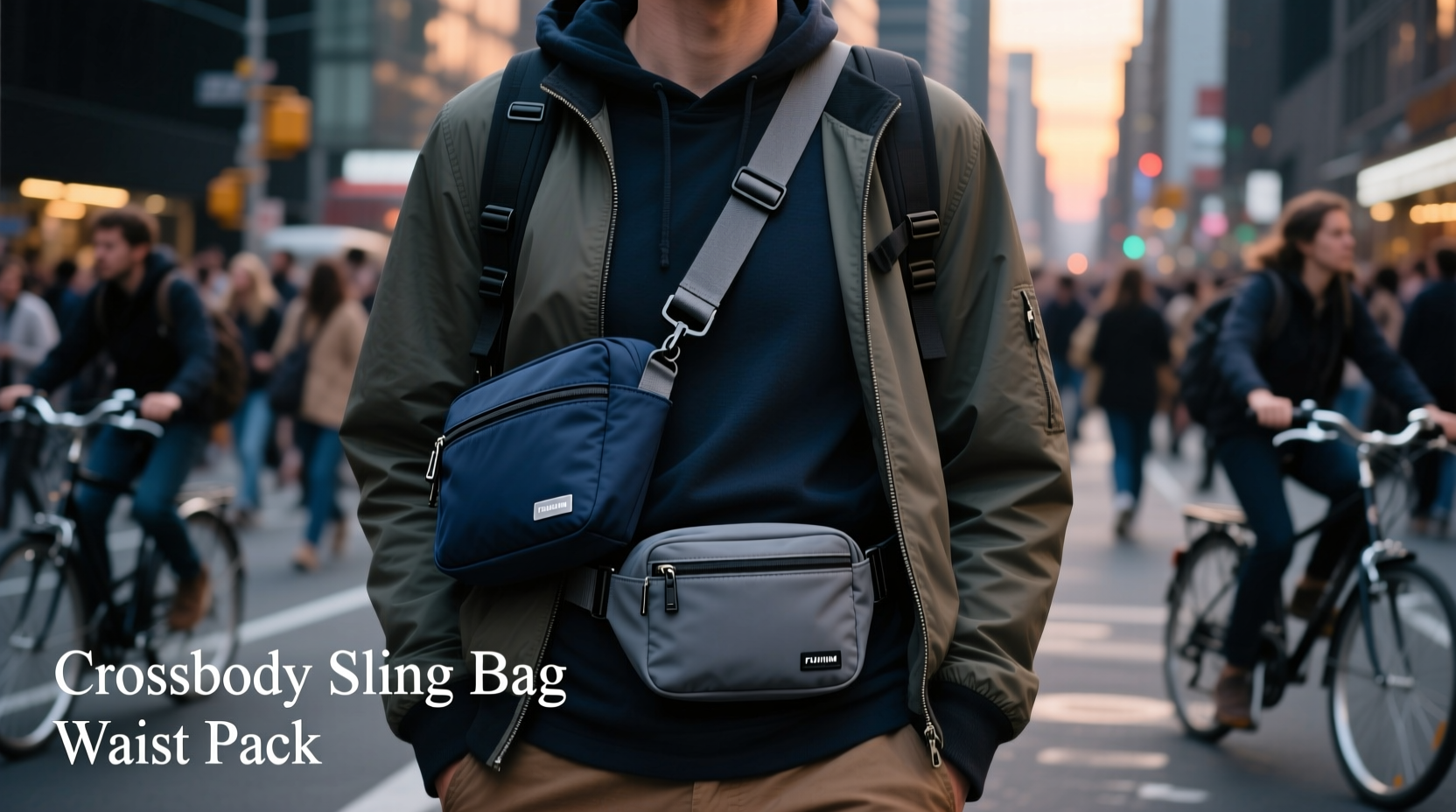
A crossbody sling bag typically features a long strap that runs diagonally across the chest, securing the bag snugly against the front or side of the torso. Modern versions often include lockable zippers, RFID-blocking compartments, slash-resistant straps, and water-resistant materials.
Because the bag rests close to the body—usually between the shoulder and hip—it’s harder for someone to reach around unnoticed. When worn across the front (rather than behind the back), the user maintains visual awareness of the bag at all times, making tampering immediately noticeable.
Many travelers prefer sling bags for their balance of capacity and discretion. They can hold a passport, wallet, phone, power bank, and even a small camera, while still looking casual enough not to draw attention.
Tip: Always wear your sling bag across the front in crowded areas—even if it feels awkward at first. Visibility equals security.Waist Pack: Positioning and Accessibility
A waist pack wraps around the hips or upper thigh, sitting either in front, on the side, or behind the wearer. Traditional rear-positioned fanny packs are notoriously vulnerable—they’re out of sight, easy to unzip silently, and located where you can’t feel movement.
However, modern anti-theft waist packs are designed to be worn *across the front*, like a utility belt. This shift in positioning dramatically improves security. Front-worn waist packs allow constant visual monitoring and immediate tactile feedback if someone touches them.
They’re also lower-profile than sling bags. Because they don’t hang over the shoulder or chest, they attract less attention from opportunistic thieves scanning for obvious tourist gear. Their slim profile makes them ideal for quick trips, day excursions, or situations where you only need minimal items.
“Front-carrying waist packs have become one of the most underrated tools in urban travel safety. When used correctly, they offer better situational awareness than any shoulder bag.” — Lena Torres, Travel Safety Consultant & Author of *Secure Journeys*
Head-to-Head Comparison: Security, Comfort, and Practicality
To determine which option is less likely to be stolen, we evaluated both based on five key criteria: visibility, access difficulty, comfort, capacity, and social blending.
| Feature | Crossbody Sling Bag | Waist Pack |
|---|---|---|
| Visibility | High when worn in front; reduced when slung behind | Very high when worn in front; very low when worn in back |
| Access Difficulty | Moderate—zippers are reachable from multiple angles | High when front-mounted and secured with hidden zippers |
| Comfort (Long-Term Wear) | Good, though strap pressure can build over time | Excellent—weight distributed evenly around hips |
| Capacity | Medium to high (fits larger phones, documents, small gadgets) | Low to medium (best for essentials only) |
| Social Blending | Moderate—common among tourists and city commuters | High—increasingly fashionable, less associated with tourists |
| Theft Risk (Proper Use) | Low to moderate | Low (when worn in front) |
The table shows that while both options can be secure, the waist pack edges ahead in visibility and access difficulty—provided it's worn in the front. Its lower profile and ergonomic fit reduce strain during extended walking, making it easier to keep secured without constant adjustment.
Real-World Scenario: A Backpacker’s Close Call in Lisbon
Daniel, a solo traveler from Canada, visited Lisbon during peak summer season. He wore a sleek black crossbody sling bag over his right shoulder, assuming its snug fit made it safe. While taking photos near Tram 28, he felt a sudden tug but didn’t think much of it—until he turned and saw a man sprinting away with his bag.
“It happened so fast,” Daniel said. “I didn’t even feel the zipper open. I later realized I had worn it slightly to the back, thinking it was more comfortable. Big mistake.”
After replacing his passport and credit cards, Daniel switched to a front-worn waist pack for the rest of his trip. “It looked weird at first, but I got used to it. More importantly, I never worried about it again—even in crowded markets.”
His experience reflects a broader trend: even well-designed bags fail when worn incorrectly. Placement matters more than material.
Step-by-Step Guide: Maximizing Theft Resistance with Either Bag
No bag is completely theft-proof. However, following these steps significantly reduces risk regardless of your choice:
- Always position the bag in front of your body in crowded or unfamiliar environments. Rotate it forward when entering busy zones like train stations or bazaars.
- Use lockable zippers or zipper clips. Even simple cable locks or zip ties can deter quick grabs.
- Limit visible contents. Avoid stuffing receipts, boarding passes, or cash in outer pockets where they’re easily seen.
- Carry a decoy item—like an old wallet or empty cardholder—in an accessible pocket to hand over if confronted, preserving your real valuables.
- Practice situational awareness. Stay alert in areas known for theft; avoid using your phone while walking with an exposed bag.
- Choose muted colors—black, navy, or gray—to avoid standing out. Bright or flashy designs signal \"tourist\" to experienced thieves.
Expert Recommendations: What Security Specialists Say
Security professionals emphasize behavioral habits over gear alone. “The best anti-theft bag is the one you pay attention to,” says Mark Rivera, former TSA advisor and travel safety trainer. “A waist pack worn in front gives you a psychological advantage—you see it, you feel it, and you react faster.”
Rivera recommends combining physical security with mental discipline. “Thieves exploit autopilot behavior. People who check their phones while walking, wear headphones, or gawk at maps are prime targets. Your bag type is secondary to your awareness level.”
He also warns against overconfidence in “anti-theft” marketing claims. “Slash-proof straps won’t help if the thief just unzips the front panel. Look for internal locking mechanisms and hidden compartments—not just buzzwords on the label.”
Checklist: Choosing and Using the Safest Option
- ✅ Do wear your bag in front of your body in high-risk areas
- ✅ Choose a waist pack with a diagonal cross-body strap for added stability
- ✅ Opt for a sling bag with a magnetic snap under a flap to hide zippers
- ✅ Avoid rear-pocket storage or back-positioned waist packs
- ✅ Distribute valuables—don’t keep everything in one place
- ✅ Consider using a money belt underneath clothing for backup storage
- ✅ Practice drawing items quickly and discreetly to minimize exposure time
Frequently Asked Questions
Is a waist pack safer than a sling bag?
Yes, when worn in front. A front-mounted waist pack offers superior visibility and is harder to access without detection. However, if worn on the back, it becomes one of the easiest targets. The sling bag is safer than a backpack but requires proper positioning to avoid side or rear vulnerability.
Can I carry a passport and phone securely in a waist pack?
Absolutely—many modern waist packs feature RFID-blocking slots and padded phone sleeves. Place your passport in an interior compartment and avoid storing it in easily accessible outer pockets. Just ensure the pack fits snugly and doesn’t bounce while walking.
Won’t wearing a waist pack make me look outdated?
Not anymore. Waist packs have undergone a fashion revival and are now worn by locals and influencers worldwide. High-end brands like Prada and Fjällräven offer minimalist, stylish versions that blend seamlessly into urban environments. Functionality no longer means sacrificing style.
Final Verdict: Which Is Less Likely to Get Stolen?
Based on positioning, awareness, and real-world usage patterns, the **waist pack is less likely to be stolen—when worn correctly**. Its ability to stay in your line of sight, combined with low physical strain and growing social acceptance, makes it the optimal choice for theft-prone environments.
The crossbody sling bag remains a solid alternative, especially for those needing more storage or preferring a traditional carry style. But its security depends heavily on consistent front-facing use and vigilance. Misposition it even slightly, and it becomes an easy mark.
Ultimately, the safest bag isn’t defined by brand or model—it’s defined by how you use it. A $20 waist pack worn in front with locked zippers outperforms a $200 “anti-theft” sling bag left dangling behind your back.
Conclusion: Make Security a Habit, Not an Afterthought
Your choice between a crossbody sling bag and a waist pack shouldn’t be based on trends—but on practical safety. In the ongoing battle against travel theft, awareness, positioning, and routine matter far more than material strength.
Start today: reposition your current bag to the front, test its accessibility, and practice reaching into it without exposing contents. If you’re considering a new purchase, prioritize design features that support front-carrying and tactile feedback.
🚀 Ready to travel smarter? Share this guide with fellow travelers, and start treating bag security as seriously as your itinerary. Your peace of mind is worth more than any souvenir.