When it comes to workout gear, most people focus on high-performance tops and bottoms—but what you wear underneath matters just as much. Moisture-wicking fabric in underwear can mean the difference between a comfortable training session and one plagued by chafing, dampness, and irritation. Two of the most common natural fiber options are cotton and bamboo. While both are praised for their softness and eco-friendliness, they perform very differently when sweat starts flowing. So, which material actually wicks moisture better during exercise? The answer isn’t as simple as “bamboo wins”—but it’s close.
The Science of Moisture Wicking
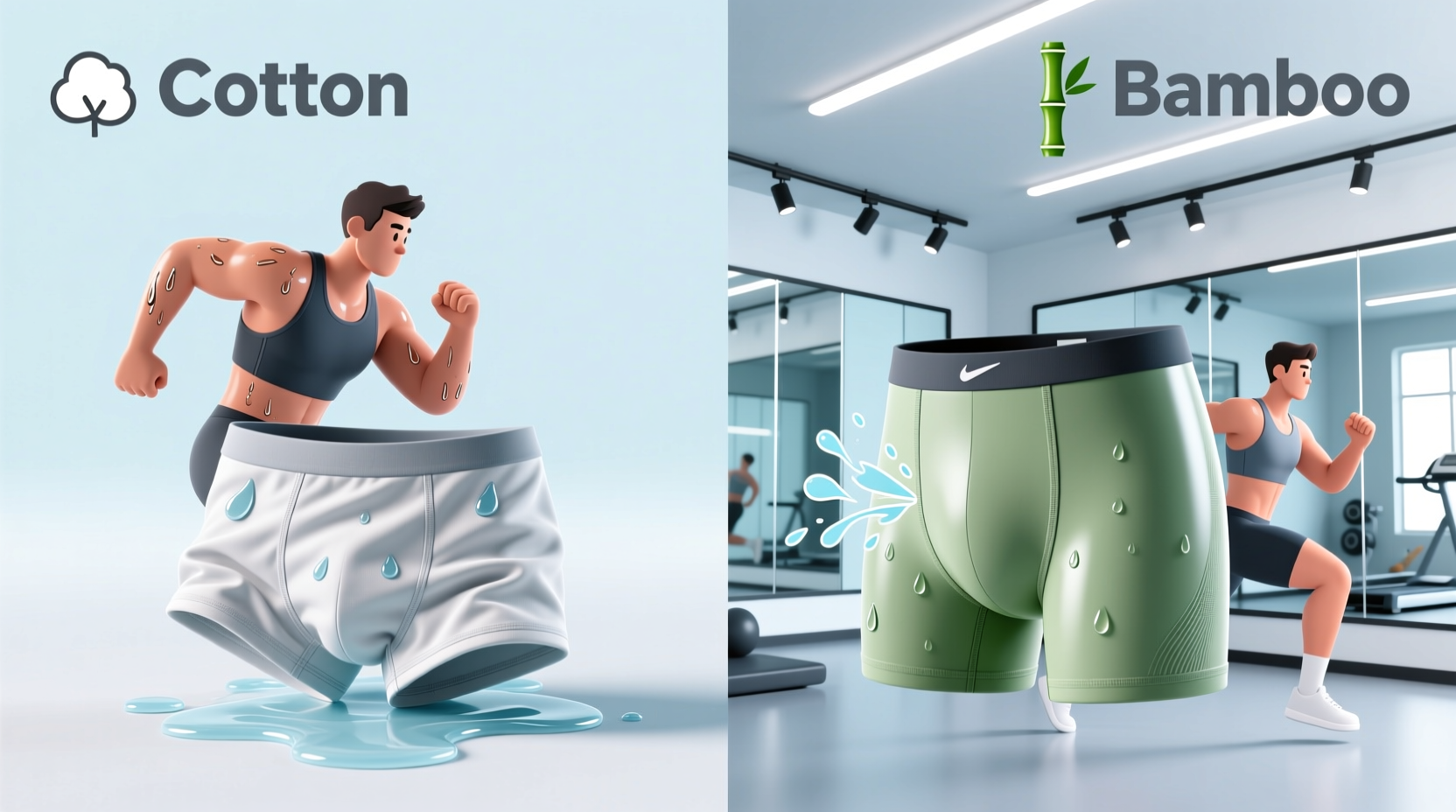
Motion generates heat. Heat leads to sweat. And unless that sweat is efficiently drawn away from the skin, it pools, creating discomfort and increasing friction. This is where moisture wicking becomes critical. True moisture-wicking fabrics don’t absorb sweat like a sponge; instead, they use capillary action to pull liquid through micro-channels in the fiber structure and spread it across a larger surface area, where it evaporates quickly.
Natural fibers vary significantly in this ability. Cotton, while soft and breathable under normal conditions, behaves more like a reservoir than a transporter when wet. It absorbs moisture but holds onto it, leading to prolonged dampness. Bamboo, on the other hand, has a semi-hollow fiber structure that promotes airflow and faster evaporation. Its naturally porous composition allows it to move moisture away from the body more effectively—even without synthetic treatments.
“Bamboo viscose outperforms cotton in moisture management not because it absorbs less, but because it releases moisture faster.” — Dr. Lena Park, Textile Researcher at the Sustainable Apparel Coalition
Cotton Underwear: Comfortable But Not Performance-Oriented
Cotton remains the default choice for everyday underwear due to its softness, breathability, and hypoallergenic properties. It’s especially popular among those with sensitive skin or allergies to synthetic materials. However, during physical activity, these benefits come with trade-offs.
Cotton can absorb up to 27% of its weight in water—more than most natural fibers. While this sounds impressive, the problem lies in retention. Once saturated, cotton dries slowly and clings to the skin, creating a breeding ground for bacteria and increasing the risk of odor and irritation. During a high-intensity workout, this means:
- Increased likelihood of chafing due to friction from wet fabric
- Reduced thermal regulation as dampness traps heat
- Potential for fungal growth in warm, moist areas
Bamboo Underwear: The Natural Performance Alternative
Bamboo-derived viscose (also called bamboo rayon) has gained popularity in athletic and lifestyle apparel over the past decade. Unlike cotton, bamboo fibers have microscopic gaps and pores that enhance breathability and facilitate rapid moisture transfer. Independent lab tests show that bamboo fabric can wick moisture up to 40% faster than standard cotton under identical conditions.
One key reason is its cross-sectional structure. While cotton fibers are relatively solid, bamboo fibers contain tiny cavities that act like miniature ventilation shafts. These allow air to circulate and moisture vapor to escape, reducing the time the fabric stays wet against the skin. Additionally, bamboo contains a natural antimicrobial agent called “bamboo kun,” which helps resist odor-causing bacteria—a major advantage during extended workouts or multi-day outdoor activities.
Beyond moisture management, bamboo offers several secondary benefits:
- Exceptional softness—often compared to silk or cashmere
- Natural UV resistance (UPF rating around 15–20)
- Biodegradability and sustainability when processed responsibly
However, not all bamboo underwear is created equal. Some brands blend bamboo with synthetic fibers like spandex to improve stretch and shape retention. Others use chemical-intensive processes to convert raw bamboo into viscose, which can negate some environmental benefits. Look for Oeko-Tex or FSC-certified products to ensure safer production methods.
Head-to-Head Comparison: Cotton vs Bamboo
| Feature | Cotton | Bamboo |
|---|---|---|
| Mechanical Absorption | High (up to 27%) | Moderate to High (20–25%) |
| Moisture Evaporation Rate | Slow | Fast |
| Drying Time (after wash) | 2–4 hours | 1–2 hours |
| Odor Resistance | Poor (bacteria thrive in dampness) | Good (natural antimicrobial properties) |
| Skin Sensitivity | Excellent (low allergenicity) | Excellent (soft, non-irritating) |
| Eco-Footprint (raw material) | Moderate (high water/pesticide use) | Low (fast-growing, minimal inputs) |
| Best Use Case | Daily wear, light activity | Workouts, travel, humid climates |
This comparison makes it clear: while both materials are gentle on the skin, bamboo excels in dynamic environments where sweat management is crucial. For anyone engaging in regular physical activity, bamboo offers superior functional performance without sacrificing comfort.
Real-World Example: A Runner’s Experience
Consider the case of Marcus Rivera, a recreational marathoner based in Miami. For years, Marcus wore cotton boxer briefs during his morning runs, assuming “natural” meant “better.” After consistently dealing with groin chafing and post-run discomfort, he switched to a bamboo-spandex blend recommended by a physiotherapist.
Within two weeks, he noticed a significant reduction in irritation. “It wasn’t just about staying dry—it was how fast the fabric bounced back,” he said. “Even on 90-degree days with 80% humidity, my underwear didn’t feel heavy or sticky after five miles. I could hop straight into my car without changing, and there was no smell.”
Marcus now uses bamboo underwear exclusively for training and reserves cotton for rest days. His experience reflects a broader trend: athletes who prioritize recovery and hygiene are increasingly turning to natural yet performance-enhancing fabrics like bamboo.
How to Choose the Right Underwear for Workouts
Selecting the best underwear for exercise involves more than just material. Fit, seam placement, and blend composition all influence performance. Here’s a step-by-step guide to making an informed decision:
- Assess your activity level: Light walking or gym machines may not require advanced moisture management, but running, cycling, or HIIT does.
- Check the fiber blend: Pure bamboo is rare. Most performance bamboo underwear includes 5–15% spandex or elastane for stretch and support.
- Avoid 100% cotton for intense sessions: Even if labeled “breathable,” cotton retains moisture too long for high-sweat scenarios.
- Look for flatlock seams: These reduce friction and prevent chafing during repetitive motion.
- Test drying time: Wash a pair and time how long it takes to air-dry. Faster drying correlates with better wicking during use.
- Monitor odor buildup: Wear the same pair across multiple moderate workouts. Persistent smell indicates poor bacterial resistance.
Common Misconceptions About Natural Fibers
Many consumers assume that “natural” automatically means “better for sports.” This isn’t always true. While natural fibers are often more sustainable and skin-friendly, they don’t inherently possess athletic performance qualities. For example:
- Organic cotton is still cotton: It avoids pesticides, but doesn’t wick better than conventional cotton.
- Bamboo isn’t always eco-friendly: If processed using carbon disulfide (a common viscose method), it can be polluting. Opt for closed-loop lyocell processes when possible.
- Softness ≠ performance: Silk is incredibly soft but performs poorly under sweat and lacks durability.
The goal should be function-first thinking: choose materials based on what they do, not just what they are.
Frequently Asked Questions
Can bamboo underwear replace synthetic moisture-wicking fabrics?
For moderate to high-intensity workouts, bamboo comes remarkably close. While polyester-based technical fabrics still lead in extreme conditions (e.g., ultramarathons, military operations), bamboo offers a compelling natural alternative with added comfort and environmental benefits. Many users find it sufficient for most fitness routines.
Does bamboo lose its wicking ability after multiple washes?
No—unlike some treated synthetics, bamboo’s moisture-wicking properties are inherent to the fiber structure, not a surface coating. As long as you follow care instructions (cold wash, mild detergent, no bleach), performance remains consistent over time.
Is bamboo underwear more expensive than cotton?
Generally, yes. A quality bamboo brief typically costs $2–4 more per pair than a comparable cotton version. However, given its longer lifespan, reduced odor retention, and versatility across activities, many users find the investment worthwhile.
Action Checklist: Upgrading Your Workout Underwear
Ready to make a change? Follow this checklist to transition smoothly:
- ☐ Audit your current drawer: Identify how many pairs are 100% cotton
- ☐ Research reputable bamboo brands (look for Oeko-Tex certification)
- ☐ Start with one hybrid pair (e.g., 88% bamboo, 12% spandex) for testing
- ☐ Wear during a mid-intensity session (e.g., 30-minute jog or circuit training)
- ☐ Evaluate post-workout comfort, dryness, and odor
- ☐ Replace cotton pairs gradually as needed
Final Verdict: Bamboo Wins for Active Wear
When it comes to moisture wicking during workouts, bamboo clearly outperforms cotton. Its structural advantages—porous fibers, faster evaporation, and natural antimicrobial traits—make it a smarter choice for anyone breaking a sweat regularly. Cotton remains excellent for casual, low-movement settings, but it simply wasn’t designed for sustained physical output.
That said, the best underwear isn’t defined by a single material. Look for blends that combine bamboo’s wicking ability with enough elasticity for support. Prioritize fit, seam design, and ethical sourcing alongside performance. The result? A foundation layer that enhances comfort, supports movement, and keeps you feeling fresh from warm-up to cool-down.
🚀 Take action today: Replace one pair of cotton workout underwear with a certified bamboo blend. Track how your comfort and recovery improve over the next two weeks—and see the difference for yourself.








