When it comes to accessorizing the neckline, few choices spark as much debate as the collarbone versus choker necklace. One sits snugly around the base of the neck, the other drapes just above the collarbones—each commanding attention in its own way. But beyond trend appeal, the real question isn’t which is more stylish, but which is more flattering. The answer depends on anatomy, attire, and intention. Understanding how these two lengths interact with your body and wardrobe can elevate your look from average to intentional.
Anatomy of Necklace Lengths
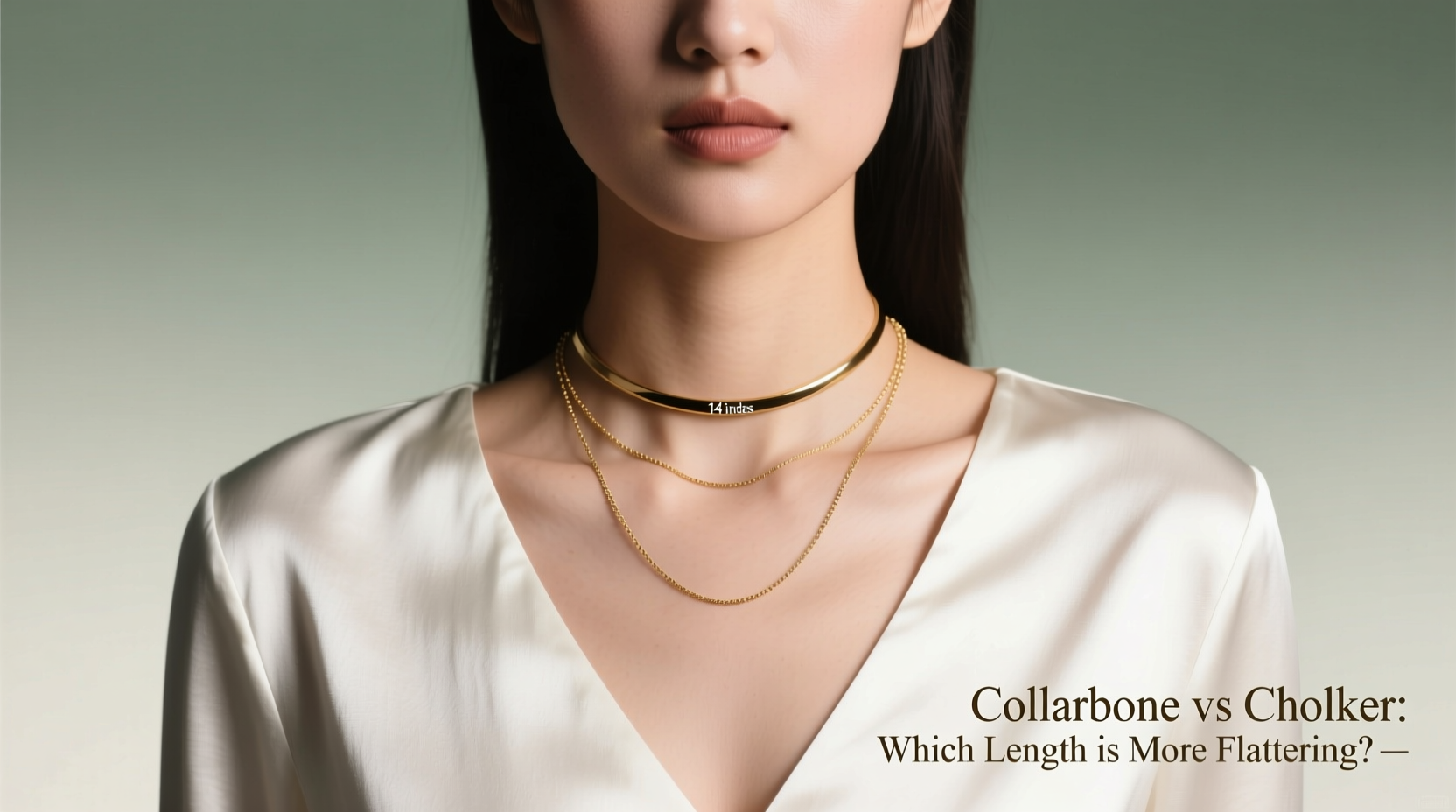
Before comparing collarbone and choker necklaces, it’s essential to define them precisely:
- Choker Necklace: Typically measures between 14 to 16 inches long, designed to sit tightly at the base of the neck or just above the Adam’s apple.
- Collarbone Necklace: Ranges from 16 to 18 inches, resting directly on or slightly below the collarbones, allowing gentle movement with the body.
The difference of just one or two inches may seem negligible, but in jewelry, proximity to key anatomical landmarks—like the jawline, throat, and clavicles—can dramatically alter visual proportions.
“Necklines are the frame for the face. A well-chosen necklace doesn’t compete with your features—it enhances them.” — Lena Torres, Fashion Stylist & Jewelry Consultant
Who Looks Best in a Choker?
Chokers create a bold, defined line around the neck, drawing immediate attention upward. This makes them particularly effective for certain body types and styles:
- Longer Necks: A choker adds balance by visually shortening an elongated neck, preventing it from appearing too stretched.
- Oval or Square Face Shapes: The horizontal emphasis of a choker softens strong jawlines and complements balanced facial proportions.
- V-Neck or Off-the-Shoulder Outfits: Chokers contrast beautifully with deep necklines, creating a striking focal point where fabric recedes.
However, chokers can be less forgiving on shorter necks or fuller faces, potentially creating a constricting effect if not styled carefully. Delicate materials like velvet, thin chains, or flexible leather tend to work better than rigid designs for those concerned about comfort or proportion.
Tip: If you love the choker look but have a shorter neck, opt for a 15-inch piece with a slight pendant drop to draw the eye downward and elongate the silhouette.When a Collarbone Necklace Wins
The collarbone necklace, often called a “princess” or “matinee” length depending on exact measurement, offers versatility that few other styles match. Sitting gently on the clavicles, it follows the natural curve of the upper chest, making it ideal for:
- Round or Heart-Shaped Faces: The horizontal line emphasizes width at the collarbone, balancing a narrower chin or wider forehead.
- Shorter Necks: By resting lower, it creates vertical interest without cutting off the neck, offering a subtle elongation effect.
- Diamond, Turtleneck, or High-Collar Tops: These garments leave little exposed neck—so a collarbone piece becomes the natural focal point without competing with the neckline.
Additionally, collarbone necklaces pair seamlessly with layered looks. They serve as a foundation layer when stacked with a choker above and a longer pendant below, adding depth without clutter.
Comparative Analysis: Key Differences at a Glance
| Feature | Choker (14–16\") | Collarbone (16–18\") |
|---|---|---|
| Best For Neck Length | Longer necks | Shorter or average necks |
| Face Shape Compatibility | Oval, square, rectangular | Rounded, heart, diamond |
| Outfit Pairing | Off-shoulder, halter, V-neck | Turtlenecks, crewnecks, blouses |
| Movement & Comfort | Limited; closer fit | More fluid; less restrictive |
| Layering Potential | Top layer only | Ideal middle layer |
Real-Life Example: Choosing for an Evening Event
Sophia had an upcoming wedding and wanted to wear her favorite emerald green off-the-shoulder dress. She owned both a black velvet choker and a delicate gold chain with a teardrop pendant that sat at collarbone level.
At first, she leaned toward the choker for its dramatic flair. But during a fitting, her stylist suggested trying the collarbone piece instead. While the choker emphasized the bare shoulders, it also made her neck appear slightly compressed. The collarbone necklace, however, created a graceful diagonal line from shoulder to pendant, echoing the dress’s elegance without overwhelming it.
She chose the collarbone necklace—and received multiple compliments on her “effortlessly polished” look. The lesson? Sometimes subtlety flatters more than statement-making.
Step-by-Step Guide to Finding Your Flattering Length
Choosing between a choker and a collarbone necklace doesn’t need to be guesswork. Follow this five-step process to determine what works best for your next occasion:
- Measure your neck and upper torso: Use a soft tape measure from the base of your neck down to just below the collarbones. Note where 16\" ends—this shows where a typical collarbone necklace will fall.
- Assess your neck length: Stand sideways in a mirror. If your neck appears longer than average, a choker may add needed balance. If it seems short, lean toward collarbone length.
- Consider your outfit’s neckline: Deep cuts suit chokers; high or closed necklines pair better with collarbone pieces.
- Evaluate your face shape: Round faces benefit from downward-drawing lines (collarbone), while longer faces gain harmony from horizontal breaks (choker).
- Test with layers: Try both styles over the actual outfit. Take photos in natural light to see which draws attention most favorably.
Frequently Asked Questions
Can I wear both a choker and a collarbone necklace together?
Absolutely. Layering a choker with a slightly longer collarbone piece is a modern styling technique. Just ensure there’s at least a 2-inch difference in length to avoid tangling and maintain visual separation.
Do chokers make you look older?
Not inherently. Vintage-style chokers with pearls or lace can evoke classic elegance, while sleek metallic ones feel contemporary. The key is matching the material and design to your overall aesthetic—not avoiding the length altogether.
Are collarbone necklaces suitable for professional settings?
Yes. Their moderate length and understated presence make them ideal for office wear. A simple pendant at collarbone level adds polish without distraction, especially when paired with blazers or button-downs.
Final Tips for Making the Right Choice
Tip: Always try necklaces with the actual clothing you plan to wear. Lighting, fabric texture, and cut all influence how a piece appears on your body.- Prioritize proportion over trend. What’s popular may not enhance your unique structure.
- Consider your daily activities. Chokers can feel restrictive during long wear; collarbone necklaces offer more comfort for movement.
- Don’t overlook skin tone and metal finish. Rose gold often softens warm complexions, while white gold or silver sharpens contrast on cooler tones—this affects perceived flatteringness too.
Conclusion: Choose Intention, Not Just Inches
The debate between collarbone and choker necklaces isn’t about declaring a universal winner—it’s about alignment. A choker commands attention and frames the face with confidence. A collarbone necklace flows with the body, enhancing natural lines with grace. The most flattering choice is the one that aligns with your anatomy, your attire, and your attitude.
Jewelry should never be arbitrary. Whether you're dressing for a night out, a boardroom meeting, or a quiet dinner, take a moment to consider not just what you’re wearing, but how it interacts with your body. Measure, test, and trust your reflection. When you choose with intention, every inch counts.
💬 Which necklace length do you reach for most often—and why? Share your go-to style and personal tip in the comments to help others discover their most flattering fit.