For centuries, people have turned to symbolic jewelry not just for adornment, but as talismans believed to influence fortune, ward off misfortune, and project personal identity. Among the most popular are clover and evil eye bracelets—both steeped in tradition, both celebrated in modern fashion. But when it comes to balancing spiritual significance with aesthetic value, how do they truly compare? Is the four-leaf clover a stronger harbinger of luck than the all-seeing blue bead? And which makes a bolder style statement today?
The answer isn’t universal. It depends on cultural context, personal belief, design versatility, and intention. This article breaks down both symbols from historical roots to contemporary trends, helping you decide which bracelet aligns best with your quest for luck—and looks.
The Symbolism Behind the Clover Bracelet
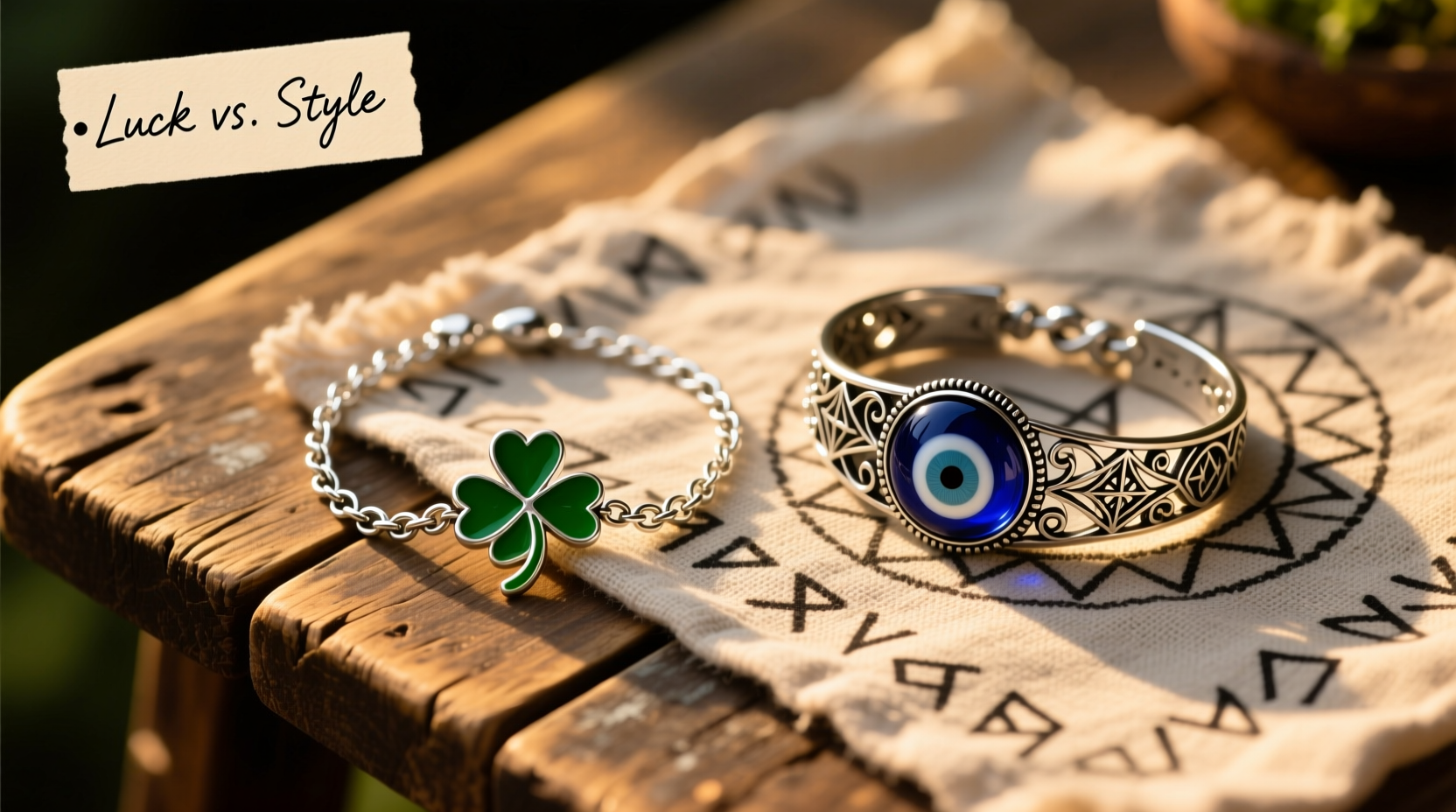
The four-leaf clover is one of the most universally recognized symbols of good fortune. While the common three-leaf shamrock represents the Holy Trinity in Christian tradition, the rare four-leaf variant has long been associated with luck, particularly in Celtic and European folklore.
Each leaf carries symbolic meaning: the first for hope, the second for faith, the third for love, and the fourth for luck. Finding one naturally is considered so improbable—estimated at 1 in 10,000—that owning a clover charm feels like carrying a piece of serendipity.
In Irish culture, clovers are deeply tied to national identity and St. Patrick’s Day, but their appeal extends beyond heritage. Many wear clover bracelets during transitional periods—new jobs, relationships, or creative ventures—as a quiet affirmation of optimism.
“Symbols like the four-leaf clover work on both psychological and cultural levels—they remind the wearer to stay open to possibility.” — Dr. Lila Chen, Cultural Anthropologist, University of EdinburghTip: For maximum symbolic impact, choose a clover bracelet made from natural materials like sterling silver or gold—metals historically linked to purity and prosperity.
The Protective Power of the Evil Eye Bracelet
The evil eye is an ancient apotropaic symbol—a protective sign meant to deflect negative energy, jealousy, and ill intent. Originating in Mesopotamia and later embraced across the Mediterranean, Middle East, and South Asia, the eye-shaped amulet is typically rendered in blue and white, mimicking the gaze it seeks to neutralize.
The belief is simple: envy generates a harmful “glance” that can disrupt health, wealth, or happiness. The evil eye absorbs or reflects this energy before it reaches the wearer. Unlike the passive luck of the clover, the evil eye is active defense.
Today, evil eye bracelets are worn not only for protection but as fashion statements. Popularized by celebrities and luxury brands, they’ve become staples in bohemian, minimalist, and coastal aesthetics. Turkish \"nazar boncuğu\" beads remain among the most authentic forms, often handcrafted with glass and intricate patterns.
How the Evil Eye Works in Practice
Many cultures follow a ritual: when an evil eye charm cracks or falls, it’s seen as having fulfilled its purpose—absorbing enough negativity to break. It should then be replaced respectfully, often by tossing it into flowing water or burying it.
This dynamic quality gives the evil eye a narrative depth lacking in static symbols. It's not just about attracting luck; it's about surviving adversity through invisible guardianship.
Clover vs Evil Eye: A Style Comparison
Fashion is where these two symbols diverge most dramatically. While both can be elegant, their design language caters to different tastes and wardrobes.
| Feature | Clover Bracelet | Evil Eye Bracelet |
|---|---|---|
| Primary Aesthetic | Natural, whimsical, romantic | Boho-chic, mystical, edgy |
| Common Materials | Sterling silver, gold, enamel, leather cords | Glass beads, turquoise, ceramic, woven threads |
| Worn With | Casual denim, floral dresses, office attire | Beachwear, layered jewelry, festival outfits |
| Versatility | Moderate – leans feminine or classic | High – easily mixed and stacked |
| Gender Appeal | Traditionally feminine | Unisex and widely adopted |
The evil eye tends to dominate in trend-driven spaces. Its bold color contrast and geometric shape make it ideal for stacking with other bracelets or pairing with statement rings. Designers like Gorjana, Mejuri, and Pura Vida have elevated it into mainstream accessory culture.
Clover bracelets, meanwhile, shine in subtlety. A delicate gold clover pendant on a dainty chain reads as understated elegance—perfect for professional settings or minimalist wardrobes. They’re less likely to clash with other pieces and offer timeless appeal.
Which Brings More Luck? A Practical Perspective
Can either truly bring luck? From a metaphysical standpoint, believers argue yes—especially when intention and awareness are involved. From a psychological angle, both function as “lucky charms,” enhancing confidence and resilience through the placebo effect of belief.
Studies in behavioral psychology suggest that individuals who believe in their lucky objects perform better under pressure, take more risks, and report higher satisfaction. In that sense, the power lies not in the object itself, but in the mindset it cultivates.
That said, if measured by cultural endurance and global reach, the evil eye holds broader protective authority. It’s embedded in daily rituals—from hanging above doorways to being sewn into children’s clothing—in dozens of countries. The clover, while iconic, is more regionally concentrated and emotionally focused (love, hope) rather than spiritually defensive.
Tip: Charge your bracelet with intention. Hold it in your hands, state your desire (e.g., “I welcome opportunity”), and visualize success. This strengthens the symbolic bond.Mini Case Study: Two Women, Two Symbols
Alexa, a freelance designer in Lisbon, began wearing an evil eye bracelet after a string of client cancellations. She attributed her streak to workplace envy and started layering multiple eye charms on both wrists. Within weeks, she landed a major contract. “I don’t think the bracelet signed the deal,” she says, “but it reminded me to stay grounded and shield my energy.”
Meanwhile, Naomi, a teacher in Dublin, inherited a vintage clover locket from her grandmother. She wears it during parent-teacher conferences and job interviews. “It’s not magic,” she admits, “but touching it calms my nerves. It feels like carrying encouragement.”
Both women experienced positive outcomes—not because the jewelry acted as a supernatural force, but because it anchored them to focus, self-belief, and emotional clarity.
How to Choose the Right One for You: A Step-by-Step Guide
- Assess Your Intent: Are you seeking protection from negativity (evil eye) or inviting serendipity and joy (clover)?
- Evaluate Your Style: Do you prefer bold, layered accessories or subtle, refined details?
- Consider Cultural Respect: If adopting the evil eye, research its origins—especially if gifting or wearing in traditional communities.
- Test Material Quality: Look for tarnish-resistant metals, secure clasps, and durable cords.
- Start Simple: Begin with one well-made piece. Stack later if desired.
Checklist: Before Buying Either Bracelet
- ✅ Define your purpose: luck, protection, style, or all three
- ✅ Research the brand’s ethics—avoid mass-produced imitations
- ✅ Check return policies and material authenticity
- ✅ Try it on (if possible) to assess comfort and proportion
- ✅ Pair it mentally with 3 outfits you wear often
FAQ
Can I wear both a clover and evil eye bracelet together?
Absolutely. Many people combine symbols for layered meaning—one for attraction of good fortune, the other for repelling harm. Just ensure the styles complement each other visually.
Do clover bracelets have to be four-leaf to be lucky?
Traditionally, yes. Three-leaf versions are often mistaken for clovers but represent the shamrock, symbolizing faith, hope, and love without the added luck element.
Is it disrespectful to wear an evil eye if I’m not from that culture?
Not inherently—but approach with respect. Avoid sacred forms used in religious rituals, and recognize its significance beyond fashion. When in doubt, buy from artisans within the culture.
Conclusion: Luck Meets Style—Choose With Intention
The clover and evil eye bracelet each carry distinct energies—one rooted in natural rarity and hopeful anticipation, the other in vigilant protection and ancestral wisdom. Stylistically, the evil eye offers versatility and boldness; the clover delivers grace and quiet charm.
Ultimately, the “luckier” bracelet is the one that resonates with your spirit and complements your lifestyle. Whether you're drawn to the serene promise of a clover or the fierce gaze of the evil eye, what matters most is the intention behind the wear.
💬 Have a personal story about a lucky bracelet? Share your experience below and inspire others to wear meaning with style.