The four leaf clover has long been a symbol of luck, rarity, and hope. In recent years, it's become a dominant motif in fashion jewelry—especially in minimalist designs worn as pendants, earrings, or rings. But as more brands flood the market with dainty clover pieces labeled “gold plated,” consumers are asking: Is this trend built on lasting value or just fleeting shine? The answer lies not in symbolism, but in material science, craftsmanship, and consumer awareness.
Understanding Clover Jewelry: More Than Just Symbolism
Clover jewelry draws its appeal from both aesthetic minimalism and cultural resonance. The four leaf clover, statistically rare in nature, represents fortune and individuality. When crafted thoughtfully, these pieces carry emotional weight—ideal for gifts, self-expression, or daily wear. However, the growing popularity has led to a surge in low-cost imitations made with base metals and thin gold plating.
True clover jewelry isn’t defined by its shape alone, but by what it’s made of. High-end versions use solid gold, sterling silver, or vermeil (thick gold over silver), while budget-friendly alternatives rely on gold-plated brass or copper. The difference impacts durability, skin compatibility, and long-term value.
Tip: Always check the metal composition before purchasing—look for stamps like “14K,” “925,” or “vermeil” rather than vague terms like “golden finish.”Gold Plated Jewelry: How It’s Made and Why It Fades
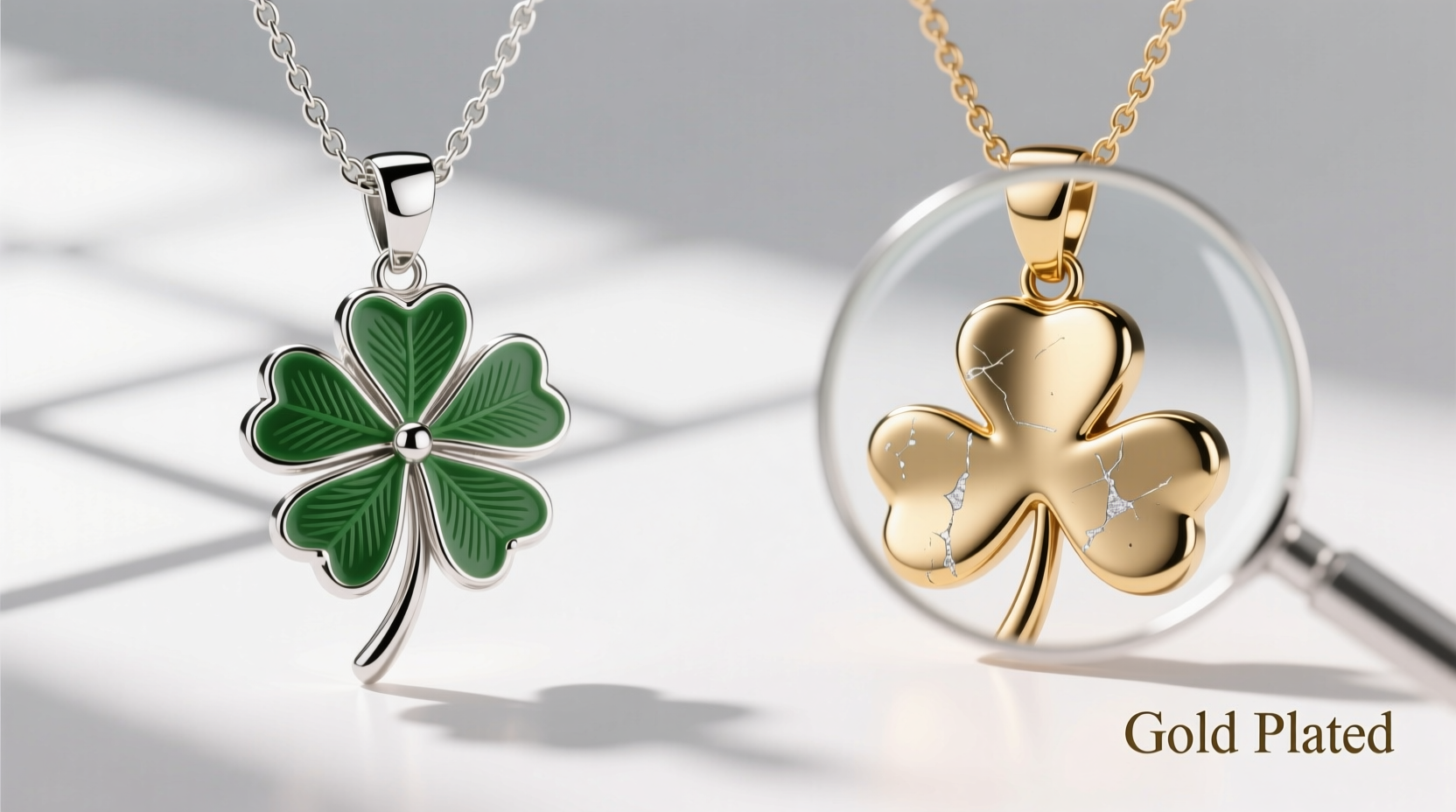
Gold plating involves bonding a micro-thin layer of real gold (typically 0.5 to 2.5 microns thick) onto a base metal using electroplating. While cost-effective, this process results in a fragile surface. Daily friction, exposure to moisture, sweat, and chemicals (like lotions or perfumes) accelerate wear, leading to tarnishing, flaking, or discoloration within weeks or months.
In clover jewelry, where delicate details are common—such as engraved veins on leaves or intricate wire outlines—the plating often wears unevenly, leaving parts of the design dull or exposed. This compromises both appearance and perceived quality.
“Gold plating can look luxurious at first, but without proper care, it rarely lasts beyond six months with daily wear.” — Lena Torres, Jewelry Artisan & Materials Consultant
Clover Jewelry vs Gold Plated: A Material Comparison
To understand whether the clover trend is sustainable or merely a gimmick, we must compare the options available. Below is a detailed breakdown of common materials used in clover-themed jewelry:
| Material Type | Gold Thickness | Average Lifespan (Daily Wear) | Hypoallergenic? | Price Range (Pendant) |
|---|---|---|---|---|
| Gold Plated (Brass Base) | 0.5–2.5 microns | 3–6 months | Rarely (nickel content common) | $15–$40 |
| Gold Vermeil (Sterling Silver Base) | 2.5+ microns, 14K+ | 2–5 years | Yes (if nickel-free) | $80–$150 |
| Solid 10K Gold | 100% gold throughout | Decades | Generally yes | $300–$600 |
| Sterling Silver (Unplated) | N/A | 5+ years (tarnishes, but polishable) | Yes (unless alloy-sensitive) | $60–$120 |
This comparison reveals that while gold-plated clover jewelry offers immediate affordability, it sacrifices longevity and integrity. In contrast, vermeil or solid gold versions maintain their luster and structural detail far longer, making them better investments despite higher upfront costs.
Real-World Example: Two Buyers, One Trend
Consider two shoppers drawn to the same minimalist four leaf clover pendant:
- Sophie chooses a $28 gold-plated option from a fast-fashion jewelry brand. She wears it daily, pairing it with her workwear. By month four, the gold begins flaking near the bail (the loop at the top). By month six, greenish discoloration appears on her neck—a sign of base metal oxidation reacting with skin.
- Jamila invests $110 in a 14K gold vermeil clover pendant from a transparent, ethical jeweler. She removes it before swimming and stores it separately. After 18 months, the piece still shines, with no visible wear. The thicker plating and silver base have resisted degradation.
Their experiences underscore a key truth: the clover trend isn’t inherently a gimmick—but how it’s produced and purchased determines its worth.
How to Spot Quality Clover Jewelry: A Buyer’s Checklist
Before adding another clover piece to your collection, use this checklist to assess authenticity and durability:
- ✅ Look for clear metal stamping: “14K,” “18K,” “925,” or “vermeil”
- ✅ Avoid items labeled only as “gold finished,” “golden,” or “rose gold tone”
- ✅ Check product descriptions for plating thickness (microns)
- ✅ Prefer vermeil over standard gold plating for better base metal quality
- ✅ Read return policies—reputable brands stand behind their craftsmanship
- ✅ Research the brand’s ethics and sourcing practices
- ✅ Test magnetism—real gold and silver are non-magnetic; if it sticks, it’s likely base metal
Maintaining Your Clover Jewelry: A 4-Step Care Routine
Even high-quality clover jewelry requires maintenance. Follow this simple routine to extend its life:
- Remove Before Exposure: Take off your piece before showering, swimming, applying skincare, or exercising.
- Wipe After Wear: Use a soft, lint-free cloth to gently remove oils and residue after each use.
- Deep Clean Monthly: For vermeil or solid gold, soak in warm water with mild soap for 5 minutes, then brush lightly with a soft toothbrush. Rinse and dry thoroughly.
- Store Properly: Keep in a fabric-lined box or individual pouch to prevent scratches and oxidation.
“Jewelry is personal. If you love your clover piece, treat it like an heirloom—not a disposable accessory.” — Marcus Reed, Master Goldsmith
Frequently Asked Questions
Is gold-plated clover jewelry worth buying?
It can be, if you view it as temporary fashion jewelry. For occasional wear or short-term styling, gold-plated options offer aesthetic appeal at low cost. However, they are not ideal for everyday use or sentimental pieces meant to last.
Can I repair faded gold-plated clover jewelry?
Yes—many jewelers offer re-plating services for $20–$50. However, repeated plating weakens the base metal over time. If the item has sentimental value, consider upgrading to solid gold instead.
Does clover jewelry make a good gift?
Absolutely, especially when chosen thoughtfully. A well-crafted four leaf clover symbolizes luck and care. Opt for vermeil or solid gold to convey lasting sentiment, and include a note about its meaning for added personal touch.
Conclusion: Beyond the Gimmick
The four leaf clover trend transcends mere aesthetics—it taps into a universal desire for meaning, luck, and beauty. But like any trend, its value depends on execution. When clover jewelry is reduced to mass-produced, poorly plated trinkets, it risks becoming just another disposable fashion cycle. Yet, when crafted with integrity—from ethically sourced materials to durable construction—it becomes a meaningful keepsake.
The distinction between “gimmick” and “treasure” lies in your choices as a consumer. Demand transparency. Prioritize quality over quantity. Choose pieces that align not just with your style, but with your values.
💬 What does your clover jewelry represent to you? Share your story or tips for caring for symbolic pieces—we’d love to hear how you keep meaning alive in your accessories.