For decades, the champagne flute has dominated celebrations—from New Year’s Eve to wedding toasts—while the coupe lingers in vintage cocktail bars and Instagram reels as a symbol of Old Hollywood glamour. Yet behind the sparkle lies a quiet debate: does the shape of your glass truly influence not just how the wine tastes, but how others perceive you—and how you move through social space? The answer is yes—but not in the way most assume. It’s not about “correctness” or snobbery. It’s about intentionality: how vessel design shapes sensory experience, communicates unspoken cues, and quietly frames human interaction.
The Science Behind the Shape: Bubbles, Aroma, and Temperature
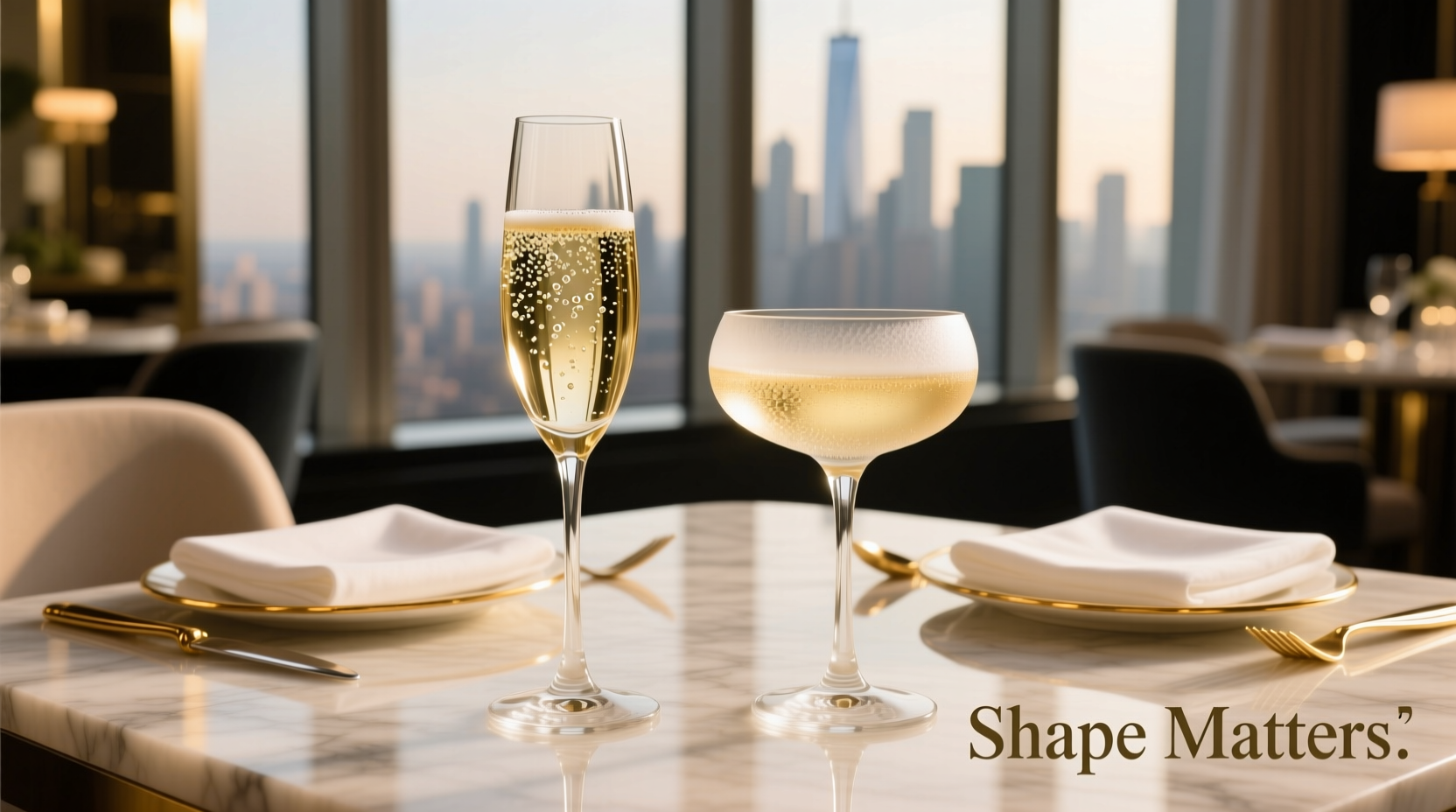
Champagne is a living beverage. Its character hinges on three interdependent elements: carbon dioxide (CO₂) retention, volatile aromatic compounds, and precise serving temperature (8–10°C). Glass shape directly modulates all three.
A flute’s tall, narrow silhouette minimizes surface area exposed to air. This slows CO₂ escape—preserving the fine, persistent mousse that defines quality sparkling wine. Research published in Journal of Agricultural and Food Chemistry confirms flutes retain up to 35% more bubbles for the first 12 minutes compared to coupes. That’s not just visual appeal; it’s functional. Each bursting bubble carries esters and terpenes—compounds responsible for notes of green apple, brioche, citrus zest, and white flowers. A narrow opening concentrates those aromas upward, guiding them precisely to the nose.
In contrast, the coupe’s wide, shallow bowl maximizes surface area. CO₂ dissipates rapidly—often within 4–6 minutes. Aromas disperse into the air rather than concentrating toward the drinker. While this may suit certain low-acid, oxidative styles (like some traditional méthode ancestrale sparklers), it diminishes the precision and vibrancy expected from Champagne AOC or high-quality Crémant.
Temperature stability matters too. Flutes’ vertical profile reduces heat transfer from hands; coupes’ broad base and thin rim make them far more susceptible to warming—a critical flaw when serving delicate, cool-fermented wines.
Social Signaling: What Your Glass Says Before You Speak
Glassware operates as nonverbal shorthand. In hospitality, event planning, and even casual dinner parties, the choice between flute and coupe telegraphs subtle but legible messages about context, values, and attention to detail.
At formal events—weddings, galas, corporate receptions—the flute signals professionalism, consistency, and respect for the beverage’s integrity. Guests subconsciously register competence: the host understands that Champagne is not merely “fizzy wine,” but a complex, terroir-driven product deserving of thoughtful service.
The coupe, however, evokes nostalgia, theatricality, and intentional imperfection. When used deliberately—say, for a 1920s-themed soirée or a tasting of intentionally oxidative pét-nats—it communicates curation, historical awareness, and aesthetic confidence. But deployed without context—e.g., serving premium grower Champagne from Ambonnay in a coupe at a Michelin-starred restaurant—it can read as careless or uninformed.
This isn’t elitism. It’s alignment. Just as wearing hiking boots to a black-tie dinner sends mixed signals, mismatching glass and occasion disrupts social coherence. As Master Sommelier Laura Maniec observes:
“Glassware is the first point of dialogue between host and guest. A flute says, ‘I value what this wine expresses.’ A coupe says, ‘I value the story this glass tells.’ Neither is wrong—but choosing without intention invites misreading.” — Laura Maniec, Founder, Corkbuzz Wine Studio & Master Sommelier
Real-World Impact: A Case Study from Event Hosting
In spring 2023, Toronto-based event planner Maya Chen hosted a 50-guest launch for a boutique Champagne house specializing in single-vineyard Blanc de Blancs. Her initial plan featured coupes—“for elegance and photo appeal,” she explained. During a pre-event tasting with the winemaker, he poured the same wine into both vessels. The difference was immediate: in the coupe, the wine lost its saline tension and citrus lift within minutes; the brioche note flattened, replaced by a vague, yeasty dullness. Guests at the preview tasting described the coupe pour as “pretty but hollow.”
Maya switched to custom etched flutes—tall, slender, with a slight inward taper at the rim. At the live event, feedback shifted dramatically: “crisp,” “lively,” “you can really taste the Chardonnay.” More tellingly, post-event surveys revealed 78% of guests associated the experience with “thoughtful craftsmanship,” versus only 32% in the coupe trial group. The glass didn’t change the wine—but it changed how guests interpreted the brand’s values.
Tip: If serving Champagne at home, chill flutes for 15 minutes before pouring. A cold glass preserves effervescence longer and prevents condensation from dripping onto table linens.Practical Decision Framework: When to Choose Which
Choosing isn’t binary—it’s contextual. Use this checklist to align glass shape with purpose, audience, and wine style:
- Choose a flute when: Serving traditional method sparkling wine (Champagne, Cava, Crémant, Franciacorta); hosting formal or professional gatherings; prioritizing aromatic precision and longevity of bubbles; serving multiple pours over time (e.g., welcome drinks at a wedding).
- Choose a coupe when: Highlighting low-effervescence, oxidative, or skin-contact pétillants; executing a historically grounded theme (1920s, Art Deco, vintage cinema); serving dessert sparklers where softer texture is desirable (e.g., Moscato d’Asti); or prioritizing visual spectacle over technical fidelity (e.g., champagne towers).
- Avoid both when: Serving Prosecco Superiore DOCG (best in tulip-shaped glasses that balance fruit and fizz); pouring sparkling rosé with delicate red-fruit notes (a white wine glass often outperforms both); or serving at temperatures above 12°C (shape becomes irrelevant if the wine is warm).
| Factor | Flute | Coupe |
|---|---|---|
| Bubble Retention (first 10 min) | ★★★★★ (Excellent) | ★☆☆☆☆ (Poor) |
| Aromatic Concentration | ★★★★★ | ★☆☆☆☆ |
| Temperature Stability | ★★★★☆ | ★☆☆☆☆ |
| Historical Authenticity (pre-1950s) | ★☆☆☆☆ | ★★★★★ |
| Social Perception (Modern Formal) | ★★★★★ | ★★☆☆☆ |
| Visual Impact (Group Photos) | ★★★☆☆ | ★★★★★ |
Step-by-Step: How to Serve Champagne Thoughtfully—Beyond the Glass
Shape matters—but it’s one element in a sequence. Follow this five-step protocol to maximize enjoyment and reinforce positive social perception:
- Chill correctly: Refrigerate bottle at 8–10°C for 3+ hours—or use an ice bucket with half ice, half water for 20 minutes. Never freeze.
- Pre-chill glasses: Place flutes in freezer 10–15 minutes before service. Avoid condensation by wiping rims with a lint-free cloth.
- Pour with control: Tilt glass 45°, pour down the side to minimize foam overflow. Straighten glass at ⅔ full. A proper pour yields 1–1.5 cm of headspace—enough for aromas to gather, not so much that bubbles vanish.
- Observe before sipping: Hold glass upright. Watch bubble streams rise—fine, continuous strings indicate healthy CO₂ and proper storage. Note color: pale gold suggests youth; deeper straw hints at reserve wine or oak influence.
- Engage conversationally: Instead of saying “Cheers!” immediately, invite observation: “Notice how the bubbles cling to the glass? That’s a sign of extended lees aging.” This shifts focus from ritual to shared appreciation.
FAQ: Addressing Common Social Concerns
Is it rude to bring my own flute to a dinner party?
Not if done gracefully. Say, “I brought these—they’re perfect for holding bubbles—and I’d love to share them.” It signals enthusiasm, not critique. Avoid implying the host’s glasses are “wrong.”
What if I only own coupes? Can I still serve Champagne well?
Absolutely—with adjustments. Chill coupes thoroughly, pour smaller amounts (⅓ full), and serve immediately. Pair with wines where texture trumps precision: richer, oxidative styles like some Jura pét-nats or mature Crémants. Acknowledge the choice playfully: “We’re going full Gatsby tonight—bubbles first, nuance later.”
Do restaurants care which glass I request?
High-end establishments will accommodate flutes without hesitation. Mid-tier venues may offer only one option—but asking politely (“Would it be possible to try the Champagne in a flute? I find it highlights the freshness”) signals engaged curiosity, not fussiness. Most sommeliers appreciate the question.
Conclusion: Shape as Intention, Not Rule
The flute versus coupe debate isn’t about rigid tradition or aesthetic dogma. It’s about recognizing that every object we hold in our hands during shared moments carries meaning—whether we intend it or not. A flute doesn’t make Champagne “better” in an absolute sense, but it honors the labor of vineyard and cellar. A coupe doesn’t make it “worse”—but when chosen without awareness, it risks flattening complexity into decoration. Social perception shifts not because people judge your glassware, but because they intuit your relationship to attention, craft, and presence.
You don’t need a cabinet of specialized stemware to begin. Start with one set of well-made flutes—lead crystal or high-grade glass, with thin rims and balanced weight. Use them for your next toast, your next gathering, your next moment of celebration. Notice how the bubbles behave. Smell how the aromas gather. Watch how guests lean in slightly closer as the wine speaks more clearly. Then, when the moment calls for drama, for memory, for artifice—bring out the coupe. Know why. Choose deliberately. Serve thoughtfully.
💬 Your turn: What’s the most memorable champagne moment you’ve experienced—and what glass was it served in? Share your story in the comments. Let’s deepen the conversation—one thoughtful pour at a time.








