When it comes to premium knitwear, few materials spark as much debate as cashmere and lambswool. Both are celebrated for their softness, warmth, and timeless appeal. Yet, cashmere often commands two to five times the price of even high-quality lambswool. For many shoppers, that raises a critical question: Is the luxury of cashmere truly justified, or can lambswool deliver comparable performance at a fraction of the cost?
The answer isn’t straightforward—it depends on how you wear, care for, and value your clothing. This article breaks down the key differences between cashmere and lambswool sweaters across multiple dimensions: fiber origin, texture, insulation, durability, maintenance, and long-term value. By the end, you’ll be equipped to make an informed decision based on lifestyle, budget, and personal priorities.
Fiber Origins and Production
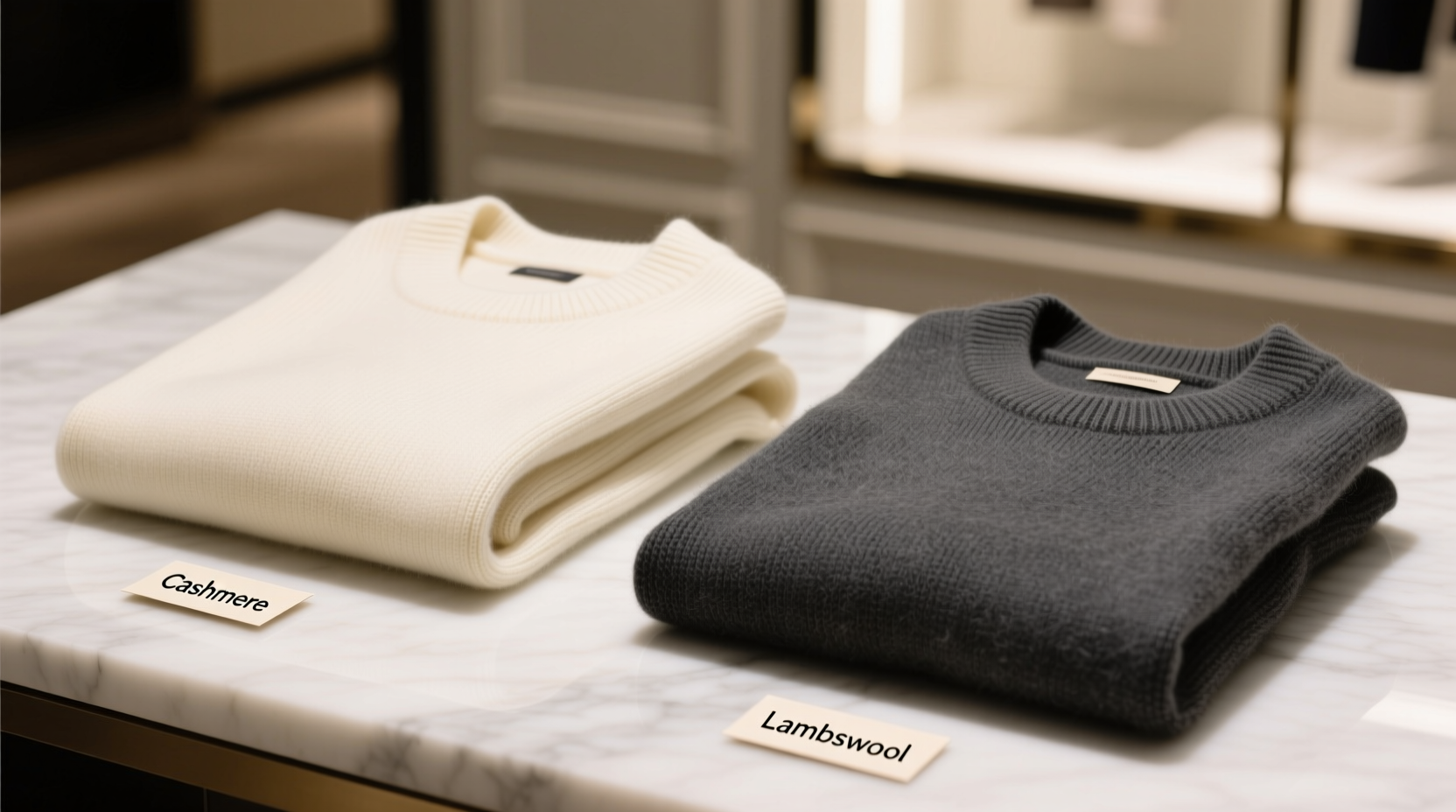
Cashmere and lambswool come from different animals and harvesting processes, which directly influence cost and scarcity.
Cashmere is derived from the soft undercoat of cashmere goats, primarily found in Mongolia, China, and parts of Central Asia. Each goat produces only about 100–200 grams of usable fiber per year, and the fleece must be hand-combed during molting season. After collection, the coarse outer hairs are painstakingly separated from the fine underlayer—a process that requires significant labor and time.
Lambswool, by contrast, comes from the first shearing of young sheep, usually under seven months old. This early cut yields exceptionally soft and elastic fibers compared to wool from mature sheep. While still a natural product requiring shearing and processing, lambswool is far more abundant and easier to produce at scale than cashmere.
“Cashmere’s rarity and labor-intensive production are the primary drivers behind its premium pricing. It’s not just about softness—it’s about scarcity.” — Daniel Reeves, Textile Sourcing ConsultantTip: Always check garment labels for fiber origin and processing details. \"Pure cashmere\" should be 100% cashmere; blends may dilute quality.
Softness and Comfort Comparison
One of the most cited advantages of cashmere is its luxurious softness. The fibers are significantly finer than those of lambswool—typically 14–19 microns in diameter versus 18–22 for lambswool. This fineness translates into a smoother feel against the skin, making cashmere ideal for people with sensitivities or those who dislike the slight prickle of traditional wool.
Lambswool, while softer than regular wool, still has a more textured hand feel. However, modern spinning techniques and high-twist yarns have narrowed this gap considerably. Some premium lambswool sweaters now rival lower-grade cashmere in comfort, especially when lined with silk or blended with small amounts of cashmere (e.g., 70% lambswool, 30% cashmere).
That said, top-tier cashmere remains unmatched in its buttery-soft drape and lightweight elegance. If tactile luxury is a priority, cashmere delivers an experience that even the best lambswool struggles to replicate.
Warmth, Weight, and Insulation Efficiency
Both fibers excel at thermal regulation, but they do so differently.
Cashmere fibers have a higher loft-to-weight ratio, meaning they trap more warm air relative to their density. As a result, a cashmere sweater can provide exceptional warmth without bulk. This makes it ideal for layering under coats or wearing in variable indoor-outdoor environments.
Lambswool is also highly insulating due to its natural crimp and moisture-wicking properties. It retains heat well even when damp—a trait inherited from sheep’s need to survive in wet climates. However, because the fibers are slightly coarser and denser, lambswool sweaters tend to be heavier for the same level of warmth.
| Feature | Cashmere | Lambswool |
|---|---|---|
| Fiber Diameter | 14–19 microns | 18–22 microns |
| Warmth per Ounce | ★★★★★ | ★★★★☆ |
| Weight (for equivalent warmth) | Lighter | Heavier |
| Moleskin Sensitivity Suitability | Ideal | Good (varies by finish) |
| Moisture Wicking | Good | Excellent |
Durability and Longevity
This is where the conversation shifts. Despite its delicate reputation, high-quality cashmere—when properly cared for—can last 10 to 15 years or more. Its fibers are strong for their fineness and resist pilling if tightly spun and knitted densely.
Lambswool, being more resilient and less prone to abrasion, often holds up better in daily wear scenarios. It resists stretching, maintains shape longer, and tolerates machine washing (on gentle cycles) more reliably than cashmere, which typically requires hand-washing or dry cleaning.
However, longevity ultimately depends on usage patterns. A cashmere sweater worn occasionally and stored correctly will outlast a frequently worn, poorly maintained lambswool piece. Conversely, using cashmere as workwear in abrasive environments (e.g., under backpacks, over office chairs) accelerates wear and reduces its lifespan dramatically.
Mini Case Study: Sarah’s Winter Wardrobe
Sarah, a marketing executive in Toronto, bought two sweaters last winter: a $350 cashmere turtleneck and a $120 merino-blend lambswool crewneck. She wore the lambswool nearly every weekday, tossing it in the wash weekly. After eight months, it began to pill and lose shape. The cashmere, reserved for weekends and formal events, was hand-washed three times and stored folded in cedar-lined drawers. Two winters later, the cashmere looks almost new, while the lambswool was donated.
For Sarah, the cashmere proved more durable *because* of how she used it—not despite the cost.
Care Requirements and Maintenance
Proper care is non-negotiable with cashmere. Improper washing leads to shrinkage, felting, or misshaping. Experts recommend hand-washing in cool water with pH-neutral detergent, laying flat to dry, and avoiding wringing or hanging. Storage should be fold-only (never hung), in breathable cotton bags, away from moths.
Lambswool is more forgiving. Many modern versions are labeled “machine washable,” thanks to treatments that reduce fiber scales and prevent felting. Still, cold water and low tumble-dry settings are advised to preserve texture and fit.
- Cashmere: Hand-wash every 3–5 wears; professional clean annually.
- Lambswool: Machine wash (gentle cycle) every 5–7 wears; air dry preferred.
- Both: Use natural moth repellents like cedar or lavender; avoid plastic bins.
Step-by-Step Guide: How to Store Cashmere Properly
- Wash or refresh the sweater before storing.
- Lay flat on a clean towel to ensure complete dryness.
- Fold gently—do not hang—to prevent shoulder bumps.
- Place in a breathable cotton storage bag or drawer liner.
- Add cedar blocks or lavender sachets to deter moths.
- Store in a cool, dark, dry space; avoid attics or basements.
Value Over Time: Is Cashmere Worth the Investment?
Let’s crunch the numbers. A $400 cashmere sweater worn 30 times over five years costs about $13.33 per wear. A $100 lambswool sweater worn 40 times over three years costs $2.50 per wear—significantly cheaper upfront.
But consider intangibles: the emotional satisfaction of wearing something exquisitely soft, the versatility in styling, and the reduced environmental impact of owning fewer, higher-quality items. In sustainable fashion circles, cashmere is often praised for promoting a “buy less, buy better” philosophy.
Moreover, well-made cashmere holds resale value. Platforms like The RealReal or Vestiaire Collective regularly list gently used cashmere at 40–60% of retail price, whereas lambswool rarely retains significant value.
Tip: Invest in cashmere only if you’re committed to proper care. Otherwise, opt for high-quality lambswool or wool blends.FAQ
Can I wear cashmere in rainy weather?
Yes, but with caution. Cashmere absorbs moisture and takes time to dry. Wear it under a waterproof coat and avoid prolonged exposure. Once damp, let it air dry naturally—never use heat.
Is all cashmere the same quality?
No. Grades vary: Grade A (14–15 microns) is finest; Grade C (over 19 microns) feels coarser. Origin matters too—Mongolian cashmere is generally considered superior due to harsher climates producing denser undercoats.
Does lambswool itch?
High-quality lambswool should not cause itching. If irritation occurs, it may be due to chemical residues from processing or a blend with coarser wools. Look for OEKO-TEX® certified options for sensitive skin.
Final Verdict: When to Choose What
The extra cost of cashmere is worth it if:
- You prioritize comfort and tactile luxury.
- You plan to wear the sweater infrequently but want lasting elegance.
- You’re willing to follow strict care routines.
- You embrace slow fashion and value heirloom-quality pieces.
Stick with lambswool if:
- You need a durable, everyday sweater.
- Your budget is limited.
- You prefer low-maintenance fabrics.
- You live in a humid or active climate where frequent washing is necessary.
“The best sweater isn’t the most expensive one—it’s the one that fits your life.” — Clara Nguyen, Sustainable Fashion Stylist
Conclusion
Cashmere and lambswool each offer distinct advantages. Cashmere wins on refinement, lightness, and prestige—but only pays off with mindful ownership. Lambswool delivers resilience, affordability, and ease, making it the practical favorite for real-world use.
Rather than asking whether cashmere is “worth it” in absolute terms, ask yourself: How will I use it? How will I care for it? And what kind of relationship do I want with my clothes?
🚀 Ready to upgrade your wardrobe wisely? Start by assessing your lifestyle, then choose fabric that supports it—not just impresses others. Share your thoughts below: Have you made the cashmere leap? Was it worth it?