When it comes to utilitarian fashion, few garments spark as much debate as cargo pants and parachute pants. Both emerged from military and performance roots but have since evolved into cultural symbols—one representing rugged functionality, the other embodying 1980s rebellion and dancefloor flair. At first glance, their most noticeable feature is the abundance of pockets. But beyond aesthetics, a pressing question remains: are those extra pockets genuinely useful, or do they simply add unnecessary bulk?
This isn’t just a style debate—it’s about how clothing serves our daily lives. Whether you're navigating city commutes, outdoor adventures, or weekend outings, the design of your pants can impact comfort, mobility, and efficiency. Let’s break down the real-world value of these iconic pocket-laden trousers.
The Origins: Function Before Fashion
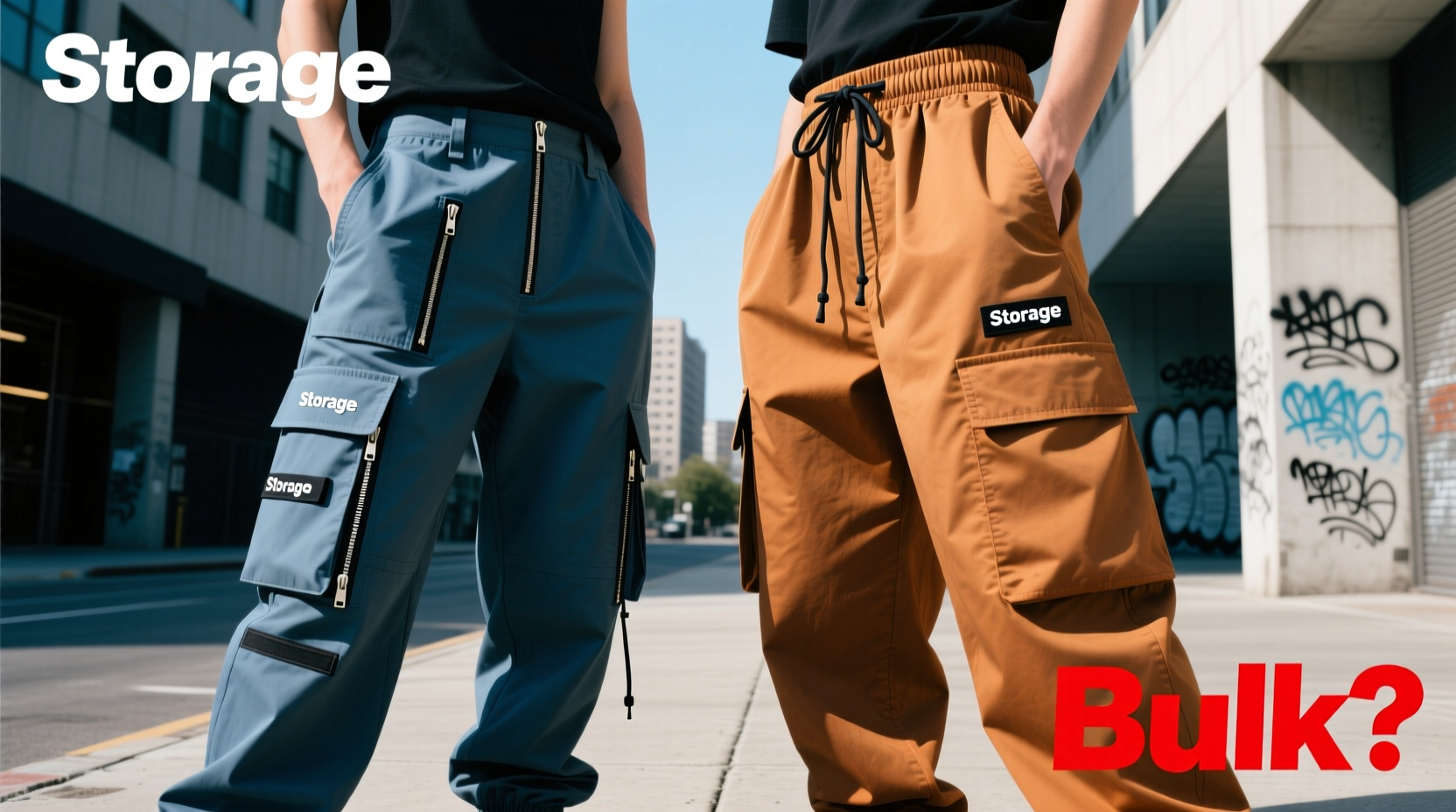
Cargo pants trace their lineage back to British military uniforms during World War II. Designed for soldiers in the field, they featured large side pockets—originally secured with buttoned flaps—for carrying maps, ammunition, and rations. The modern version, typically made from durable cotton or cotton-blend fabrics, retains this layout with roomy thigh pockets accessible via zippers or Velcro.
Parachute pants, by contrast, were born out of necessity in a different arena. Invented in the 1970s and popularized in the 1980s, they were constructed from lightweight, water-resistant nylon—the same material used in actual parachutes. Their signature crinkly sound and reflective details made them ideal for breakdancers and street performers who needed flexibility, durability, and visual flair. While they also feature multiple pockets, these are often smaller, zippered, and more decorative than functional.
“Clothing evolves when utility meets subculture. Cargo pants stayed true to purpose; parachute pants became symbols of expression.” — Marcus Lin, Urban Apparel Historian
Pocket Design Compared: Practicality vs. Presence
To understand whether the extra pockets serve a purpose or just add visual weight, we need to compare how each pant uses its storage space.
| Feature | Cargo Pants | Parachute Pants |
|---|---|---|
| Number of Pockets | 6–8 (including front, back, and dual thigh pockets) | 4–6 (mostly small zippered side and leg pockets) |
| Pocket Size & Depth | Large, deep—can fit phones, notebooks, multitools | Shallow, narrow—suited for keys, cash, lighters |
| Accessibility | Easy reach while standing or walking | Limited; some require bending or unzipping layers |
| Material Around Pockets | Reinforced stitching, durable fabric | Thin nylon, prone to wear at stress points |
| Load Capacity | High—practical for tools, gear, supplies | Low—best for minimal essentials |
| Aesthetic Impact | Bulky but rugged; associated with workwear | Sleek when empty; puffy when loaded |
The data shows a clear divergence. Cargo pants prioritize volume and access, making them suitable for people who carry gear regularly—outdoor workers, photographers, delivery riders, or urban explorers. Parachute pants, while innovative for their time, sacrifice storage depth for mobility and style. Their pockets are more about having somewhere to put small items quickly than supporting sustained use under load.
Tip: If you frequently carry a phone, wallet, and multitool, cargo pants offer superior organization without overloading jacket pockets.Real-World Use: Who Actually Benefits From Extra Pockets?
Consider Alex, a freelance photographer based in Portland. His typical day involves biking between locations, shooting in parks and alleyways, and managing equipment on the go. He wears cargo pants not because they’re trendy, but because he keeps lens caps in one pocket, spare batteries in another, and a rain cover folded neatly in the third. For him, the extra pockets reduce reliance on a backpack and improve responsiveness in fast-changing environments.
In contrast, Jamie, a DJ and vintage fashion enthusiast, owns several pairs of retro-style parachute pants. She wears them for club appearances and themed events. “I love the look and the sound,” she says. “But I only keep my ID and a credit card in the pockets. Anything bigger makes them sag and ruins the silhouette.”
This contrast highlights a key truth: practicality depends on context. Cargo pants excel when utility is paramount. Parachute pants shine in environments where movement and appearance matter more than carrying capacity.
When Bulk Becomes a Liability
However, added pockets aren’t always an advantage. Overloading cargo pants can lead to sagging fabric, strained seams, and restricted leg motion. Some users report that full thigh pockets interfere with sitting comfortably in car seats or on public transit. Similarly, filled parachute pant pockets disrupt the smooth drape of the nylon, creating awkward bulges that detract from their intended aesthetic.
Moreover, both styles face criticism in professional settings. Traditional offices rarely embrace either due to their casual, sometimes theatrical, appearance. Even in creative industries, excessive bulk can signal disorganization rather than preparedness.
Modern Interpretations: Blending Utility With Wearability
Today’s market reflects growing demand for smart utility. Designers are reimagining cargo pants with slimmer silhouettes, hidden compartments, and technical fabrics that resist wrinkles and stains. Brands like Lululemon, Uniqlo, and Outlier offer \"performance chinos\" that integrate discreet cargo pockets without the boxy profile of classic versions.
Similarly, contemporary takes on parachute pants focus on sustainable materials and modular designs. Some newer models use recycled ripstop nylon and include magnetic closures for faster access. These updates aim to preserve the original spirit—lightweight, weather-resistant, mobile—while improving everyday usability.
The evolution suggests a shift toward intentionality. Consumers no longer accept bulk for the sake of tradition. They want pockets that serve a purpose, not just occupy space.
Tip: Look for cargo pants with tapered legs and stretch fabric if you want utility without sacrificing style or comfort.Checklist: Choosing the Right Pocket-Packed Pants
- Assess your daily carry: Do you need space for tools, tech, or documents?
- Evaluate your environment: Are you outdoors, commuting, or attending social events?
- Test the fit: Sit down and walk around in-store or during returns window.
- Check pocket placement: Can you access them easily without hiking up the leg?
- Consider maintenance: Nylon pants may require special detergents; cotton cargos can shrink if not washed properly.
- Weigh aesthetics: Will the style align with your existing wardrobe and lifestyle?
Step-by-Step Guide: Maximizing Pocket Utility Without the Bulk
- Inventory your essentials: List everything you currently carry in bags or coat pockets. Identify what could move to pants storage.
- Assign dedicated pockets: Designate one for phone, one for wallet, one for miscellaneous items. Consistency prevents clutter.
- Use slim organizers: Slide credit cards into low-profile holders instead of bulky wallets.
- Avoid overfilling: Keep total pocket weight under 2 lbs to prevent sagging and strain.
- Balance distribution: Load both sides evenly to maintain posture and gait.
- Empty nightly: Remove contents before washing or storing to preserve fabric integrity.
Following this routine ensures that extra pockets enhance rather than hinder your day-to-day experience.
Frequently Asked Questions
Are cargo pants still in style in 2024?
Yes, but in evolved forms. Slim-fit, neutral-colored cargo pants made from technical fabrics are widely accepted in streetwear and hybrid workwear. The key is avoiding overly baggy cuts and keeping the overall look balanced with fitted tops.
Can parachute pants be worn casually today?
They’re niche but viable in specific contexts—music festivals, dance events, or bold fashion statements. Modern reinterpretations with matte finishes and minimalist detailing make them easier to style without looking dated.
Do extra pockets damage your pants faster?
Only if misused. Regularly stuffing heavy items into thin-fabric pockets (especially on parachute pants) can cause tearing at stress points. Reinforced pockets on quality cargo pants handle moderate loads well, but even they degrade faster if consistently overloaded.
Expert Insight: What Designers Say About Pocket Culture
“We’ve seen a resurgence in functional design, but consumers now reject ‘more’ in favor of ‘better.’ A pocket should solve a problem, not create one.” — Lena Torres, Lead Designer at Field & Form
Torres emphasizes intentional engineering: “We prototype every pocket with weighted simulations. If it pulls the hem out of alignment or restricts knee bend, it goes back to the drawing board.”
This mindset signals a broader industry shift—from maximalism to meaningful utility. It challenges the assumption that more pockets automatically mean greater value.
Final Verdict: Practical or Just Bulky?
The answer lies in alignment with purpose. Cargo pants, when thoughtfully designed and appropriately loaded, deliver genuine practicality. Their pockets serve real needs for people on the move. However, they become bulky when treated as catch-all bins or worn in situations where minimalism is preferred.
Parachute pants, on the other hand, were never meant to be workhorses. Their pockets are secondary to their primary role: enabling dynamic movement and making a visual statement. Calling them “impractical” misses the point—they weren’t built for heavy-duty use. As fashion pieces, they succeed when styled intentionally and not expected to perform beyond their limits.
In the end, the usefulness of extra pockets isn’t determined by quantity, but by relevance. A single well-placed pocket that holds your phone securely is worth more than four poorly designed ones that flap open or distort the fit.
💬 What do you carry in your pockets? Share your daily essentials and whether your pants help—or hinder—your routine. Join the conversation below.