
When it comes to protecting your eyes from harmful UV rays and enhancing your everyday style, not all sunglasses are created equal. At first glance, a $10 pair from a convenience store might seem like a smart bargain compared to premium brands like Carfia. But beneath the surface, the differences in materials, optical performance, durability, and eye health protection can be dramatic. The real question isn’t just about price—it’s about value. Are you truly saving money by choosing cheap sunglasses, or are you risking your vision and comfort for a short-term deal?
The Hidden Cost of Cheap Sunglasses
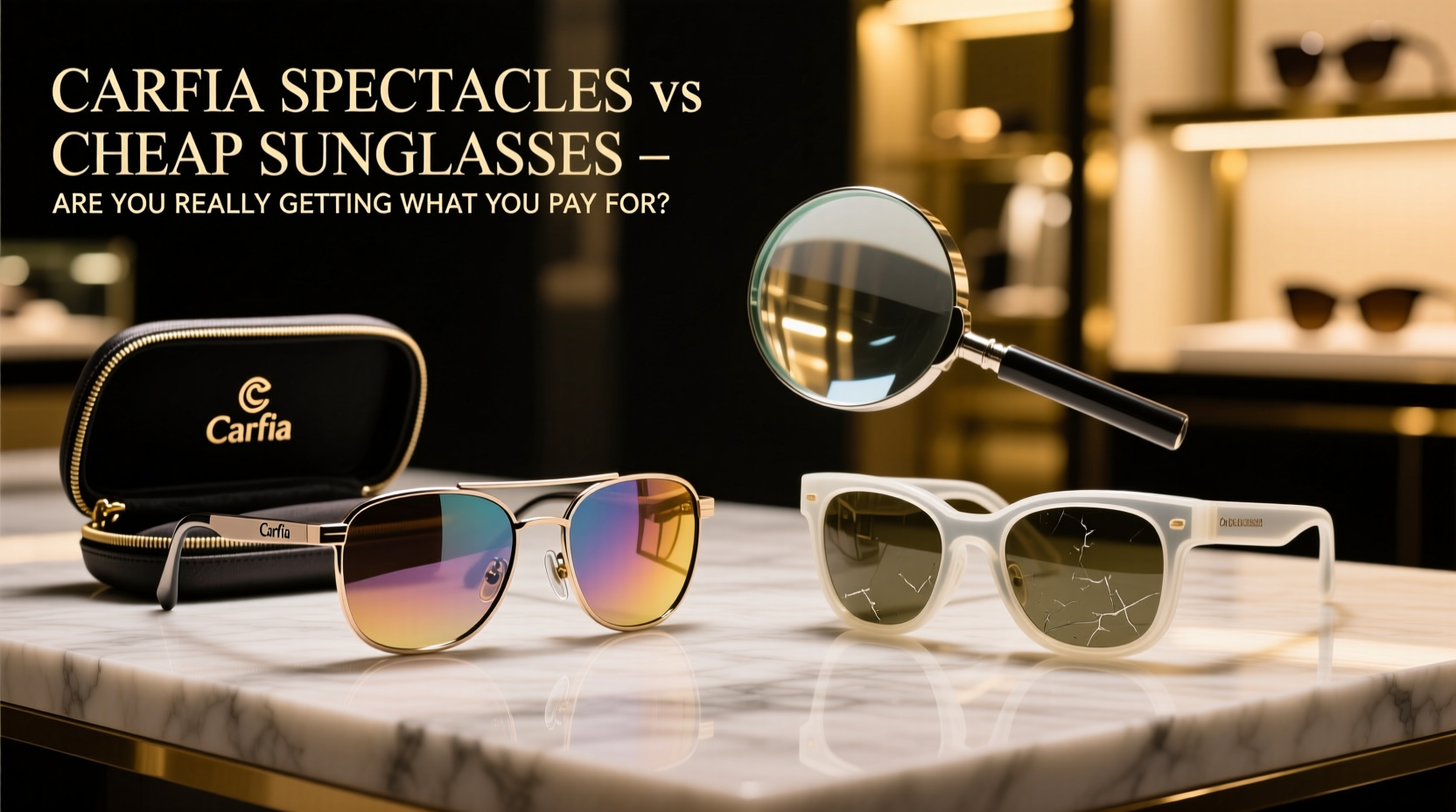
Cheap sunglasses often come with a misleading promise: full UV protection at a fraction of the cost. While some budget models do offer UV400 shielding, many fail to deliver consistent quality. Poorly calibrated lenses can distort vision, cause eye strain, and even increase light sensitivity due to inconsistent tinting. When lenses are too dark without proper UV filtering, your pupils dilate—letting in more harmful radiation than if you wore no sunglasses at all.
Manufacturers of low-cost sunglasses frequently cut corners on lens clarity, frame durability, and ergonomic design. Flimsy hinges, warped frames, and uneven coatings lead to frequent replacements, turning a “bargain” into a recurring expense. Worse, inconsistent polarization can create visual distortions while driving or during outdoor activities, reducing safety rather than improving it.
Tip: Never assume dark lenses mean better protection—always verify UV400 labeling.What Sets Carfia Apart?
Carfia positions itself as a modern eyewear brand that blends premium craftsmanship with accessible pricing. Unlike luxury designer labels, Carfia avoids inflated markups but maintains high production standards. Their sunglasses typically feature polarized TAC (Tri-Acetate Cellulose) lenses, which reduce glare significantly while preserving color accuracy and visual clarity. Frames are constructed from lightweight yet durable materials such as flexible TR90 nylon or acetate, designed to withstand daily wear and environmental stress.
One of Carfia’s key differentiators is its commitment to optical integrity. Each pair undergoes rigorous testing for UV absorption, polarization efficiency, and impact resistance. Independent lab reports confirm compliance with ANSI Z80.3 standards—the benchmark for sunglass safety and performance in the U.S. This level of transparency is rare among generic brands, where certification claims are often unverified.
“Polarization and UV filtration aren’t luxuries—they’re necessities for long-term eye health. Brands that invest in certified optics are investing in their customers’ vision.” — Dr. Lena Torres, Optometrist & Vision Health Advocate
Performance Comparison: Carfia vs. Budget Sunglasses
| Feature | Carfia Sunglasses | Cheap Sunglasses |
|---|---|---|
| UV Protection | UV400 certified, lab-tested | Inconsistent; often unverified |
| Polarization | True polarization, reduces glare by 99% | Fake or partial polarization film |
| Lens Clarity | Optically correct, distortion-free | May cause blurring or warping |
| Frame Material | Durable TR90 or acetate | Brittle plastic or low-grade metal |
| Hinge Quality | Spring hinges, tested for 10k+ openings | Loose or break within weeks |
| Price Range | $45–$75 | $5–$20 |
| Average Lifespan | 2–4 years with regular use | 3–12 months |
Real-World Example: A Week at the Beach
Consider Sarah, an avid beachgoer who bought two pairs of sunglasses over the past year—one from a gas station for $12 and a Carfia model for $65. During a week-long coastal vacation, she alternated between them. The cheap pair quickly fogged up in humid air, slipped down her nose, and caused headaches after a few hours of wear. She noticed halos around lights while driving at dusk, a sign of poor lens quality. After just five days, one temple snapped when she set them on her car dashboard.
Meanwhile, the Carfia sunglasses stayed comfortable, maintained grip even when sweating, and eliminated blinding glare off the water. The lenses preserved true colors, making it easier to spot changes in water depth. Two summers later, they still perform flawlessly. When factoring in replacement costs and discomfort, Sarah spent more chasing cheap alternatives than she would have with a single high-quality investment.
How to Choose Smartly: A Buyer’s Checklist
Before purchasing any sunglasses, use this checklist to ensure you're getting real value—not just a low price tag.
- ✅ Look for “UV400” or “100% UV protection” labeling (not just “blocks UV”)
- ✅ Test polarization by tilting your head near reflective surfaces—if glare doesn’t change, it’s not truly polarized
- ✅ Check lens clarity by focusing on straight lines (like window frames); no waviness should appear
- ✅ Ensure the frame fits snugly without pinching; nose pads should prevent slipping
- ✅ Verify return policy and warranty—reputable brands stand behind their products
- ✅ Research independent reviews or lab test results if available
Long-Term Value: It’s Not Just About Durability
The value of premium sunglasses extends beyond how long they last. Consistent visual comfort supports better focus, reduces fatigue, and enhances outdoor experiences. For drivers, athletes, or anyone spending extended time in bright environments, precise optics contribute to safety and performance.
Carfia and similar mid-tier premium brands strike a balance: they eliminate the markup of luxury fashion houses while maintaining engineering standards that mass-market producers ignore. Over three years, owning one well-made pair often costs less than replacing three or four cheap ones—and saves the frustration of constant loss or breakage.
Frequently Asked Questions
Do all expensive sunglasses offer better protection?
Not necessarily. Price alone isn’t a guarantee of quality. Some designer brands prioritize aesthetics over optical performance. Always check for UV400 certification and polarization specs regardless of brand prestige.
Can I trust online reviews for brands like Carfia?
Yes, but critically. Look for verified purchase reviews and videos showing real-world use. Be wary of listings with only five-star ratings and vague comments like “great product!”—these may be incentivized.
Are Carfia sunglasses worth it for occasional use?
If you wear sunglasses fewer than 20 days a year, a decent budget pair with verified UV400 protection may suffice. But for regular use—even a few times a week—investing in reliable optics pays off in comfort and eye health.
Make the Right Investment for Your Eyes
Your eyes are irreplaceable. Choosing sunglasses should be about more than fashion or upfront cost. Carfia represents a growing category of direct-to-consumer brands that deliver laboratory-grade protection, thoughtful design, and lasting build quality without luxury pricing. In contrast, most ultra-cheap sunglasses fail to meet basic safety standards consistently, putting your vision at risk over time.
The next time you reach for a $10 pair at the checkout counter, ask yourself: Is temporary savings worth potential eye strain, distorted vision, or increased UV exposure? High-quality sunglasses aren’t an indulgence—they’re protective gear. Prioritize certified UV protection, optical accuracy, and durable construction. Your eyes will thank you years down the road.
💬 Have you switched from cheap to premium sunglasses? Share your experience below and help others make smarter choices for their eye health!








