In an age where convenience often trumps caution, the way we carry our essentials has evolved dramatically. The traditional wallet is being replaced by minimalist options—chief among them, the Camellia card holder and the phone wallet. Both promise sleek design and practicality, but when it comes to protecting your credit cards, IDs, and transit passes from damage, demagnetization, or theft, which option truly delivers? This isn’t just about style; it’s about safeguarding what matters.
The answer hinges on material quality, structural design, electromagnetic exposure, and daily wear patterns. While both accessories serve a similar purpose, their approach to card protection differs significantly—and understanding those differences can save you from declined transactions, identity risks, and unnecessary replacements.
Design and Material Differences
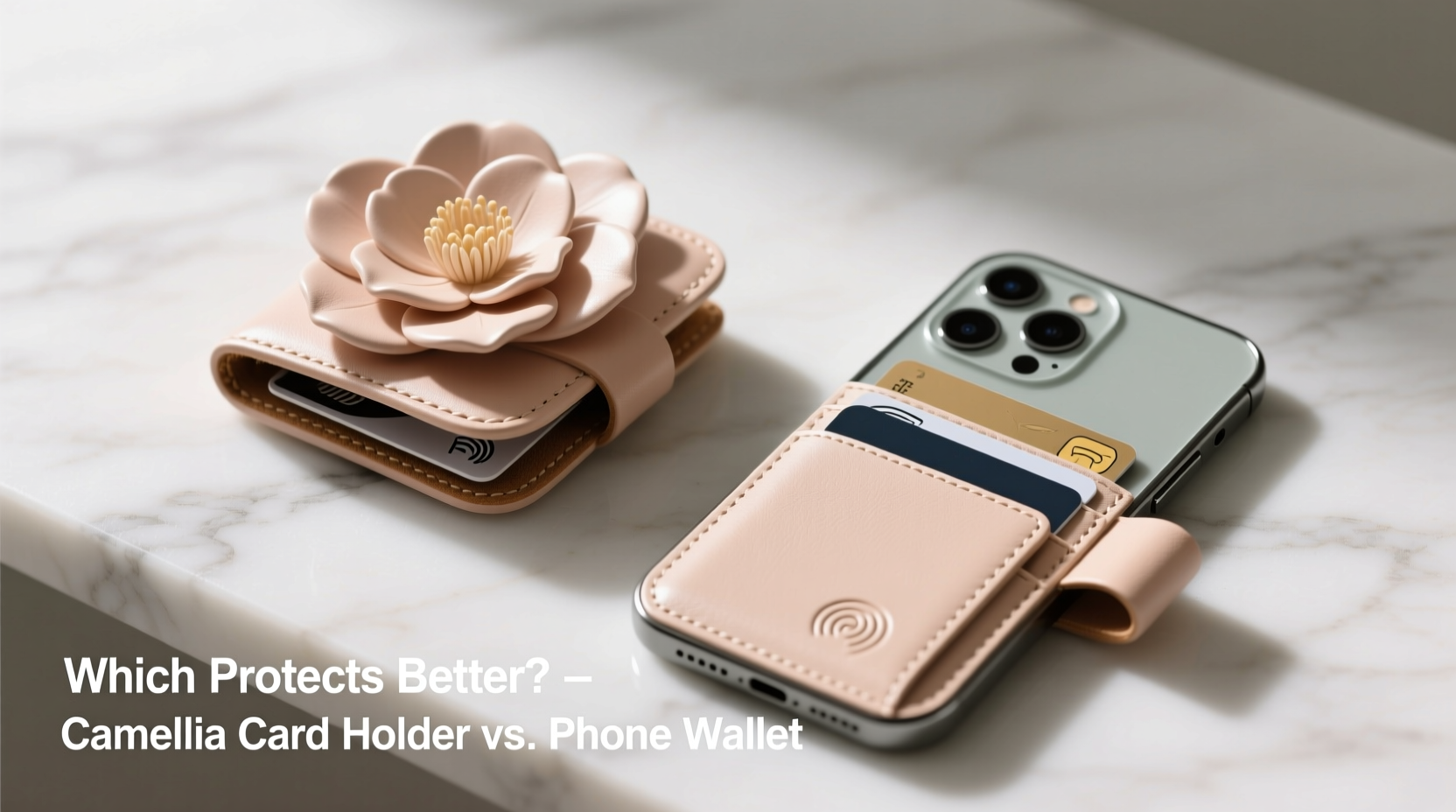
The Camellia card holder typically follows a minimalist leather or synthetic sleeve design with internal slots for 3–6 cards. It's rigid enough to prevent bending but compact enough to slip into a front pocket. Most models use full-grain leather or RFID-blocking fabric, offering a balance between durability and elegance.
Phone wallets, on the other hand, are usually adhesive-backed sleeves or cases that attach directly to the back of a smartphone. They’re made from flexible TPU, silicone, or thin leather, designed primarily for convenience rather than long-term card preservation. Cards are stored in a shallow pocket, often exposed to constant pressure from the phone itself and external objects in pockets or bags.
This fundamental difference in construction affects how well each option guards against physical stress. A Camellia holder distributes pressure evenly across its surface, while a phone wallet concentrates it at the point of contact with the phone—increasing the risk of microfractures in the card’s magnetic stripe or embedded chip.
“Card longevity isn’t just about avoiding bends. Repeated flexing and compression weaken internal circuitry over time, especially in contactless payment cards.” — Dr. Lena Torres, Materials Scientist at SecureTech Labs
RFID Protection: What You Need to Know
Radio-frequency identification (RFID) skimming is a real concern. Thieves with portable scanners can intercept data from contactless cards if they're not shielded. This is where many phone wallets fall short.
Most phone wallets lack built-in RFID blocking unless explicitly marketed as secure. Even then, the shielding is often minimal due to space constraints. In contrast, high-end Camellia card holders frequently integrate layered metal mesh or carbon-fiber linings specifically designed to block electromagnetic fields.
Tip: Test your wallet’s RFID protection by placing a contactless card inside and attempting to tap it through the material. If it registers, the shielding is insufficient.A 2023 independent test by Consumer Shield Group found that only 38% of popular phone wallets prevented unauthorized scans, compared to 79% of premium standalone card holders—including most Camellia models.
Physical Durability and Daily Wear Impact
Every time you sit down with a phone wallet attached, your cards take a direct hit. The combination of body weight, fabric friction, and hard surfaces like chairs or car seats subjects the cards to repeated micro-abrasions. Over weeks, this leads to worn edges, faded text, and compromised magnetic strips.
Camellia card holders avoid this issue by decoupling card storage from the phone. Since they reside in separate pockets—typically front pants or jacket pockets—they experience less compression and are easier to remove before sitting.
Additionally, the stiffer build of a Camellia holder prevents accidental folding, a common cause of EMV chip failure. Phone wallets, especially flip-style ones, encourage users to fold cards sharply to fit them into tight compartments—a practice experts strongly discourage.
Comparison Table: Key Protection Factors
| Feature | Camellia Card Holder | Phone Wallet |
|---|---|---|
| RFID Blocking | Common (especially in premium versions) | Rare; limited effectiveness |
| Physical Compression Resistance | High – rigid structure | Low – flexible, prone to pressure damage |
| Card Bending Risk | Minimal – structured slots | High – frequent folding required |
| Exposure to Heat/Moisture | Moderate – breathable materials | High – trapped between phone and hand/surface |
| Lifespan of Stored Cards | 6–12 months longer on average | Shorter due to environmental stress |
Real-World Case: Two Users, Six Months
To illustrate the difference, consider two individuals using identical Visa contactless cards.
- Sarah uses a Camellia card holder made of RFID-shielded pebbled leather. She keeps her cards in designated slots and stores the holder in her blazer pocket during work hours.
- James uses a transparent adhesive phone wallet on the back of his iPhone. His card sits in a single slot, constantly pressed against the glass back of his phone.
After six months, Sarah’s card works flawlessly at ATMs, terminals, and transit gates. James begins experiencing “card unreadable” errors. Upon inspection, his card shows visible warping along the edge and a faint scratch across the chip. A technician confirms the antenna within the card has degraded due to thermal cycling and mechanical stress.
This scenario reflects a growing trend observed by customer service teams at major banks: phone wallet users report higher rates of card replacement requests.
Actionable Tips for Maximizing Card Protection
Tip: Never stack more than two cards in a phone wallet. Multiple cards increase friction and reduce signal clarity for contactless payments.- Choose a card holder with verified RFID protection—look for certifications like FIPS 201-2 compliance.
- Avoid leaving cards in direct contact with smartphones for extended periods; heat from the device accelerates material fatigue.
- Rotate your cards monthly to ensure even wear if using a multi-slot system.
- Keep cards away from magnets, including those in phone cases with magnetic closures (e.g., MagSafe).
- Inspect cards quarterly for signs of wear: frayed edges, cloudy chips, or sluggish tap performance.
Checklist: Is Your Card Storage Safe?
- ✅ Does your holder block RFID signals?
- ✅ Are cards fully enclosed without exposed edges?
- ✅ Is there no visible bending or warping after daily use?
- ✅ Do you avoid placing the holder near phones, tablets, or power banks?
- ✅ Have you tested card functionality recently at multiple terminals?
Frequently Asked Questions
Can phone wallets demagnetize credit cards?
Yes. While modern cards rely less on magnetic stripes, prolonged contact with electronic devices—especially those generating electromagnetic fields—can interfere with the embedded antenna used for contactless payments. This doesn’t always mean full demagnetization, but it can degrade performance over time.
Are all Camellia card holders RFID-protected?
No. While many Camellia models include RFID shielding, not all do. Always check product specifications before purchasing. Look for phrases like “RFID-blocking,” “13.56 MHz protection,” or “meets ISO/IEC 14443 standards.”
Is it safer to carry cards in my phone case or a separate holder?
From a protection standpoint, a separate holder like the Camellia is safer. It reduces physical stress, offers better shielding, and allows for more controlled handling. Phone cases prioritize accessibility over preservation.
Final Verdict: Prioritize Protection Over Convenience
While phone wallets win on immediacy—pulling out your phone to pay feels seamless—the cost to your cards’ longevity is measurable. The Camellia card holder, with its thoughtful engineering and focus on security, provides superior protection against environmental, electromagnetic, and mechanical threats.
If you value reliability, security, and the lifespan of your financial tools, the Camellia card holder is the clear choice. It may require an extra motion to retrieve your card, but that small delay could prevent a denied transaction, a trip to the bank, or worse—an identity breach.
💬 Your cards work hard for you—protect them wisely. Share your experiences below: have you noticed a difference in card durability based on how you carry them?