
In an era where smartphones are both essential tools and expensive investments, protecting them from drops has become a top priority. Two popular accessories—bracelet chain phone cases and Pop Sockets—promise to keep your device secure, but they work in fundamentally different ways. One physically tethers your phone to your wrist; the other enhances grip through ergonomics. But when it comes to actual drop prevention, which one truly saves your phone more effectively?
This isn’t just about convenience or style—it’s about physics, real-world usage patterns, and what happens in that split second when your phone slips from your hand. Let’s break down the strengths, weaknesses, and real protective value of each option.
How Bracelet Chain Phone Cases Work
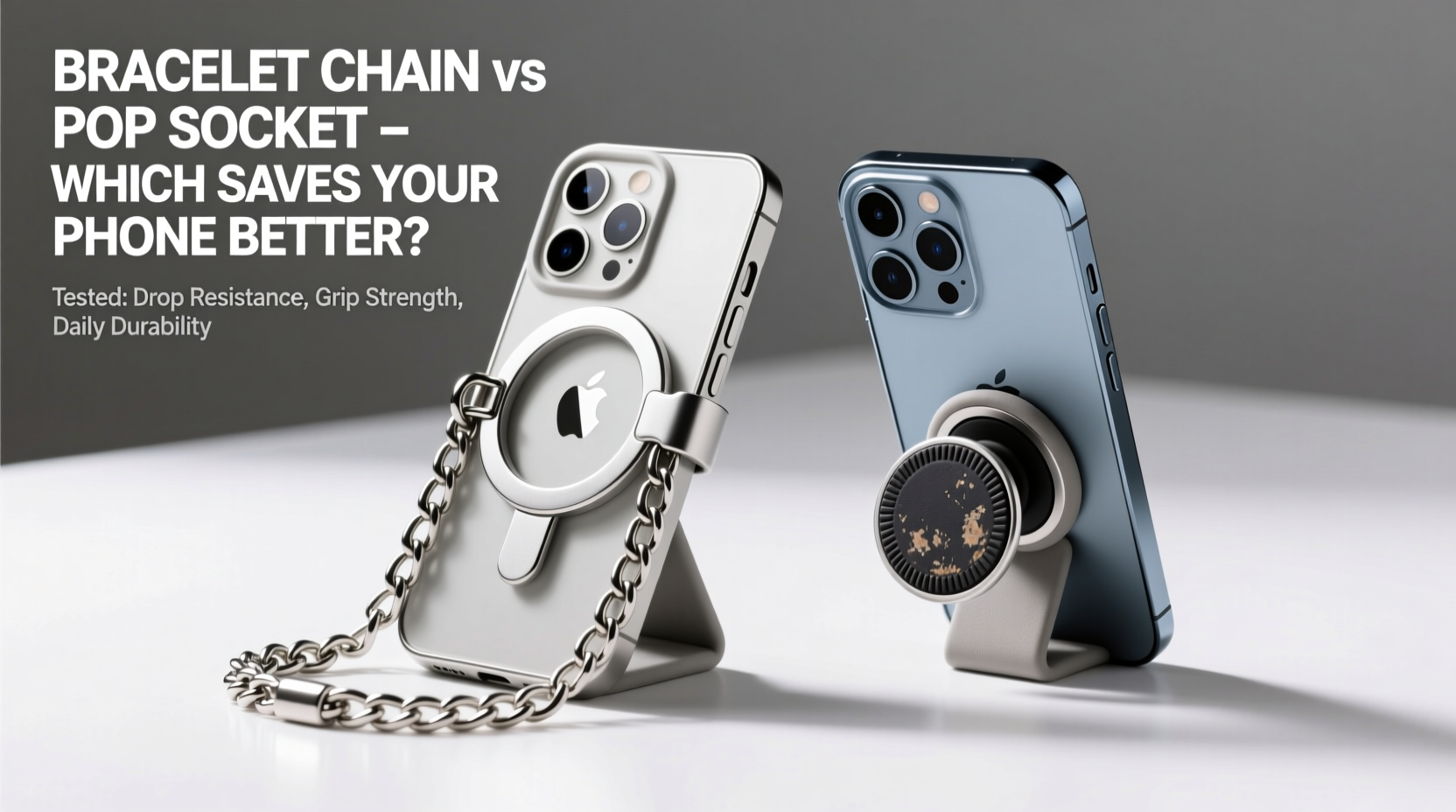
A bracelet chain phone case integrates a durable metal or fabric strap into the back of the case, forming a loop that wraps around your wrist. The idea is simple: even if you lose your grip, the phone remains physically attached to you.
These cases are especially popular among travelers, parents, and active users who frequently shift tasks—like carrying groceries while texting or holding a child while using their phone. The tether acts as a mechanical fail-safe, preventing the phone from falling to the ground entirely.
Tip: Choose a bracelet chain with a reinforced clasp and flexible links to reduce strain on the attachment points.The effectiveness hinges on two factors: the strength of the chain-to-case connection and the user wearing it correctly. If the chain detaches under stress or isn’t worn snugly, its protection fails. However, when properly implemented, it offers near-total drop prevention in most daily scenarios.
How Pop Sockets Improve Grip (But Not Attachment)
Pop Sockets are collapsible circular grips that adhere to the back of your phone or case. When expanded, they provide a comfortable finger hold, improving control during use—especially for one-handed operation, scrolling, or taking selfies.
Unlike bracelet chains, Pop Sockets don’t physically tether your phone. They rely on enhancing friction and leverage to reduce accidental slips. While they significantly improve handling, they offer no protection once the phone leaves your hand. If your fingers miss the grip or the socket detaches (a known issue over time), the phone falls freely.
“Grip aids like Pop Sockets reduce slip incidents by up to 40%, but they don’t eliminate fall risk. True retention requires physical attachment.” — Dr. Lena Torres, Human Factors & Device Safety Researcher at Mobile Ergo Labs
Comparative Analysis: Protection, Practicality, and Longevity
| Feature | Bracelet Chain Case | Pop Socket |
|---|---|---|
| Drop Prevention | High – physically restrains phone | Moderate – improves grip only |
| Fall Outcome | Phone swings, rarely hits ground | Full impact if dropped |
| Attachment Security | Depends on build quality | Adhesive degrades over time |
| Portability | Always attached, can snag | Compact when collapsed |
| Compatibility | Requires specific case | Works with most phones/cases |
| Lifespan | 1–3 years (chain wear) | 6–18 months (adhesive failure) |
The data shows a clear divide: bracelet chains prevent falls through physical restraint, while Pop Sockets merely reduce the likelihood of a slip. In high-risk environments—crowded streets, stairs, or wet conditions—the chain offers a definitive safety edge.
Real-World Test: Commuter Drop Scenario
Jamie, a nurse in Chicago, uses her phone constantly between patient rounds. She tested both solutions over six weeks. With a Pop Socket, she experienced two near-drops—one resulted in a cracked screen after slipping off a gurney. After switching to a titanium-link bracelet case, she had three full slips—but the phone dangled safely each time.
“The socket felt sleek, but it didn’t save me when I was rushing,” Jamie said. “The chain embarrassed me at first—felt like something my grandma would use—but now I wouldn’t go back. It saved my phone twice in one week.”
This mirrors broader user trends: aesthetic preferences often favor Pop Sockets, but real-world protection increasingly pushes practical users toward tethered solutions.
Key Factors That Determine Effectiveness
Not all products perform equally within their categories. Several design and usage factors determine whether either solution actually delivers on its promise.
- Chain durability: Thin or poorly welded links can snap under impact.
- Adhesive quality: Pop Sockets with weak glue may detach before the phone ever slips.
- Placement: A misaligned socket reduces ergonomic benefit; a loose wristband defeats the chain’s purpose.
- User behavior: People forget to wear the chain or remove it for charging, creating unprotected windows.
Step-by-Step: Maximizing Your Phone’s Drop Protection
- Evaluate your lifestyle: Frequent multitaskers or those in motion benefit most from tethering.
- Choose a high-quality chain case: Look for stainless steel links and epoxy-reinforced anchors.
- If using a Pop Socket: Apply it centrally near the bottom third of the phone for optimal balance.
- Combine strategies: Use a Pop Socket on a bracelet case for enhanced grip and physical security.
- Inspect monthly: Check chain joints and socket adhesion for signs of wear.
- Replace proactively: Don’t wait for failure—swap out sockets every year and inspect chains quarterly.
Can You Combine Both? The Hybrid Advantage
Some users assume they must choose one or the other. But many modern bracelet chain cases include flat or textured backs compatible with Pop Sockets. This hybrid approach offers dual-layer protection: improved grip during use, plus a fail-safe tether if the phone slips completely.
It’s particularly effective for larger phones (6.5 inches and above), where grip is harder to maintain. Just ensure the socket doesn’t interfere with the chain’s movement or create pressure points that weaken the case over time.
Frequently Asked Questions
Do bracelet chains damage your phone when it swings?
Well-designed chains allow the phone to pivot smoothly without hitting hard surfaces. However, swinging in tight spaces (like crowded subways) can cause side impacts. Using a case with raised edges helps protect the screen and camera.
Why do Pop Sockets stop sticking over time?
The adhesive pad absorbs oils, dust, and moisture. Regular cleaning with alcohol wipes can extend life, but eventual degradation is inevitable. Some models now offer magnetic replacements that attach to built-in metal plates for longer durability.
Are bracelet chains safe for children?
Yes, but with caution. Shorter, non-adjustable chains designed for kids minimize strangulation risk. Always supervise young children and avoid long, loose straps.
Final Verdict: Which Actually Saves Your Phone Better?
When the goal is preventing drops and protecting your phone from impact, the bracelet chain phone case is objectively superior. It transforms a potential disaster into a minor inconvenience. While Pop Sockets enhance usability and reduce slip frequency, they do not stop falls—they only delay them.
That said, aesthetics and convenience matter. Pop Sockets win in discretion and versatility. But if your priority is protection, especially for expensive devices or high-movement lifestyles, the chain provides unmatched peace of mind.
The smartest choice? Prioritize safety first. Use a well-built bracelet chain case as your primary defense. Add a Pop Socket only if it complements—without compromising—the structural integrity of your setup.
🚀 Your phone is too valuable to gamble on grip alone. Make the switch to a tethered solution today and never dread that moment your fingers lose their hold.








