For women with curvy figures, finding the right pair of jeans isn’t just about fit—it’s about harmony. The goal is to create balanced proportions that celebrate your shape without adding visual weight or distorting your natural curves. Among denim styles, two of the most popular choices—bootcut and straight leg jeans—offer distinct silhouettes, each with unique advantages. Understanding how these cuts interact with a curvy body can transform not only your wardrobe but also your confidence.
The key lies in how each style drapes from hip to hem, influences leg line perception, and complements common curvy body traits such as fuller hips, a defined waist, and broader thighs. While both bootcut and straight leg jeans have enduring appeal, one may serve better than the other depending on your specific proportions and styling goals.
Understanding Curvy Body Proportions
A \"curvy\" body type typically features a well-defined waist with fuller hips and bust, often described as an hourglass, pear, or spoon shape. These silhouettes benefit from clothing that emphasizes the waist while balancing volume across the lower half. Poorly chosen denim can exaggerate hip width, shorten legs, or create an unbalanced top-to-bottom ratio.
When evaluating jeans, consider three critical zones: the hip and thigh area, the seat, and the leg opening. A well-fitting pair should skim over fullness without clinging too tightly, support the buttocks without gaping at the waist, and extend downward in a way that elongates rather than truncates the leg.
Bootcut and straight leg jeans diverge primarily in their lower-leg design, which affects overall balance. Knowing how each cut interacts with your shape allows you to make intentional fashion decisions that enhance your natural form.
Bootcut Jeans: Structure and Flare
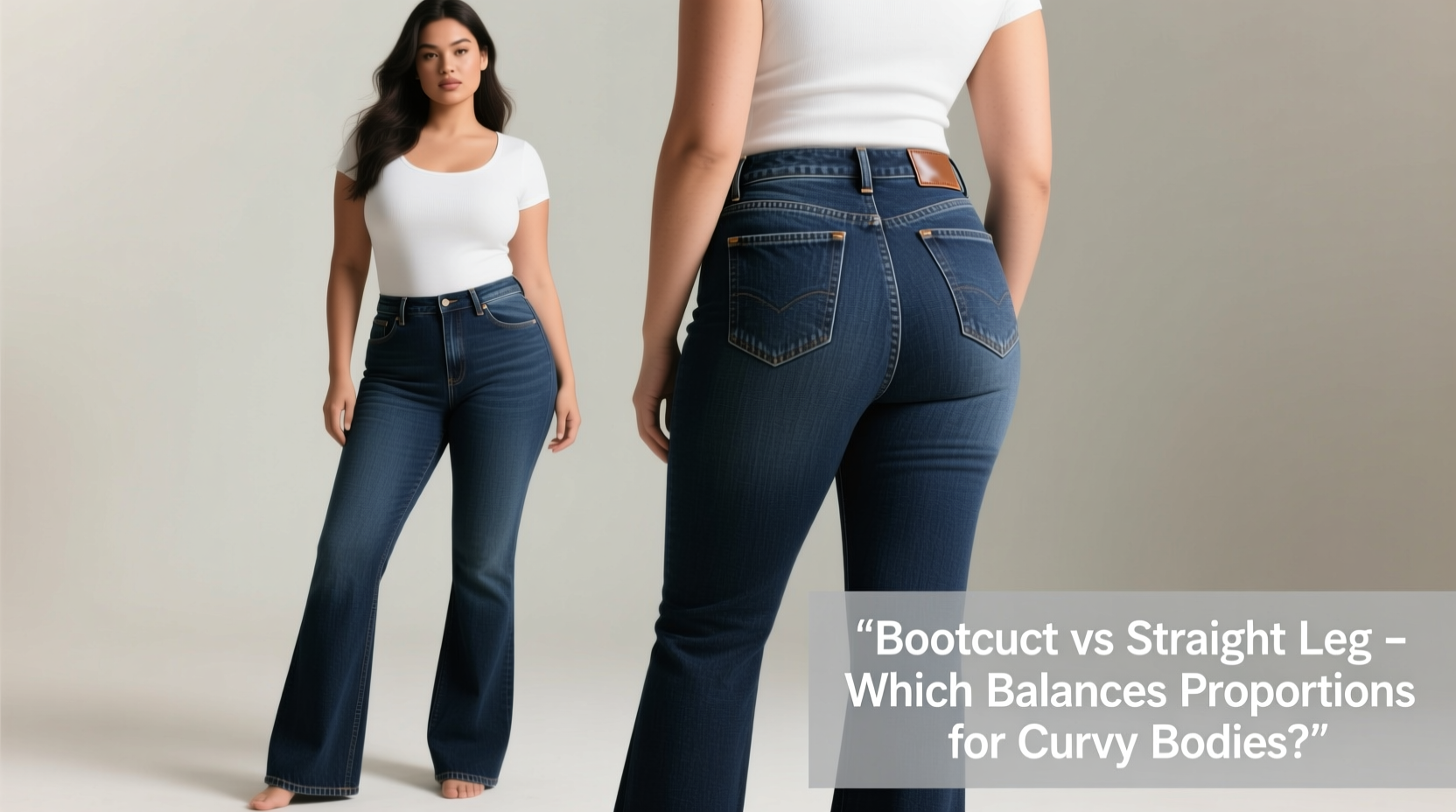
Bootcut jeans are characterized by a slight widening from the knee down, designed originally to fit over boots. This subtle flare—usually 1 to 3 inches wider at the ankle than at the knee—creates a gentle outward curve that offsets hip width and draws the eye downward. For many curvy women, this is a game-changer.
The strategic flare helps redistribute visual weight. If your hips are significantly wider than your ankles, the bootcut creates symmetry by introducing proportional fullness below the knee. This effect prevents the classic “triangle” look where the lower garment appears too narrow beneath a wide hip line.
Tip: Opt for bootcut jeans with a mid-to-high rise to anchor the waist and prevent muffin-top spillage, especially if you carry weight around the midsection.Additionally, bootcut jeans often come with more room through the thigh and seat, making them forgiving for fuller legs while still maintaining a tailored appearance. Because the leg opens gradually, they avoid the abrupt widening of bell-bottoms, preserving a polished, modern aesthetic.
Fashion stylist Lena Rivera notes:
“Bootcuts are underrated for curvy clients. They offer structure where it’s needed and release where it matters—balancing the lower body without sacrificing sophistication.” — Lena Rivera, Celebrity Stylist
Straight Leg Jeans: Clean Lines and Uniform Width
Straight leg jeans maintain a consistent width from the hip to the hem, creating a column-like silhouette. Unlike bootcuts, there’s no intentional flare—just a parallel seam running down each side. This clean, minimalist line appeals to those who prefer a sleek, tailored look.
For curvy figures, straight leg jeans can work exceptionally well—if the fit is precise. The uniform cut elongates the leg by creating uninterrupted vertical lines, which is inherently flattering. However, because they don’t widen at the ankle, any tightness through the thigh or calf can become immediately apparent.
The challenge arises when the leg opening is too narrow. If the fabric pulls across the hips or bunches at the back, the jeans will emphasize rather than minimize. Moreover, a narrow hem can create a visual “stop” at the ankle, making legs appear shorter—especially when paired with flat shoes.
That said, modern straight leg designs increasingly include stretch blends and contoured waistbands, improving comfort and shaping. When selected carefully, straight leg jeans can define the waist, streamline the hips, and project a confident, contemporary vibe.
Comparing Bootcut vs Straight Leg: Key Differences
| Feature | Bootcut Jeans | Straight Leg Jeans |
|---|---|---|
| Leg Shape | Slight flare from knee to hem | Uniform width from hip to ankle |
| Hip/Thigh Fit | Generally roomier; accommodates curves | Varies—can be snug if not sized properly |
| Proportion Effect | Balances wide hips with flared base | Creates vertical continuity; may highlight imbalance if too tight |
| Shoe Pairing | Ideal with boots, heels, or flats with volume | Works with sneakers, loafers, pumps |
| Best For | Pear shapes, hourglass figures, fuller thighs | Rectangular or balanced curvy frames, longer legs |
| Styling Flexibility | Excellent with flowy tops or tucked-in blouses | Versatile; suits cropped tops and longer tunics |
Real-World Example: Choosing the Right Style
Consider Maria, a 34-year-old with an hourglass figure—38” hips, 28” waist, and muscular thighs. She loves jeans but often feels self-conscious when her lower half looks disproportionate. After trying several styles, she noticed a pattern: straight leg jeans in rigid denim made her legs look boxy, especially with ankle boots. The fabric strained across her quads, and the narrow hem cut off her leg line.
Switching to a medium-rise bootcut with 2% elastane changed everything. The jeans hugged her waist, smoothed her hips, and flared just enough to clear her boots without dragging. The result? Longer-looking legs and a balanced profile. “I didn’t realize how much the flare helped until I saw photos,” she says. “It’s like the jeans frame my body instead of fighting it.”
Maria’s experience underscores a crucial point: the right cut doesn’t hide your curves—it harmonizes with them.
Step-by-Step Guide to Choosing Your Ideal Denim
- Assess Your Body Shape: Determine whether you’re hourglass, pear, apple, or rectangular. Pear shapes (narrower shoulders, wider hips) often benefit most from bootcuts.
- Measure Key Areas: Note your hip, thigh, and inseam measurements. Compare them to brand size charts—don’t rely solely on waist size.
- Try Both Styles Side by Side: Wear identical tops and shoes when testing. Walk, sit, and bend to check mobility and fit.
- Evaluate the Hem Width: For bootcuts, ensure the flare starts below the knee and isn’t excessive. For straight legs, confirm the leg opening allows room for footwear without tightness.
- Check for Gaping and Pulling: No gap at the waist, no diagonal drag lines from the crotch, and no pinching at the thighs.
- Review in Natural Light: Artificial lighting distorts color and fit. Step outside or near a window to see the true drape.
- Style It Out: Pair with shoes and a top you’d actually wear. See how the full outfit balances.
Do’s and Don’ts for Curvy Denim Shopping
| Do’s | Don’ts |
|---|---|
| Choose mid-to-high rise for waist control | Avoid low-rise styles that dig into hip curves |
| Prioritize stretch (1–3% elastane) for comfort | Don’t buy rigid denim if you have muscular thighs |
| Match flare width to shoe volume (e.g., wider flare for tall boots) | Don’t wear bootcuts with pointed heels unless hemmed correctly |
| Opt for dark washes to slim and elongate | Avoid excessive distressing on wide areas |
| Tuck in tops to highlight the waist | Don’t wear baggy tops that obscure your shape |
FAQ: Common Questions About Jeans for Curvy Bodies
Can straight leg jeans work for very curvy hips?
Yes—but only if they have enough stretch and a leg opening wide enough to avoid constriction. Look for “curvy” or “full-figure” specific sizing, which adds room in the hip and thigh while keeping the waist fitted. Avoid stiff cotton blends that don’t move with your body.
Are bootcut jeans outdated?
No. While fashion cycles favor different silhouettes, bootcut jeans remain a timeless option for curvy figures. Modern versions feature cleaner finishes, lighter flares, and sustainable fabrics, making them relevant in contemporary wardrobes. They’re especially practical for seasonal layering with boots.
How do I know if the flare is too much?
If the hem flaps outward or catches on your heels when walking, it’s too wide. The ideal bootcut grazes the top of your shoe without lifting or dragging. A simple test: stand naturally and check that the fabric hangs straight down from the knee when viewed from the side.
Final Checklist Before Buying
- ✅ Waist fits snugly without a belt
- ✅ No gaping at the back waistband
- ✅ Fabric moves with your body—no pulling at inner thighs
- ✅ Hem length allows for desired shoe height
- ✅ Seam alignment is centered on the ankle
- ✅ Color and wash complement your skin tone and wardrobe
- ✅ You feel confident and comfortable when wearing them
Conclusion: Style With Intention
The choice between bootcut and straight leg jeans isn’t about trendiness—it’s about proportion, function, and personal expression. For most curvy bodies, bootcut jeans offer a naturally balancing effect, gently countering hip width with a controlled flare that elongates and stabilizes the silhouette. Straight leg jeans can be equally flattering when tailored to your exact measurements and paired thoughtfully with footwear.
Ultimately, the best jeans are the ones that align with your body’s architecture and your lifestyle’s demands. Try both styles with intention, assess them critically, and keep what truly serves you. Fashion should empower, not frustrate. When you understand how cuts interact with curves, you’re not just buying jeans—you’re curating confidence.
💬 Have a favorite pair of jeans that transformed your look? Share your story in the comments—your insight could help someone else find their perfect fit!